

China's Digital Health Unicorns and Late-Stage Contenders: Six Unicorns and Twenty Emerging Players File for IPO
In 2018, investment transactions in the global digital health sector continued to grow, reaching $14.6 billion, a 25% increase from 2017. Woodside Capital Partners released a report on digital health. The report divides the entire healthcare sector into four distinct segments—consumers, healthcare providers, payers, and value-based healthcare—and identifies unicorn companies and late-stage startups within each segment.
VCBeat (WeChat Official Account: vcbeat) has compiled the list section of the report: There are 20 global digital health unicorns, with 6 from China; there are 144 companies in the mid-to-late stage “reserve pool,” with 20 from China.
Woodside Capital Partners (WCP) is a renowned investment institution dedicated to providing financing and investment advisory services to startups in the technology sector. Since 2001, WCP has been engaged in investment, mergers and acquisitions, strategic partnerships, and other activities on a global scale, with its team having completed transactions totaling over $10 billion.
Below is the detailed list of unicorns and “reserve teams”
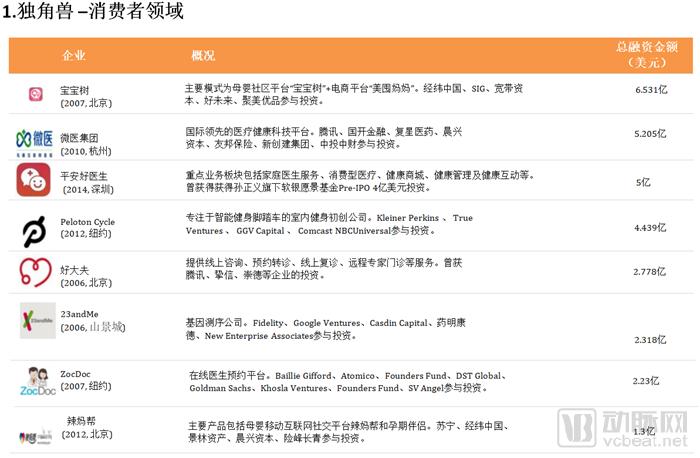
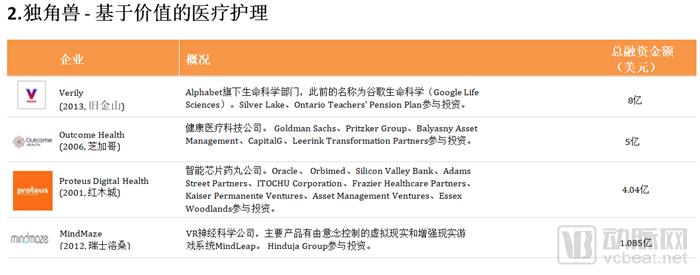
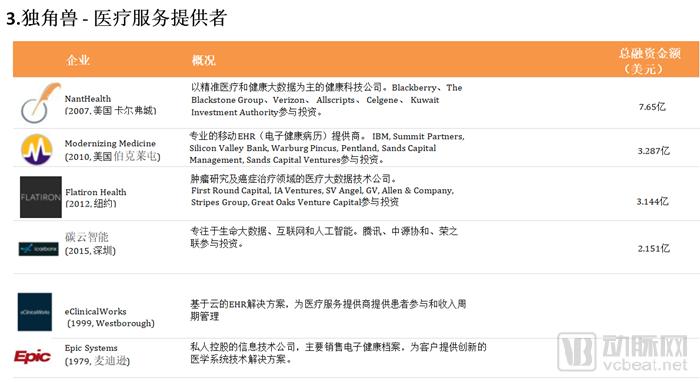
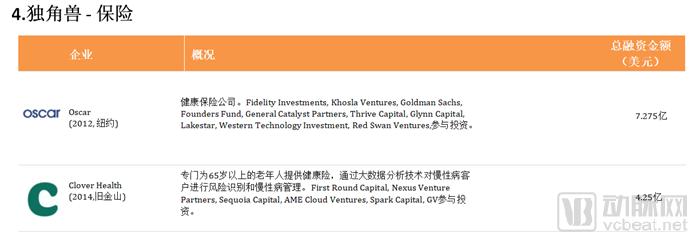
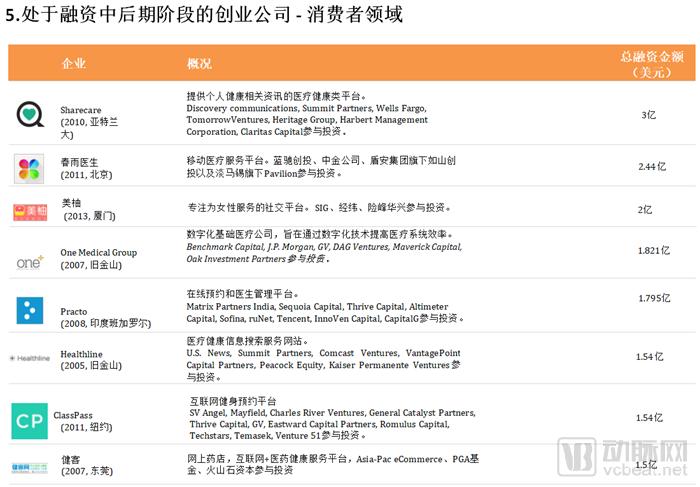
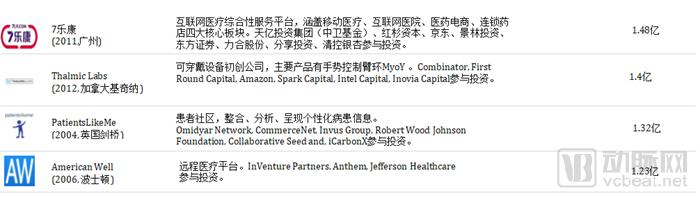
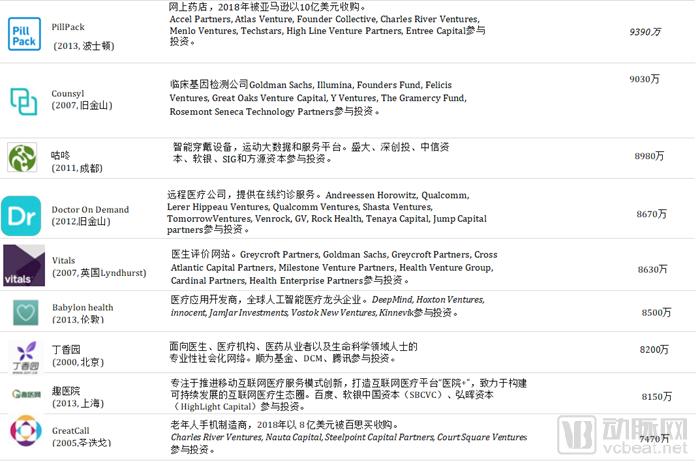
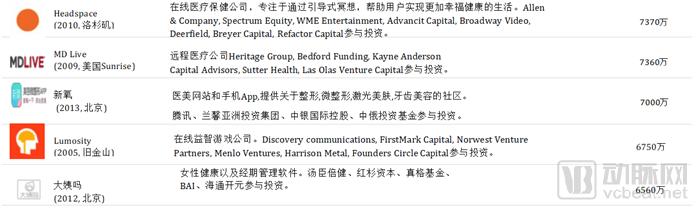
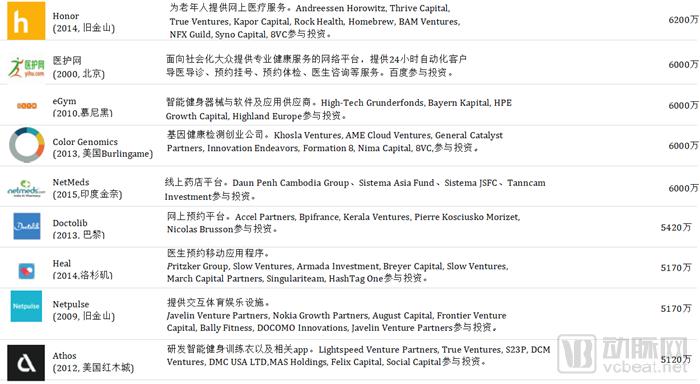
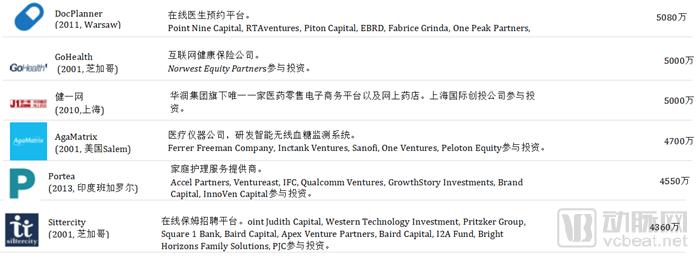
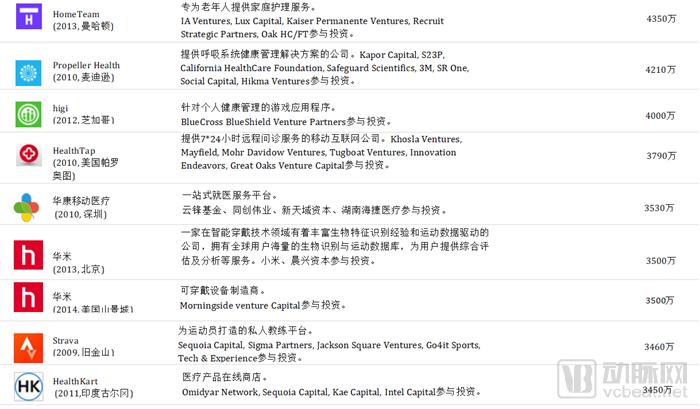
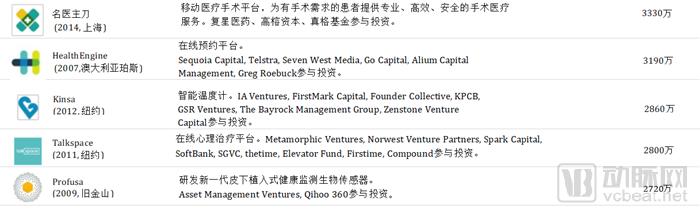
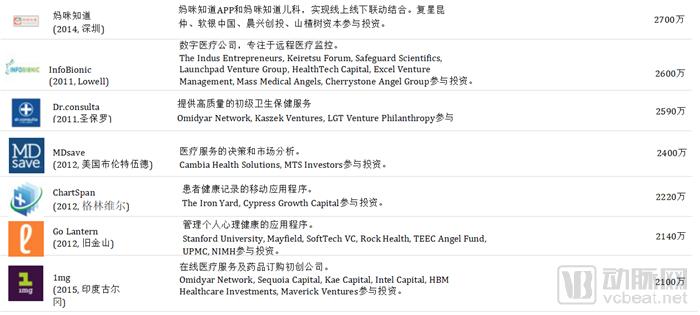
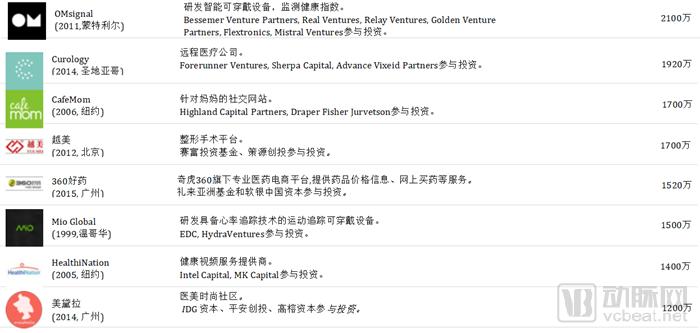
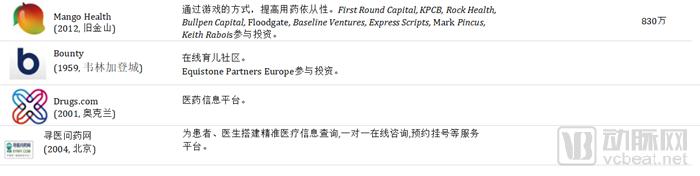
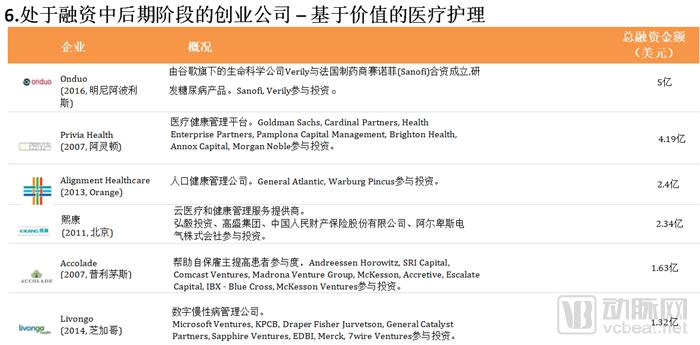
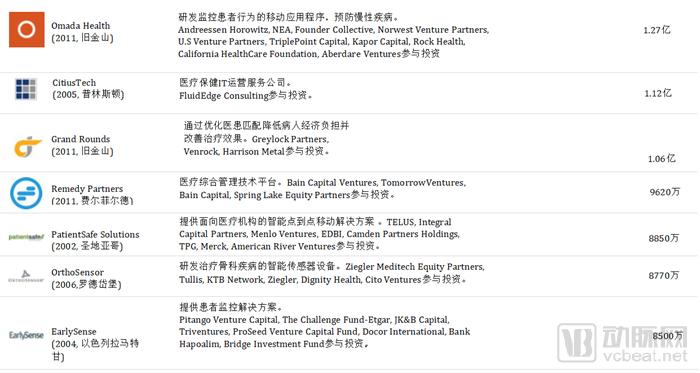


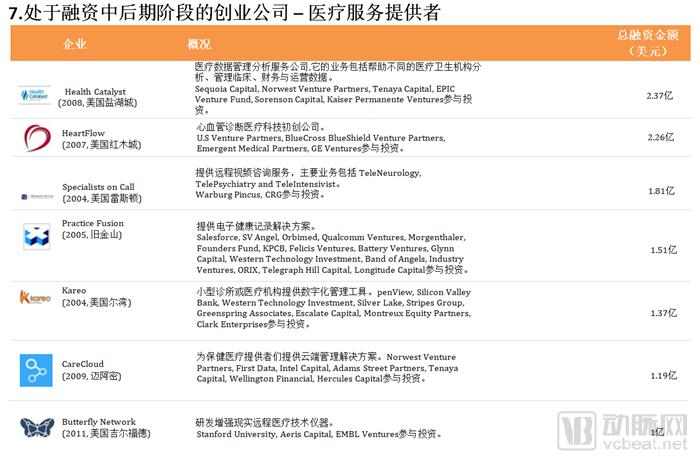
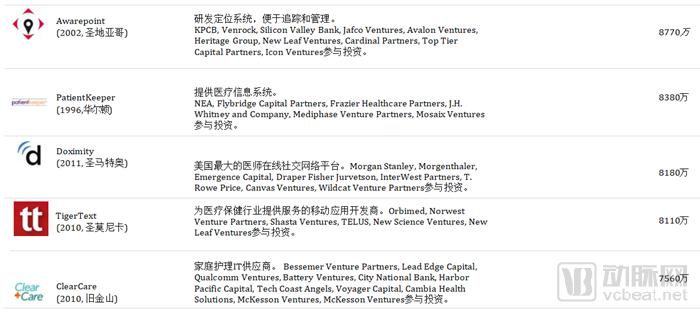

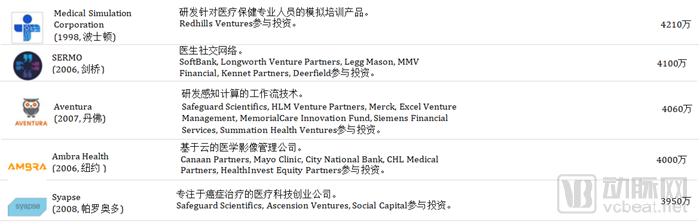

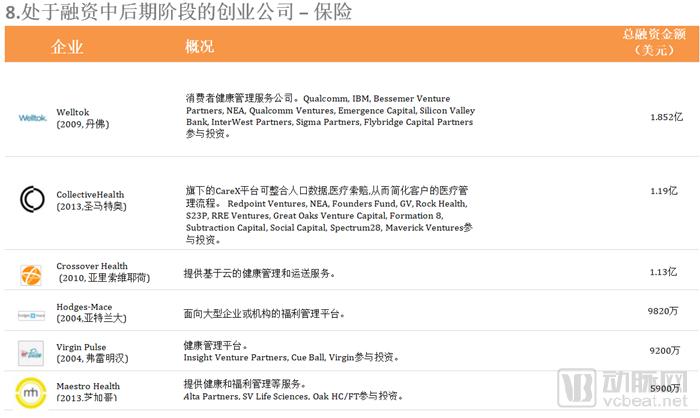
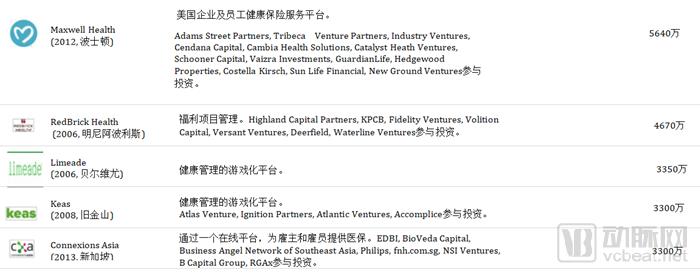
As can be seen from the table above, Chinese companies on the “Unicorn” list include: Babytree, WeDoctor Group, Ping An Good Doctor, Haodafu, Lamabang, and iCarbonX.
In the mid-to-late stage “reserve team,” Chinese companies include: Chunyu Doctor, Meiyou, Jianke, Qilekang, Codoon, DXY, Quyi, So-Young, Dayima, Yihuwang, Huami, Mamizhidao, Mingyi Zhudao, Yuemei, 360 Haoyao, and Xunyi Wenyao Wang.
These are well-known projects that enjoy broad recognition from the market, users, and investors, with a high probability of emerging as future leaders.
The unicorn list and the “reserve” list also reveal the differences between China’s digital health innovations and similar global projects. Chinese companies are notably scarce in sectors such as healthcare providers and insurance; instead, Chinese digital health firms excel primarily at information connectivity and resource integration.
This indicates that the infrastructure for medical services has become relatively mature, capable of providing basic healthcare to residents. However, due to factors such as information asymmetry and poor mobility, access to high-quality medical services remains limited. “Internet Plus” offers the solution to this challenge.
Of course, the essence of digital health goes far beyond simply “moving” medical resources online. Just as Oscar Health has reimagined health insurance services by building a value network, digital health should actively participate in the reallocation of medical resources and the creation of new services. This integration of technology and business models represents the next frontier for breakthroughs.
Note: All data mentioned in this article are as of the report publication date.