GAREA Health: Empowering Intelligent Community Health Management Centers with Telemedicine to Close the Healthcare Service Loop

GAREA
Mobile Medical Solutions Provider
Currently, the number of primary healthcare institutions and medical personnel in China is increasing year by year. However, the service quality of medical staff still needs improvement, and primary care physicians face multiple challenges, such as outdated equipment and a lack of information technology support.
Yang Haifei, co-founder of Jiangsu Garea Healthcare Technology Co., Ltd. (hereinafter referred to as “GAREA”), told VCBeat (WeChat ID: vcbeat): “At that time, many physicians’ diagnostic equipment was still limited to the ‘old three’: stethoscopes, mercury thermometers, and analog sphygmomanometers. Physicians would manually record examination results on paper, which were then bound into booklets to form residents’ health records.”
Outdated equipment cannot guarantee the accuracy of disease screening results, and handwritten patient information fails to ensure data precision. Yang Haifei stated, “After conducting research for a period of time, we recognized that there are still many pain points in the primary healthcare market. We wondered if we could do something to improve the current state of primary healthcare and empower primary care physicians.”
Leveraging its technical expertise in embedded systems and telecommunications, GAREA’s team has intelligently upgraded traditional medical devices. Its independently developed all-in-one health kiosk meets the operational needs of primary healthcare services and ensures ease of use for primary care physicians.
To date, GAREA has covered more than 20 provinces across China, serving a population of over 100 million.
Smart Communities: Achieving a Paradigm Shift Toward Health Management
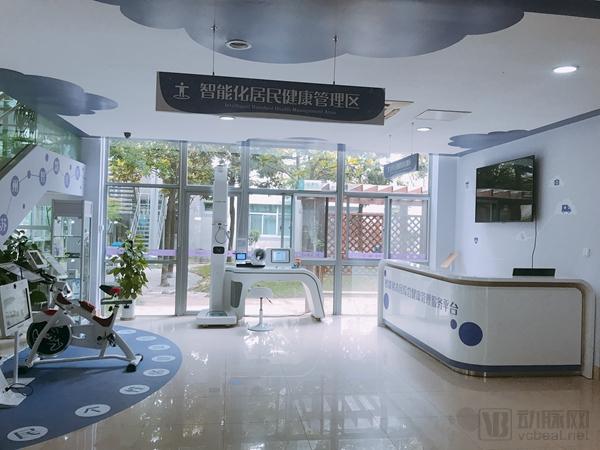
Garea Health’s Intelligent Resident Health Management Zone (Image source: Provided by the company)
Yang Haifei told VCBeat, “Professional medical equipment involves complex operations, making it difficult for untrained individuals to use. Primary-care physicians have relatively weaker skills, and fully mastering the operation of such equipment typically requires extensive training.”
Therefore, GAREA decided to design a compact, specialized, and integrated device that presents testing functions via buttons on a touchscreen, offering simplicity and convenience. After four years of research, GAREA developed the “All-in-One Health Monitoring Device.” It is reported that this all-in-one health monitoring device provides more than 10 testing capabilities through built-in and peripheral devices, collects over 60 health indicators, and offers multi-level solutions. The device has been granted nearly ten national invention patents, as well as dozens of copyrights and utility model patents.
Yang Haifei stated, “With an average of four hours of training per primary-care physician, doctors can fully master the operation of the all-in-one health kiosk. Furthermore, the device incorporates an embedded AI-assisted system to help physicians analyze results, significantly lowering the barrier to entry for primary-care practice.”
GAREA continuously enriches and expands its medical product portfolio to meet the daily needs of primary care physicians, delivers primary healthcare services, and has established an intelligent community health comprehensive management service platform, dedicated to enabling residents to access medical and health management services related to chronic diseases within a five-minute walk from home.
On the physician side, GAREA has integrated previously siloed systems—such as the public health system, primary care system, and family doctor system—into its comprehensive health management platform. This creates a business-oriented, information-based workflow system for physicians, thereby enhancing the operational and clinical efficiency of primary care providers.
From the resident’s perspective, GAREA places greater emphasis on enhancing residents’ sense of gain. Yang Haifei stated that in the past, primary healthcare services were delivered merely to fulfill regulatory mandates. Government authorities assigned tasks to community health service centers, such as establishing health records for residents, matching them with family doctors, and conducting follow-ups on their medical conditions. However, in practice, many residents are unaware of these functions of community health service centers, perceiving them only as facilities for treating minor ailments and dispensing common medications.
GAREA adopts a proactive management approach, conducting disease screenings for residents—such as for hypertension, diabetes, osteoporosis, chronic obstructive pulmonary disease (COPD), and childhood asthma—through services like home visits by nurses and follow-ups by general practitioners. Screening results are directly synchronized to the health management platform, which automatically generates personal health records, produces individual checkup reports in a timely manner, and provides personalized health guidance. In addition, residents can perform self-health monitoring at home using GAREA’s medical devices, such as dynamic ECG monitors and all-in-one home health kiosks. Through the patient-facing side of the platform, residents can interact with doctors in real time, thereby establishing personalized, multi-dimensional health information databases.
Focusing on Primary Healthcare Institutions to Build an “Internet+” Tiered Diagnosis and Treatment Support System
Chronic disease management is only one aspect of the health management system. To achieve effective health management for residents, it is necessary to establish a closed-loop system across the entire spectrum of health services:
Primary care physicians establish digital health records for residents at general practitioner workstations, providing systematic medical services such as contracted diagnosis and treatment, intelligent chronic disease management, and outpatient appointment scheduling;
At specialized disease screening stations, primary care physicians have established a closed-loop service system for conditions such as cardiovascular and cerebrovascular diseases, cancer, osteoporosis, and chronic obstructive pulmonary disease (COPD), encompassing screening, treatment, management, and patient education. This has fostered a family health service model centered on early screening, early diagnosis, and early treatment.
When primary care physicians encounter complex conditions such as rare or difficult-to-diagnose diseases, they can guide patients to community-based remote outpatient workstations for “face-to-face” consultations with specialists from tertiary hospitals. This enables patients to receive expert telemedicine diagnoses without traveling to large hospitals, thereby improving the quality and efficiency of diagnostic and treatment services while saving patients time in seeking medical care.
In addition, residents can also complete self-service health check-ups at community health kiosks to promptly understand their health status and gradually enhance their awareness of health management in daily life.
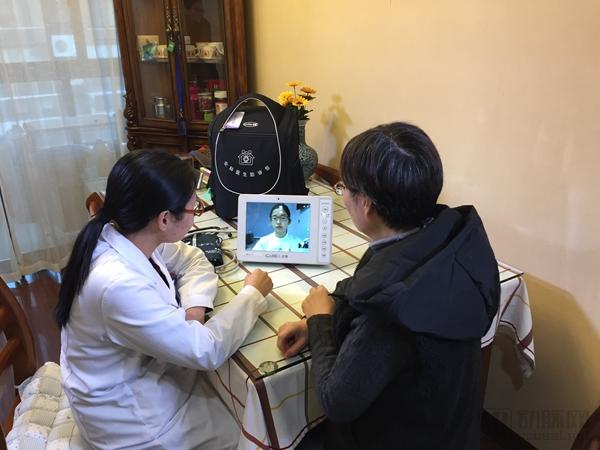
Remote consultation conducted in a resident’s home (Image source: provided by the enterprise)
Under GAREA’s health management framework, residents can simply swipe their ID cards on an all-in-one health kiosk to view personal basic information and electronic medical record data, such as past medical history. Subsequently, through GAREA’s specialized system platform, test results are uploaded in real time and synchronized to individual exclusive health records for comprehensive documentation. Residents can also access convenient services via online information consultation platforms and professional intelligent medical knowledge bases, including online health education, health knowledge queries, and professional interpretation of medical examination reports. These initiatives aim to promote scientific healthy lifestyles and enhance the overall health literacy of the population.
2019: New Opportunities and Challenges Coexist!
VCBeat joins hands with“Deep Divers,” Focusing on the “Ocean” of Grassroots Medical Innovation
How to in the vast“Deep Waters”: Survival of the Fittest, Diving Deeper?
If you are also in primary healthcare"Deep Diving Enthusiast"
We welcome you to sign up and join us in conquering the vast landscape of primary healthcare."Ocean."