

2019 Fitness Industry Outlook: Giants Await Opportunities, Returning to Operational Fundamentals
Editor’s Note: This article is republished from Lianba, authored by Justin. Republished with authorization by VCBeat.
In the blink of an eye, the Spring Festival holiday has ended for many people, and it is time to return to the normal work rhythm.
As expected, anxiety within the industry will intensify this year. However, unlike in previous years when concerns primarily revolved around competition and expansion, there is now a heightened sense of uncertainty and hesitation, akin to trying to see flowers through fog. Many professionals remark that they can no longer clearly decipher industry trends, with uncertainty along the path forward increasing significantly.
Therefore, with this annual forecast, we will combine reviews from previous years, hoping to offer some preliminary insights to spark further discussion and reflection.
(1) Model
We have stated more than once that the long-term trajectory of the fitness industry is undoubtedly positive. However, whether one can endure until the inflection point where the industry curve turns upward remains a tangible challenge for every player. Since last year, we have clearly observed signs of stagnation in the sector. The emergence and growth rate of high-quality new brands have slowed down. Trendy business models are losing out to fundamental services, and prestigious investment backgrounds fail to ensure basic team stability. Occasional collapses of major brands have occurred, while small and medium-sized enterprises continue to face immense survival pressure. This will remain the dominant theme of this year.
An analysis of cases involving business closures reveals that China’s fitness industry cannot be driven simply and crudely by capital or technology. At its core, the fitness industry is heavily reliant on service and personal companionship, which prevents it from achieving significant efficiency gains through intelligence-driven solutions in the same way as retail or even restaurant businesses. Moreover, ordinary individuals typically require supervision from others to achieve effective training outcomes.
While the traditional fitness club model has significant drawbacks, blindly copying foreign models is bound to cause problems, as evidenced by the failures of certain authorized CrossFit boxes in China, as well as those of BASEBODY, VENTO, and GuCycle.

An examination of the relatively successful new models currently on the market reveals that their essence lies not in “novelty,” but rather in the reintegration of existing resources through advanced operational management and brand marketing concepts, so as to enhance traffic acquisition efficiency and profitability—a capability that traditional players notably lack.
Group exercise is the angel of a fitness facility, while the group exercise model is its devil.
(II) Users
It is often said that the industry is facing a winter, but a closer look reveals that fitness has become a nearly universal topic with immense potential. China has only 15 million fitness users, whereas Europe boasts over 52 million, and North America exceeds 60 million.
However, the growth in the number of fitness users in China has not been as significant as expected, and the penetration rate remains low. Excluding Beijing, Shanghai, Guangzhou, and Shenzhen, the fitness population penetration rate across China is below 3%, and in some cases even under 1%. Three years ago, many businesses could survive simply by understanding why users joined. But with the industry’s average churn rate exceeding 70%, it is no longer enough to know only why users come; companies must now clearly identify where they come from, why they leave, under what circumstances they depart, and where they go afterward.
Traditional clubs will continue to rely on the funnel model for customer acquisition, which essentially involves screening users and continuously churning through them. In contrast, studios’ inherent weakness in customer acquisition makes them more reliant on user-driven referrals. This approach essentially leverages existing users to attract new ones, seeking incremental growth within the existing customer base. In other words, the role of studios is to re-engage members who have purchased memberships or classes but remain inactive.
The core demographic of fitness users in China remains beginners, who are obsessed with achieving visible abdominal muscles and primarily aim to lose weight. Due to their inability to sustain healthy eating habits over the long term, there is still significant, tangible growth potential for online fat-loss camps, influencer-led workout routines, and even weight-loss food products.
We have seen too many venues equipped with millions of dollars’ worth of top-tier international equipment fail to compete with peers relying on small apparatus or even bodyweight training, whereas a clean, tidy restroom featuring well-known brands can win immense goodwill. Practice has proven that users’ attention and experience are confined within the bounds of their own cognition; therefore, operators need to shift from PTCD (Personal Trainer Centered Design) to CCD (Client Centered Design) thinking.
Community-based marketing is key to boosting user retention. However, building a community is not as simple as gathering people for group training sessions; a community is not synonymous with group fitness classes. Traditional health clubs often see high attendance in their group exercise studios, yet this fails to improve retention rates. Meanwhile, pure personal training studios can foster a stable, close-knit user circle driven by the charisma of the founder-coach.
The user experience in the fitness industry does not exhibit the “inside vs. outside the Fifth Ring Road” divide seen in consumer retail, as the core demographic consists of the middle class and younger generations, whose consumption patterns are increasingly homogeneous. This trend is also leading to a gradual weakening of regional disparities in China’s fitness market, laying the foundation for the emergence of truly nationwide chain brands in the future.
Chinese fitness consumers are more pragmatic than imagined. Fitness as a showy lifestyle has rapidly become a thing of the past; what now attracts consumers to take photos and post on social media is no longer your gym’s feature wall, but real abs and biceps.
For fitness venues, user value extends beyond membership and session fee revenue to include the purchasing power and consumption characteristics represented by their socioeconomic status. However, it is difficult for any single brand or venue to deeply unlock this additional commercial value. In earlier years, Active Media’s business aimed to develop commercial opportunities among gym users and achieved a certain degree of success. Yet, the higher-quality studio user base could not be substantially monetized due to insufficient scale of operations. Perhaps a collaborative model for joint user value development in the form of an alliance will be the direction of growth in the coming period.
(III) Revenue
According to optimistic estimates, the total output value of China's fitness industry currently stands at around RMB 50 billion. In contrast, during the tax evasion scandal that rocked the film and television industry late last year, some celebrities alone paid back taxes amounting to RMB 11.747 billion. Thus, the fitness sector remains a micro-industry.
Given the substantial untapped potential on the demand side, it seems somewhat premature for the industry to suddenly encounter a “tipping point” within just three or four years. However, this phenomenon can be explained by applying the Kitchin cycle of inventory destocking from economics: the market is saturated with homogeneous products and services, necessitating a process of survival of the fittest.
We reiterate our call: investors seeking quick profits or expecting net profit margins above 20% should refrain from entering the market for now. Indeed, under strict accounting standards, the industry’s average overall profitability may well be in the single digits.
From the perspective of economic cycles, if the fitness industry aims to improve its profitability, it may need to wait for the trough of the Kuznets cycle, which has an average length of 20 years—specifically, the point at which real estate rents decline significantly. However, it remains uncertain whether this day of rent reduction will actually arrive. A more pragmatic approach is to collaborate with real estate companies, a strategy from which many across China have already benefited.
Excluding rent costs, persistently high labor costs cannot be significantly reduced in the short term. In this context, rather than focusing on improving sales per square meter, greater emphasis should be placed on enhancing employees’ unit output efficiency.
Many venues have attempted to sell derivative products, including fitness meals and branded apparel, but few have made a meaningful contribution to profits. This is because they have failed to build their brands into true intellectual properties (IPs), resulting in a lack of user identification. However, IP-driven branding is undoubtedly a long-term trend.
While the fitness industry faces no seasonal winter, capital markets do; thus, fundraising in the fitness sector will become increasingly difficult in 2019. The low return on investment (ROI) will lead small and medium-sized investment firms to strategically withdraw from this market. Furthermore, unlike ball sports or ice and snow sports, the fitness industry cannot leverage policy-driven opportunities supported by national initiatives, making it highly unlikely to attract significant interest from large-scale capital.
However, in contrast to the tightening of financial investments, we may see several opportunities for large-scale strategic investments.
While pay-per-visit models are advantageous, they struggle to withstand cash flow pressures; therefore, prepaid systems or improved recharge card formats will remain the mainstream.
(1) Social Media
As a communication tool used by 1 billion people, WeChat remains the primary platform for fitness brands’ promotional efforts. While Official Accounts (Service Accounts) are a standard configuration, few brands fully leverage their capabilities beyond integrating SaaS-based class booking features.
An increasing number of venues are placing greater emphasis on the content of their WeChat Official Account posts. While human-interest stories remain the most popular genre, venues with independent content creation capabilities are few and far between, making this a critical operational competency in urgent need of improvement.
Location-based WeChat Moments ads will become a powerful tool for venue marketing.
Weibo remains the primary battleground for cultivating fitness influencers and intellectual property (IP). Early on, industry celebrities such as Chen Yun of OneFit, Roger D.P., and Mao Rui Fitness reaped significant benefits from traffic dividends. In the future, we can expect more institutionalized operations and the introduction of international fitness influencers.
Chinese fitness influencers are not lacking in traffic; what they lack is effective monetization strategies. Beyond opening gyms and participating in events, most derive their daily income from social commerce-style sales. This situation stems largely from the homogeneous nature and low aesthetic quality of their content, which fails to gain recognition from mainstream commercial brands.
Douyin is excellent, and short-form videos are highly engaging; however, due to the constraints imposed by interest-based algorithms, even high-quality fitness content can only reach a niche audience of fitness enthusiasts and coaches. This is not conducive to customer acquisition for gyms.
(II) Merchant Services Website
Dianping.com remains the primary source of customer traffic for the vast majority of fitness venues. However, faced with rising customer acquisition costs, many venue operators have a love-hate relationship with the platform: they wish to move away from it but struggle to identify more effective alternatives for lead generation. Even so, current indicators suggest that the fitness sector is not a key industry prioritized for support by Dianping.com.
Alibaba Sports has long sought to make a breakthrough in the fitness industry but struggled to find an entry point. After experimenting with various models, including events, smart products, and SaaS solutions, it is now leveraging Taobao’s resources to encourage gyms to establish online fitness stores. Alipay will also launch a universal fitness pass based on credit assessments. In fact, Koubei.com, under Taobao, had attempted to break Dianping’s monopoly several years ago, but with limited success. With the involvement of Alibaba’s core teams this time, can they truly help fitness venues secure more orders?
(3) Appointment Booking Platform
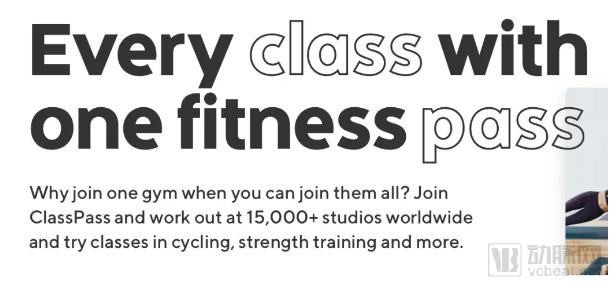
Three years ago, a wave of ClassPass clones based on the O2O model fueled a speculative bubble in China’s fitness industry. Earlier this year, Singapore’s GuavaPass was also acquired by ClassPass. What are the challenges of operating a class-booking platform? Clearly, low prices alone do not win over users and, to some extent, undermine venues’ pricing power. In a highly competitive market, the way forward may lie in tangibly improving the efficiency of matching supply with demand. So how can one effectively address the core needs of both sides?
1. Not all clubs are monsters, and naturally, not all studios are paragons of virtue. What determines user retention is the level of service, not the payment method or course content. There is no “Gresham’s Law” at play here; rather, the scarcity of high-quality providers has led to a slow improvement in the industry’s overall reputation. However, caution must be exercised against low-quality entrants from other sectors, whose disruptive impact on the industry can be exponential.
2. The customer distribution of traditional gyms will exhibit an M-shaped pattern, dominated by novices and seasoned fitness enthusiasts. Entry-level users will gradually migrate to boutique fitness studios, aligning with their preferred training styles and goal-oriented approaches.
3. Fitness studios with differentiated course offerings will share “users,” avoiding the zero-sum, cutthroat competition typical of traditional gyms; however, competitive pressure will intensify among pure personal training studios located in close proximity to one another.
4. Although major brands like Horsh have declined, the lifespan of traditional fitness club brands such as Will’s and Tera Wellness will far exceed expectations. Rather than pinning hopes on overturning entrenched industry giants through disruptive revolution, it is more prudent to first ensure one’s own survival for at least a decade.
5. Mergers and acquisitions will become the mainstream approach for venue brand expansion in the near future.
Although both offline and physical industries are involved, in today’s world where the internet has become infrastructure and the boundaries between online and offline are increasingly blurred, operational talent is indispensable. Operations, at its core, encompasses all intervention measures used to help establish better relationships between products and users. In terms of specific work directions, operations have two major focuses: one is user acquisition, traffic generation, and conversion; the other is user management and retention. The vast majority of venues lack dedicated operational professionals, and coaches are burdened with excessive operational responsibilities, which results in immense pressure for them.
The service quality of coaches is a necessary factor for winning over clients, while their professional competence is a sufficient condition for customer satisfaction.
The homogenization of body types, minor cosmetic procedures, and photo-editing skills has resulted in a monotonous, cookie-cutter appearance. Meanwhile, deficiencies in on-camera presence and expressive capabilities have become bottlenecks limiting the further expansion of influence for first-generation internet celebrities. Currently, from the perspective of sponsors, under similar physical conditions, a professional fitness enthusiast is less attractive than a cross-industry “slash youth.” Only second-generation fitness idols who transition from other industries are likely to break free from the constraints of the fitness sector and achieve greater commercial prospects.
For many people, happiness stems from a stable life and career, as well as the sense of security found within their comfort zone. Yet these very factors are what make another group unhappy. Most entrepreneurs likely belong to the latter category, especially those who remain committed to building businesses in the fitness industry today.
Viewed over a longer horizon, every episode of anxiety presents an opportunity. Embracing uncertainty and finding certainty within the unknown is both the challenge we face and the source of our motivation.
2019: The Year of Value Realization in the Fitness Industry. Consumer attention will shift toward more stable service standards and more reliable chain brands. Organizations that focus on accumulating brand equity and maintaining consistent operational excellence will usher in new opportunities.
But regardless of whether our predictions are right or wrong, and no matter if this year turns out to be good or bad, steadfastly attending to every small detail and striving to serve every customer well can never go astray.