

Respect to Every AI Pioneer at the Start of the New Year: A Special Lunar New Year Feature
In 2018, despite the capital winter, AI in healthcare continued to thrive. This hard-won achievement was made possible by the diligent and unremitting efforts of many individuals.
As a communication platform, VCBeat has perceived the faint yet heartfelt voices and sincere blessings amidst the bustling crowds—moments that emerge from investors rushing back and forth through airports, tech PR professionals navigating precarious paths, and pioneers dedicating themselves entirely to their companies’ growth.
Here, VCBeat has gathered insights from nearly 20 individuals spanning investors, tech PR professionals, and life sciences companies. Their reflections encompass both hopeful wishes for the new year and the hardships endured over the past one. It is our hope that these words will help them resolve the various challenges faced during the year and pave the way for greater scientific advancements in the year ahead.
For Investors
@Newbie investors exploring the healthcare industry
#My Dream Lies in Commercialization#
A novice without a medical background begins to explore the application and implementation of AI in the counter-cyclical healthcare industry amid a capital winter.
In the second half of 2018, capital became increasingly cautious, placing greater emphasis on corporate cash flow. Consequently, there was a stronger expectation for AI-plus-imaging companies to achieve robust commercial implementation. From a macro perspective, national regulations permitting hospitals to collaborate with third-party imaging and pathology providers represent a significant benefit for AI-plus-imaging companies; however, this also imposes higher requirements on industry players’ products. The year 2019 is likely to serve as a critical test for AI imaging companies: those capable of standardizing their products and achieving scaled sales will attract greater investor interest and accumulate increasing competitive advantages through a snowball effect.
I hope that AI imaging companies will each develop their own commercialization strategies, identifying viable business directions tailored to their specific strengths across public hospitals, third-party testing centers, primary care facilities, and health checkup centers, thereby leveraging technology to change the world.
@NoWay
#When hills multiply and streams repeat, one doubts there is a way; willows darken, flowers brighten, and another village appears.#
In 2018, an AI company we served nearly collapsed due to its failure to secure financing. This was not because of inferior products, but rather because its niche sector was too cutting-edge, leading most investors to adopt a wait-and-see approach. Everyone involved—from the company’s founder to our boss and myself—was gripped by anxiety. The founder declared that even if it meant going into personal debt, he would do whatever it took to keep the business afloat.
Fortunately, through the concerted efforts of multiple parties, the company ultimately secured funding, weathered the storm, and regained the opportunity to deliver high-quality products to its customers. Entrepreneurship is no easy feat—or rather, life itself presents challenges for everyone. When facing adversity, in addition to relentless effort, it may also be necessary to maintain a hopeful outlook on a brighter future, thereby fostering the confidence needed to persevere.

@One Cut
# The Healthcare Sector Is Vast; AI Is Small #
I only began researching artificial intelligence in the healthcare sector this August. Although internet hospitals have been thoroughly analyzed by your team, there are still many noteworthy developments. As for the AI companies, they have been extensively covered and scrutinized. I remain eager to see new enterprises emerge with innovative technologies, bringing a fresh perspective and renewed vitality in the coming year.
@Casual Pursuit
# The Good Gets Better, the Bad Gets Worse #
Sourcing projects is a tough task. With the year-end capital winter, we hesitate to make moves rashly. I’ve also noticed a significant shift in the frequency with which VCBeat reports on new AI projects—there are far fewer stories at year-end than at the beginning of the year. Strong companies raise funds multiple times a year and have already reached Series C; as for newer startups, they’re just treading water. I hope to engage with more projects next year, and I also wish for an acceleration in the regulatory approval process for artificial intelligence. These are my New Year’s wishes!
AI PR Edition
@A Healthcare Newcomer Gradually Solidifying Their Career Plan
Since graduation, I have worked in several different industries. After entering the healthcare sector, my initial skepticism has gradually given way to firm conviction, driven by the realization of the value that my profession brings to both myself and those around me.
In 2018, the father of a childhood friend was diagnosed with lung cancer at a local hospital in their hometown. For my friend’s family, this was undoubtedly devastating news. Given the limited medical capabilities of the hometown hospital and the time required for a re-evaluation at hospitals in Beijing, every additional day of waiting was an ordeal for everyone involved under those circumstances.
Thanks to the professional advantages of my job, I obtained my friend’s father’s imaging scans immediately and sought a second opinion from a leading expert on our company’s platform. It was quickly confirmed that he did not have lung cancer; the initial diagnosis was a misdiagnosis, putting everyone at ease.
In that instant, my resolve was solidified to dedicate myself to the healthcare industry. I also came to understand the greatness of healthcare professionals: transforming panic into reassurance and helplessness into stability. This is the most unique significance and value of this profession.
@Newbie in the Medical AI Industry
#GrowingTogetherWithAI#
Newcomers without a medical background have grown alongside the company since 2018, frantically catching up and learning amidst a fast-paced work environment. The year 2019 may usher in the most fierce competition. To achieve growth in industrial value, products need broader coverage beyond CT and lung imaging, such as AI-based screening for ophthalmic OCT, AI-assisted slide reading in pathology, and applications in dermatology and neurology. Continuously expanding the product line to provide more comprehensive departmental services represents a clear direction for future development.
In terms of distribution channels, the focus has gradually expanded from the radiology departments of high-quality public hospitals to health checkup centers, third-party imaging providers, and primary care institutions. This shift not only alleviates competitive congestion but also creates new and distinct opportunities.
In the new year, for all enterprises and relevant practitioners, I simply wish everyone survival.
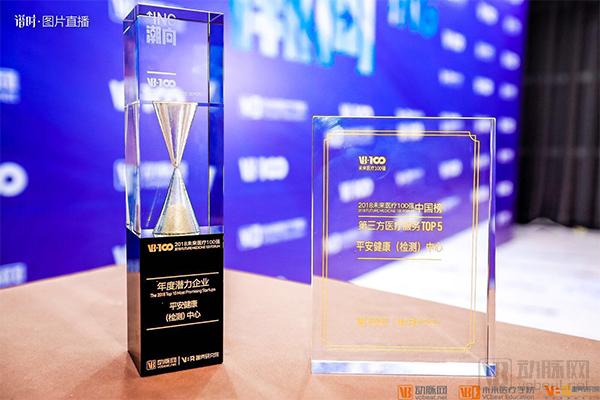
VB100 Draws to a Close Amidst Knowledge Sharing and a Technological Celebration
@Serious AI Genomics Industry PR
#Building a Brand Is a Tough Battle#
In this era of information overload, from the first news headline you hear upon waking to the last top story you scroll through before bed, every piece of content is a deliberately crafted delivery of information. To break through the clutter of advertisements and informational noise, one needs not only an attractive exterior but also an engaging substance that withstands scrutiny. While appealing aesthetics often fall into sameness, truly compelling substance is rare. To leave a lasting impression on the public mind, one must ultimately offer tangible value.
Those who have taken the stage, please begin your performance; those who have not yet taken the stage, please prepare yourselves offstage.
@OldPRintheDumps
# Say No to Being Caught in the Middle in the New Year! #
Building a brand is no easy feat! On one hand, I need to maintain good relationships with journalist friends; on the other, I have to deal with my boss. Faced with my boss’s quirky communication demands, I simply pass them along to the journalists without overthinking. So, my daily routine consists of being pressured from above while I, in turn, press the journalist friends... There are only a handful of AI imaging companies in the industry, after all. How can we let our reputation fall behind our competitors?
However, our company’s technology is already solid; I am merely adding the finishing touches. In the new year, I hope my boss will be more understanding! I also hope our company continues to move forward!
Corporate Section
@ShangGong Medical Information
#Getting to Know VCBeat#
In the summer of 2017, at an internal meeting held in a picturesque traditional Beijing courtyard residence adjacent to the Forbidden City, I met Mr. Da Tao from VCBeat. Prior to that, I had always harbored many questions.
Why is the number of patients with chronic diseases increasing? How can we break the cycle where an abundance of new therapeutic drugs and technologies leads to greater financial pressure on the national health insurance system? Given that the strain on health insurance primarily stems from treatment costs, how can we alleviate this expenditure pressure? How can major cities with concentrated medical resources, such as Beijing, Shanghai, and Guangzhou, provide support to lower-tier cities?
We engaged in an in-depth discussion about the 22-year trajectory of ups and downs in the healthcare industry. While some questions remain without clear answers, we have reached certain consensuses: new technologies, after acquiring certain capabilities of top-tier experts, are undoubtedly beneficial in assisting physicians and improving efficiency; new technologies will certainly provide significant support to the weaker segments of healthcare; and the state will gradually increase its support for and refinement of regulations regarding new medical technologies.
Da Tao stated that he would provide more coverage and support for new medical technologies and innovations within his field. What I hope most is to continuously explore and enrich the optimal observation window for fundus diseases through new technologies. I look forward to a future, years from now, where fundus examinations become as widespread and routinely applied as complete blood and urine tests.
To date, we have progressed together, and we hope that everyone will achieve a successful start in the new year.
@Huiyi Huiying Chai Xiangfei
#AI for Full-Cycle Medical Imaging Is the Future#
"Starting a business is one of the most challenging endeavors, requiring constant attention to setting direction, recruiting talent, securing funding, and managing operational processes."
“5+2,” “White+Black” Busy Schedule: I Often Wake Up in the Middle of the Night, Thinking About So Many Colleagues and Clients at the Company, Afraid That I Might Fail Them. Now, With Many Excellent New Colleagues Joining the Company, We Support and Encourage Each Other. No Longer Feeling Lonely, My Anxiety Has Also Subsided.
More importantly, when the developed technological products are implemented in hospitals and gradually generate value, I feel that all my efforts and dedication have been worthwhile. I look forward to achieving resounding success in the coming year.
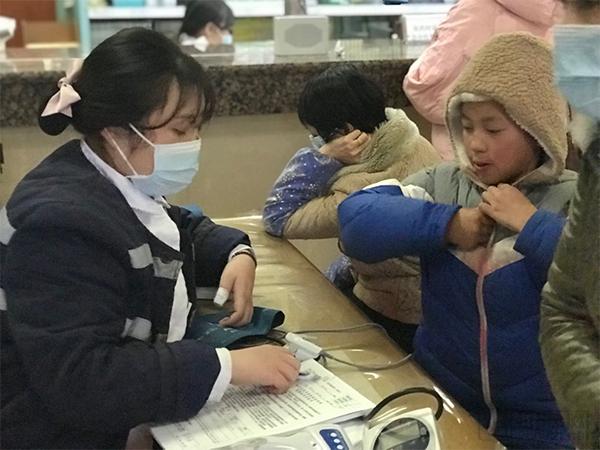
@Visionary Technology
#StayTrueToOurOriginalAspirations#
2018 was a year of going from zero to one. From the moment the company was founded, we embarked on a relentless race against time. We lost count of how many times we visited hospitals to understand clinicians’ needs, followed by countless interviews with candidates...
AI in healthcare involves long development cycles, challenges in monetization, narrow application scenarios, difficulties in data acquisition, and strict government regulations—all of which pose exceptional challenges for startups.
In September last year, the National Medical Products Administration (NMPA) replaced its former English acronym “CFDA” with “NMPA.” This policy advancement has had a positive impact on the development of the medical AI industry. Efforts by experts in the field of medical imaging to promote AI have also greatly encouraged companies.
Through years of perseverance and hard work, 2019 will be a year marked by both challenges and opportunities. Shijian Technology has now taken shape on a significant scale, with its products gradually being implemented in the market. In the new year, staying true to our original mission, developing high-quality products, and delivering greater value to users remain our ultimate goals!
@Yasen Technology Chen Hui
#Scarcity of Diagnostic and Treatment Resources#
Digital healthcare has been a hot topic and sector in recent years, especially with the support of AI, during which the entire market experienced rapid growth in an explosive phase. However, in 2018, as business implementation became increasingly challenging, technical bottlenecks were exposed, and due to the unique nature of policies and the medical market, the market began to return to rationality. This is a positive development. If we examine China’s healthcare system through the lens of first principles at this juncture, we reaffirm that the scarcity of diagnostic and treatment resources remains the most critical pain point in healthcare. Any business model that can compensate for or increase the supply of such resources is aligned with the major trend. Therefore, we continue to experiment, learn from mistakes, and explore new paths, becoming even more resolute in our direction without turning back.
@Shukun Technology
#Opening the "Heart" Era#
In 2018, Shukun Technology led the medical imaging AI industry into the “Cardiac” Era by pioneering the world’s first comprehensive AI solution for cardiovascular and cerebrovascular diseases, accumulating more than 50 invention patent applications. Over a hundred major hospitals and thousands of clinicians have validated through extensive clinical practice that Shukun’s AI technology achieves a “dual improvement” in both diagnostic efficiency and diagnostic performance.
In 2019, Shukun Technology will expand its coverage to encompass a broader range of diseases and clinical scenarios, building an “all-scenario intelligent imaging platform” and a “new big data AI research platform” tailored to physicians’ needs. The company will continue to advance its mission of “making healthcare more precise and convenient,” leveraging smart medical services to benefit the public.
@Medical AI Entrepreneurs
#Great dreams are not achieved by waiting or shouting, but by striving and doing#
2018 was the true inaugural year for medical AI in China, as it marked the formal launch of policy initiatives and tangible progress in the approval of Class III medical device certifications. After five years of perseverance, Jianpei Technology has finally seen the light at the end of the tunnel. We are confident that under regulatory oversight, the market will become increasingly orderly. Firmly believing that “opportunity favors the prepared mind,” we dedicated most of our efforts in 2018 to refining our products and strengthening our core competencies, while closely following policy developments and actively cooperating with regulatory authorities. These efforts yielded breakthrough progress, making it a rewarding year well worth celebrating.
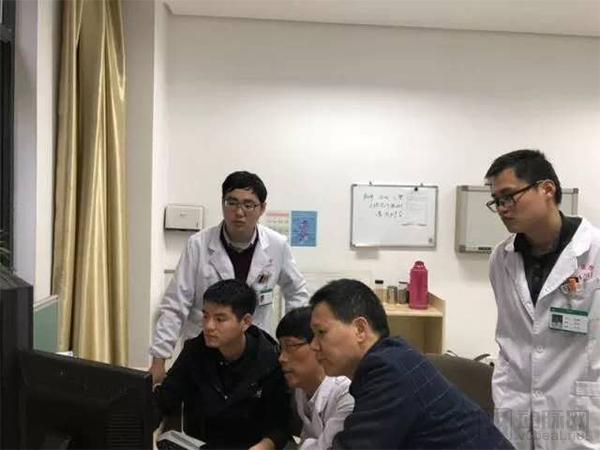
Jianpei Collaborates with Hospital Teams to Research Artificial Intelligence
@Baiyang Intelligent Technology
#Optimizing Medical Application Scenarios with New Technologies#
2018 was a critical year for the healthcare industry to undergo transformation and upgrading. Through years of practical exploration, we have increasingly recognized that companies with comprehensive service capabilities and those providing holistic solutions will become the key players in the industry, while technology-driven scenario upgrades are the primary means of industry consolidation.
As a pioneer in China’s new era of healthcare informatization, innovation is more than just a byword for us; it is the driving force behind the industry’s progress and development through new technologies and new models.
We believe that medical AI holds significant value, both in the allocation of social resources and in the overall enhancement of the healthcare system.
@Senyi Intelligence Li Gang
#For a better future, every effort is worth it#
At the annual meeting, Dr. Zhang Shaodian, the founder, looked back on 2018, a year of economic winter, and recalled the many sleepless nights and arduous phases Senyi endured to accelerate innovative R&D and product application. He said, “In times of difficulty, I always remember the original aspiration and mission behind founding Senyi—to benefit human health through technological innovation.” Amidst the clamor of the annual gala, his words rang out like a clear note, cutting through the clinking glasses and lively songs and dances, and striking directly at my heart. Seeing my colleagues around me equally moved, I could not help but feel proud to have joined such a dream-driven and responsible enterprise.
“Sweetness is forged through hardship,” Shao Dian stated firmly. “In 2019, we will continue to recognize the immense value of medical AI and big data, endure the hardships, and persist in innovation...” I secretly resolved to stand together through thick and thin and strive to pioneer new frontiers!
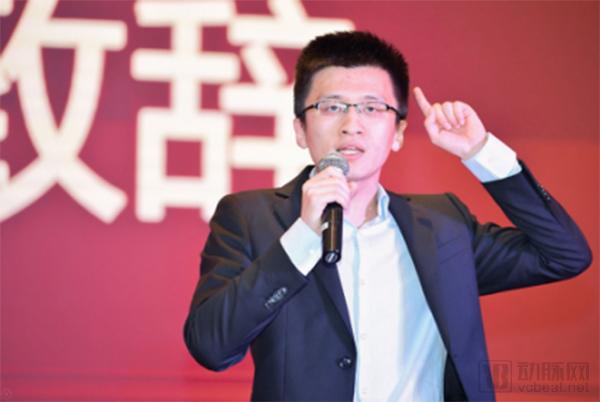
“Sweetness is distilled through suffering.”
@Yitu Healthcare
#Striving for Sci-Tech Innovation#
Amidst the fierce competition where countless vessels race forward, those who row with determination take the lead. For Infervision Medical, 2018 was a year of deep industry engagement and leadership.
Deeply rooted in healthcare, we have deployed our products in hundreds of Grade 3A hospitals. With the comprehensive implementation and deep integration of our AI solutions for lung cancer, breast health, bone age assessment, and pediatric pre-consultation into clinicians’ workflows, we are fulfilling our original mission: “Making healthcare accessible through AI.”
Leading the Industry: We Launched care.ai at RSNA 2018TMIntelligent 4D Chest CT Imaging System: For the first time globally, this system expands lesion detection capabilities beyond pulmonary nodules to encompass the vast majority of chest CT findings, including nodules, fibrotic strands, plaques, cystic opacities, and pleural effusions. It performs analysis and diagnosis of lesion characteristics, predicts and evaluates treatment efficacy, and leverages China’s AI prowess to lead the global AI trend. The company has launched its bone age assessment product into the market, pioneering its practical application in health checkup scenarios. Additionally, it has initiated the “AI Cancer Prevention Map” project to enhance healthcare institutions’ service delivery capacity through AI applications, propelling cancer screening in China into the “AI+” era.
In 2019, Yitu Healthcare will continue to work hand in hand with physicians, integrating AI into every diagnostic and treatment decision through products designed with a physician-centric mindset. We remain committed to supporting China’s early cancer screening initiatives, ensuring that AI extends care to every Chinese citizen.
2019 is bound to be an extraordinary year. We are witnessing many long-awaited developments come to fruition—regulatory approvals for Class III medical devices, the deployment of AI products across more fields, expanded application scenarios, and breakthroughs in commercialization...
And we, too, hope to offer our modest assistance to more enterprises, so that no more wisdom is left without a place to thrive...
Appendix: Summary of In-Depth AI Articles in 2018
Since the reform and opening-up, many sectors in China have been on a catch-up trajectory. However, artificial intelligence, which rose to prominence in the 21st century, has broken away from this pattern. Today, China’s AI technology is considered world-class. So, what have Chinese companies contributed to the global market? In-depth Article for March:Chinese Medical AI Companies Go Global: What Have Tencent, Infervision, Huiyi Huiying, and Airdoc Exported?It was thoroughly deconstructed.
Chips are the key factor influencing the development of artificial intelligence technology. Since the onset of the trade war, ZTE and its underlying supply chain have naturally borne the brunt of the impact. With cutting-edge chips controlled by overseas giants such as NVIDIA and Intel, what is China doing? What domestic products are poised to compete with these tech titans in the future? Read on in our April article.Chinese Medical AI Companies’ Chips All Come from the US: Will They Be “Strangled” Like ZTE?
Since the establishment of the lung database and fundus database in 2018, the approval of Class III medical devices for AI products has been thrust into the spotlight, as noted in VCBeat’s April article.No Next-Generation Medical AI Products Have Yet Received CNDA Approval in China: What Are the Six Core Issues the Industry Needs to Address?
AI Products Serve Hospitals, but Their Success Ultimately Depends on Physicians’ Perspectives. Here, VCBeat visited the First Affiliated Hospital of Chongqing Medical University and, after in-depth discussions with physicians, summarized their viewpoints. Stay tuned for our in-depth article in June.Medical AI Products Are Flocking to Hospitals: How Should Hospitals Choose? What Do Department Heads Say?
By October, the development of artificial intelligence had entered a new phase. At this juncture, VCBeat invited numerous physicians to its technology conference, where they discussed their various encounters and connections with artificial intelligence.On the Eve of Medical AI Commercialization: Are Companies Ready? Let’s Look at Doctors’ FeedbackThese comments have been reviewed and summarized.
In October, Fan Wei of Tencent’s Medical AI Laboratory stated, “We are currently focusing solely on R&D, not on implementation.” Such dedication to scientific research is a level of commitment that few enterprises can match. In mid-November, Tencent held three signing ceremonies over three days in Guiyang, Hangzhou, and Shenzhen, respectively, finalizing collaborative projects involving AI for glaucoma, gastric cancer, and Clinical Decision Support Systems (CDSS).In-Depth Analysis of Tencent’s Healthcare Ambitions: Breaking Free from Traditional AI Scenarios, What Kind of Healthcare Landscape Will It Map Out?Seizing this opportunity, VCBeat conducted an in-depth analysis of Tencent’s AI strategy to uncover the underlying logic.
The development of artificial intelligence is rapidly evolving, yet it remains inseparable from two key elements for assessing product quality: “quality” and “demand.” From the man-machine showdown to hospital market expansion, and now to the imminent commercial deployment, what appears to have been a long journey has in fact unfolded over just two short years, with the landscape of this sector changing at a breakneck pace. So, in this year marked by both opportunities and challenges, what has artificial intelligence changed? And how has artificial intelligence itself undergone transformation?“Medical Imaging + AI”: 2018, the Year of Implementation, Evidenced by 9 Major Changes [VB100]A Summary of Changes in AI Technology in 2018.