

How Tech Giants Like Apple, Google, and Amazon Are Competing in Healthcare: A Special Lunar New Year Report
As the 2019 Spring Festival quietly arrived, VCBeat wishes all its readers a Happy New Year and extends our festive greetings! On the occasion of this traditional Chinese New Year, the VCBeat content team has specially curated a series of Spring Festival reports. We have compiled articles documenting various medical subsectors from the past year into cohesive chapters, presenting them as the first knowledge package of the new year.
This initiative also invited entrepreneurs and investors deeply rooted in various medical sub-sectors to share their New Year’s messages on the future of healthcare. Amidst the transformative changes in the medical field, VCBeat remains committed to identifying innovative forces that are reshaping the healthcare landscape, providing support, and fostering mutual growth.
In January 2019, VCBeat curated a short article series analyzing the healthcare strategies of three tech giants: Apple, Google, and Amazon. Apple has built a “user-centric” health ecosystem by creating an entry point for personal health data. Google’s smartwatch ECG feature received FDA approval, leveraging partnerships to challenge Apple’s dominance in the smartwatch market. Since 2017, the retail giant has made significant investments in AI, cloud computing, big data, e-commerce, insurance, and diagnostics.
The optimal allocation of corporate profits is through investment, particularly in businesses with strong future prospects, and healthcare is a sector uniformly favored by tech giants.
In 2018, Google collaborated with multiple partners to compete against tech giants and traditional healthcare service providers. Furthermore, Google’s healthcare ecosystem has already covered various aspects of medical care, including new drug development, medical devices, pharmaceutical distribution, patient management, and telemedicine. This industrial chain is further empowered by Google’s cutting-edge technologies such as artificial intelligence (AI) and machine learning. Currently, Google appears to have gained a slight lead in its competition with other tech giants in the healthcare sector.
Details <Google Watch ECG Receives FDA Clearance: Can It Overtake Apple Through Alliances?》
In 2018, Apple increasingly moved closer to the healthcare industry. An app on the latest Apple Watch can already detect atrial fibrillation and has received FDA approval.
Today, Apple is attempting to blur the lines between health and healthcare, leveraging the ubiquity of its products in people’s pockets to bridge the two. By breaking down the “data silos” that separate personal health records from patient data platforms, it would empower patients to make informed decisions and grant data access to anyone they choose. This represents a fundamentally different model of healthcare, one in which patients wield increasing leverage, information, and agency in decision-making.
In 2018, Microsoft successively removed HealthVault Insights from the iOS, Android, and Windows stores. This software, launched by Microsoft in February 2017 alongside Healthcare NExT, was designed to provide long-term care and rehabilitation plans for specific patients.
This move does not mean that Microsoft is withdrawing from the personal care field. On the contrary, it indicates that the Microsoft Healthcare NExT initiative has entered a new phase. The “AI + Healthcare” strategy has taken shape, and every step Microsoft takes in its healthcare layout exudes the essence of “cutting-edge technology.”
In 2018, IBM Watson Health was mired in controversy, facing layoffs, the departure of its leader, and questions about its accuracy. Nevertheless, these challenges did not diminish its standing among industry professionals; it remained a pioneer in the field of medical AI, with its technology and products continuing to be highly impressive.
In 2018, Alibaba Health announced its financial results for the first half of fiscal year 2019. As of September 30, 2018, Alibaba Health’s revenue reached RMB 1.879 billion, a year-on-year increase of 111.2%; gross profit amounted to RMB 529 million, up 107.1% year on year; and adjusted net profit reached RMB 10.5 million.
After years of exploration, Alibaba Health has found its position in the industry. The business landscape has gradually taken shape, forming four business lines: pharmaceutical e-commerce, product traceability, smart healthcare, and health management.
Just days into the new year, Teng Ai Doctor officially announced the discontinuation of its services. However, Tencent has not halted its efforts in the healthcare sector; electronic social security cards issued through WeChat now cover dozens of provinces and cities across China, including Shenzhen, Chengdu, Guangzhou, Zhengzhou, Guangxi, Yan’an, and Changshu.
Moreover, Tencent Miying remains a formidable competitor in the medical AI sector, with its pace of R&D, collaboration, and implementation drawing widespread acclaim. Tencent’s roster of partners in the healthcare field continues to expand, including GE, Neusoft, Winning Health, Tasly, and Novartis. In 2019, Tencent is poised to deliver even more surprises.
Baidu has appeared relatively quiet in its recent moves, but Baidu Ventures has reaped substantial rewards overseas. In the first quarter of 2018, Baidu Ventures invested in three companies: More Health, Atomwise, and Engine Biosciences, two of which are star enterprises in the field of AI-driven drug discovery.
……
In 2018, there were countless instances of major tech companies expanding into the healthcare sector. At the start of the new year, VCBeat invited several tech giants to share their messages for our readers’ benefit.
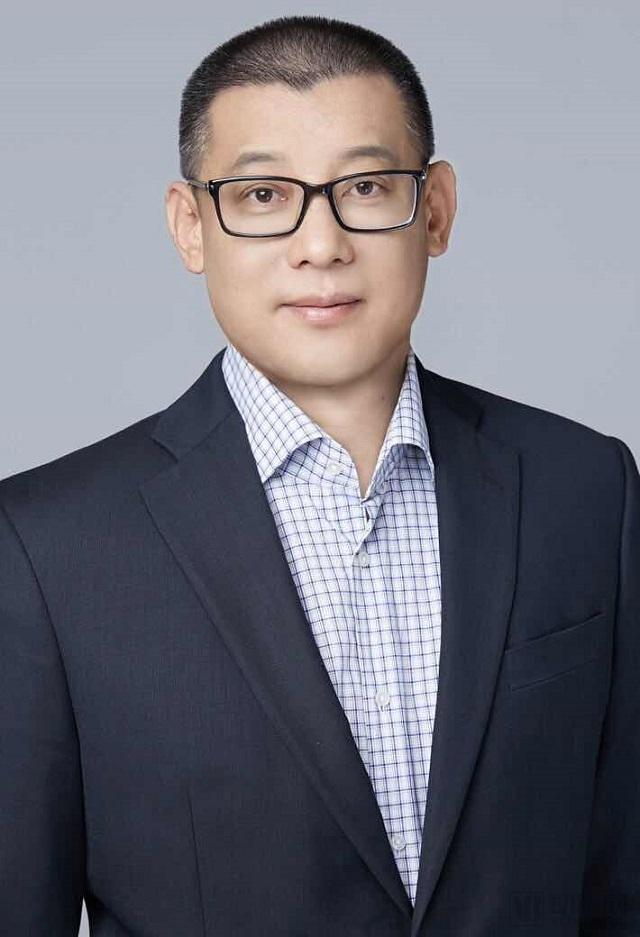
Lin Lin, CEO of Ping An Lenovo Smart Healthcare
In 2018, we rolled up our sleeves and worked hard, achieving remarkable results. Ping An Lenovo Smart Healthcare’s newly developed and launched core business system for large hospitals received widespread acclaim, sequentially earning the trust of major Grade A tertiary hospitals in Hebei, Anhui, Yunnan, Beijing, and other regions. Our market footprint steadily expanded across China. The benchmark hospital informatization projects we built successively received the National Health Commission’s “National Demonstration Hospital for Quality Services” award, becoming models for hospital informatization construction in various provinces.
In 2019, we are filled with confidence and passion. Ping An Group’s strategic investments in the new year have provided Ping An Lenovo Smart Healthcare with a broader platform for growth. Joining hands with Ping An, we will jointly forge a “Ping An–Lenovo Path” to accelerate and lead Chinese medical institutions into a new era of smart healthcare.
Ping An Lenovo Smart Healthcare is delighted to partner with VCBeat, a leading media outlet in the healthcare sector. We will continue to share the latest updates and developments through VCBeat, driving transformation across the entire health industry chain via hospital informatization, advancing China’s smart healthcare capabilities, and creating an enhanced medical experience for patients.
Digitalization and intelligence are undoubtedly the most exciting and profound transformations in the healthcare sector over the coming decades, and they will inevitably accelerate the realization of healthier lives and more inclusive healthcare—two shared ideals and goals of all humanity.
NVIDIA is honored to partner with VCBeat, a leading media outlet in this field, to actively explore and promote the concepts and applications of smart healthcare solutions. By integrating cutting-edge technology with the most valuable medical insights, we aim to serve patients and physicians alike.
Our partnership holds not only immense commercial potential but, more importantly, profound social value. We are thrilled by this opportunity and fully aware of the significant responsibilities it entails.
In 2018, the two parties established a solid foundation for cooperation. We hope to deepen our collaboration in 2019 and make unremitting efforts to advance the overall progress of China’s healthcare industry.
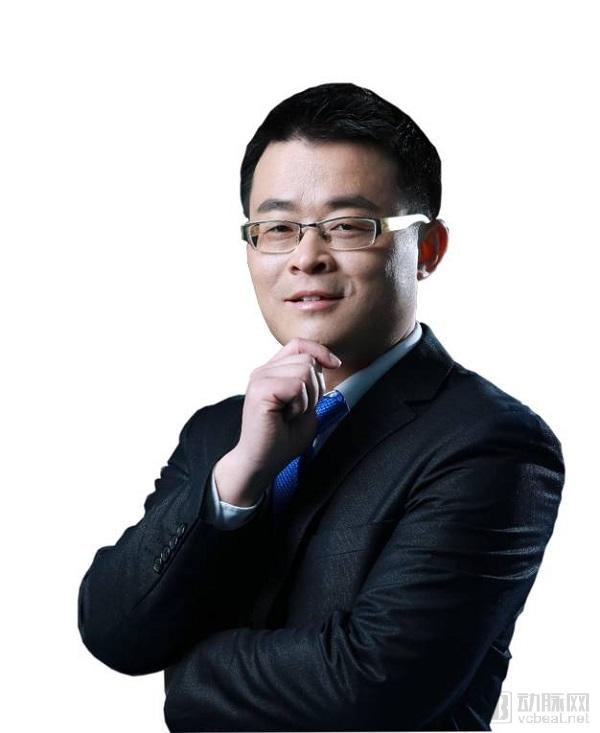
Lu Xiaoliang, Executive President of iFlytek Healthcare
2018 marked the year of comprehensive implementation for iFlytek’s Smart Healthcare solutions. “Smart Doctor Assistant,” which passed the comprehensive written examination of the National Clinical Practitioner Qualification Examination with a score of 456, has provided auxiliary diagnosis for nearly 1,000 types of diseases. It has been deployed in nearly 2,000 primary healthcare institutions, while iFlytek’s smart healthcare products have been implemented in over one hundred Grade A tertiary hospitals across China, cumulatively serving more than 3 million patient visits.
We aim to build a “dream team” of physicians and artificial intelligence. This will empower physicians with average competency to perform at a higher level, while enabling highly skilled physicians to focus on complex cases rather than repetitive, routine tasks. The integration of AI and healthcare is a matter of national significance and public welfare, directly impacting the well-being of every individual. This imbues our industry with profound meaning and substantial responsibility. iFlytek Healthcare will continue to move forward with reverence, leveraging artificial intelligence to support the Healthy China initiative.
Ren Bobing, Vice President of Investment at BV Baidu Ventures
In 2018, I entered this industry as a novice with a sense of awe. While intensively evaluating projects, I continued to learn, yet I always felt that the pace at which my knowledge and cognitive understanding improved could not keep up with the frequency with which I was thoroughly outmatched. This may well be the industry that has been explored for the longest time, involves the most cross-disciplinary technologies, and yet remains the most perplexing.
What left the deepest impression on me was participating in VCBeat’s Gobi Desert trek in October. Together with my teammates, we forged ahead through challenges, reflecting on entrepreneurship, life, and the future of healthcare, all while maintaining optimism and staying true to our original aspirations. This attitude mirrors what I have observed in all the entrepreneurs, professors, physicians, and investors I have met over the past year.
Looking ahead to 2019, I’d like to share a quote with my friends: “Not every search yields an answer, but we grow gradually through the process of searching—that is the true meaning of seeking.”
Looking back at 2018, Microsoft, as a traditional IT vendor, had already completed its digital transformation journey and simultaneously embarked on a disruptive journey to empower Chinese insurance enterprises. The author believes that, in addition to its traditional enterprise productivity suite, Microsoft can enhance productivity in the insurance industry through the following areas.
Online Customer Acquisition. Among Microsoft China’s clients, many boast substantial online user bases, enabling mutual traffic diversion and cross-selling from a B2B2C perspective. Meanwhile, by leveraging Microsoft’s artificial intelligence technologies, customer acquisition efficiency can be enhanced. Additionally, Microsoft actively utilizes its global advantages to assist clients in expanding overseas, thereby boosting the international influence of domestic insurance capital brands.
Knowledge Graph. As the core of the AI platform, Microsoft has signed a framework agreement with China Pacific Insurance (Group) Co., Ltd. for an insurance industry knowledge graph. Through the joint efforts of both parties, this has become the first implementation of an insurance industry knowledge graph in the sector.
Insurance Ecosystem. Microsoft boasts an extensive ecosystem of insurance partners. Leveraging Microsoft’s artificial intelligence and technology, it helps clients achieve precise customer acquisition and improve traffic conversion rates. Meanwhile, it actively integrates with Microsoft’s health and elderly care ecosystem partners, assisting leading insurance companies in strategically developing their elderly care and health ecosystems.
Intelligent Asset Allocation for Insurance Capital. Against the backdrop of robust risk management, Microsoft and Taiping Asset Management have signed a strategic framework agreement aimed at jointly building a globally leading intelligent asset allocation platform for insurance capital.
Finally, I wish everyone a Happy New Year!