

From $10 Billion to Zero: The Theranos Collapse and the Hidden Risks of Stealth-Mode Health Unicorns
Editor’s Note: This article is republished from Silicon Valley Confidential, with authorization granted to VCBeat.
Most of us are familiar with Theranos, the most “notorious” medical startup fraud in Silicon Valley:
Elizabeth Holmes, a gifted young woman who had feared injections since childhood, dropped out of Stanford University at the age of 19 to found Theranos, a blood-testing company with the ambition of revolutionizing blood testing. Theranos claimed that its technology would eliminate the need for venous blood draws, requiring only one or two drops of blood from a fingertip instead, offering a painless, convenient, rapid, and accurate alternative.
The vast size of the blood-testing market, founder Elizabeth Holmes’s quintessential “college dropout-turned-entrepreneur” story, and extensive media hype quickly enabled Theranos to secure backing from a roster of high-profile figures, including Oracle co-founder Larry Ellison, media mogul Rupert Murdoch, and former U.S. Secretaries of State Henry Kissinger and George Shultz. As the company’s valuation soared, Holmes herself became a billionaire, basking in unparalleled prominence.
But it was only after Wall Street Journal reporter Carreyrou published his exposé that Theranos’s technological fraud, fabricated experimental data, and thousandfold inflation of revenue were revealed.
In 2018, Theranos, having exhausted its vitality, ultimately could not escape the fate of closure, and Holmes became a stain on Silicon Valley.
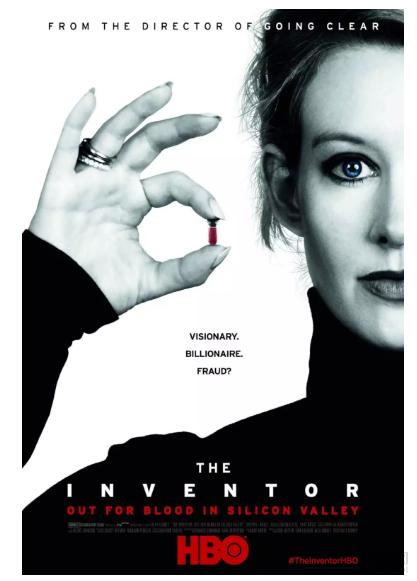
(HBO Theranos Documentary Poster)
However, are the problems with Theranos truly just an isolated incident?
Carreyrou’s initial skepticism toward Theranos stemmed precisely from the founder’s decision to drop out of college at age 19 to start a business. Unlike the founding of Microsoft or Facebook, innovation in the medical field necessitates years of rigorous academic study combined with extensive professional experience. It defied conventional logic that Holmes could launch a startup after only one year of university education—much of which typically consists of introductory coursework during the first two years. In essence, Carreyrou questioned her academic and technical credentials.
But in Silicon Valley, where operating in “stealth mode” is commonplace, how many startups shrouding their technologies in secrecy truly have “substance”?
Last week, the Meta-Research Innovation Center at Stanford (METRICS) pointed out in an article titled “Stealth research: lack of peer-reviewed evidence from healthcare unicorns” (hereinafter referred to as “Stealth research”) that among the many unicorns (i.e., companies valued at over $1 billion) in the healthcare sector, only a handful have published papers. The efficacy of the technologies employed by the vast majority of these unicorns remains within a “black box.”
Let's start by discussing this stealth mode.
In an earlier article, VCBeat introduced this concept: the term is borrowed from military jargon and refers to a strategy whereby startups keep their business plans or key technologies confidential during a certain period, typically the early stages of founding. “Stealth mode” is often adopted to prevent competitors—especially those with greater resources—from learning about your startup idea and racing to develop it first. This approach proves quite useful before a company has gained significant recognition.

(Stealth mode is commonplace in Silicon Valley. Pictured: news coverage of a startup emerging from stealth mode.)
The not-so-rare “stealth mode” has drawn attention in the healthcare sector, primarily because this field is closely tied to safety and health. Although healthcare investments are generally characterized by high risk, substantial capital requirements, and long cycles, the returns can be equally significant. However, “stealth mode,” operating within the chaotic frontier of technology and returns, often lends itself to problems.
According to CB Insights, as of January 2019, there were a total of 314 “unicorn” companies across various countries and sectors worldwide, with a combined valuation of $105.6 billion. VCBeat’s statistics show that within this unicorn club, there were 27 healthcare-related companies, accounting for 8.5% of the total, with a combined valuation of $7.634 billion, representing 7.2% of the total valuation.
The fervor in the healthcare sector is evident. However, a Stanford article points out that, in terms of the quantity and quality of peer-reviewed, published academic papers, the contributions of these unicorn companies are disproportionately low.
The data cited in the Stanford article are not from January 2019, but rather as of July 2018. The authors analyzed 18 existing unicorns and 29 unicorns that had successfully exited. These existing unicorn companies collectively published 425 papers, of which only 34 (8% of the total) were highly cited. In contrast, the successfully exited unicorns published 413 papers, with 47 (11%) being highly cited.

(John P.A. Ioannidis, a Stanford professor and one of the paper’s authors)
The article also points out that more than half of the existing unicorns (10 out of 18) and nearly 40% of the exited unicorns (10 out of 29) do not have a single highly cited paper.
(Editor’s Note: The number of citations a paper receives measures the extent to which it is recognized by other teams or individuals in the same field, serving as an important quantitative indicator for evaluating the academic competence of its authors. A higher citation count generally indicates greater value and recognition, although it is also influenced by whether the research area is currently a hot topic.)
To put it plainly, according to the statistics in this article, when including all past and present unicorn companies in the healthcare sector, only about 10% of the published papers have gained widespread recognition, and half of these unicorns have scored zero on “highly cited papers.”
The article specifically named several companies: Outcome Health from Chicago, GuaHao (Guahao.com) from China, and Oscar Health from New York. Although all three have reached unicorn status—a rare feat among startups—they have not published a single paper. This does not refer to highly cited papers, but rather to the fact that they have not published any paper at all.
Meanwhile, the two unicorns Clover Health and Zocdoc have each published only one paper. Of course, all five companies mentioned above belong to the Digital Health sector, and it remains unclear whether this is related to certain characteristics of the field.
Featured on Stanford’s “red list” are two well-known genetic testing companies: 23andMe and Adaptive Biotechnologies. The former has published 107 papers, while the latter has published 89. Together, these two companies account for half of all publications by healthcare unicorns, further highlighting the relatively low publication output of the other 45 healthcare unicorns.
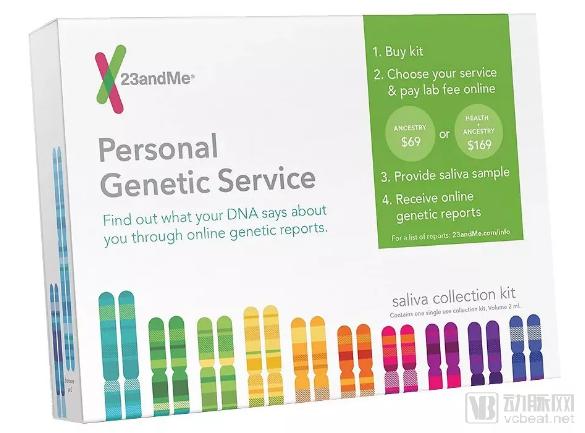
(Among these healthcare unicorns, the gene sequencing company 23andMe ranks first in the number of published papers)
In contrast to these well-funded medical unicorns are the lesser-funded, lower-valued healthcare startups. Unsurprisingly, these companies also have a low volume of published papers.
Of course, startups are not academic institutions after all. It is indeed an overgeneralization to evaluate startups based on the quantity and quality of their published papers. So, how do those healthcare unicorns that have raised substantial funding but have published few or even no papers actually perform? The authors of the article “Stealth Research” conducted several case studies, and the results were somewhat awkward...
Stemcentrx, a San Francisco-based oncology therapeutics company, was acquired by the U.S. pharmaceutical giant AbbVie for $1.02 billion in 2016. Stemcentrx has published 16 papers, one of which is highly cited and describes preclinical studies of monoclonal antibodies in tumor models. However, the efficacy of its targeted antibody-drug conjugate, Rova-T, remains inconclusive to date, and the FDA recently mandated the delay of the release of its Phase II clinical trial results.
In addition to those forcibly halted by the FDA, there are also unicorns that have admitted to fabricating data.
Acerta Pharma, a San Francisco-based startup specializing in oncology and autoimmune diseases, was acquired by the pharmaceutical giant AstraZeneca for $7.3 billion. Recently, it received accelerated approval for using “acalabrutinib” to treat the rare malignancy “mantle cell lymphoma.” The startup had previously published nine papers, one of which was highly cited. Embarrassingly, however, before further clinical trials could be approved, AstraZeneca acknowledged that data fabricated by Acerta, the acquired startup...
Intarcia, a biopharmaceutical company specializing in the treatment of long-term chronic diseases, once became the most highly valued unicorn in the healthcare sector with a valuation of $5.5 billion. The company has published no fewer than six papers; however, none of these six papers have been cited more than 50 times (Editor’s note: The threshold for what constitutes a high number of citations varies by discipline, but 50 citations is not considered high; it is not uncommon for some papers to be cited over 100 times).
However, the FDA has recently rejected Intarcia’s mass-production plan for “ITCA 650,” a matchstick-sized subcutaneously implantable “drug pump” developed for the treatment of type 2 diabetes. Intarcia has not disclosed the reasons for the rejection, how it intends to address the issues, or what subsequent measures it will take.

(ITCA 650. Image from The Business Journals)
Of course, these few examples are not representative of the whole. Healthcare is a sensitive field closely tied to public health, characterized by high professional barriers and the not-uncommon phenomenon of founders operating under the radar. How, then, should one assess whether a startup is trustworthy?
Some companies take an alternative approach: “If you don’t have enough publications, make up for it with experts.” Simply posting photos of well-known experts in the field on their websites gives them a sense of reassurance. Of course, this practice is common among the myriad and mixed-quality startups in Silicon Valley and is not unique to the healthcare sector. But does having renowned experts on board truly guarantee quality?
The authors of the article “Stealth Research” compiled statistics on the core members of these healthcare unicorn companies, including founding teams, key management personnel, board members, and advisors. They then cross-referenced these individuals with the list of highly cited authors in Scopus, the world’s largest database of abstracts and citation information for scholarly literature. The results revealed that among the 18 unicorns, founders from 13 companies appeared on the “highly cited” list, whereas in 10 of the 18 companies, neither key management personnel nor board members were highly cited authors.
Isn’t this somewhat similar to the star-studded advisory board of Theranos back in the day, which included many prominent figures from American politics and business, yet not a single scientist from the relevant fields?
Moreover, although many authors of highly cited papers serve as scientific advisors to unicorn startups, the specifics of their “advisory” roles and responsibilities remain highly ambiguous. It is unclear to outsiders whether these experts are merely figureheads or are deeply involved.
Given the current landscape, where “stealth mode” is commonplace and founders in the healthcare sector need only demonstrate their technology privately to investors, rarely subjecting it to peer validation, such opacity can easily lead to problems. Bridging the gap between medical innovation and the public may require not only the scrutiny of regulatory bodies like the FDA and the keen eye of investors, but also more professional and in-depth review by academic peers. After all, the cautionary tale of Theranos falsifying blood test data feels as if it happened just yesterday.