

Strong Policy Enforcement, Smooth Healthcare Reform: How Huangzhou Achieved an 18% Medical Insurance Surplus by Steering Patients from Big Hospitals to Primary Care
Rome was not built in a day, and healthcare reform cannot be achieved overnight. As a systemic project closely tied to people’s livelihoods, healthcare reform in any country is a journey fraught with challenges. After reviewing the entire process of healthcare reform in Huangzhou, we are left with only one sentiment: it has been arduous.
In recent years, we have witnessed the benchmarking effects of initiatives such as the “Sanming Healthcare Reform” and the “Luohu Model.” In reality, however, whether at the scale of a major city or a small village, healthcare reform practitioners must identify both the commonalities and unique characteristics of their local contexts. Therefore, healthcare reform solutions must be tailored to local conditions in each region.
Huanggang City is located in eastern Hubei Province and currently administers one district, two county-level cities, seven counties, and the Longganhu Management Area (at the county level). The “one district” refers to Huangzhou District, which comprises 95 villages and 42 communities, with a total population of nearly 400,000. According to the Huanggang City Regional Health Plan (2016–2020), Huanggang faces several challenges, including insufficient total health resources coupled with suboptimal structure and low quality, an imperfect mechanism for division of labor and collaboration, inadequate support from development factors, and insufficient informational infrastructure support.
The same holds true for Huangzhou District. In 2017, data from the district’s medical insurance program showed that patients referred to outside hospitals accounted for 8% of all hospitalizations covered by medical insurance, yet they incurred the highest per-capita costs, representing 24% of total inpatient expenditures under the scheme. Tiered diagnosis and treatment and cost containment within medical insurance are key objectives of China’s new healthcare reform. Given the limited growth in overall medical insurance budgets, improving the quality of medical services has become a pressing challenge for Huangzhou’s healthcare reform efforts.
In late 2017, Huanggang City designated Huangzhou District as a pilot zone for healthcare reform. After more than a year of exploration, various reform objectives were rapidly advanced, giving rise to a highly effective model known as the “Huangzhou Model.” In August 2019, a reporter from VCBeat (WeChat ID: vcbeat) visited this pilot zone and conducted field research at village clinics, community health service centers, secondary general hospitals, and Grade A tertiary hospitals, thereby gaining a deeper understanding of the “Huangzhou Model.”
The first step in Huangzhou’s healthcare reform was the establishment of Huangzhou General Hospital, which integrated resources from 17 public medical institutions and 98 village clinics across the district to form a tightly knit medical consortium.
The original intention behind establishing medical consortia is to integrate healthcare resources, enabling medical institutions at all levels to fulfill their respective roles, facilitate the downward flow of medical resources, and achieve goals such as implementing primary care diagnosis at the grassroots level. Furthermore, it aims to enhance the overall medical capacity in the local area, reduce healthcare costs, and achieve effective control of health insurance expenditures.
How Do Primary Healthcare Institutions “Thrive”?
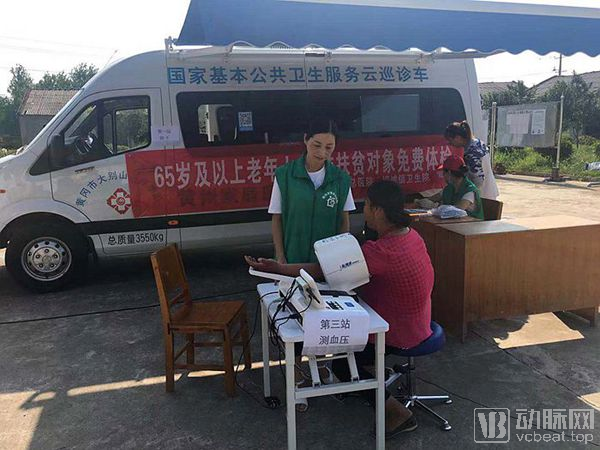
At the entrance of the Wailing Village Clinic in Ducheng Town, Huangzhou District, health check-up services for local villagers are drawing to a close, as a mobile medical examination vehicle completes its mission.
“The Cloud Mobile Clinic has greatly facilitated family doctor contracting and public health services; tasks that previously took several days can now be completed in a single morning,” Xie Xiaomei, Director of Dutang Town Health Center, told VCBeat. According to her, the Cloud Mobile Clinic supports 7 major categories comprising 53 specific tests and examinations, effectively bringing the diagnostic capabilities of a secondary hospital to villagers’ doorsteps. It regularly visits villages to provide health consultations, appointment-based referrals, chronic disease follow-up, and other services. With the assistance of an all-in-one contracting kiosk, family doctors can simultaneously handle family doctor contract signings and basic public health services, which include over a dozen basic tests, paperless contracting, and electronic follow-ups.
Wailing Village in Huangzhou District has a rather unique demographic structure. The village currently has a population of 1,737. Due to its low-lying terrain, most residents relocated to the town after the 1998 Hubei floods, leaving behind primarily elderly and vulnerable individuals. Wu Qigang, aged 46, is the sole village doctor in Wailing Village. He faces intense work demands and significant pressure, making digital tools highly practical for his practice. “In the past, I would carry a sphygmomanometer, a stethoscope, and a stack of data forms when making house calls. After conducting basic examinations during the day, I had to spend my evenings entering the collected data into a computer, which was extremely labor-intensive. Now, with just one device, I can perform examinations and automatically record data by simply scanning an ID card, which is much more convenient.” Wu Qigang is clearly satisfied with the adoption of the all-in-one health kiosk.
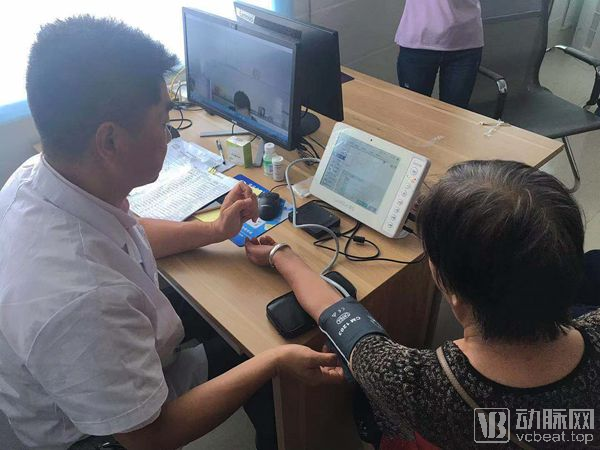
Wu Qigang is the youngest village doctor in his locality and one of the few village doctors serving the 98 village clinics in Huangzhou District. It is hard to imagine that, in the past, his income from a whole morning of house calls was sometimes less than 10 yuan. To address the shortage of grassroots medical personnel and issues related to performance incentives, Huangzhou District has delegated the management authority for middle-level cadres of district-level hospitals to the Huangzhou General Hospital. The hospital staffing quotas and positions across medical institutions are now centrally managed and allocated by the General Hospital. Personnel at township health centers and community health service centers operate under a “district-managed, township-utilized” model, promoting the rational mobility of healthcare talent.
Since 2017, Huangzhou District has recruited a total of 51 talents. The proportion of senior-level positions for professional and technical personnel in healthcare has been increased to 8%, with individuals holding associate senior titles or above being appointed immediately upon evaluation, in principle. Meanwhile, the district has established a “one-on-one” exchange system for medical staff between district-level and township-level institutions, as well as a “township-hired, village-deployed” system for village doctors.
Specifically, Huangzhou General Hospital arranged for medical staff from township health centers and community health service centers to receive advanced training at district-level medical institutions, while simultaneously assigning medical staff from district-level institutions to work at the grassroots level. This approach not only enhanced the specialized professional skills of grassroots personnel but also ensured that the technical strength of grassroots medical services remained undiminished. Staff members at township health centers received township work subsidies. In 2018, the locality publicly recruited 21 village doctors, incorporated them into the staffing establishment of township health centers for unified performance evaluation, provided them with compensation and benefits comparable to those of township health center staff, and assigned them to practice in village clinics.
In addition, the family doctor contract service model in Huangzhou District is also a key measure to revitalize primary healthcare. Since 2018, Huangzhou General Hospital has dispatched a total of 37 experts to provide services at the grassroots level, accounting for 27.01% of its total medical expert workforce. These experts dedicate one-third of their time to serving grassroots communities, having provided cumulative services to over 33,800 patient visits.
A total of 46 family doctor teams have been established across Huangzhou District, achieving an 88% contract service coverage rate for key populations. Additionally, 16 family doctor workstations have been sequentially set up in communities within the jurisdiction, with experts from secondary-level hospitals and above and family doctor contract teams assigned to provide community-based services.
According to official statistics, in the first quarter of 2019, the standardized management rate for hypertensive patients in Huangzhou District reached 75.40%, and the blood pressure control rate among the managed population reached 57.52%, representing year-on-year increases of 2.7% and 10.25%, respectively. The standardized management rate for patients with type 2 diabetes across the district reached 71.79%, and the blood glucose control rate among the managed population reached 57.50%, representing year-on-year increases of 4.69% and 12.03%, respectively, compared to the same period in 2018.
Meanwhile, patients’ medical expenses have decreased significantly. From January to May 2019, the average outpatient cost per visit and the average inpatient cost per admission across all medical institutions in the region were RMB 216.65 and RMB 4,702.14, respectively, representing year-on-year decreases of 6.31% and 5.82% compared with the same period in 2018.
“The most significant change in Huangzhou District before and after the healthcare reform is that primary care has been revitalized. Patients with chronic diseases have been transferred to community health service centers and family doctor workstations, resulting in a 30%-50% increase in primary care service capacity and a significant reduction in related costs,” Yi Peng, Director of the Huangzhou District Health Commission, told VCBeat. He also stated that after consolidating previously fragmented public medical institutions into a tightly integrated medical consortium, Huangzhou District has effectively reduced the difficulties in coordination and management, enabling centralized oversight through the general hospital.
How to Ensure Healthcare Service Capability?
Huangzhou General Hospital has integrated 17 medical institutions. As no single hospital possesses strong comprehensive capabilities, establishing a major-discipline medical service mechanism is particularly important to ensure the homogenization of medical services across the entire district.
As the only Grade 3A hospital in the district, the Municipal Hospital of Traditional Chinese Medicine (TCM) focuses on TCM practices, TCM-based treatments, and TCM rehabilitation, while extending its industrial chain to develop the TCM industry. The District People’s Hospital primarily provides services for emergencies, critical and severe cases, as well as general internal medicine and general surgery. Meanwhile, departments such as anesthesiology, oncology, and interventional radiology across various medical institutions have been consolidated, integrating internal and surgical resources into the District People’s Hospital. The District Maternal and Child Health Hospital leads the broader discipline of women’s and children’s health, while the Hospital of Integrated Traditional Chinese and Western Medicine, Kangtai Psychiatric Hospital, and Cerebrovascular Disease Hospital each focus on their respective specialized fields and disease-specific care. Currently, the General Hospital has identified the first batch of eight major disciplines and has launched a multidisciplinary diagnosis and treatment mechanism, establishing a corresponding performance evaluation system for these major disciplines.
Furthermore, the General Hospital, building on its robust disciplinary framework, has adopted approaches such as co-developing specialties, providing clinical mentorship, offering professional guidance, conducting teaching rounds, and fostering collaboration in research and projects. These efforts aim to facilitate the downward flow of high-quality medical resources to district-level hospitals and promote the standardized development of primary healthcare institutions.
The major specialties conduct remote diagnostics online, centrally formulate treatment plans, achieve homogenization of medical services provided by healthcare institutions at all levels, and implement mutual recognition of examination and test results. Offline, in addition to rotating expert consultations, primary hospitals are staffed with resident physicians at the attending level or above, serving the local population while helping to improve the quality of local healthcare. By combining online and offline services, patients are guided to seek initial consultation at primary care facilities, thereby reducing medical costs.
The Huanggang Zhiying Medical Imaging Diagnostic Center we visited is a typical application scenario for the formation of university-affiliated departments, constructed by third-party social capital. The center employs approximately 50 radiologists and provides services including cloud platforms, cloud-based diagnosis, cloud film, cloud education, and sharing of imaging equipment. After hospital radiologists complete the examinations, the images are transmitted to the imaging center for centralized diagnosis.
According to the person in charge of the center, they currently review approximately 1,000 images per day, which is more than sufficient to meet the needs of Huangzhou District. By integrating radiology resources, the center can provide image interpretation and diagnostic services for digital films from Huangzhou District, Huanggang City, and even other regions across China. At present, all image reviews and diagnoses at the center are performed manually; however, efficiency could be further enhanced with the future addition of AI assistance.
How to Build an Information Technology Support System?
The relationship between the construction of medical consortiums and their information support systems is analogous to that between hardware and software. Since 2018, Huangzhou District has launched the informatization initiative for its medical consortium, jointly led by the district and Weiyi Group, to rebuild an information support system aligned with the consortium’s management structure and operational mechanisms.
Step 1: Huangzhou District will uniformly replace and upgrade the existing primary healthcare information systems, integrating the dedicated healthcare network, the dedicated medical insurance network, the public internet, and the cloud connectivity of Huangzhou General Hospital. The “integration of four networks” is also a key component of this IT support framework.
Zhang Daxing, Executive Director of Information Technology at Huangzhou General Hospital, told VCBeat that in the past, village doctors’ computers were connected to three separate networks: the dedicated healthcare network, the dedicated medical insurance network, and the public internet. All required end-to-end IP communication, making actual operations extremely cumbersome. Currently, the hospital has established cloud links internally and partnered with China Telecom to build a cloud data center, effectively creating a private cloud. This private cloud covers all front-end systems, meaning that any computer in the hospital and any computer used by village doctors can be interconnected through just one Ethernet cable. Described by Zhang Daxing as the “Three Ones” project, this initiative enables connectivity via a single cable, access through a single interface, and completion of all tasks in a single operation.
Following the implementation of the “Four-Network Integration,” provincial and municipal tertiary hospitals, primary healthcare institutions, the Health Commission, the Healthcare Security Administration, the Finance Bureau, and other relevant entities have achieved interconnectivity among various health information systems, with all data stored on the National Population Health Information Platform.
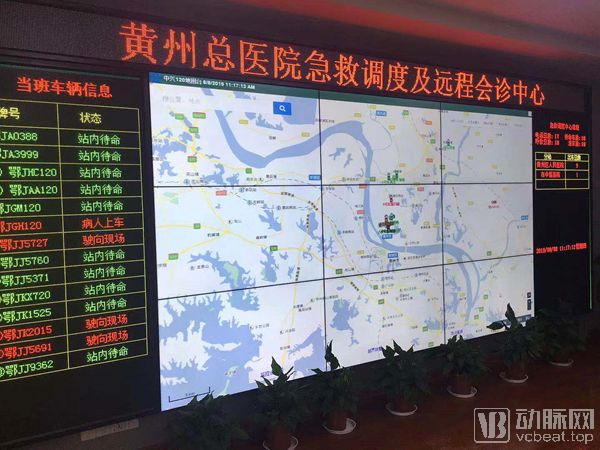
Building on this foundation, Huangzhou District has also established intelligent tiered diagnosis and treatment workstations that cover all clinical and public health tasks performed by primary care physicians. These workstations integrate systems such as the family doctor contract management system, public health services, and disease control and management. Additionally, a comprehensive suite of hardware and software—including PC terminals, mobile devices, cloud-based portable diagnostic kits, and cloud-enabled mobile clinic vehicles—is provided to primary care physicians, enabling paperless family doctor contracting and allowing them to complete their work more efficiently. Furthermore, Huangzhou General Hospital has integrated emergency dispatch with its remote consultation center. This unified platform monitors and coordinates the status and deployment of all emergency ambulances across the district, ensuring that ambulances can be dispatched and arrive at the scene without delay when remote patients require emergency transport.
In alignment with its digitalization initiatives, Huangzhou District has currently deployed 9 cloud-based mobile clinic vehicles, 98 all-in-one kiosks for contracted services, and nearly 100 remote care all-in-one devices. Leveraging the National Population Health Information Platform and achieving interconnectivity of health data across the district, Huangzhou District can conduct big data analytics to guide health management in response to shifts in disease spectra, thereby realizing the goal of “prevention before treatment.”
Where does the enthusiasm come from?
Healthcare reform is not an isolated initiative; it requires the coordination of resources from all stakeholders, with the Healthcare Security Administration playing a pivotal role in “managing the purse strings.” To incentivize hospital directors and physicians, Huangzhou District issued the Notice on the Implementation Plan for Deepening the Reform of Basic Medical Insurance Payment Methods in 2018 and the Notice on Issuing the Implementation Opinions on Further Advancing the Reform of Medical Insurance Payment Methods in Huangzhou District in 2019.
In accordance with the requirements of the “Notice,” a management model characterized by “full upfront payment, whole-process management, reasonable sharing of excess expenditures, and retention of surpluses” is implemented for medical insurance funds. Medical insurance agencies are required to consolidate the fund revenue projected at the beginning of the year into a unified package and disburse it in timely installments as advance payments to the General Hospital, which shall internally allocate and utilize these funds according to agreed-upon protocols. Year-end assessment and settlement will be conducted, with any surplus distributed proportionally by the General Hospital for its autonomous discretion. Surplus medical insurance funds will be directly incorporated into the hospital’s medical service revenue and allocated as health promotion expenses. Medical insurance agencies must exercise comprehensive oversight over the fully prepaid funds to ensure the safe use of medical insurance funds. The issuance of this policy has directly prompted medical institutions to proactively reduce medical service fees and control costs, shifting from passive cost containment to active cost management, thereby eliminating the problem of “over-treatment.”
We understand that the Healthcare Security Administration currently prepays the entire healthcare security fund, excluding the 10% risk reserve, to Huangzhou General Hospital on a per-capita basis. This transforms the healthcare security fund from hospital revenue into hospital costs, thereby fully incentivizing the general hospital to control expenses. The general hospital has entrusted all staff involved in healthcare security management to the Healthcare Security Administration for centralized administration and allocation. The Administration conducts performance evaluations, based on which the general hospital disburses performance-related compensation. This approach ensures that although the funds are fully prepaid, the Healthcare Security Administration maintains end-to-end management oversight.
To support this initiative, the General Hospital has established a streamlined referral mechanism and implemented payment models primarily based on diagnosis-related groups (DRGs) and per-diem rates for inpatient care, as well as capitation for general outpatient services. Prepayment systems are being gradually extended to cover medical services such as telemedicine, day surgery, day wards, and contracted family doctor services. Meanwhile, Huangzhou District has completed the selection of single-disease entities subject to price caps and their corresponding pricing standards. Leveraging digital tools, the district has also optimized the pooling fund management for resident basic medical insurance outpatient care and conducted precise analyses of health insurance fund flows.
As the use of medical insurance funds became increasingly rational, the surplus reached 18% in the first quarter of 2019.
The Long Road of Healthcare Reform Has Just Begun
The Huangzhou Healthcare Reform is a model that activates endogenous momentum and has already achieved phased results. Both grassroots healthcare capabilities and health insurance cost containment have seen significant improvements. If the Huangzhou healthcare reform process is condensed, its core consists of three parts: a tightly integrated medical consortium, an information technology support system, and a health insurance payment model featuring “full prepayment with retained surpluses.”
Although the model appears clear-cut, its implementation has been extremely arduous, with the greatest challenge lying in the coordination and allocation of resources across various stakeholders. During the transition of mindsets and the rollout of operations, bottlenecks in policy execution are inevitable. In response, Huangzhou District has demonstrated a “firm hand” in enforcing policies from top to bottom, and Huangzhou General Hospital has implemented a “five-unified management” system for its internal medical institutions, covering finance, logistics, human resources, clinical operations, and equipment.
Zhang Jin, Secretary of the Party Leadership Group of the Hubei Provincial Health Commission, once summarized Huangzhou’s close-knit medical consortium as featuring “strong coordination, seamless vertical integration, flexible mechanisms, and deep relationships.” He also proposed three areas for optimization: first, finalizing the top-level design; second, completing disease spectrum screening; and third, ensuring effective paired assistance.
“The overall impression is quite positive. It is truly no small feat to have achieved such results in such a short time, particularly given the high priority attached by the municipal party committee and government, as well as the district party committee and government, to the development of medical consortia. There are still many areas that require improvement, and we aim to achieve full coverage across the province this year,” Zhang Jin added.
As described by a participant in the Huangzhou medical reform: “We have only taken 3,000 steps of the Long March; there is still much to be advanced.”