

Shenzhen Beisen Medical Secures China's First AI-Powered Mobile App Medical Device Approval for Neonatal Jaundice Monitoring
VCBeat (WeChat ID: vcbeat) has learned that Shenzhen Beishen Medical has obtained the medical device registration certificate for its “Mobile Software for Neonatal Jaundice Screening” issued by the Guangdong Provincial Medical Products Administration. This is currently the only known registration certificate for a clinical decision support software medical device officially approved for market launch after the implementation of the new classification catalog. The project has also set multiple precedents, including being China’s first medical device registration certificate granted for a mobile application (APP)-based medical device, and the first artificial intelligence medical device to complete Good Clinical Practice (GCP) clinical trials.
This registration certificate marks a milestone in China’s diagnosis and treatment of neonatal jaundice, serving as an affirmation and encouragement for the Beishen Medical team’s Jaundice Project Group, which has dedicated four years to quiet perseverance and focused breakthroughs, and it also represents market approval granted by the industry regulatory authorities.
Four Years in the Making
Neonatal jaundice is a complex physiological and pathological phenomenon. Its diagnosis and treatment are focal points of widespread concern among pediatricians worldwide, while out-of-hospital screening and follow-up for neonatal jaundice remain significant challenges facing the global academic community in neonatology. Particularly in developing countries, neonatal jaundice is the leading cause of neonatal mortality in Africa, and the Guangxi and Guangdong regions of China are also high-prevalence areas for this condition. There is an urgent need within the global pediatric medical community for a non-invasive, simple, reliable, cost-effective, and easily scalable technological approach to screen for neonatal jaundice.
Founded in 2015, Beishen Medical has creatively addressed this global challenge by leveraging smartphone and artificial intelligence technologies, thereby rapidly securing an invention patent from the China National Intellectual Property Administration, special approval for innovative medical devices from the National Medical Products Administration, and support from the National Natural Science Foundation of China.
Throughout its journey, the Beishen Medical team has navigated every stage from conceptualization and project initiation, technical implementation, product translation, clinical validation, regulatory submission, GCP trials, to market approval. Notably, during the pre-clinical research phase, the team received attention and guidance from numerous experts in the field of pediatrics, including Professor Luo Xiaoping, Vice Chairman of the Pediatric Branch of the Chinese Medical Association; Professor Du Lizhong, Head of the National Neonatology Group of the Chinese Medical Association; Professor Han Shuping from Nanjing Maternity and Child Health Care Hospital Affiliated to Nanjing Medical University; Director Gao Xiangyu from Xuzhou Central Hospital Affiliated to Southeast University; and Professor Bhutani from Stanford University.
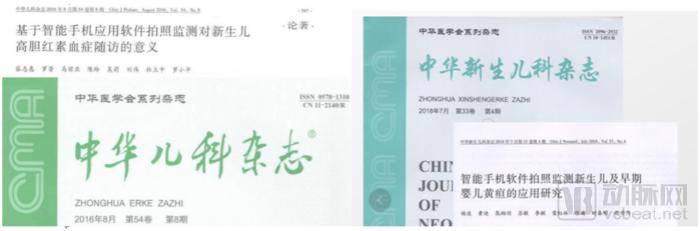
In early 2016, the project completed its first phase of multicenter clinical trials. The research paper was published in the August 2016 issue of the Chinese Journal of Pediatrics, and a more detailed study was published in the July 2018 issue of the Chinese Journal of Neonatology. Additional clinical research papers are scheduled for subsequent publication. Furthermore, the paper on “Photographic Detection Technology for Neonatal Jaundice” by Beishen Medical was selected for an oral presentation at the 2016 Pediatric Academic Societies (PAS) Meeting in the United States, making it the first domestic mobile health project to be presented on an international academic platform.
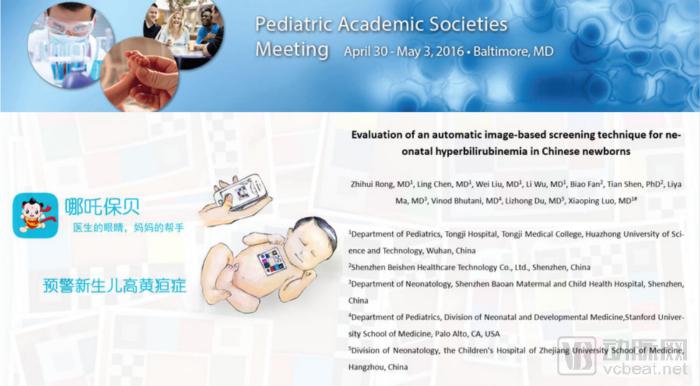
Beishen Medical’s paper on “Photographic Detection Technology for Neonatal Jaundice” was presented at the 2016 Pediatric Academic Societies (PAS) Meeting in the United States, a premier global academic conference in pediatrics.
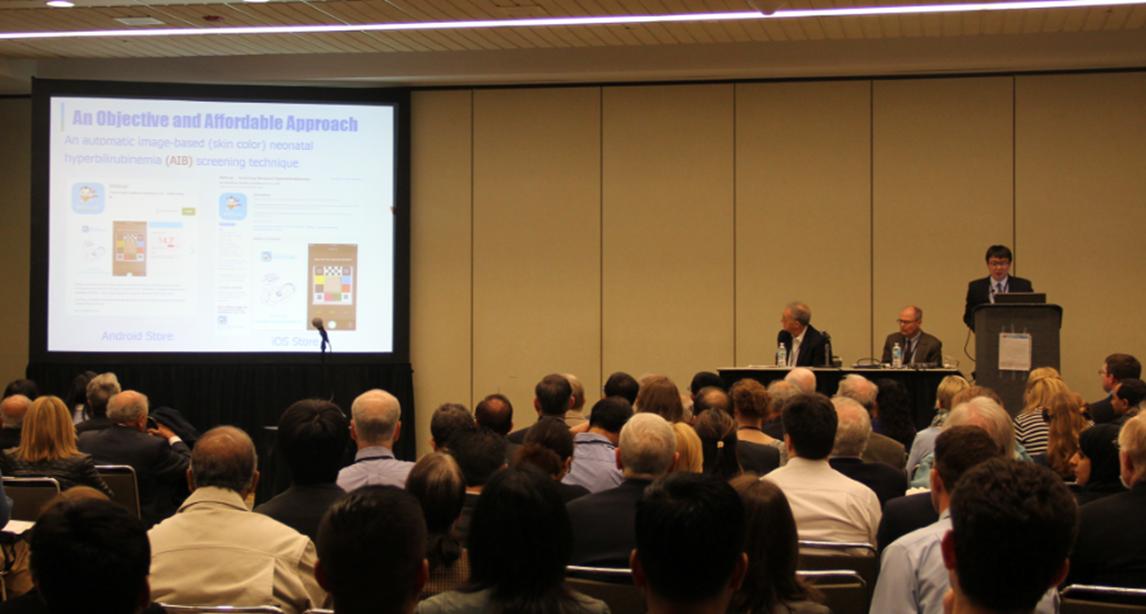
Invited to deliver an academic lecture at the 2016 American Academy of Pediatrics National Conference, it became the first mobile health project in China to present on an international academic platform.
Submitted for “Special Approval for Innovative Medical Devices” at the end of 2016
As a fully independent innovation project, the “Neonatal Jaundice Detection Mobile Application” applied for the “Special Approval Procedure for Innovative Medical Devices” in late 2016 and obtained the “Notice of Classification Determination” from the National Medical Products Administration (NMPA). Over the past three years, Beishen Medical has strictly adhered to the statutory medical device registration procedures, completing a series of processes including product registration testing, Good Clinical Practice (GCP) clinical trials, corporate quality system audits, on-site clinical trial inspections, expert review meetings for product registration, technical evaluation, and administrative approval, ultimately securing final approval.
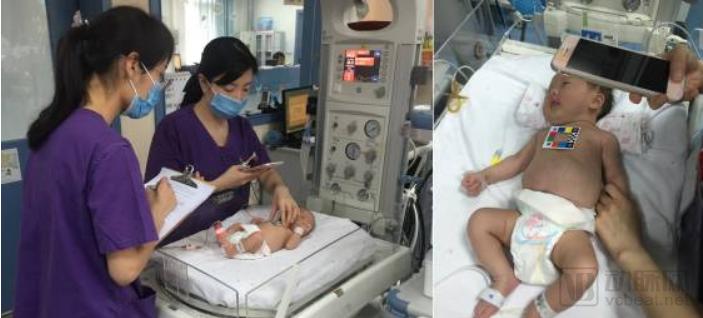 Collaborated with 1,000+ partner hospitals in China to conduct big data validation trials for accuracy
To date, Beishen Medical’s partner hospitals are distributed across China, serving millions of newborn families and accumulating 4 million registered users. Among these, the company maintains close collaborations with more than 30 provincial- and municipal-level key hospitals nationwide to conduct big data research on neonatal jaundice. These partners include Peking Union Medical College Hospital, Nanjing Maternity and Child Health Care Hospital, Children’s Hospital of Fudan University, Hainan Women and Children’s Medical Center, Tongji Hospital Affiliated to Huazhong University of Science and Technology, The Children’s Hospital of Zhejiang University School of Medicine, and Shenzhen Bao’an District Maternal and Child Health Hospital, among others. This initiative holds exceptional significance for reducing the incidence of bilirubin encephalopathy in newborns in China, improving screening for hyperbilirubinemia, and informing the formulation of healthcare policies by relevant authorities.
In recent years, the concept of “medical AI” in China has garnered significant attention. However, a substantial portion of these initiatives lacks the potential for medical device development and is unable to obtain market authorization. In contrast, those that successfully secure regulatory approval are poised to attract capital investment and stand out from the competition.
Nezha Baobei App Surpasses 400,000 Users, AI Technology Assists in Diagnosing Neonatal Jaundice