

Ten Biotech Firms Pivoting to Hong Kong IPO: Profiles and Pipeline Highlights
In 2018, a major event in the capital markets triggered a dramatic shift in the biopharmaceutical sector: companies that had originally planned to list on the NASDAQ in the United States abruptly terminated their IPO processes and flocked to the Hong Kong Stock Exchange instead. WuXi AppTec delisted from the U.S. market and returned to China through a three-way spin-off, while BeiGene pursued a secondary listing in Hong Kong. Even overseas companies such as Stealth BioTherapeutics and GRAIL were drawn to the Hong Kong market.
The Hong Kong stock market allows unprofitable biotechnology companies to go public, a development that actually garnered widespread attention as early as 2017.
As early as June 2017, the Stock Exchange of Hong Kong (SEHK) mentioned in two consultation papers that it would broaden listing channels for Hong Kong’s capital market. Six months later, the SEHK officially announced its decision to implement a plan to expand the existing listing regime, allowing biotech issuers not yet profitable, as well as issuers from emerging and innovative industries with weighted voting rights (WVR) structures, to list on the Main Board, subject to additional disclosures and safeguard measures. In February 2018, the SEHK released a consultation paper on the Listing Regime for Companies from Emerging and Innovative Industries, proposing amendments to the Listing Rules. In March of the same year, the SEHK also hosted the inaugural “Hong Kong Biotech Summit” to build momentum for attracting biotech companies to list.
Traditional enterprises undergo slow transformation, while fully innovative companies are unable to seek public listings domestically. This has been a major dilemma for Chinese biopharmaceutical companies, with only a few leading firms able to list on the NASDAQ. The opening of the Hong Kong market is akin to having a “NASDAQ” right at the doorstep of domestic innovative biopharmaceutical entrepreneurs.
Among biotech companies, Ascletis Pharma was the first to file its prospectus and listed on August 1, 2018, becoming the first pre-revenue biotechnology company to go public on the Hong Kong Stock Exchange (HKEX). However, the wave of biotech firms listing in Hong Kong coincided with a downturn in the HKEX market, where stock prices cumulatively fell by 24% from their peak. Healthcare stocks such as Ascletis, BeiGene, and Ping An Good Doctor all broke their issue prices without exception, while non-healthcare companies like Dreamsky Technology and Meituan Dianping were not spared either.
This situation eased with the listing of Innovent Biologics, whose stock price rose 19% on its debut day, lifting the shares of Ascletis Pharma and BeiGene.
Although the share prices of most companies remain below their initial public offering (IPO) prices, this has not deterred a wave of enterprises from listing on the Hong Kong Stock Exchange. To date, four companies have successfully listed in Hong Kong: Ascletis Pharma, BeiGene, Innovent Biologics, and Junshi Biosciences. Other biotech firms that had initially planned to list in the United States, such as Ascentage Pharma, MicuRx Pharmaceuticals, and CStone Pharmaceuticals, have also shifted their focus and filed prospectuses for listings in Hong Kong.
It is certain that, thanks to the opening of the Hong Kong stock market, biopharmaceutical companies have ushered in unprecedented opportunities. Never before have so many pre-revenue biotech firms initiated IPO procedures in a single year. So, which companies are poised or expected to list on the Hong Kong Stock Exchange in 2019? We have conducted an analysis on this matter.
On November 11, 2018, the Hong Kong Stock Exchange published CStone Pharmaceuticals’ listing application. On February 13, 2019, CStone Pharmaceuticals-B (02616) held its global offering conference, planning to offer approximately 186 million shares globally, with its shares expected to be listed on February 26.
CStone Pharmaceuticals is an innovative biopharmaceutical company focused on the development of tumor immunotherapy drugs and combination therapies. Just two years after its establishment, this young company secured a total of $410 million in financing, with its Series B round setting a new record for biomedical fundraising in China at that stage. Its investors include top-tier global investment institutions such as the Government of Singapore Investment Corporation (GIC), ARCH Venture Partners, Sequoia Capital, and Hillhouse Capital.
The core of CStone Pharmaceuticals’ R&D strategy is combination therapies in tumor immunotherapy. Beyond integrating immunotherapy with conventional chemotherapy and targeted therapies, the company believes that any regimen capable of improving patient survival rates and quality of life is worth pursuing.
Meanwhile, CStone Pharmaceuticals is one of the companies with the fastest domestic progress in its PD-L1 drug project. The Phase I clinical trial for this project has been completed, and it will soon enter pivotal Phase II clinical studies. In addition, CStone Pharmaceuticals has previously disclosed that it would file an Investigational New Drug (IND) application for CS1001 in the United States. As a result, CS1001 has become a global product.
In terms of R&D investment, its expenditures for 2016, 2017, and the first half of 2018 were RMB 247 million, RMB 213 million, and RMB 509 million, respectively; the corresponding losses amounted to RMB 253 million, RMB 343 million, and RMB 744 million. The company’s three largest shareholders are WuXi Ventures, Zhengze Yuanshi and its affiliates, and Graceful Beauty Limited, with shareholding ratios of 39.31%, 18.30%, and 19.72%, respectively.
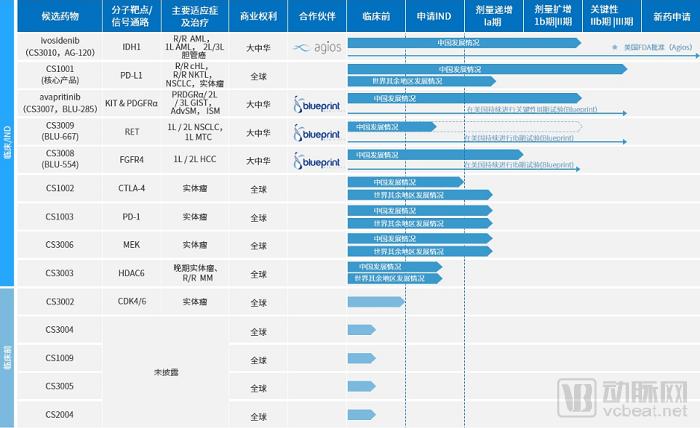
Image from CStone Pharmaceuticals' official website
Jiang Ningjun, Chairman and Chief Executive Officer of CStone Pharmaceuticals, stated that the company conducted 11 clinical trials in 2018 and will conduct 28 clinical trials in the second half of 2019, including 12 trials on combination therapies.
CanSino Biologics, founded in Tianjin in 2009, is a vaccine research and development company whose founding team consists of four former executives from multinational pharmaceutical corporations.
CanSino’s product pipeline comprises 16 products, among which four novel vaccines are undergoing Phase I–III clinical trials in North America and China, with multiple candidate vaccines in preclinical studies.
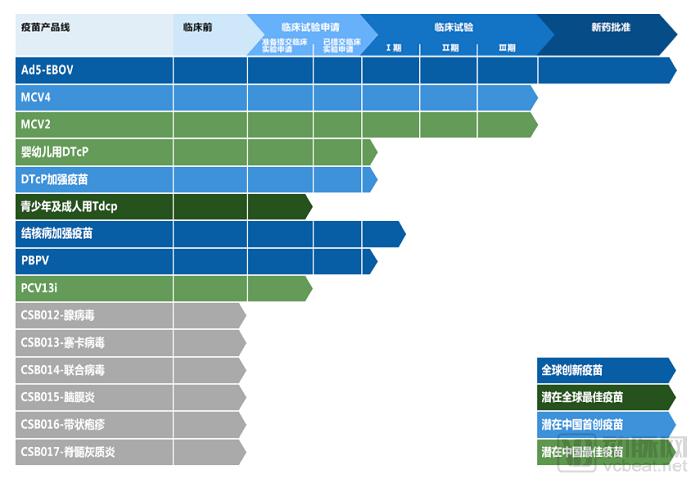
Image from the official website of CanSino Biologics
In addition to its globally innovative vaccines, such as the recombinant pneumococcal protein vaccine and the recombinant tuberculosis vaccine, its flagship product—the recombinant Ebola virus disease vaccine (a globally innovative vaccine)—was approved by the former China Food and Drug Administration in October 2017, making it the world’s first approved novel drug for an Ebola virus vaccine.
The company has two meningococcal conjugate vaccines (MCV)—MCV2 and MCV4—both of which have completed Phase III clinical trials and are preparing to submit new drug applications.
On July 17, 2018, CanSino Biologics announced that it had submitted a listing application to the Hong Kong Stock Exchange, with plans to list on the Main Board of the Hong Kong Stock Exchange. The prospectus revealed that CanSino Biologics incurred net losses of RMB 49.85 million and RMB 64.45 million in 2016 and 2017, respectively, with research and development expenses amounting to RMB 51.67 million and RMB 68.10 million for those two years.
To date, CanSino Biologics has completed five rounds of financing, raising approximately RMB 773 million, and attracted investment from multiple strategic investors, including Lilly Asia Ventures, Qiming Venture Partners, Advanced Manufacturing Industry Investment Fund, CITIC Securities, Suzhou Populus, and Tianjin Heyue.
Henlius Biotech, established in February 2010, is a pharmaceutical innovation enterprise founded by Fosun Pharma and an overseas team of scientists. It is primarily engaged in the research, development, and manufacturing of biosimilars and innovative antibody drugs that meet global standards.
Dr. Liu Shigao and Dr. Jiang Weidong, the company’s co-founders, served for many years at top-tier international biopharmaceutical companies, accumulating over 20 years of hands-on industry experience in biopharmaceutical R&D, manufacturing, and management. Other core members of the R&D team have also participated in the early-stage development and industrialization of multiple monoclonal antibody drugs at major pharmaceutical enterprises both domestically and internationally.
Henlius has established R&D laboratories in Shanghai, Taipei, and California, USA, leveraging the complementary technological advantages across mainland China, Taiwan, and the United States. To date, Henlius has submitted clinical trial applications for 22 indications covering 13 products and one combination therapy regimen, securing a total of 27 clinical trial approvals worldwide (17 in mainland China, 3 in Taiwan, 3 in the United States, and one each in the European Union, Australia, Ukraine, and the Philippines). The Phase III clinical trial of the company’s first product, HLX01 (Rituximab Injection), for non-Hodgkin lymphoma (NHL) has been completed, positioning it to potentially become the first biosimilar approved by regulatory authorities in China.
It is understood that the marketing application for Rituximab Injection has been submitted and is currently in the final stage of regulatory review. Additionally, the marketing application for another product, Adalimumab Injection (a biosimilar, specifically a recombinant human anti-TNFα monoclonal antibody injection), has been accepted for review by the National Medical Products Administration (NMPA). This product is primarily indicated for the treatment of plaque psoriasis and rheumatoid arthritis.
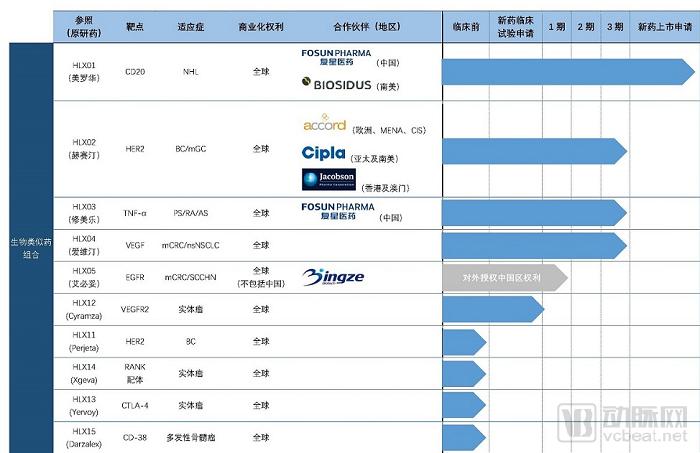


Image from the official website of Henlius
Since its inception, Henlius has consistently attracted significant attention from the industry. After several rounds of financing, the company’s valuation has soared to RMB 20 billion, propelling it to unicorn status. On December 5, 2018, the China Securities Regulatory Commission (CSRC) accepted Henlius’s application materials for its initial public offering (IPO) overseas.
Through efficient independent innovation, the company has developed and established a diversified, leading, and high-quality product pipeline targeting oncology and autoimmune diseases. However, the company’s products have not yet been approved for commercial sale, and it has not generated any revenue from product sales to date.
The prospectus shows that the company has incurred operating losses in all periods since its establishment in 2010. The net losses attributable to owners of the parent company were RMB 74.36 million, RMB 260 million, and RMB 270 million for 2016, 2017, and the eight months ended August 31, 2018, respectively. As of August 31, 2018, the company’s accumulated losses amounted to RMB 690 million, and it is expected to continue incurring operating losses at least in the next few years.
In 2007, Yuan Zhengyu returned to China and founded MicuRx Pharmaceuticals, dedicated to discovering and developing safer and more convenient antibiotics for the treatment of drug-resistant bacterial infections. Since its establishment, the company has completed three rounds of financing, raising a total of approximately USD 100 million. Its investors include well-known venture capital firms both in China and abroad, such as Morningside Venture Capital, BioVeda Capital, and Delian Capital.
On June 27, 2018, MicuRx Pharmaceuticals, a biopharmaceutical company, filed an application with the Hong Kong Stock Exchange (HKEX) for a listing on the Main Board, with Jefferies serving as the sole sponsor. It became the third pre-revenue biotech company to file for an IPO with the HKEX. The net proceeds from the listing will be used for product development and clinical trials.
Currently, MicuRx Pharmaceuticals has four products in its R&D pipeline, three of which have conducted clinical trials to varying extents in China, the United States, and Australia. The most advanced product is expected to be launched in China in 2020.
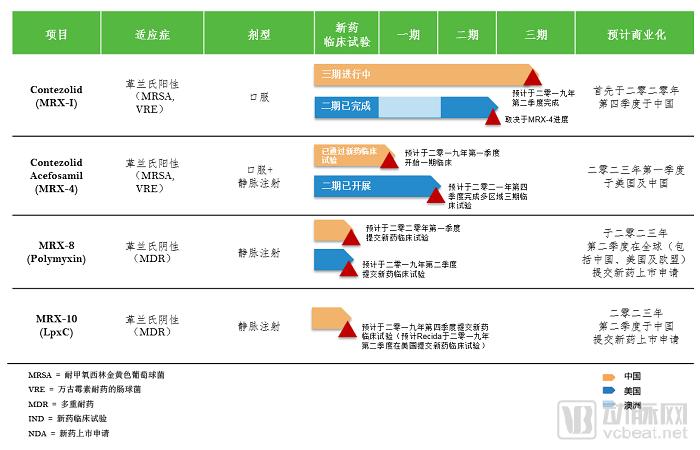
Image from the official website of MicuRx Pharmaceuticals
According to the prospectus, MicuRx Pharmaceuticals is a clinical-stage biopharmaceutical company with a diversified asset portfolio, focused on the discovery, development, and commercialization of safe and effective antibacterial therapies for infections caused by multidrug-resistant (MDR) “superbugs.” The company’s operating losses for 2016 and 2017 were $11.59 million and $15.20 million, respectively. For the first quarter of 2018, the operating loss was $2.89 million, compared with $3.32 million in the same period of the previous year.
Ascentage Pharma is a globally leading, clinical-stage biopharmaceutical company dedicated to developing innovative drugs in the therapeutic areas of oncology, hepatitis B, and age-related diseases. In 2009, amid the global financial crisis, Dr. Yang Dajun and his colleagues returned to China and took over the Shanghai R&D center that a U.S. company had planned to shut down, thereby establishing Ascentage Pharma.
Leveraging its strengths in drug structure design and new drug discovery, Ascentage Pharma has built a robust product portfolio and advanced seven candidates into clinical development, including inhibitors of protein-protein interactions (PPIs) targeting difficult-to-drug proteins and next-generation tyrosine kinase inhibitors (TKIs).
Its PPI candidate drugs are designed to treat cancer and other diseases by restoring the normal function of key apoptotic pathways—including the Bcl-2/Bcl-xL, MDM2-p53, and IAP pathways—which play a critical role in regulating apoptosis.
It is reported that, for the eight drugs under development, Ascentage Pharma has launched 20 Phase I or II clinical trials in China, the United States, and Australia, and all investigational products have first-in-class or best-in-class potential.
On August 20, 2018, Ascentage Pharma, which had originally planned to list on the NASDAQ in the United States, formally submitted its listing application to the Hong Kong Stock Exchange, with Bank of America Merrill Lynch and Citigroup serving as joint sponsors.
The prospectus shows that for the years ended December 31, 2016 and 2017, Ascentage Pharma’s annual revenues were RMB 7.67 million and RMB 6.33 million, respectively, with net losses of RMB 107 million and RMB 120 million, respectively. For the three months ended March 31, 2017 and 2018, revenues were RMB 1.9 million and RMB 0.9 million, respectively, with net losses of RMB 24.79 million and RMB 13.18 million, respectively. The Company has not yet commercialized any candidate products and therefore has not generated any revenue from drug sales. It expects that future revenues in the coming years will be derived from sales of its core products and other products following approval of their New Drug Applications (NDAs).
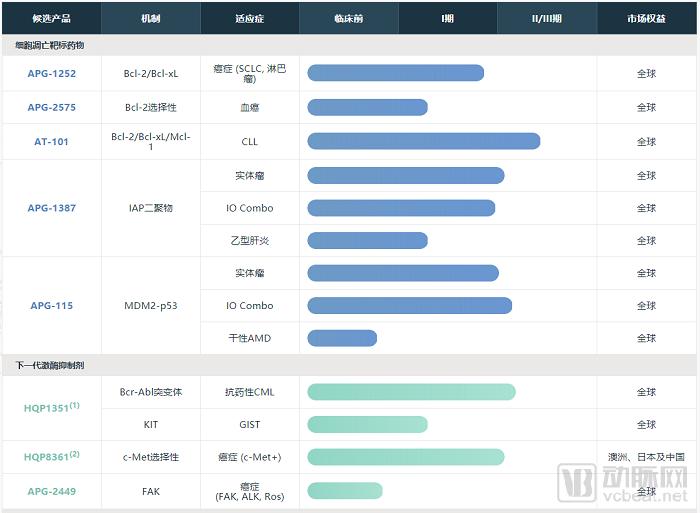
Image from the official website of Ascentage Pharma
Stealth BioTherapeutics (hereinafter referred to as “Stealth”), founded in 2006 and headquartered in Boston, a U.S. life sciences hub, is one of the leading companies in the field of mitochondrial medicine. Its core product is a remarkable compound called Elamipretide. This compound is a small peptide consisting of four amino acids that binds to cardiolipin in the inner mitochondrial membrane, thereby repairing defects in the inner mitochondrial membrane.
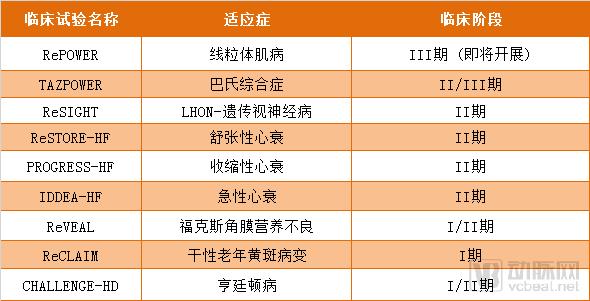
For more than a decade since Stealth’s founding, the mechanism of action of elamipretide on mitochondria has been clearly validated. The compound has demonstrated favorable efficacy across a range of indications, including primary mitochondrial myopathy, heart failure, dry age-related macular degeneration, Barth syndrome, Huntington’s disease, acute kidney injury, heterochromic iridocyclitis, and Leber hereditary optic neuropathy. Related findings have been published in nearly 100 peer-reviewed academic journals, and the U.S. FDA has approved multiple indications for entry into clinical trials.
Among numerous clinical trials, Elamipretide for primary mitochondrial myopathy (a rare genetic disorder) is at the forefront. The FDA has currently granted Elamipretide Fast Track designation and Orphan Drug designation for this indication, and it will soon enter Phase III clinical trials.
The symptoms of primary mitochondrial myopathy resemble "accelerated aging," with a global incidence rate of 1 in 4,300 and approximately 40,000 patients in the United States alone. Currently, there are no effective pharmacological treatments for this condition; upon approval, Stealth’s product will become the sole therapy available for this disease.
Stealth Biotherapeutics filed its listing application with the Hong Kong Stock Exchange on July 3, 2018. The prospectus revealed that for the two years ended December 31, 2017, the company incurred losses of $88.6 million and $64.1 million, respectively.
AOBiome Therapeutics is a world-leading clinical-stage microbiome company focused on the research and development of treatments for inflammatory conditions, central nervous system disorders, and other systemic diseases. The company was founded in 2012 under the original name Nitrocell Biosciences.
Since its inception, the company has raised a total of $98.2 million in financing. Notably, in June 2018, AOBiome Therapeutics underwent restructuring following its Series C funding round, with Wang Jun, founder of iCarbonX, becoming its Chairman of the Board.
AOBiome Therapeutics’ pipeline comprises six ongoing clinical programs and multiple preclinical studies. Among these, AOB101, its product candidate for acne, has completed Phase II clinical trials and is expected to begin patient enrollment for two Phase III trials in the first half of 2019. The other five candidates are all in Phase II clinical development, targeting indications such as acne vulgaris or acne, atopic dermatitis or eczema, rosacea, allergic rhinitis, migraine, and hypertension.
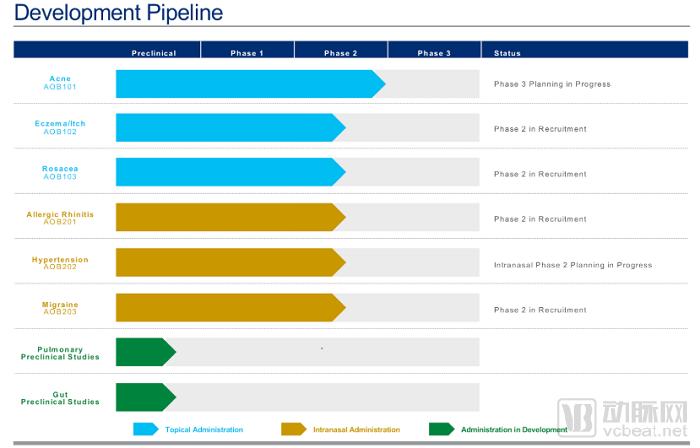
Image from the official website of AOBiome Therapeutics
In July 2018, AOBiome Therapeutics announced the submission of its prospectus to the Hong Kong Stock Exchange. For the two years ended December 31, 2017, the company’s revenues were $1.926 million and $2.595 million, respectively, while its loss and total comprehensive income for the years amounted to $8.799 million and $11.69 million, respectively. The prospectus indicated that the proceeds from the offering were intended to be used for the continued research and development and clinical development of its core products, among other purposes.
Viva Biotech, established in 2008, is a comprehensive drug discovery platform based in Zhangjiang, Shanghai. Its services cover the full spectrum of client needs in early-stage drug discovery, including target protein expression and structural studies, target screening, lead optimization, and candidate drug assay.
As of April 2018, Viva Biotech had provided drug discovery services to nearly 300 biotechnology and pharmaceutical clients, characterized over 1,000 independent targeted drugs, and delivered more than 7,000 unique protein structures. Its key customers include nine of the top ten global pharmaceutical companies.
WuXi Biologics’ business model primarily combines the Cash-for-Service (CFS) and Equity-for-Service (EFS) models. To date, WuXi Biologics has established two incubation centers, incubating 21 early-stage R&D projects, and plans to add several standardized incubation centers in Shanghai, Jiaxing, and Chengdu, China.
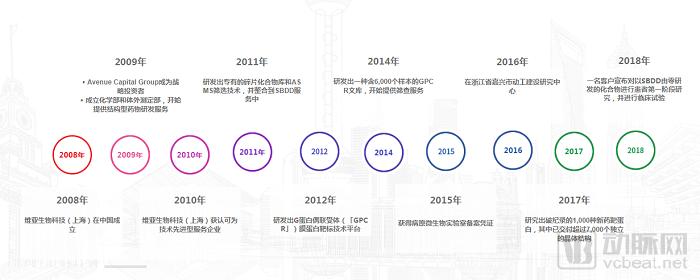
Image from the official website of WuXi Biologics
In July 2018, Viva Biotech formally submitted its listing application to the Hong Kong Stock Exchange. The prospectus revealed that the company’s revenues in 2015 and 2016 were RMB 73.6 million and RMB 96.5 million, respectively. Due to the recognition of a milestone payment from a key customer in 2017, the company’s annual revenue rose to RMB 148 million in that year. Net profits for 2015 and 2016 were RMB 18.9 million and RMB 24.5 million, respectively, increasing to RMB 76.3 million in 2017.
Tasly Biopharmaceuticals, a subsidiary of Tasly Holding Group established in 2001, is primarily responsible for developing the company’s biopharmaceutical business segment.
Tasly’s exclusive product, Puyouke (recombinant human prourokinase for injection, a cardiovascular disease medication), is a self-developed Class 1 new drug. Its sales reached RMB 100 million in 2017, representing a year-on-year growth of over 150%. In 2017, Puyouke was included in the National Reimbursement Drug List, with its price reduced by approximately 10%. Tasly expects that, with the expansion of provincial tendering and inclusion in the national medical insurance scheme, Puyouke will enter a period of rapid growth, with sales projected to reach RMB 300 million in 2018.
It is reported that Puyouke has two additional indications currently in clinical development. The Phase II trial for acute ischemic stroke has been completed, and the program is poised to enter Phase III clinical trials. For the acute pulmonary embolism indication, patient enrollment for the Phase II clinical study has been fully completed.
Public information indicates that, to date, Tasly Biologics has established a pipeline of more than 15 product candidates through independent R&D, investment-driven introductions, and other strategies. Among these, anmeimu monoclonal antibody (SY01) for the treatment of colorectal cancer is on the verge of entering Phase II clinical trials; the T101 vaccine for hepatitis B is currently in Phase I clinical trials; the Class 1 oncolytic virus T601 for solid tumors is applying for clinical trial approval; and the Class 1 novel lipid-lowering drug, a humanized anti-PCSK9 antibody, has completed preclinical studies.
In addition, Jianya Bio’s third-generation insulin products, part of Tasly Biopharmaceuticals’ portfolio, are currently being prepared for submission to the European Union, leveraging their superior performance compared to the originator products.
In July 2018, Tasly Biopharmaceuticals reached a valuation of RMB 12.5 billion following its Pre-IPO financing round.
Kintor Pharmaceutical, established in 2009, is a China-based global innovative drug development company. Currently, the company focuses primarily on three major cancers—prostate cancer, breast cancer, and liver cancer—and is dedicated to building an R&D and industrialization platform for “best-in-class” and “first-in-class” innovative drugs. In terms of its R&D pipeline, Kintor’s core business centers on proprietary Class 1.1 small-molecule innovative drugs. Its lead product, Pyruvamide, has entered Phase II clinical trials, which are being conducted simultaneously in both China and the United States.
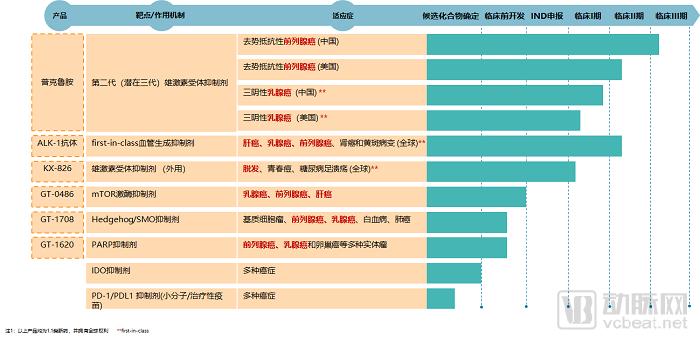
Image from Kintor Pharmaceutical's official website
Since its establishment, Kintor Pharmaceutical has completed six rounds of financing, with a cumulative amount exceeding RMB 653 million. The company was listed on the National Equities Exchange and Quotations (NEEQ) in December 2016 and announced the termination of its listing via a public announcement on June 21, 2018.
Summary
Among the series of reform initiatives introduced by the Hong Kong Stock Exchange, the most significant highlight is the allowance for companies with weighted voting rights and pre-revenue biotechnology firms to list. However, opening a green channel for unprofitable biotechnology enterprises does not imply a lowering of listing thresholds. First, these companies must have products at various stages of clinical trials and regulatory approval. The new listing rules, which took effect on April 30, 2018, state that biotechnology companies may be exempt from traditional financial eligibility tests, provided they meet a set of other conditions, the main aspects of which are as follows:
1. The product has completed at least Phase I clinical trials;
2. Received a substantial amount of investment from seasoned investors prior to going public;
3. The expected market capitalization shall be no less than HK$1.5 billion (approximately US$200 million).
“A significant investment” is defined as follows: “For applicants with a market capitalization between HK$1.5 billion and HK$3 billion, the investment amount shall be no less than 5% of the applicant’s issued shares at the time of listing; for applicants with a market capitalization between HK$3 billion and HK$8 billion, the investment amount shall be no less than 3% of the issued share capital at the time of listing.”

Note: Data sourced from the VCBeat knowledge base, company official websites, and compiled public data.
Our data indicates that these ten companies have all met the aforementioned basic thresholds and criteria. The lowest financing amount was $5.9 million, while the highest reached $410 million; the lowest market capitalization was $200 million, with the highest at $3.1 billion. For companies listed on the Hong Kong Stock Exchange, revenue and profitability figures are not used as listing benchmarks; therefore, the primary reference criteria for other biopharmaceutical enterprises are market capitalization and product pipelines. Among the aforementioned companies, each has at least one product in Phase II clinical trials, with an average market capitalization of $350 million (Henlius Biotech and Tasly Biologics were excluded from this calculation, as the market capitalizations of most startups rarely reach their scale). This figure may serve as a reference for the market capitalization scale of biotechnology companies currently seeking listings in Hong Kong.
In 2018, following the internationalization of regulatory frameworks and talent, the biopharmaceutical market ushered in a springtime for capital markets driven by the Hong Kong Stock Exchange (HKEX) and the STAR Market. Just one year after the HKEX announced that it would allow pre-revenue biotechnology companies to list, more than a dozen enterprises had already filed their prospectuses, despite the considerable uncertainties lying ahead.
Undoubtedly, the opening of the Hong Kong market has provided a significant boost to both enterprises and investment institutions. Even as the capital winter sets in, the biopharmaceutical sector is highly likely to continue thriving amidst the chill in 2019.