

Shukun Technology Secures RMB 200 Million Series B Funding Led by Chengshi Partner Capital to Advance AI in Cardio-Cerebrovascular Diseases

SHUKUN
Provider of Intelligent Products and Innovative Solutions

Morningside Ventures
Well-known early-stage venture capital institution

Huagai Capital
Private Equity Investment Institution
On February 18, 2019, medical AI company SHUKUN announced the completion of its RMB 200 million Series B financing round. The round was led by China Creation Ventures, with existing investors Morningside Ventures and Huagai Capital, as well as angel investor Yuanyi Capital, continuing to participate. Following its RMB 100 million Series A financing in July 2018, SHUKUN secured another hundred-million-yuan funding round within just six months, becoming one of only ten medical imaging companies to have completed Series B financing.
The funds raised in this round will be allocated to R&D investment, helping SHUKUN consolidate its leadership in cardiovascular and cerebrovascular diseases, extend AI technology to other disease areas such as oncology and neurological disorders, and cover key diseases and clinical scenarios involving the heart, brain, lungs, breast, and prostate. Meanwhile, leveraging its three major AI product lines—the SHUKUN Smart Imaging Platform, the SHUKUN Smart Research Platform, and the SHUKUN Smart Department Management Platform—to address urgent clinical needs, SHUKUN will drive comprehensive, multi-dimensional intelligent upgrades for hospitals.
Zhou Wei, Founding Managing Partner of China Creation Ventures, the lead investor, stated, “SHUKUN’s current leading position in the AI market for cardiovascular and cerebrovascular diseases demonstrates its ability to understand market demands, pinpoint key growth drivers, and address critical pain points. This convinces us that SHUKUN has the strength to become the leader in the medical imaging AI market.”
China has over 290 million patients with cardiovascular and cerebrovascular diseases, with annual deaths reaching as high as 3 million. The prohibitive cost of treatment and the scarcity of medical resources have left many patients in a dilemma. Addressing this severe challenge of resource allocation and cost would help alleviate some of the pressure on China’s national health insurance system.
However, AI research and development in this field demands exceptionally high standards for algorithmic models and data quality, resulting in limited industry participation. Compared to two-dimensional imaging of pulmonary nodules, three-dimensional reconstruction during CT angiography (CTA) imposes even more stringent requirements on AI technology.
In response, SHUKUN established a “Global AI Elite Team” and a “Clinical Science Think Tank” at its inception, continuously overcoming technical challenges. It pioneered core technologies including AI-based 3D reconstruction, hemodynamic analysis, and intelligent surgical planning and navigation, and launched the world’s first cardiovascular AI imaging platform in 2018. Through “high-frequency” R&D optimization and “high-quality” data training, the platform achieved over 90% accuracy in both second-level post-processing results and stenosis diagnosis by late 2018, significantly enhancing the diagnostic efficiency of radiologists.
Currently, SHUKUN’s AI product series for cardiovascular and cerebrovascular diseases is the only mature and clinically viable solution in the industry, having pioneered end-to-end full-process implementation in over one hundred hospitals across China. Meanwhile, its comprehensive portfolio of vascular AI products—including the Coronary FFRCT Auxiliary Assessment System, the Intelligent Auxiliary Diagnostic System for Aortic Diseases, and the Intelligent Auxiliary Diagnostic System for Head and Neck CT—has already entered testing phases in dozens of hospitals. With this, SHUKUN has established a multidimensional intelligent diagnostic system for cardiovascular and cerebrovascular conditions, covering regions with high prevalence of such diseases, including Northeast, North, Southwest, and South China. Notably, the majority of these hospitals have either initiated procurement processes or explicitly expressed their intent to purchase, signaling that SHUKUN’s commercial monetization is imminent.
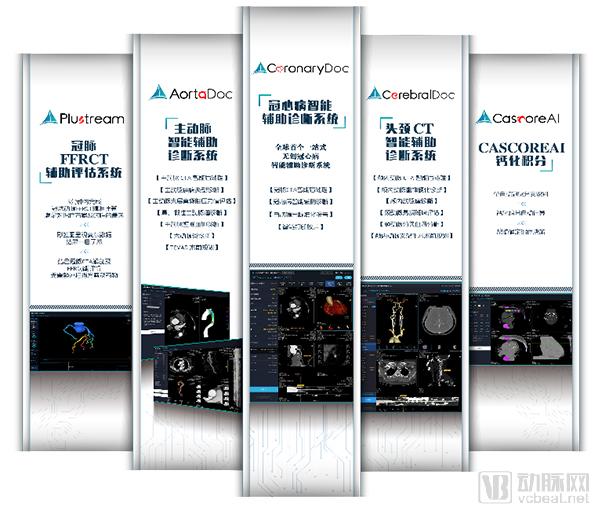
Looking back at 2018, SHUKUN rapidly achieved the clinical deployment and research output of multiple series of AI products for cardiology and neurology, becoming the medical AI company with the highest installation base and product utilization rate in hospitals, and firmly securing the leading position in the AI field for cardiovascular and cerebrovascular diseases, which holds the greatest market value.
To enable deployed AI products to serve physicians more effectively, enhance their clinical experience, and better align with clinical workflows, SHUKUN has launched a comprehensive AI solution covering the entire patient care journey.
SHUKUN’s Intelligent Imaging Platform is specifically tailored for physicians’ daily clinical workflows, closely aligning with clinical processes to assist doctors in improving diagnostic efficiency and effectiveness. SHUKUN’s mature AI solutions for cardiovascular diseases have been steadily implemented, and registration applications are progressing smoothly, building on preliminary work including clinical pilot studies and multicenter trials both domestically and internationally. Meanwhile, SHUKUN is fully leveraging its advantages in rapid, high-quality R&D and implementation to accelerate the maturation of existing AI products and expand its AI portfolio into new disease areas.
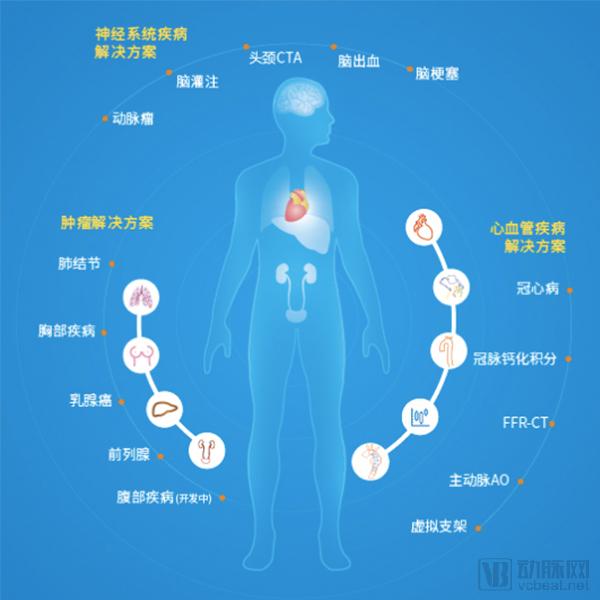
Currently, SHUKUN has jointly launched AI product development initiatives with multiple top-tier Grade 3A hospitals across various fields. These include neurological solutions for conditions such as brain tumors, cerebral infarction, intracerebral hemorrhage, cerebral perfusion, and aneurysms, as well as oncology solutions covering lung nodules, thoracic diseases, breast cancer, prostate cancer, and abdominal conditions. Some of these products have entered the clinical refinement phase and have demonstrated significant clinical efficacy.
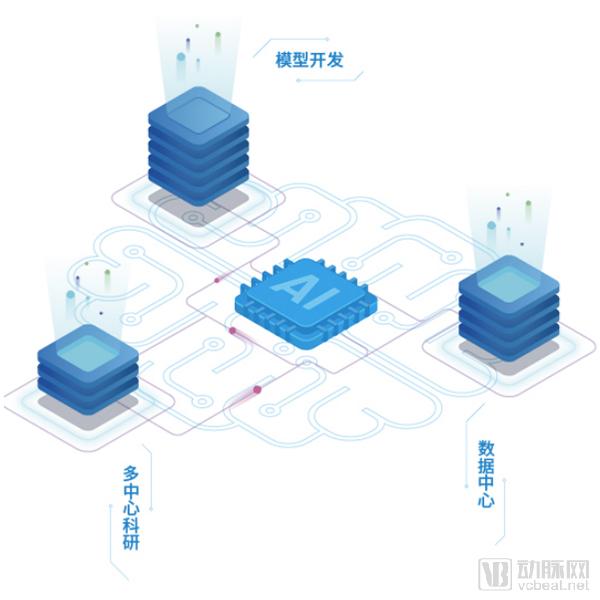
SHUKUN Intelligent Research Platform is a novel disease research platform built around new research methodologies such as big data and artificial intelligence. By providing multi-center statistics and research, dual-mode training and visualized model development, and a data center with standardized double quality control, it collaborates with hospitals to accelerate the output of scientific research.
In September 2018, Beijing Friendship Hospital, Capital Medical University, led a multi-center study on AI-assisted diagnosis of coronary CTA, in collaboration with SHUKUN and dozens of hospitals across China, achieving phased results. By the end of 2018, SHUKUN partnered with internationally renowned cardiovascular hospitals to launch a global multi-center research project, aiming to validate the efficacy and safety of AI technology on a larger scale and among broader populations. Meanwhile, SHUKUN and multiple hospitals jointly applied for scientific research projects at various levels.
The SHUKUN Smart Department Management Platform is a digital management platform designed to enhance hospital management efficiency. Leveraging the foundation of hospital information systems, SHUKUN collaborates with clinical departments to establish connectivity among people, between people and assets, and among assets themselves. Furthermore, it establishes management mechanisms for daily operations, emergency response, and resource allocation across medical, educational, and research activities.
At critical junctures, the platform can also span across all stages—including personnel allocation, equipment utilization status, image quality control, diagnostic efficacy, and performance evaluation—to implement AI-driven intelligent upgrades, enable datafication, and achieve visualization, thereby driving the department’s transformation from informatization to digitalization and intelligence.
Current artificial intelligence remains limited to assisting physicians in diagnosis. Since medical imaging serves as the precursor to surgical planning, its deeper value lies in providing guided recommendations for subsequent treatment after confirming the patient’s disease type, thereby avoiding unnecessary and redundant examinations.
In response, Ma Chun’e, CEO of SHUKUN, stated, “The radiology department serves both clinical practice and patients. Taking cardiovascular disease as an example, many individuals undergo relevant examinations only after obvious symptoms have manifested during medical consultations, followed by corresponding treatments. Since surgical procedures are guided by imaging, the deeper value of artificial intelligence lies in assisting surgeons with preoperative planning and conducting risk assessments throughout this process.”
“Secondly, existing imaging data do not provide physicians with sufficient information. For instance, while plaques are indeed visible on the images, it remains unclear whether they are lipid-rich or calcified—a distinction that clinicians need but cannot directly ascertain. Our solution enables physicians to obtain this critical information.”
“Ultimately, the convergence of multiple factors limits doctors’ ability to engage in extensive communication with patients, leading to patient skepticism toward diagnostic outcomes and thereby fueling doctor-patient conflicts. This is precisely where the value of artificial intelligence lies: by alleviating physicians’ workload, AI enables them to devote more time and energy to patient communication, gaining a clearer understanding of patients’ conditions. This not only benefits patient treatment but also helps alleviate the currently severe doctor-patient tensions.”
When medical AI first emerged, it was widely viewed with optimism, with its market size projected to reach $6.6 billion in 2021. Although the prospects remain broad, uncertainties surrounding the commercialization of medical AI have led investment firms to voluntarily curb the influx of capital. Against this backdrop, SHUKUN’s securing of RMB 200 million in financing is a notable achievement.
Regarding this investment, Meng Nan, Executive General Manager of Huagai Capital’s Healthcare Fund, stated, “SHUKUN boasts top-tier capabilities in team, product quality, and commercialization within the medical AI sector. Therefore, after participating in its Series A financing, we chose to increase our investment in its Series B round. The medical AI industry may undergo a consolidation phase in 2019. By focusing on the cardiovascular field and avoiding highly homogeneous and competitive areas such as pulmonary nodule detection, SHUKUN’s products have demonstrated strong commercial potential through high physician adoption rates and positive professional evaluations. Furthermore, regulatory pathways for medical AI products are becoming increasingly clear. Companies capable of obtaining Class III medical device certifications will establish significant competitive barriers, and SHUKUN is ranked among the first tier in terms of product registration progress. SHUKUN has achieved strong synergy with imaging equipment manufacturers within Huagai Healthcare Fund’s portfolio. Huagai will continue to facilitate interactions among these enterprises to deliver greater value. We believe SHUKUN will emerge as a leading enterprise in medical AI that can truly withstand market scrutiny.”
Mr. Liu Qin, Founding Partner of Morningside Ventures, expressed strong recognition of SHUKUN’s technological advantages: “Healthcare is an industry with high barriers to entry in terms of domain-specific know-how, and it has remained a sector of sustained, high-priority focus for Morningside. In identifying investment opportunities in AI-driven healthcare, we have consistently sought out cross-disciplinary teams that possess both deep healthcare industry expertise and mastery of cutting-edge AI technologies. SHUKUN’s founding team, hailing from IBM and GE, demonstrates a particularly profound understanding of the B2B healthcare services market. In 2018, we witnessed SHUKUN’s robust R&D capabilities and rapid growth trajectory. The pace at which its products were deployed in hospitals exceeded our expectations, and they earned high acclaim from frontline physicians for their genuine clinical performance. With this new round of financing, Morningside continues to increase its stake in SHUKUN. We are confident that SHUKUN’s accelerated development of new products across broader healthcare scenarios will continue to drive the transformation of the healthcare industry in the era of artificial intelligence.”
Ma Chun’e stated, “Healthcare is a crucial cornerstone for ensuring people’s sense of gain and promoting stable social development. SHUKUN has always approached its work with reverence, striving for excellence to create intelligent healthcare value in the fields of cardiology and neurology, and will continue to do so across more clinical scenarios. I am deeply grateful that, in an environment where capital investment has become more cautious, SHUKUN continues to earn profound trust. This gives us greater strength to devote ourselves to comprehensive market expansion.”
Looking ahead, SHUKUN will remain grounded and committed to delivering the most trustworthy value to physicians, patients, and society through every product, service, and research endeavor, while leading the industry in turning the bright future of medical AI into reality.