

Kidgrow: Pioneering a Health-Oriented Paradigm Shift in Pediatric Growth Management

KidGrow
Bone Age Research Technology Institutions and Software Application Service Providers
From 2007 to 2018, a heavyweight “laid-back” unicorn emerged in the infant and toddler sector: BabyTree. On the track of health management for children and adolescents aged 3–18, the next unicorn may already be in the making.
The Greatest Concern, Yet the Least Understanding of How to Act: The Predicament Facing Chinese Parents Regarding Children’s Growth and DevelopmentCurrently, relatively mature market systems have been established in both the infant and toddler sector (ages 0–3) and adult health checkups. However, health management and growth monitoring for children aged 3–18 remain a blind spot in market education.
“This sector is poised for explosive, exponential growth,” said Pang Hai, founder of KidGrow. The health management market for China’s 250 million children and adolescents remains a nascent track and an overlooked multi-billion-dollar opportunity.
KidGrow is one of the early entrants in this market.
KidGrow, founded in 2016, was established by a founding team with over a decade of extensive experience in bone age research. Starting with bone age assessment, the company is dedicated to developing and promoting an evaluation system for bone age and growth development tailored to contemporary Chinese children and adolescents. Its AI-powered bone age assessment system boasts an accuracy rate exceeding 96% and is currently deployed in more than 800 medical institutions across China to assist in the diagnosis and treatment monitoring of pediatric growth and developmental disorders.
Children’s growth and development are characterized by continuity, stage-specific progression, and individual variability. Pang Hai argues that fully realizing children’s growth potential requires a shift in mindset among both physicians and parents—from a disease-oriented approach to a health-promotion perspective. This transition should focus on three key areas: first, scientifically monitoring the level and pace of children’s growth and development, thereby moving from experience-based medicine to precision medicine; second, empowering pediatricians and child healthcare providers to enhance their clinical competence; and third, disseminating knowledge on children’s health management to parents.
“Bone age assessment, as an essential tool for scientifically monitoring children’s growth and development, serves as the cornerstone of building a health management system for Chinese children. If the foundation below is not solid, effective health management above cannot be achieved.”
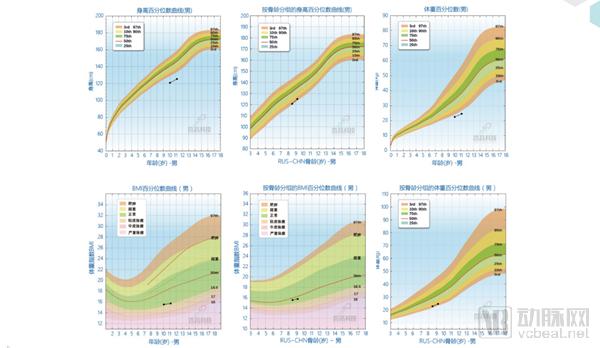
Image provided by the interviewee
Pang Hai told VCBeat that bone age assessment has long been used in athletic talent identification and to ensure fair competition, while its initial application in the medical field was for the diagnosis and treatment of pediatric diseases. Compared with children’s health management, its scope of application remains a “niche market,” and industry development has generally been challenging.
Since 2015, the demand for bone age assessment has gradually moved beyond a “single” purpose. An increasing number of parents have sought out Pang Hai and his current co-founder, Zhang Miao—a core member of the R&D team for the Chinese Standard 05 (CHN 05) bone age assessment method—to evaluate their children’s bone age.
During bone age assessment, Pang Hai and Zhang Miao observed that some children exhibited precocious development; however, by the time this was detected, most of these children were already at an advanced age, making it difficult to achieve optimal height outcomes through intervention. Conversely, other children presented with delayed bone age maturation, in some cases progressing to a pathological state, yet their parents remained insufficiently attentive, thereby missing the optimal window for treatment.
Another phenomenon they identified is that, although some children have undergone bone age assessments, the results vary by 2–3 years across different medical institutions due to inconsistent physician proficiency in interpreting bone age and analyzing pediatric growth and development. Consequently, these assessments offer very limited reference value for evaluating a child’s growth and developmental status.
As similar cases continue to multiply, Pang Hai and Zhang Miao have begun to sense a shift in the bone age assessment market. Bone age testing is gradually transitioning from niche applications—such as athletic talent identification and the treatment of pediatric endocrine disorders—to the mass market.
The primary reason behind this is that, in recent years, public awareness has been shifting from a disease-oriented mindset to a health-oriented one. Previously, parents would only seek medical treatment for their children when they fell ill. Today, even in the absence of illness, parents aspire to optimize their children’s growth and development.
Drawing on recommendations from industry insiders, Pang Hai ultimately chose to begin by empowering pediatricians and child health physicians, redefining the application scenarios for child growth and development assessment and bone age testing, and establishing a service evaluation system for bone age and child growth and development.
“Bone age assessment itself is not highly technical; the challenge lies in the professional expertise required of physicians,” Pang Hai analyzed. He noted that bone age testing alone has limited clinical significance. Only by integrating a child’s bone age results with individual parameters such as height and weight, and conducting a comprehensive comparative analysis against genetic height potential and height norms for peers, can one objectively, accurately, and comprehensively reflect the child’s growth and developmental status.
However, at that time, the field of bone age assessment in China still faced the following three pain points:
1. Clinical medicine lacks a bone age database applicable to Chinese children. Currently, the most widely used method in clinical practice in China is the Greulich-Pyle (GP) atlas method, which references bone age standards for American white children from the 1930s and 1940s. This approach overlooks temporal and racial differences, deviating significantly from the actual growth and development status of contemporary Chinese children.
2. Bone age assessment has been applied in clinical practice for a relatively short period. Currently, the proficiency of pediatricians and child healthcare providers in interpreting bone age assessments and analyzing children’s growth and development varies significantly.
3. Lengthy analysis process. The internationally recognized TW3 scoring method is precise, but it also presents challenges such as complex procedures and time-consuming assessments.
“Over the past two years, artificial intelligence has become a major trend, with many companies entering the bone age assessment market through AI-assisted diagnostic products. Although this has improved physicians’ work efficiency to some extent, many of these solutions are AI-driven, seeking application scenarios for the technology rather than leveraging AI as a tool to enhance professional practice. As a result, they often fail to establish a comprehensive service system,” said Pang Hai. “KidGrow’s approach to AI is precisely the opposite!”
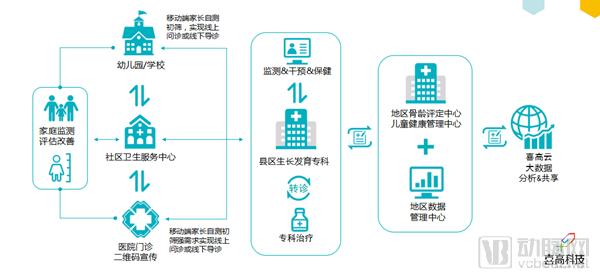
Image provided by the interviewee
KidGrow’s core team includes Professor Zhang Shaoyan, a leading expert in bone age research in China and the company’s Chief Scientist, as well as co-founder Zhang Miao. Many team members have devoted decades to advancing bone age research. “Our team’s primary business is helping clients assess bone age and analyze related data. AI-based bone age assessment and growth and development evaluation are natural application scenarios for our team. We are integrating scientifically validated bone age assessment and pediatric physical development evaluation systems into the broader children’s health management industry. By leveraging AI technology, we are transferring the expertise and experience of KidGrow’s specialist team to primary-care physicians, enabling more Chinese children to access high-quality growth and development assessments and guidance,” said Pang Hai.
Under the guidance of Professor Zhang Shaoyan, KidGrow has reviewed authoritative recommendations and academic achievements from organizations such as the World Health Organization and the International Society of Endocrinology. Building upon the results of the Olympic Public Relations Project—specifically the “Zhonghua-05” bone age standard, which was incorporated into the “Industry Standards of the People’s Republic of China” in 2006 and remains China’s only industry-standard bone age reference—KidGrow has launched a bone age and growth development evaluation system tailored for contemporary Chinese children and adolescents. This system includes: an AI-powered bone age assessment system (which generates analysis reports within five seconds, achieves a bone age detection accuracy of 96%, and has been deployed in over 800 medical institutions nationwide); manual bone age assessment services; a bone age training program for pediatricians and child healthcare providers; and a WeChat public platform designed for parents to monitor, seek medical consultation, and manage their children’s growth and development.
Pang Hai stated, “Through KidGrow’s efforts, we aim to replicate specialists’ diagnostic reasoning and disease assessment frameworks in primary care settings. We hope to encourage more primary care physicians and medical institutions to prioritize pediatric health management, and to empower more parents to scientifically manage their children’s growth and development, thereby driving positive change within the industry.”