

FDA Approved 59 New Drugs in 2018: Insights from 16 Oncology Therapies
In January 2019, the FDA’s Center for Drug Evaluation and Research (CDER) released its annual report, “Innovation to Advance Health: New Drugs Approved in 2018” (hereinafter referred to as the “Report”). The Report highlights that 2018 was another strong year for innovation and progress, during which the FDA approved 59 new drugs and 7 biosimilars. These approvals spanned a range of therapeutic areas, including rare diseases, infectious diseases, neurological disorders, cardiopulmonary and circulatory system conditions, women’s health issues, and cancer and hematologic diseases. The overarching mission of FDA approvals is to provide patients in need with safe and effective innovative therapies.
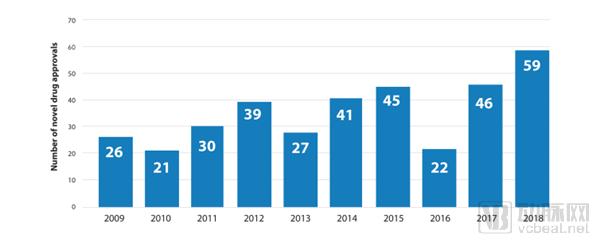
Number of New Drugs Approved by the FDA, 2009–2018 (Image source: FDA official website)
Cancer has long been considered incurable due to its diverse types, varied etiologies, and high recurrence rates. Moreover, most oncology drugs are associated with significant side effects and exhibit considerable variability in efficacy across individuals. In recent years, FDA approvals of oncology drugs have shown a steady upward trend. According to the 2018 report released by the FDA, VCBeat (WeChat ID: biobeat1) found that 16 newly approved oncology drugs accounted for 27.12% of the total.
In addition, the FDA approved 19 first-in-class new drugs, including 4 oncology drugs (21%); approved 34 drugs for rare diseases, including 13 oncology drugs (38.2%); granted Breakthrough Therapy designation to 14 drugs, including 4 oncology drugs (28.5%); granted Fast Track designation to 24 drugs, including 6 oncology drugs (25%); granted Priority Review to 43 drugs, including 13 oncology drugs (30.2%); and granted Accelerated Approval to 4 drugs, including 3 oncology drugs (75%).
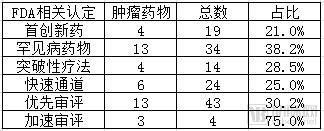
Chart of the Proportion of Oncology Drugs Receiving FDA Designations
These data indicate that oncology drugs receiving numerous FDA designations are clearly a key focus of the FDA. The Report also highlights the approval status of biosimilars this year; as patents and exclusivity rights for biological products expire in the United States, the FDA is expected to receive an increasing number of biosimilar applications. In 2018, the FDA approved three oncology biosimilars, accounting for 42.86% of such approvals, which further underscores the agency’s attention to oncology therapeutics. Therefore, VCBeat New Medicine (WeChat ID: biobeat1) has compiled and analyzed the characteristics of these 19 oncology drugs, aiming to explore the features and patterns of marketed oncology drugs based on the FDA’s 2018 approvals.
Among the 16 newly approved oncology drugs, we identified two noteworthy approvals:
1. The FDA approved the first drug, Erleada, based on the novel endpoint of MFS (metastasis-free survival).
2. The FDA approved Vitrakvi, the second “tissue-agnostic” cancer drug based on tumor characteristics rather than its site of origin in the body.
The approval of Erleada exemplifies the use of novel endpoints to accelerate the market entry of important therapeutic agents. Following the approval of Keytruda, the FDA once again approved Vitrakvi, a tumor-agnostic drug based on tumor characteristics rather than its anatomical site of origin. Whether the novel endpoints or drug attributes underlying these two approvals can be applied to the regulatory review of innovative drugs in China remains to be seen.
Asparlas (pegaspargase-MKNL), a long-acting asparagine-specific enzyme. L-asparagine is an essential amino acid required for the survival and proliferation of certain tumor cells, including leukemia cells. By hydrolyzing and depleting L-asparagine in the plasma, it ultimately inhibits the growth and proliferation of tumor cells, thereby selectively killing leukemia cells and leading to cell death. However, normal tissue cells possess the ability to synthesize L-asparagine endogenously and are therefore unaffected by the drug.
Braftovi (encorafenib), a kinase inhibitor that inhibits the in vitro growth of tumor cell lines expressing BRAF V600E, V600D, and V600K gene mutations. In combination with binimetinib for the treatment of patients with unresectable or metastatic melanoma harboring BRAF V600E or V600K gene mutations, this oral combination therapy has been approved by the FDA.
Copiktra (Duvelisib), this drug is an oral inhibitor of phosphoinositide 3-kinase (PI3K) and the first approved dual inhibitor of PI3K-delta and PI3K-gamma. The FDA has approved it for the treatment of patients with chronic lymphocytic leukemia (CLL) or small lymphocytic lymphoma (SLL), and has also granted accelerated approval to Copiktra (duvelisib) for adult patients with relapsed or refractory follicular lymphoma (FL) who have received at least two prior therapies.
Daurismo (Glasdegib), currently the first and only Hedgehog signaling pathway inhibitor approved by the FDA for the treatment of patients with AML (acute myeloid leukemia). This drug can be used in combination with low-dose cytarabine (LDAC) chemotherapy to treat newly diagnosed acute myeloid leukemia (AML) patients aged 75 years or older, or those who are unable to undergo intensive induction chemotherapy due to comorbidities.
Elzonris, the FDA has approved it for the treatment of BPDCN (blastic plasmacytoid dendritic cell neoplasm), an aggressive and rare bone marrow and blood disorder. Elzonris works by targeting IL-3Rα (CD123)—a protein highly expressed on BPDCN cells and various other hematologic cancer cells—to inhibit protein synthesis, thereby inducing apoptosis in target cells. Prior to this approval, there were no FDA-approved therapies available.
Erleada (Apalutamide), a second-generation highly selective androgen receptor (AR) antagonist, exhibits more than five times the affinity for the androgen receptor compared to first-generation AR antagonists and is indicated for the treatment of patients with non-metastatic prostate cancer. This drug is the first novel oncology agent approved for market based on metastasis-free survival (MFS) as the clinical endpoint. MFS is defined as the time from the initiation of treatment in patients with non-metastatic tumors until tumor cells metastasize to other organs or death occurs.
Libtayo, this drug helps the human immune system identify and eliminate cancer cells by blocking the PD-1 cell pathway (a protein found in human immune cells and certain cancer cells). The FDA has approved it for the treatment of patients with metastatic cutaneous squamous cell carcinoma (CSCC) or locally advanced CSCC who are not candidates for curative surgery or therapeutic radiation. This marks the first FDA approval of a drug for advanced CSCC.
Lorbrena (lorlatinib), an ALK tyrosine kinase inhibitor (TKI), indicated for the treatment of patients with ALK-positive non-small cell lung cancer (NSCLC), specifically: (1) patients whose metastatic disease has progressed after treatment with the first-generation ALK inhibitor Xalkori (crizotinib) and at least one other ALK inhibitor; (2) patients whose metastatic disease has progressed after first-line treatment with the second-generation ALK inhibitors alectinib (Alecensa, Novartis Pharmaceuticals) or ceritinib (Zykadia, Roche). Lorlatinib provides a new option to overcome resistance to previously approved TKIs.
Lumoxiti (moxetumomab pasudotox), a CD22-targeted cytotoxin and the first drug approved for patients with hairy cell leukemia, is indicated for the treatment of adult patients with relapsed or refractory hairy cell leukemia (HCL). HCL is a rare, slow-growing blood cancer. The FDA granted Fast Track designation, Orphan Drug designation, and Priority Review status to the marketing application for this drug.
Lutathera (lutetium Lu 177 dotatate), a Lu-177-labeled somatostatin analog, is an emerging peptide receptor radionuclide therapy (PRRT) that works by binding to cells with so-called somatostatin receptors. These somatostatin receptors may be present on certain tumors; after binding to the receptors, the drug enters the cells and releases radiation to damage tumor cells. The drug is used to treat gastroenteropancreatic neuroendocrine tumors (GEP-NETs), a type of cancer affecting the pancreas or gastrointestinal tract. This marks the first approval of a radiopharmaceutical, also known as a radioactive drug, for the treatment of GEP-NETs. Lutathera has been granted orphan drug status in both the United States and the European Union.
Mektovi (binimetinib), this oral, selective MEK1/2 inhibitor has received FDA approval for use in combination with encorafenib in patients with unresectable or metastatic melanoma harboring BRAF V600E or V600K mutations.
Talzenna (talazoparib tosylate), this drug is a PARP inhibitor developed by Pfizer. It is the fourth PARP inhibitor approved by the FDA to date. By inhibiting the activity of the PARP enzyme and trapping it at DNA damage sites, it leads to tumor cell death. The FDA has approved it for the treatment of patients with locally advanced or metastatic breast cancer who carry germline BRCA mutations and are HER2-negative.
Tibsovo (ivosidenib), this drug is a first-in-class, selective, potent oral targeted inhibitor for cancers with IDH1 gene mutations, and has been approved by the FDA for the treatment of adult patients with relapsed or refractory acute myeloid leukemia (AML) harboring specific “IDH1” gene mutations.
Xospata (Gilteritinib Fumarate), the first and only FLT3-targeted agent approved by the FDA for relapsed or refractory AML with “FLT3” mutations. Previously, the FDA had granted Xospata orphan drug designation and Fast Track designation.
Vitrakvi (Larotrectinib), a potent, oral, selective tropomyosin receptor kinase (TRK) inhibitor designed to directly target TRKs (including TRKA, TRKB, and TRKC), blocking the signaling pathways driven by TRK fusions that promote tumor growth. The FDA has approved it for patients with locally advanced or metastatic solid tumors harboring NTRK gene fusions. This marks the first time the FDA has approved a cancer treatment based on a common biomarker rather than the anatomical site of tumor origin. Vitrakvi is the second FDA-approved cancer therapy based on tumor characteristics rather than its site of origin in the body. The first such oncology drug was Keytruda (pembrolizumab), approved by the FDA in 2017 for patients with tumors exhibiting high microsatellite instability (MSI-H) or mismatch repair deficiency (dMMR).
Vizimpro (dacomitinib), this drug is an oral, once-daily, irreversible pan-human epidermal growth factor receptor (pan-EGFR) tyrosine kinase inhibitor (TKI) developed by Pfizer, indicated for the first-line treatment of patients with metastatic non-small cell lung cancer (NSCLC) harboring EGFR exon 19 deletions or exon 21 L858R substitution mutations.
Azedra (Iobenguane I-131), for the treatment of rare adrenal tumors—pheochromocytoma or paraganglioma—that have metastasized beyond the primary tumor site, require systemic anticancer therapy, and are unresectable. The approved patient population includes adults and adolescents aged 12 years and older, marking the first FDA-approved drug for this indication. Previously, the FDA granted the drug Fast Track designation, Breakthrough Therapy designation, Priority Review, and Orphan Drug designation.
Truxima (rituximab-abbs), this drug is the first biosimilar to rituximab (Rituxan), indicated for the treatment of adult patients with CD20-positive, B-cell non-Hodgkin lymphoma (NHL).
Herzuma (trastuzumab-pkrb), a trastuzumab biosimilar, is the second biosimilar approved by Celltrion and Teva in the United States. It is indicated for the adjuvant treatment of HER2-overexpressing node-positive or node-negative breast cancer (ER/PR-negative or with one high-risk feature), as well as for first-line or subsequent-line treatment of HER2-overexpressing metastatic breast cancer. The FDA approved the first trastuzumab biosimilar, Ogivri (trastuzumab-dkst), in 2017.
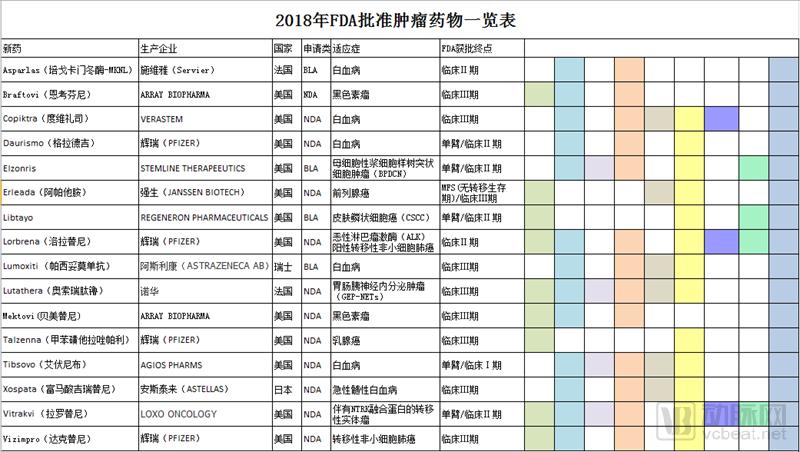


Based on these 19 oncology drug approvals, we have identified the following characteristics:
1. Pfizer emerged as the biggest winner in new drug approvals in 2018, with four new drugs approved for marketing: Daurismo (for leukemia), Lorbrena (for non-small cell lung cancer), Talzenna (for breast cancer), and Vizimpro (for metastatic non-small cell lung cancer). Following Pfizer’s 2018 “blockbuster” drugs—Ibrance for breast cancer (with 2018 sales of $4.118 billion) and its renal cell carcinoma drug (with 2018 sales of $1.049 billion)—it remains to be seen whether the four new drugs approved in 2018 will drive new performance growth in 2019, a development worthy of our attention.
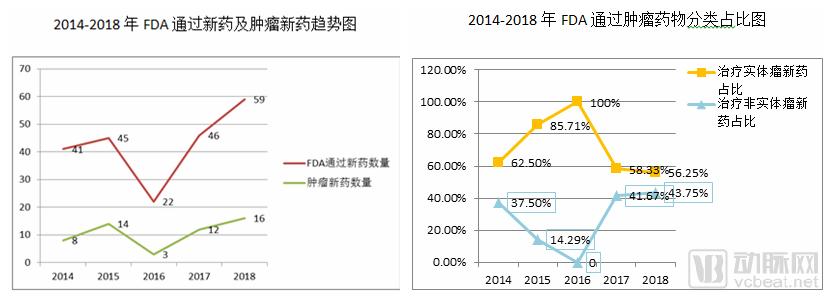
2. Apart from 2016, when the FDA approved only three new oncology drugs, the number of new oncology drugs approved by the FDA has shown a steady upward trend since 2014. Of the 16 new oncology drugs approved by the FDA in 2018, nine were for solid tumors (accounting for 56.25%) and seven were for non-solid tumors (accounting for 43.75%), representing a roughly balanced distribution. The chart illustrating the classification proportions of oncology drugs approved by the FDA from 2014 to 2018 indicates that in recent years, the FDA has increasingly focused its approval efforts on the non-solid tumor sector.
3. Among the 16 newly approved oncology drugs, 13 received both Orphan Drug and Rare Disease Drug designations, 4 were First-in-class innovations, 6 were granted Fast Track designation, 4 received Priority Review, 3 were approved via Accelerated Assessment, and 4 were designated as Breakthrough Therapies. Furthermore, all of these newly approved oncology drugs are associated with biomarkers.
4. Six new oncology drugs were approved based on single-arm trials, accounting for 31.6% of the FDA-approved oncology drugs (including 16 new drugs and 3 biosimilars); seven were approved based on Phase II clinical trials, accounting for 36.8%; eight were approved based on Phase III clinical trials, accounting for 42.1%; one was approved based on Phase I clinical trials, accounting for 5.3%; one new drug was approved based on the novel endpoint of metastasis-free survival (MFS), accounting for 5.3%; and two biosimilars were approved based on evaluations of equivalent clinical performance, accounting for 10.6%.
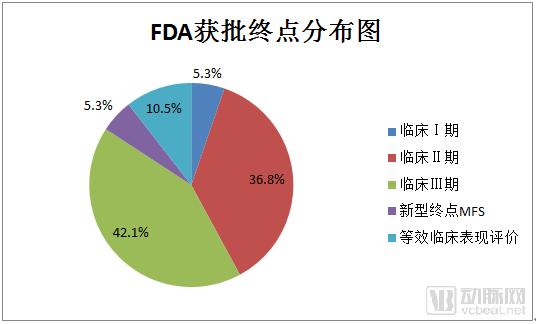
An analysis of the FDA’s oncology drug approvals in 2018 reveals that, in addition to prioritizing safety and efficacy, the agency is focused on developing more efficient and innovative methods for drug evaluation. To accelerate the market entry of innovative oncology therapies, the FDA has adopted an overarching strategy of expedited development and review. For instance, among the 16 new oncology drugs approved in 2018, 13 were granted approval through at least one accelerated pathway. The FDA approved Johnson & Johnson’s prostate cancer drug apalutamide (Erleada) based on the novel endpoint of metastasis-free survival (MFS). Notably, this approval was grounded in Phase III clinical trial data. Whether such novel endpoints can be applied to facilitate the rapid approval of other drugs remains a topic worthy of further investigation.

Scan the QR code to follow the VCBeat BioPharma WeChat Official Account (biobeat1)