

Has the Dental Chain Model Succeeded in the U.S.? Heartland Dental Files IPO After KKR Backing and Expansion to 900+ Clinics
Introduction: Dental service organizations (DSOs) have become a hot topic in China and a major focus of heavy capital investment. However, the DSO model has long faced challenges such as high physician costs and difficulties in achieving profitability during geographic expansion. From a global perspective, what does a viable chain model look like? We attempt to find answers by examining several benchmark cases. This issue’s spotlight is on Heartland Dental, a representative enterprise among U.S. DSOs.
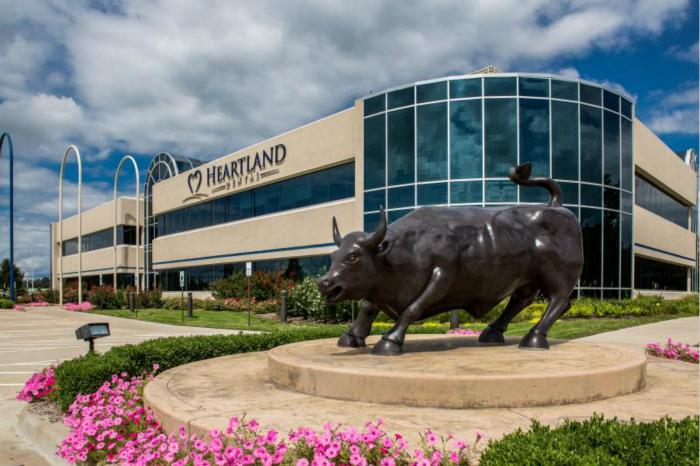
Image source: Heartland Dental official website
For dentists aspiring to open independent clinics, the greatest challenge has never been diagnosing and treating patients, but rather navigating non-clinical matters such as clinic operations, administrative management, recruitment, insurance, legal compliance, property management, and accounting. Furthermore, dental clinics must keep their equipment and technology up to date; however, the substantial capital required to acquire advanced technologies and equipment often deters many dentists from proceeding.
In light of this, a large number of Dental Service Organizations (DSOs) have emerged to assist dental professionals facing these challenges. By providing clinics with cutting-edge technology and managing administrative affairs, DSOs enable dentists to focus on their core responsibility: delivering high-quality diagnosis, treatment, and care to patients. For young dentists newly entering the field, this model not only facilitates the immediate formation of their own teams but also offers valuable learning opportunities.
Heartland Dental is currently the largest DSO in the United States, headquartered in Illinois, with a network of over 900 clinics. It has partnered with multiple vendors, such as selecting Patterson Dental (a U.S. dental products company) as its sales partner and the Bell Leadership Institute (a recognized provider of executive education and development) as its course provider. These partnerships not only offer continuing education opportunities for dental professionals (including professional education and non-clinical training) but also provide various non-clinical management support services, such as staffing, procurement, management, IT technology, finance, and marketing.
Furthermore, Heartland Dental provides comprehensive data and trend analysis for clinics, including detailed information on mergers and acquisitions, partnerships, types of financial transactions, debt issuances, private equity, venture financing, and partnership deals. This allows dentists to focus solely on leveraging their professional expertise to serve patients. VCBeat (WeChat ID: vcbeat) has provided an in-depth analysis of this company.
Core Educational Curriculum and Business Support
Heartland Dental is committed to leveraging cutting-edge technology to provide efficient career support to professionals in the dental industry. Its primary clientele consists of three groups: dentists, dental hygienists, and dental assistants.
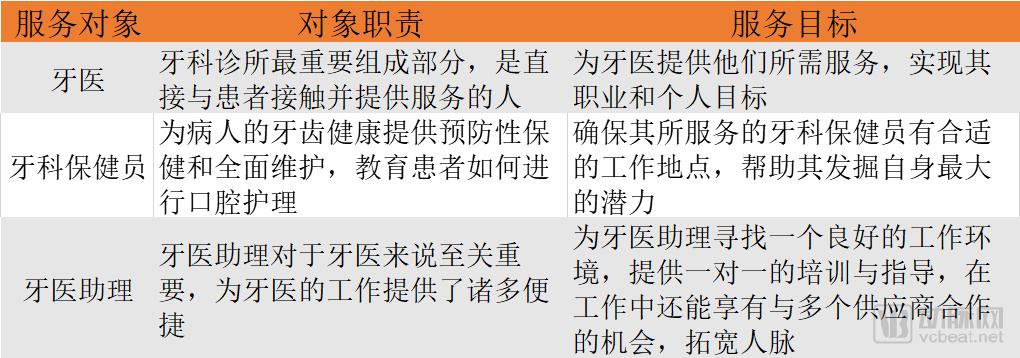
Overall, Heartland Dental takes a comprehensive approach by considering dental professionals’ career goals, family aspirations, and workplace preferences, integrating these factors with their lifestyle to match them with suitable clinic locations.
The dental industry is experiencing rapid growth. After years of development, there are now more than 10 Dental Support Organizations (DSOs) in the United States with over 200 clinics each, intensifying competition across the sector. Heartland Dental boasts an extensive professional network of dentists spanning from the East Coast to the West Coast. By continuously enhancing its proprietary technologies and products, optimizing internal systems, and designing well-structured training programs, Heartland Dental has attracted significant attention from both dentists and investors through its unique empowerment model and corporate culture.
Whether newly graduated or possessing a decade of professional experience, dentists and dental hygienists supported by Heartland Dental are empowered to maximize their potential. Joining Heartland Dental means gaining access to an extensive network of industry relationships and resources across the entire system, fostering close connections with dental experts and professional leaders throughout the United States while staying abreast of the latest industry developments. Leveraging this vast resource network, Heartland Dental primarily empowers clinics and dentists through continuing education training and business support.
Continuing Education Opportunities
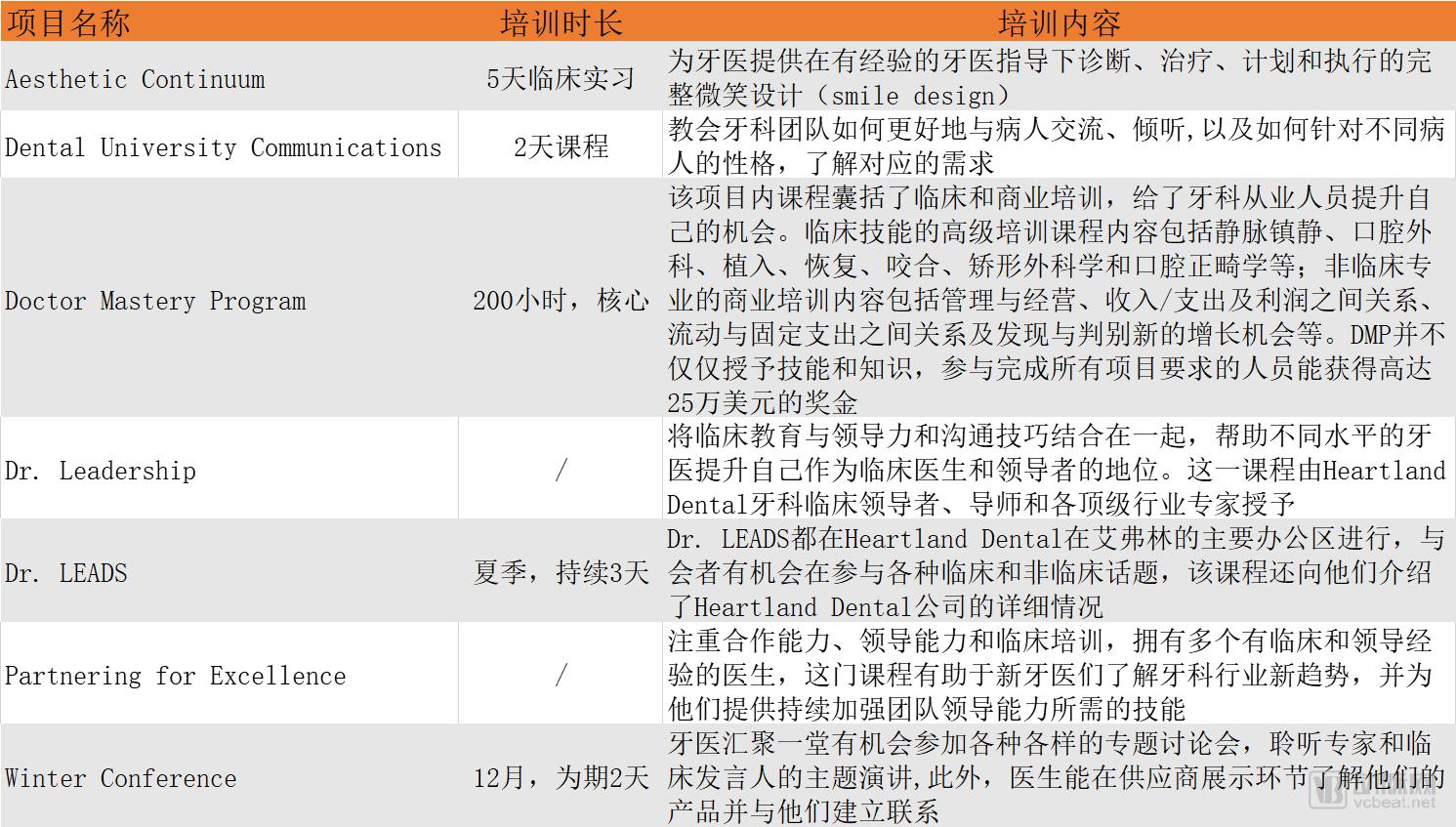
Healthcare is a rapidly evolving industry, making it crucial for dentists to stay abreast of the latest technologies. Heartland Dental offers continuing education courses developed in-house and specifically designed for its supported dentists. These programs enable participants to acquire essential leadership skills in addition to mastering clinical techniques. Core offerings include the Doctor Mastery Program and the Winter Conference.
The following are some learning courses offered by Heartland Dental to its supported dentists:
Business Support
To provide dentists with non-clinical and administrative support, enabling them to focus on delivering high-quality patient care, Heartland Dental has concentrated its efforts on the following areas:
Human Resources—Matching the Most Suitable Employees.The key to a dental practice’s success lies in having an outstanding team. This is where Heartland Dental’s Human Resources team steps in, helping practices recruit passionate, skilled, and responsible staff, managing employee claims and leave, and clarifying employment policies. Additionally, the HR team assists team members with various related matters, including medical, vision, and life insurance.
Payroll—Manage your patients, not employee salaries.Earning a salary is one of the key motivators for hard work, but dentists should not serve as their team’s payroll administrators. Heartland Dental’s payroll team can manage employee salaries, bonus benefits, check processing, and other related processes for dentists.
At Heartland Dental, every team member is required to clock in and out via the online time and attendance system to record their work hours. Each supported clinic also has a designated “Time Clock Administrator” who submits the final work hours to the payroll department every two weeks. Team members can access a secure, private self-service website to obtain information related to their compensation.
Marketing: Building Your Own Brand.To attract patients, effective marketing strategies and communication skills are essential. Heartland Dental’s marketing team comprises experienced professionals who provide expert marketing strategies and creative solutions, serving as dedicated personal marketing agents for individual practices. These personal marketing agents are assigned to work closely with each practice and its team to develop external marketing and advertising campaigns while also supporting internal marketing efforts.
Heartland Dental’s graphic design, web design, public relations management, and social media teams will also collaborate with the practices to provide support in website development, event announcements, press releases, community sponsorships, social media, and external advertising and promotional campaigns. To demonstrate tangible outcomes to dentists, Heartland Dental also provides comprehensive ROI (Return on Investment) reports.
IT Technology – Each team has an average of 20 IT professionals with professional certifications.Without effective digital equipment and systems, dental clinics cannot operate. The IT team at Heartland Dental ensures that the equipment and systems in all supported clinics function properly.
The IT team provides real-time monitoring and management for computers, networks, internet access, cameras, telephone systems, communication lines, pagers, radios, digital imaging equipment, chairside patient education systems, dental practice management software, and peripheral hardware at supported clinics. On-site technical support is delivered via remote access to all computers; when necessary, on-site technical services, such as installation and repair, are also provided.
Suppliers—Stockpiling for Success.Heartland Dental’s team can place proportional orders with suppliers such as Patterson Dental and secure corresponding cost discounts. A dental practice must be equipped with high-quality, advanced instruments and equipment. Heartland Dental’s supply division collaborates with leading suppliers in the dental industry to provide high-quality equipment to its supported practices. This division is also responsible for establishing accounts for all supported practices, facilitating and processing all orders for clinical and office supplies, and negotiating costs and other terms with suppliers.
Finance: Focus on patients, not numbers.Heartland Dental maintains a specialized Management Information System (MIS) team responsible for all accounting functions. This team provides dentists with financial reports, including monthly and quarterly financial statements, monthly and quarterly bonus calculations, daily tracking forms, and the MAPS performance system.
In addition, it establishes and maintains bank accounts, manages credit card lending and financing matters for all supported clinics, sets up new vendor accounts for newly launched clinics, processes all expense reports, handles postage requirements and patient refunds, and assists in calculating any necessary adjustments when paying insurance claims. The Insurance/Expense Planning Department is responsible for data entry and maintenance of fee schedules, insurance premium schedules, and payment tables for all supported clinics. Heartland Dental collaborates with insurance companies to strive for optimal reimbursement for each clinic.
Patient Support Center—Never Leaving Patients on the Sidelines.Heartland Dental’s patient service representatives can easily queue into the office systems of various clinics to assist with answering calls, ensuring that no patient appointment information is missed.
In addition, Heartland Dental boasts an enviable corporate culture that fosters a harmonious and transparent work environment. The company is committed to cultivating a workplace where employees are partners rather than competitors. Each team member possesses significant professional expertise, with professionals mutually respecting and challenging one another to achieve collective progress, thereby continuously boosting team morale and individual job satisfaction.
Heartland Dental also fully recognizes the importance of giving back to the community. To this end, it has organized numerous community outreach initiatives, ranging from sponsoring local table tennis tournaments to hosting annual events such as Free Dentistry Days and My Free Smile. Free Dentistry Days was established to provide complimentary dental services to a growing number of American adults who cannot afford dental care. In 2017, 248 Heartland Dental-supported practices participated in Free Dentistry Days, delivering nearly $3 million worth of free dental services to more than 8,000 patients, up from $2.1 million in 2016.
Rapid Expansion
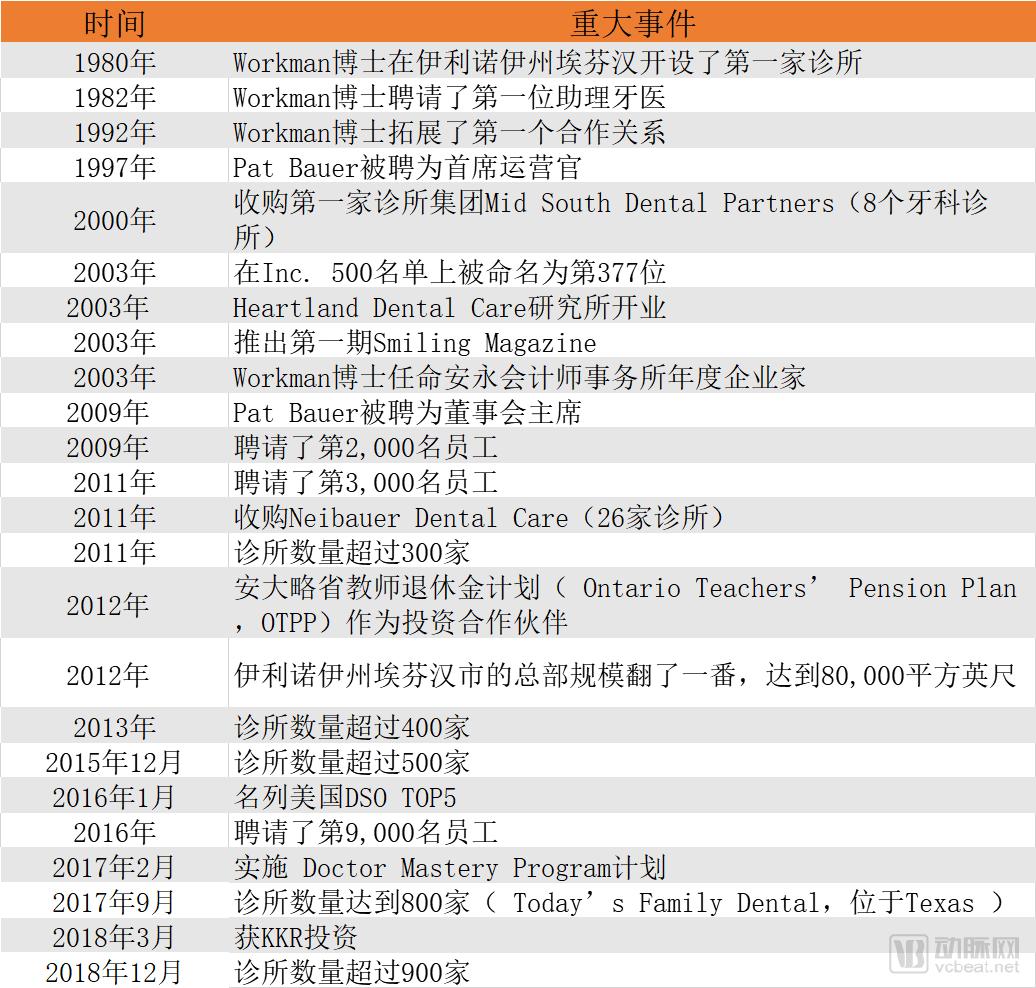
Heartland Dental experienced several key milestones in its development. In 2000, it acquired its first dental group practice, Mid South Dental Partners, which comprised eight dental clinics. Since then, the company has pursued an aggressive M&A strategy, rapidly expanding its scale. By 2011, its workforce had grown to 3,000 employees, and in the same year, it acquired Neibauer Dental Care, a network of 26 clinics.
As 2015 drew to a close, Heartland Dental operated more than 500 practices, and by 2016, it had ranked among the top five dental support organizations (DSOs) in the United States. By September 2017, the number of its affiliated practices had exceeded 800. At this scale, KKR entered the picture, further accelerating its growth through capital investment.
Beneath the surface of a growing number of clinics and capital-fueled expansion, Heartland Dental has in fact been strengthening its core capabilities by refining the two key enablement pillars mentioned earlier.
In 2016, Heartland Dental established new partnerships with Patterson Dental (a product distributor, effective January 1, 2017) and Invisalign (a supplies provider). Furthermore, the company continued its commitment to supporting the personal and professional development of dentists and team members by developing an online learning management system named Homeroom. That year, more than 255,000 hours of continuing education were completed. The inaugural Doctor Mastery Program (DMP) Summit was also held in December, with 500 participants registering within that month.
In 2017, Heartland Dental operated more than 800 clinics, supported over 1,250 dentists, and employed more than 11,000 team members, with a presence in 34 states, primarily concentrated in the eastern United States. That year, it ranked on the Inc. 5000 list for the seventh time.
One notable statistic is that during the 2017 Winter Conference, Heartland Dental’s winter event set an all-time attendance record, with more than 1,200 dentists and other guests in attendance. Attendees heard from various leaders in the business and dental sectors, and 38 sponsors exhibited at the conference (out of Heartland Dental’s total of 43 sponsors). The event also featured a live painting session, during which an anonymous donor purchased the artwork for $10,000 and donated it to the Heartland Dental Foundation.
Following KKR’s investment in early 2018, Heartland Dental slightly slowed its expansion pace, instead focusing more on meeting dentists’ needs and introducing new technologies. For instance, the company launched the “A Company of More” campaign, which aims to identify what dentists want more of, while strengthening partnerships with leading dental product and technology companies—such as by helping dentists adopt Invisalign and intraoral scanners.
Heartland Dental launched the largest-scale installation of intraoral scanners, providing over 900 scanners to its supported practices. It now also boasts the largest network of Invisalign providers, having completed more than 50,000 cases to date.
The ultimate outcome remains to be verified by dentists. According to a 2017 online survey conducted by the Oral Health Workforce Research Center (OHWRC) targeting 47 Dental Support Organizations (DSOs) in the United States, 100% of respondents indicated that various DSOs provide similar business and management services, and three-quarters (71.9%) of the DSOs share a common dental electronic records system.
With its 20 years of industry experience, mature continuing education programs, extensive resource network, robust management systems, and outstanding professional teams, Heartland Dental has attracted the attention of countless dental professionals. Eighty-two percent of dentists supported by Heartland Dental expressed satisfaction with the support provided, while 85% indicated they would recommend their peers to join Heartland Dental. Fifteen percent of practices achieved revenue growth within their first year alone. Most dentists cited the following three primary reasons for joining Heartland Dental: access to education and training, improved work-life balance, and greater job stability.
Secures Major Investment from KKR
On March 7, 2018, Heartland Dental announced an agreement under which KKR, a global leading investment firm, would acquire a majority stake in the company from the Ontario Teachers’ Pension Plan (OTPP)—Canada’s largest single-profession pension system—and other existing shareholders. The financial details of the transaction were not disclosed, but insiders revealed that the deal was valued at hundreds of millions of dollars.
Under this agreement, OTPP will also retain a minority equity stake in Heartland Dental and continue to serve as a key partner of the company. Dr. Rick Workman of Heartland Dental, President and CEO Patrick Bauer, and many other members of the leadership team will also remain significant shareholders.
Bauer stated, “We are delighted to secure KKR’s support, as our vision is to become a leader in the dental sector. KKR’s investment, combined with OTPP’s continued participation, will significantly propel the company’s growth.”
This investment marks the second-largest equity financing event in Heartland Dental’s history. In November 2012, OTPP became the first external investor to acquire a significant equity stake in Heartland Dental. At that time, Heartland Dental’s network of internal service sites spanned 397 practice support locations across 21 U.S. states. Today, Heartland Dental operates more than 900 dental clinics in 37 states nationwide. As 2017 drew to a close, the estimated total annual revenue across all service sites reached $1.3 billion, representing a net growth of 126% over five years.
Regarding this financing, Jane Rowe, Senior Managing Director at OTPP, stated, “We are honored to partner with Workman and delighted to have served as a significant shareholder of Heartland Dental for the past five years. Over this period, our investment has been instrumental in more than doubling the number of its clinics. Moving forward, we remain steadfast in our view of Heartland Dental as the leader among U.S. dental support organizations (DSOs). We also welcome KKR as a new partner in the company and look forward to Heartland Dental sustaining its growth momentum.”
Following the infusion of capital, Heartland Dental is poised to advance its growth plans, ultimately laying the foundation for greater value creation for supported dentists and their high-performing teams. Nevertheless, Heartland Dental has consistently maintained that its primary mission—and raison d’être—is to deliver enhanced value to dentists, empowering them to provide optimal patient care and effectively lead their teams.
Expectations and Controversies
Based on the above analysis, Heartland Dental boasts a nationwide network of 900 dental clinics in the United States, with no shortage of top-tier dental specialists and other professionals. Furthermore, Heartland Dental regularly organizes and encourages knowledge sharing among dentists, allowing new members to access others’ experience free of charge, participate in seminars led by industry experts, and gain exposure to abundant knowledge and resources.
Both its development model and scale have been built on a solid, steady foundation, making it a worthy reference. However, given the current state of the U.S. dental industry, the market remains dominated by private practices. Public hospitals primarily serve teaching purposes, with very few patients seeking care there. Dental Support Organizations (DSOs) are still not mainstream; according to data from Group Dentistry Now, they account for approximately 15%–20% of the market, although their growth rate is indeed accelerating.
For physicians in the United States, patient acquisition primarily stems from major insurance carriers such as Delta Dental and MetLife, which deliver strong referral outcomes. Dentists, particularly those with 20–30 years of practice experience, often join Dental Support Organizations (DSOs) with a mindset oriented toward retirement. Additionally, recent dental graduates have limited options; most carry over $300,000 in student loan debt upon graduation, making it financially unfeasible to establish private practices. Consequently, they tend to work for DSO-affiliated chains, where they can both gain clinical or managerial experience and repay their debts.
In contrast, dentists with 5–10 years of clinical experience, as well as some well-operated clinics, generally maintain a cautious attitude toward joining Dental Support Organizations (DSOs). In the United States, dentists undergo many years of rigorous training; specialists such as orthodontists face particularly high professional barriers to entry. In terms of income, general dentists can earn an annual salary of around $150,000, while orthodontists typically earn between $270,000 and $300,000, with top earners reaching $300,000–$500,000. Given their comfortable financial status, these practitioners tend to avoid formal DSO affiliations. At most, they may collaborate with other clinics on limited initiatives, such as centralized procurement, without fully adopting the DSO model.
Currently, there are no publicly listed companies among Dental Support Organizations (DSOs), but their chain-based model has been proven viable. This may offer valuable insights for China’s booming dental market, where some pioneers have already adopted the DSO model to explore development pathways suited to Chinese dental chains.