

Top Chinese Biotech Investors in 2018: Lilly Asia, Sequoia China, Legend Capital, and Honghui Capital Back Key Innovators
“The capital winter has truly arrived” was perhaps the most frequently heard phrase among entrepreneurs and investors in 2018. However, based on investment and financing data, the term “winter” does not seem to apply to the biotechnology sector. In 2018, global investment in the biotechnology sector exceeded $38.801 billion. Of this amount, total domestic financing in China reached RMB 30.9 billion.
Unlike other industries, investment in the healthcare sector demands greater patience; investments in biopharmaceuticals, in particular, entail high risks and long-term capital commitment. This prompts us to ask: while most industries are bracing for hardship by conserving resources, why does investment in the biotechnology sector remain fervent? How do investors in this field think?
“To grasp its essence, one must first study the text.” We have compiled thousands of investment and financing data points, identified the ten most active investment firms, and conducted a brief analysis of their domestic investment activities in 2018. If you are an investor or practitioner in the life sciences sector, these firms’ investment methodologies are worth examining.
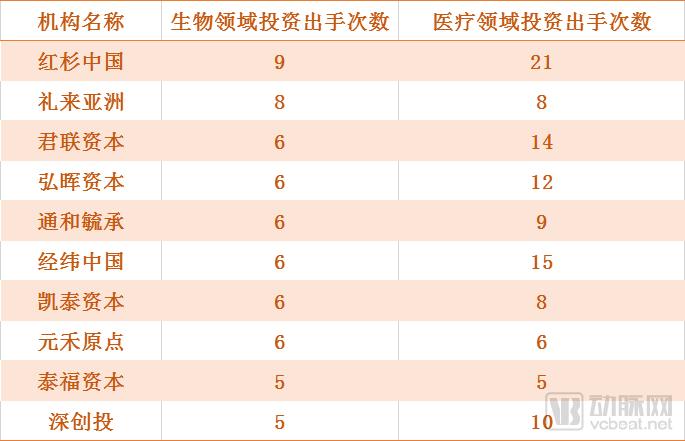
Sequoia China was established in 2005, co-founded by Neil Shen and Sequoia Capital. It focuses on investment opportunities in four sectors: technology/media, healthcare, consumer goods/services, and industrial technology. Over the past 13 years, Sequoia Capital China has invested in more than 500 companies.
In 2018, Sequoia China made 21 investments in the healthcare sector, including nine in biopharmaceuticals, with artificial intelligence and antibody/targeted drugs being their key areas of focus.
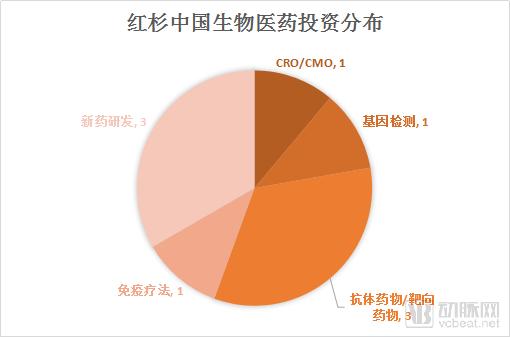
Sequoia China’s 2018 Investment Distribution in Biotechnology and Pharmaceuticals
In 2018, investments in antibody drugs/targeted therapies and artificial intelligence each accounted for 23% of the total. Based on its investment track record, Sequoia China believes that AI will ultimately evolve into a ubiquitous tool akin to the internet, permeating various industries. Yitu Technology and Infervision have applied AI to medical imaging; Deepwise and XtalPi have integrated AI with pharmaceutical sciences to accelerate drug R&D efficiency; while WuXi NextCODE is dedicated to leveraging big data and AI to expedite the clinical application of genomics.
In the biotechnology sector, with the exception of WuXi NextCODE, all of Sequoia China’s investments have been directed toward new drug development. Compared with domestic companies, they show a stronger preference for enterprises founded by returnees or professionals with experience at foreign pharmaceutical companies. For instance, the entire management team of CStone Pharmaceuticals has prior experience working for major global pharmaceutical corporations; Peizhi Luo of Allphee Therapeutics is a renowned antibody expert who was once sought after by both Novartis and Merck & Co.; and WuXi NextCODE and WuXi Juno both benefit from their affiliation with WuXi AppTec.
From the perspective of investment rounds, Sequoia China focuses more on later-stage investments during Series B and C rounds, with most portfolio companies being potential leaders in specific frontier niche sectors.
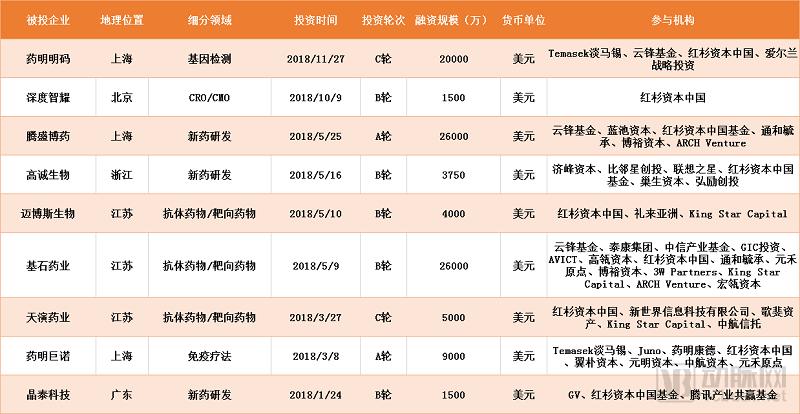
Sequoia China 2018 Biotechnology and Pharmaceutical Investment Table
Lilly Asia Ventures is a venture capital firm established by Eli Lilly and Company in Shanghai, primarily investing in the most promising emerging companies in the life sciences sector across Asia, particularly in China. It is the first biopharmaceutical venture capital firm founded in China by a global pharmaceutical company. Over the past 12 years, Lilly Asia Ventures has invested in more than 30 companies, including BioDuro-Sundia, Zhejiang Beta Pharma, and Nantong Lianya Pharmaceutical.
In 2018, Eli Lilly Asia made a total of eight investments in China, primarily focusing on the pharmaceutical sector. The firm favored companies at Series A and B stages; with the exception of Genetron Health, all other portfolio companies were engaged in the research and development of antibody/targeted therapies.
Among its portfolio companies, Kewang Bio completed two rounds of financing in 2018, with Lilly Asia Ventures participating in both. This biotechnology company aims to lead the global revolution in cancer immuno-oncology 2.0 and has currently established an independent R&D pipeline comprising 12 product candidates covering key areas of tumor immunotherapy. From making exclusive investments in the Series A round to collaborating with Hillhouse Capital and CDH Investments in the Series A+ round, Lilly Asia Ventures has remained a steadfast partner, placing high expectations on Kewang Bio.
In addition, two portfolio companies, Yi’an Jishi and Mabwell Biosciences, merged in 2019. Zhao Yining, the founder of Yi’an Jishi, is also a partner at Lilly Asia Ventures.
Mabwell Bioscience is a clinical-stage biotechnology company focused on the discovery, clinical research, and commercial development of innovative biological drugs. It has established a robust product pipeline comprising innovative first-in-class or fast-follow antibody projects. Yian Jishi primarily engages in the design and application of innovative bioprocessing technologies to accelerate the research, development, and production of biologics. Through in-licensing, Yian Jishi Biopharmaceuticals has secured rights to several first-in-class next-generation immunotherapy antibody projects for the Chinese or global markets.
The newly established Transcenta will possess integrated end-to-end capabilities in biopharmaceutical research, development, regulatory affairs, and manufacturing. It has set up a drug discovery and translational research center in Suzhou, a process and product development center along with a manufacturing base in Hangzhou, and clinical development centers in Shanghai, Beijing, and Boston, USA.
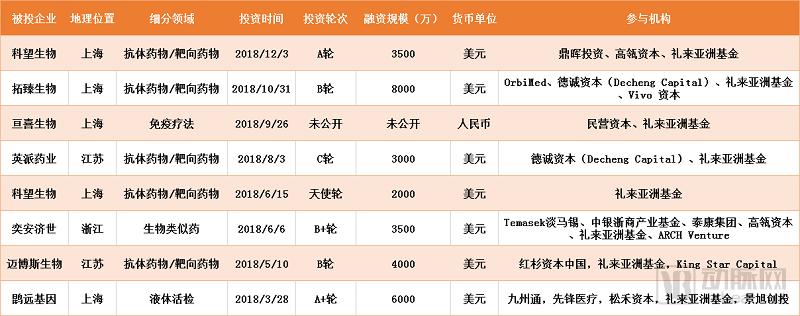
Lilly Asia 2018 Biotech and Pharmaceutical Investment Table
It is worth noting that the core businesses of these companies are all oncology-related. As is well known, Eli Lilly and Company’s primary business has historically been in the diabetes sector. In January 2019, Eli Lilly’s acquisition of Loxo Oncology was regarded as a milestone event marking its entry into the oncology business. However, as early as 2010, Lilly Asia Ventures made a Series A investment in Beta Pharma, which was then conducting Phase III clinical trials for a targeted therapy for non-small cell lung cancer (NSCLC). This investment stands as one of the most significant deals undertaken by Lilly Asia Ventures over the past decade. When Beta Pharma went public in 2016, the book exit return reached 18.53 times. In 2015, Eli Lilly entered into a development collaboration agreement with Innovent Biologics for three bispecific antibody drugs for tumor immunotherapy, with total milestone payments exceeding $1 billion. Innovent Biologics is also among the companies invested in by Eli Lilly in its early stages.
Lilly Asia Ventures’ investment thesis has always been to identify innovative enterprises in China with the potential to become market leaders and possess competitive advantages comparable to international best practices. Thus, Lilly Asia Ventures serves not merely as a venture capital firm; it also seeks partnership opportunities in the Chinese market for Eli Lilly and Company, creating synergies with its core business.
In less than three months into 2019, Eli Lilly Asia Ventures invested in two companies: Burning Rock Biotech and Boya Life Sciences. The former is a provider of oncology genetic testing services, while the latter is a gene therapy company.
Legend Capital is the professional venture capital firm under Legend Holdings. With total assets under management in U.S. dollar and RMB funds exceeding RMB 40 billion, Legend Capital focuses primarily on innovation and growth opportunities in China. As of 2018, Legend Capital had invested in nearly 400 portfolio companies, among which approximately 70 had successfully gone public or been listed domestically or overseas, and nearly 50 had exited through mergers and acquisitions.
The healthcare sector is a significant component of Legend Capital’s investment portfolio, with biotechnology being a key focus area. It is also one of the earliest funds in China to invest in biotechnology companies.
Public information shows that Legend Capital made 14 investments in the healthcare sector in 2018, primarily focusing on biotechnology and artificial intelligence, with six of these investments directed toward biopharmaceutical companies.
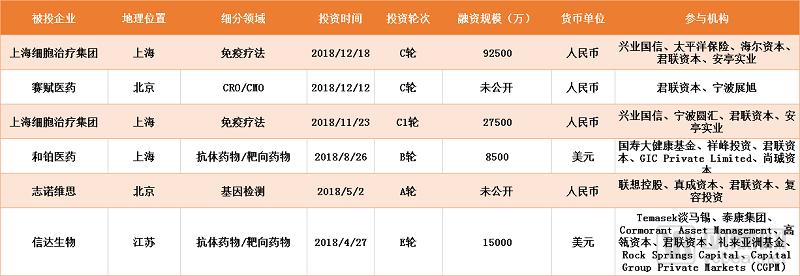
Legend Capital’s 2018 Investment Table for Biotechnology and Pharmaceuticals
Legend Capital was among the first venture capital firms in China to strategically position itself in the monoclonal antibody sector, successfully establishing its footprint ahead of the initial market boom. Today, as targets such as PD-1 have become saturated red-ocean markets, Legend Capital has shifted its investment focus toward future-oriented industries, including gene therapy, small nucleic acid drugs, immunotherapy, and other more cutting-edge antibody-based therapeutics.
As an investor focusing on early-stage and growth-stage companies, Legend Capital tends to favor Series A and B rounds; however, it is willing to make exceptions for high-quality projects.
Shanghai Cell Group is a cell therapy enterprise and a high-tech company established on the foundation of a municipal-level engineering technology research center approved by the Shanghai Municipal Science and Technology Commission. Legend Capital began investing in the company from its Series B round and participated in both financing rounds conducted in 2018.
Innovent Biologics was among the earliest portfolio companies of Legend Capital. As an early-stage technology investor, Legend Capital typically does not participate in the final stages of financing. However, given that it is rare for a company to compete head-to-head with global pharmaceutical giants in the field of monoclonal antibodies, Legend Capital also participated in Innovent’s IPO fundraising.
Also participating in the Series C round is the CRO firm Saifu Medicine. From Legend Capital’s perspective, CRO companies constitute the infrastructure of the innovative drug industry and are an indispensable component. The first wave of benefits from advancements in the biopharmaceutical sector will be evident among CRO enterprises. Having already invested in two leading domestic CRO players, WuXi AppTec and Pharmaron, Legend Capital may well make Saifu Medicine its next key incubation target.
Honghui Capital is an investment fund focused on the healthcare industry, specializing in investments in healthcare services, mobile health, medical devices, and biopharmaceuticals. In 2018, it made a total of 12 healthcare investments, six of which were in biopharmaceutical companies, primarily at the angel and Series A stages.
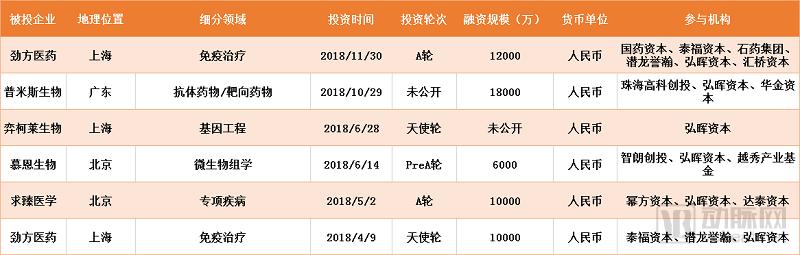
Honghui Capital 2018 Biotechnology and Pharmaceutical Investment Table
From a sector-specific perspective, Honghui Capital has expanded into currently popular fields such as antibodies, immunotherapy, and microbiomics. In 2018, the firm participated in two angel-round projects: GenFleet Therapeutics and Yikelai Biotechnology.
Among them, GenFleet Therapeutics, an immunotherapy company founded in 2017, secured over RMB 100 million in its angel round. The company completed both its angel and Series A financing rounds in 2018, with Honghui Capital participating in both.
Yikelai is a biotechnology company based in Shanghai, possessing leading enzyme engineering and genetic engineering technologies. The company is engaged in the research and development of biocatalysis and synthetic biology methods. In June 2018, Hui Capital made an exclusive investment in the company. To date, Yikelai has established one of the largest enzyme libraries in China and has accumulated extensive experience in enzyme screening, engineering, directed evolution, fermentation, immobilization, and the scaled-up production of enzymatic catalytic reactions.
Looking back at some of Honghui Investment’s previous projects, Kintor Pharmaceutical and GeneChem are both pioneers in early-stage technology sectors. Judging from its investment track record, Honghui Capital tends to focus on early-stage and growth-stage projects. It typically secures strategic positions ahead of emerging trends, identifying leading companies while the market is still a blue ocean.
In May 2017, Tonghe Capital and Yucheng Capital merged to establish Tonghe Yucheng. By joining forces, these two professional teams with a global perspective have created a specialized healthcare fund focused on cutting-edge innovative technologies worldwide.
Tonghe Yucheng focuses on sub-sectors such as medical devices, diagnostic equipment, healthcare services, healthcare IT, and medical artificial intelligence. In 2018, the firm participated in nine domestic transactions, six of which were related to biopharmaceuticals, with immunotherapy being its most heavily invested area.
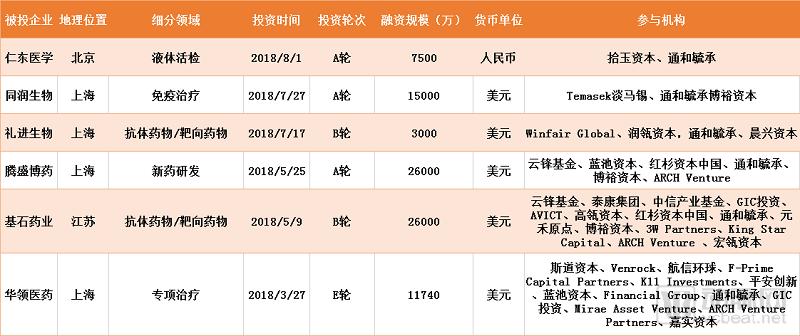
Tonghe Yucheng 2018 Biotechnology and Pharmaceutical Investment Table
CStone Pharmaceuticals is primarily engaged in the research and development of immunosuppressive drugs; Lion TCR and Tongrun Biopharma both focus on immunotherapy; while Renodx Medical, the sole liquid biopsy company, mainly provides end-to-end services for tumor immunity.
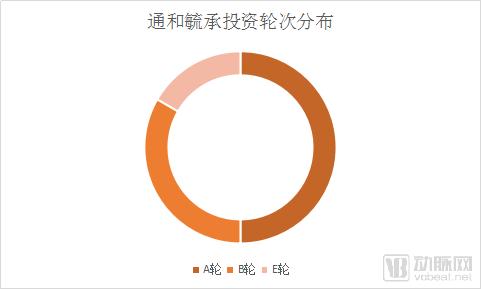
Distribution of Tonghe Yucheng's Investment Rounds in Biology and Medicine in 2018
Their investments are primarily in Series A and B rounds, focusing on innovative enterprises in the early and growth stages.
Beyond China, Tonghe Yucheng’s overseas footprint is even more cutting-edge. In 2018, the firm invested in companies focused on anti-aging drugs and immunotherapy. Tonghe Yucheng has consistently emphasized a global perspective, systematically identifying and harnessing innovative technologies worldwide to build leading healthcare enterprises in China.
They believe that venture capital (VC) firms should consider proactive investment strategies, which can be categorized into two approaches: First, VCs establish their own companies by identifying a clear unmet clinical need, assembling a management team, and introducing product pipelines. Second, for companies that are already established and have achieved a certain scale, VCs help enhance corporate value, such as by introducing additional product pipelines.
Zhu Zhongyuan, a partner at Tonghe Yucheng, mentioned in an interview that a distinctive feature of Tonghe Yucheng Capital is its “Find and Found” strategy—identifying opportunities in the United States and building operations in China. This model remains relatively rare in China. The firm aims to provide ample funding at the early stages of company formation, enabling entrepreneurial teams to focus exclusively on drug development. “We strive to ensure robust logistical support and sufficient resources, allowing teams to devote their full efforts to advancing forward,” he explained.
Matrix Partners has earned a prestigious reputation in the global venture capital industry for its outstanding investment performance and long-standing history. Matrix Partners China, established in 2008, is jointly managed by three managing partners: Shao Yibo, Xu Chuansheng, and Zhang Ying.
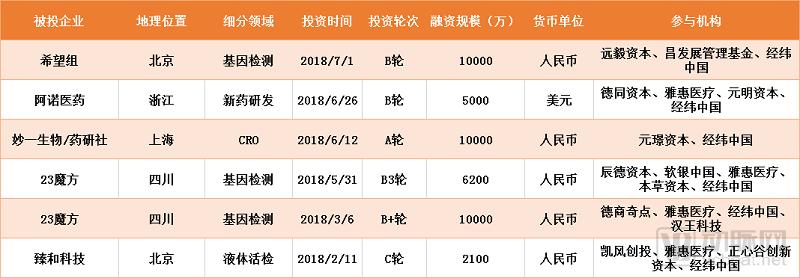
Matrix Partners China 2018 Biotechnology and Pharmaceutical Investment Table
Healthcare is one of the four key sectors focused on by Matrix Partners China. In 2018, the firm made a total of 15 healthcare investments, six of which were in the biopharmaceutical sector. Genetic testing has been a subsector where Matrix Partners China has been particularly active, investing twice in 23Mofang alone. Whether it is 23Mofang in consumer genomics, Hope Bioscience in single-gene sequencing, or Zhenhe Technology in tumor detection, Matrix Partners China’s investment style tends to favor mid-to-late stage mature companies.
Compared with antibodies and targeted therapies, Matrix Partners China is currently more focused on the genetic testing sector, having already covered the three hottest areas: consumer genomics, hereditary testing, and oncology testing.
They are prudent investors who only invest in outstanding individuals and companies that, after careful assessment, are deemed to have the potential to become industry leaders.
Kaitai Capital, established in 2009, is a professional venture capital management firm with total assets under management reaching RMB 50 billion. In 2018, nearly all of the six biopharmaceutical companies invested in by Kaitai Capital were early-stage innovative drug developers.
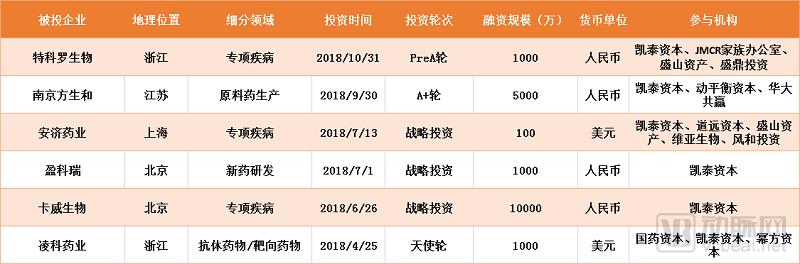
Kaitai Capital's 2018 Biotechnology and Pharmaceutical Investment Table
With the exception of Nanjing Fangshenghe, all the other companies are engaged in drug R&D. Most of these companies focus on specific disease areas, including dermatology, metabolic disorders, and autoimmune diseases. Previously, K2VC had also invested in companies specializing in specific therapeutic areas, such as Hangzhou Changxi (inhalation drug delivery) and Kefei Ping (cardiovascular and cerebrovascular diseases). K2VC is not an investor focused solely on healthcare; its investment strategy leans more toward full-industry coverage.
Since entering the healthcare sector, Kaitai Capital has successively invested in companies such as CARsgen Therapeutics, Yinxingshu, New Element, Linkco Pharma, Changxi Medical, Kawei Biologics, Kefiping, Weijian Pharmaceutical, and Zhenghexiang. Its investment scope has expanded from early-stage innovative drugs and CRO services to novel drug formulations, and further downstream to pharmacy chain operations. Based on its strategic deployments over the years, Kaitai Capital adheres to an industry-chain investment logic.
Yuanhe Origin is an early-stage equity investment management platform under Yuanhe Holdings, focusing on investment opportunities in start-up and growth-stage ventures within the TMT and healthcare sectors. Yuanhe Origin specializes in early-stage investments with a preference for technology-driven companies. In 2018, the firm invested in six companies, all of which were biopharmaceutical firms.
Among these companies, with the exception of Crystal Biologics, which is a contract research organization (CRO), all others are new drug development enterprises primarily focused on antibody-based therapeutics. Ascentage Pharma specializes in small-molecule drug development and currently has eight products in its pipeline. CStone Pharmaceuticals focuses primarily on combination immunotherapy, and its PD-L1 inhibitor is the most advanced in China. Both companies filed their prospectuses with the Hong Kong Stock Exchange in 2018 and are currently undergoing the listing process.
JW Therapeutics is a leader in domestic CAR-T research. By integrating Juno’s technologies in chimeric antigen receptor (CAR-T) and T-cell receptor (TCR) therapies with WuXi AppTec’s R&D and manufacturing platform as well as its extensive experience in the local Chinese market, the company has attracted significant attention since its inception.
It is reported that the Investigational New Drug (IND) application for JW Therapeutics’ CAR-T product, JWCAR029, has been approved by the China National Medical Products Administration (NMPA). This marks the first CD19-targeted CAR-T therapy approved for clinical trials in China.
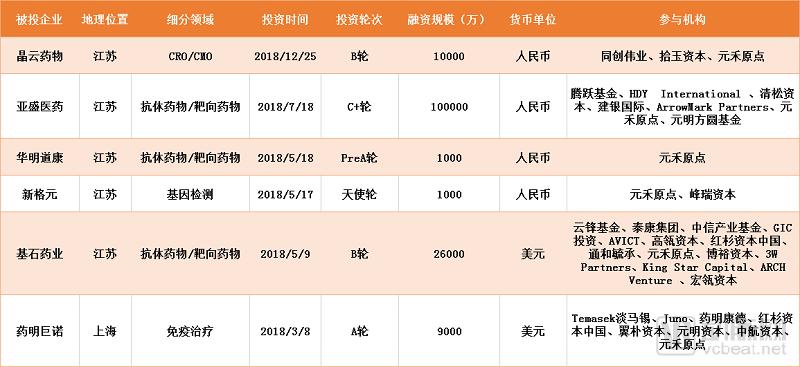
Yuanhe Origin 2018 Biotech and Pharmaceutical Investment Table
From the perspective of portfolio companies, Yuanhe Origin is more inclined toward frontier technology fields, leveraging these emerging technologies to address unmet clinical needs. Meanwhile, they mitigate risk by identifying the most leading and reputable enterprises within niche sectors.
Taifu Capital, established in 2013, is an investment firm focused on new drug development and novel medical technologies. In 2018, the firm completed five transactions in China, all of which were investments in the biopharmaceutical sector.
They primarily invest in promising early-stage and growth-stage enterprises. In 2018, this firm participated in two rounds of financing for GenFleet Therapeutics alongside Honghui Capital, while most other investors came in at the Series A stage.
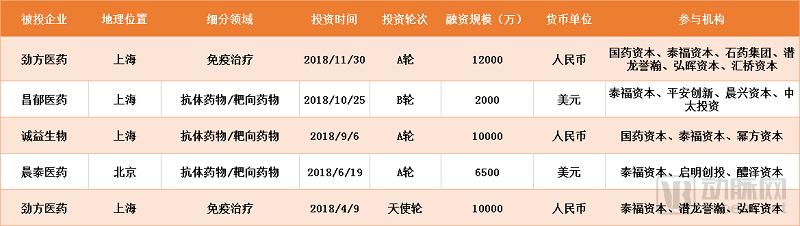
Taifu Capital 2018 Biotechnology and Pharmaceutical Investment Table
Taifu Capital appears to have a strong preference for small-molecule drugs, as nearly all of its portfolio companies are focused on this sector. Although large-molecule drugs, particularly monoclonal antibodies, currently dominate the spotlight, small-molecule drugs remain the most widely used therapeutics in the market. Despite some likening small-molecule drugs to dinosaurs in a tropical rainforest, they continue to lead the pack and outperform competitors within the realm of chemical pharmaceuticals year after year.
A report by Pharmaintelligence noted that the current growth rate of small-molecule drugs is only 4.2%, which has fallen below the overall average growth rate. Nevertheless, small-molecule drug research still accounts for 70% of the total market, whereas large-molecule drugs face the drawbacks of being unable to penetrate cells and identify intracellular targets. Amid future market shifts, small-molecule drugs are likely to maintain their competitive advantage for a considerable period.
However, its growth rate was only 4.2%, significantly lower than the 15.1% growth rate of antibody drugs, and also below the overall average growth rate for pharmaceuticals. Much like territorial disputes among animals, “latecomer” large-molecule biologics will gradually encroach upon the market share of small-molecule drugs.
Small-molecule drugs have been researched for a longer period and account for 70% of the market. Their drawbacks and challenges include the inability to target protein-protein interactions, although this issue is gradually being overcome. In contrast, large-molecule drugs have gained significant momentum and developed rapidly over the past two decades. The challenge they face is their inability to penetrate into cells; consequently, current targets remain on the cell membrane surface. Identifying intracellular targets is a key issue that large-molecule therapeutics will need to address in the future.
Shenzhen Capital Group (SCGC) was established in 1999 with capital from the Shenzhen Municipal Government, which also guided investments from social capital. It is one of China’s earliest venture capital firms. The firm primarily invests in high-tech enterprises and emerging industries characterized by independent innovation, covering key sectors strongly supported by national policies, including information technology, internet/new media, biopharmaceuticals, new energy/energy conservation and environmental protection, chemicals/new materials, high-end equipment manufacturing, and consumer goods/modern services.
In 2018, Shenzhen Capital Group (SCGC) invested in ten healthcare companies, with five investments directed toward the biopharmaceutical sector. The majority of these portfolio companies are based in Guangdong Province. In addition to antibody and targeted therapies, which have attracted widespread investment from major firms, SCGC also invested in a company specializing in microbial therapy in 2018.
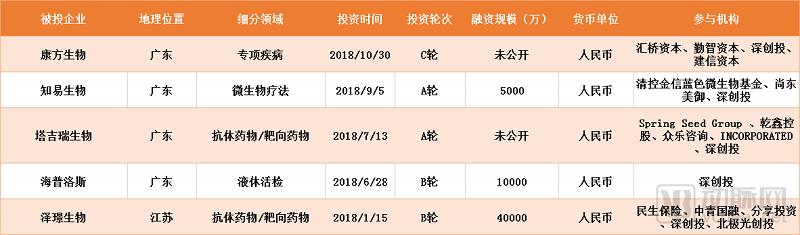
Shenzhen Capital Group's 2018 Investment Table in Biotechnology and Pharmaceuticals
Pathogens and microorganisms have formed a symbiotic ecosystem within the human body. They are significant factors influencing health and disease, yet they long remained overlooked. The advent of next-generation sequencing has facilitated research into the association between microbiota and human health, yielding substantial scientific achievements. An increasing number of companies are beginning to leverage these associations for the diagnosis and treatment of diseases through microbiome-based approaches.
The greatest challenge facing this field is the uncertainty surrounding frontier research, as most associations have yet to be validated. Nevertheless, significant capital and major corporations are beginning to establish their presence.
Shenzhen Capital Group has invested in Zhiyi Bio, a company dedicated to the research and development of next-generation probiotics and live biotherapeutics. Leveraging proprietary strain discovery and drug development capabilities, the company has conducted extensive innovative research and established end-to-end know-how from strain identification to drug formulation. Its innovative live biotherapeutic candidate, SK08, is poised to enter clinical trials.
Building on this foundation, Zhiyi will continue to strengthen its research and development into the relationship between the human microbiome and disease, including studies on culturomics and pathobiont profiles, target identification, and the isolation and application of novel functional bacterial strains.
Also co-investing alongside Shenzhen Capital Group was the Qingkong Jinxin Blue Microbial Fund. This is China’s first microbial fund, jointly initiated by Qingkong Jinxin and the Blue Economic Zone Industrial Investment.
Qingdao Tsinghua Holdings Jinxin Blue Microbial Venture Capital Center is the first microbial fund in China, jointly established by Beijing Tsinghua Holdings Jinxin Investment Management Co., Ltd. and the Blue Economic Zone Industrial Investment Fund. To date, it has invested in several microbial research enterprises, including Quantitative Health and Ruiyi Biology. Due to unique geographical conditions, Shenzhen Capital Group (SCGC) has maintained a close relationship with BGI Genomics, suggesting potential for further investment opportunities in the microbiology sector.
Shenzhen Capital Group (SCGC) is backed by a government industrial fund and is positioned to invest in emerging and high-tech industries that receive key government support. In line with the 13th Five-Year Plan, gene technology, microbiomics, and antibodies will become its key areas of focus.
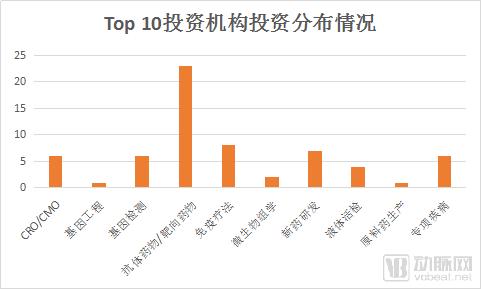
Investment Distribution of the Top 10 Biopharmaceutical Investors in 2018
Each institution has its own investment style, but as they all operate within the same sector, their insights into the industry inevitably share both differences and commonalities. We have consolidated the 2018 biopharmaceutical investment activities of these ten institutions to identify which sectors emerged as their shared choices based on their investment trends.
The top three categories are antibody drugs/targeted therapies, immunotherapy, and specialized disease treatments. Among these, antibody drugs are the most numerous, accounting for 36% of the total. Since the advent of the first antibody drug, this class of therapeutics has garnered increasing industry attention due to its favorable efficacy and safety profile.
Especially in China, following the transition from imitation to innovation, the return of overseas-trained talent, and regulatory reforms, the country’s innovative drug development has entered a productive phase, with antibodies and targeted therapies leading the charge. Competition is intensifying around established targets and pathways, while new ones continue to emerge continuously. Virtually every company has invested, to varying degrees, in antibodies and targeted therapies, making these two sectors a fiercely competitive “red ocean” market that is currently experiencing explosive growth. Meanwhile, immunotherapy and specialized disease areas are becoming the next major trend, driven by rising investment in the biopharmaceutical sector.

Scan the QR code to follow the VCBeat BioPharma official account (biobeat1)