

Pfizer Acquires 15% Stake in Vivet Therapeutics for $687M to Co-Develop VTX-801 Gene Therapy for Wilson Disease

Vivet Therapeutics
Innovative Gene Therapy Developer
On March 20, VCBeat (WeChat ID: vcbeat) learned from foreign media that pharmaceutical giant Pfizer (NYSE: PFE) announced the acquisition of an exclusive option to acquire Vivet Therapeutics for up to €605 million ($687 million).
Vivet Therapeutics is an emerging biotechnology company founded in 2016 and headquartered in Paris, France. Vivet specializes in developing novel gene therapies for rare inherited metabolic disorders. Through this transaction, Pfizer Inc. has acquired a 15% equity stake in Vivet, a company dedicated to the development of gene therapies for rare diseases. Following the completion of the transaction, both parties will jointly develop Vivet’s lead candidate, VTX-801.
VTX-801 is a gene therapy designed to treat Wilson’s disease caused by mutations in the gene encoding the ATP7B protein. Wilson’s disease is a devastating, rare, chronic liver disorder that leads to severe, potentially life-threatening copper toxicity due to impaired copper regulation in the liver and other tissues.
Wilson’s disease is caused by a monogenic mutation that impairs the normal biliary excretion of copper, leading to excessive copper accumulation in the liver and other organs, including the central nervous system. If left untreated, Wilson’s disease can result in severe hepatic damage (such as fibrosis and cirrhosis), neurological and psychiatric impairments, and may even be life-threatening; it can only be cured through liver transplantation. For many patients, existing therapies for Wilson’s disease fail to meet their treatment needs.
It is reported that VTX-801 gene therapy has been validated in preclinical models and has been granted Orphan Drug Designation by the U.S. Food and Drug Administration (FDA) and the European Commission (EC).
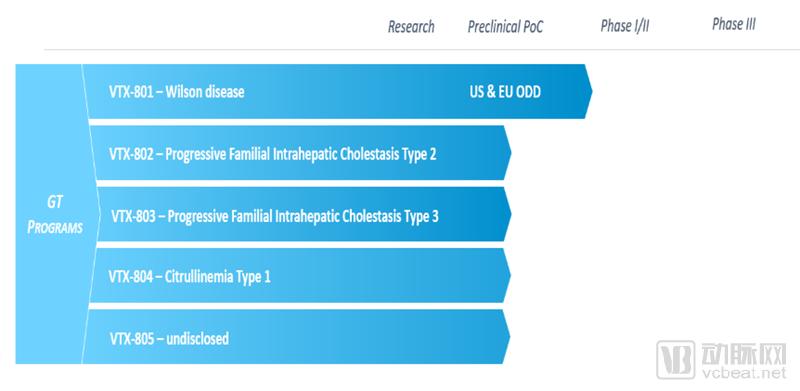
Vivet’s Product Development Pipeline (Image from Vivet’s Official Website)
Following the establishment of the collaboration, Pfizer and Vivet Therapeutics will combine their expertise in liver-directed AAV gene therapy for metabolic diseases, creating an opportunity to develop breakthrough medicines that hold the promise of significantly improving health outcomes for patients with Wilson’s disease. “By directly addressing the root cause of the disease—the inability to excrete copper due to mutations in the gene encoding this function—VTX-801 gene therapy offers a potentially transformative treatment option for patients with Wilson’s disease,” said Seng Cheng, Senior Vice President and Chief Technology Officer of Rare Disease Research at Pfizer, in a statement.
Mikael Dolsten, Chief Scientific Officer and President of Global Research, Development, and Medical at Pfizer, said: “Pfizer is committed to improving the lives of patients with rare diseases. Our partnership with Vivet Therapeutics bolsters Pfizer’s dedication to collaborating with the scientific community and accelerating our leading AAV-directed gene therapy portfolio.”
Under the terms of the transaction, Pfizer made an upfront payment of approximately €45 million ($51 million) and may pay up to €560 million ($635.8 million), including option exercise payments. Upon Vivet’s delivery of Phase I/II clinical trial data for VTX-801, Pfizer shall have the option to acquire 100% of Vivet’s equity interests.
As part of the transaction, Monika Vnuk, M.D., Senior Executive and Vice President of Global Business Development at Pfizer, will join the Board of Directors of Vivet. Other terms of the deal have not been disclosed.
It is reported that, in addition to its Wilson’s disease development program, Vivet Therapeutics is also advancing liver-directed gene therapy programs for the treatment of progressive familial intrahepatic cholestasis (PFIC) caused by defects in bile excretion and citrullinemia caused by urea cycle disorders (accumulation of ammonia and other toxic substances in the blood).
Reference Links:
https://www.genengnews.com/news/pfizer-gains-option-to-buy-rare-disease-gene-therapy-developer-vivet-for-up-to-687m/
https://www.pfizer.com/news/press-release/press-release-detail/pfizer_secures_exclusive_option_to_acquire_gene_therapy_company_vivet_therapeutics