

BaiaoZhi Files for IPO: A Rising Unicorn in China's Pharma Informatics Sector
It is commonly perceived that the pharmaceutical industry operates on a linear path from laboratory to pharmacy, with its core driver being the discovery of a specific class or type of drug and its successful delivery to patients. This perception is rather broad and lacks detail; in reality, substantial work remains to be done throughout the process of elucidating disease mechanisms, discovering drugs, and delivering them, particularly requiring robust data support.
In other words, the pharmaceutical industry is the sector most in need of “data.” Whether it concerns drug safety, efficacy, or reliability, all require support from large-sample, high-precision data. Traditional methods involved manual data entry and paper-based archiving. With the advancement of IT and internet technologies, data support in the pharmaceutical industry has become increasingly diverse, giving rise to an entirely new sector: the pharmaceutical informatics industry.
Given the unique characteristics, industry-specific attributes, and specialized nature of the pharmaceutical sector, there are stringent requirements for data collection, data management, and statistical analysis. In developed regions such as Europe and North America, providing information technology services to life sciences companies constitutes a substantial market, which has not only attracted traditional IT giants like Oracle and IBM but also fostered the emergence of innovative firms such as Veeva and Medidata.
As new technologies such as big data, artificial intelligence, and the Internet of Things continue to advance, pharmaceutical informatics has acquired new connotations and richer applications. Real-world studies and continuous dynamic monitoring have become prominent areas of focus within this field. These developments are also driving the expansion of the pharmaceutical informatics industry, which is projected to reach a market size of tens of billions of U.S. dollars in the future.
In this article, VCBeat (WeChat: vcbeat) will provide an overview of the pharmaceutical informatics sector. The main contents include:
Data is the primary productive force, and the market for pharmaceutical informatization services is vast;
Large Tech Companies vs. Niche Market Players: Each Excels in Its Own Arena;
The domestic healthcare IT industry, taking off, may later surpass its predecessors.
Empowered by Big Data and AI, Pharmaceutical Informatics Reaches New Heights.
Before entering the field of pharmaceutical informatics, it is essential to understand the drug development process. Generally, innovative drug development begins with elucidating the pathogenic mechanisms of diseases. Only by identifying the specific anatomical sites affected and determining the underlying causes can we “administer the appropriate treatment for the specific condition.”
The figure below illustrates the key tasks and informatization service requirements at different stages of drug development.

Source: BioKnow, VCBeat
The clinical research phase is characterized by the highest volume of data generation and the most intense demand for data processing, creating a critical need for robust productivity tools to enhance efficiency. According to industry research reports from Probes Capital, informatics in clinical research has reached a high level of maturity in developed economies. Since 1995, biopharmaceutical companies and contract research organizations (CROs) in the United States, Japan, and Europe have gradually transitioned from traditional paper-based clinical data collection and management to electronic systems.
Multi-stage data analysis based on clinical research informatics enables faster decision-making, allowing researchers to adjust allocation ratios among different sample groups, re-estimate sample sizes, modify experimental arms, or terminate trials. Furthermore, for volunteers, clinical research informatics facilitates more timely feedback on adverse event data, thereby better safeguarding their health and safety.
As the scope and complexity of global drug development programs continue to increase, data management functions must bear the burden of processing a greater volume and variety of clinical data. Electronic clinical outcome assessments, mobile devices, social media, and electronic health/medical records are just a few examples of the new and diverse data sources now being captured in clinical trials. The volume and diversity of pharmaceutical research data present the pharmaceutical industry with challenges in integration, compatibility, workload, and interoperability, all aimed at optimizing the drug development process.
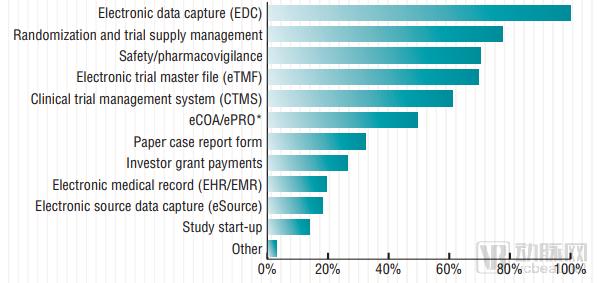
A survey conducted by Tufts University and Veeva of more than 260 pharmaceutical companies and CROs worldwide revealed that these organizations commonly utilize six types of informatics systems in clinical research. These systems include Electronic Data Capture (EDC), Randomization and Trial Supply Management (RTSM), Pharmacovigilance (PV), electronic Trial Master File (eTMF), Clinical Trial Management System (CTMS), and electronic Clinical Outcome Assessment/electronic Patient-Reported Outcome (eCOA/ePRO) systems.
Application of Clinical Research Information Systems in Pharmaceutical Companies and CROs
Source: Tufts University & Veeva Survey, VCBeat
Data reveal that all respondents have implemented Electronic Data Capture (EDC) systems in clinical research, achieving a 100% adoption rate. Approximately three-quarters of companies utilize Randomization and Trial Supply Management (RTSM) systems, while Pharmacovigilance systems and Clinical Trial Document Management Systems also boast adoption rates exceeding 70%. Nevertheless, 26% of pharmaceutical companies and 52% of Contract Research Organizations (CROs) still rely heavily on paper-based records for information documentation and transmission in clinical research.
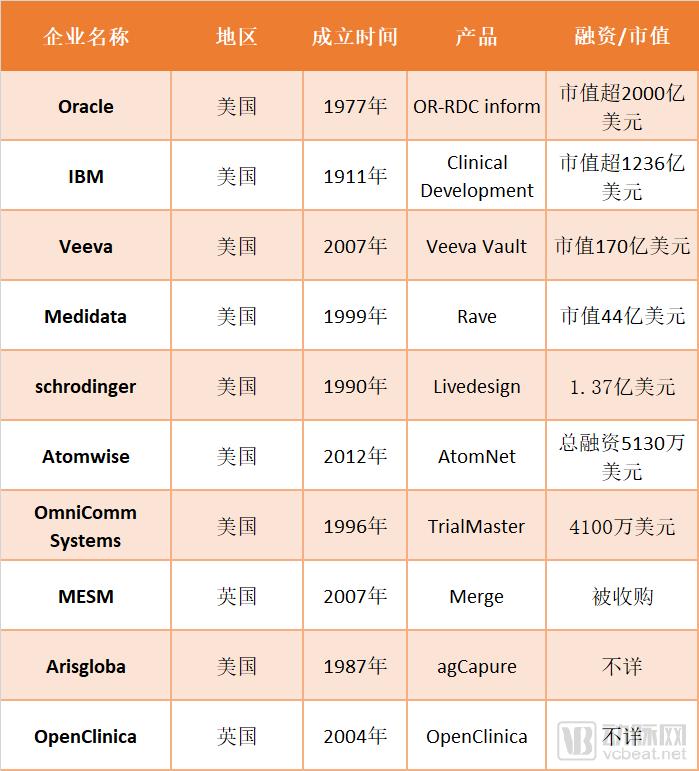
The market for informatics services in the life sciences sector is vast, attracting a multitude of companies. Some offer systematic solutions and products, while others adopt a more focused approach, delving deeply into one or two niche requirements. Nevertheless, core demands and products remain concentrated in areas such as Electronic Data Capture (EDC), drug management systems, and pharmacovigilance.
Overview of Overseas Pharmaceutical IT Companies
Source: VCBeat
Here, we take Veeva and Medidata as examples to examine in detail case studies of pharmaceutical informatics companies.
Veeva
Veeva was founded in 2007, initially relying on its founder’s former employer, Salesforce, to provide CRM products that helped pharmaceutical sales representatives organize drug data to better maintain relationships with physicians. Subsequently, Veeva expanded its product portfolio, launching multiple product series including Veeva Network, Veeva OpenData, and Veeva Vault.
Veeva R&D Cloud Platform is an application suite built on Veeva Vault. All Vault applications feature native interoperability, enabling R&D-related documents to be shared among authorized departments across the entire enterprise. This ensures content authenticity and consistency across all channels from the source, thereby enhancing regulatory and submission efficiency. The platform’s specialized products include applications for Clinical Trial Master File (CTMF) management, Quality Document Management, Electronic Submission Management, and Regulatory Information Management suites. Document management serves as its core functionality.
Medidata
Medidata owns the world’s most widely used platform for clinical development, commercial data, and real-world data, leading the digital transformation of life sciences. The Medidata Intelligent Platform for Life Sciences, powered by artificial intelligence and developed collaboratively by a think tank of top industry experts, helps pharmaceutical companies, biotechnology firms, medical device manufacturers, and academic researchers accelerate value creation, minimize risks, and optimize outcomes. Medidata serves more than 1,000 customers and partners worldwide, providing daily support to over 100,000 authenticated users and bringing hope to millions of patients.
Summary
The informatization services in the life sciences sector have undergone two stages of development: selling software and selling services. Although this market emerged early on, few companies achieved success comparable to Veeva and Medidata until cloud services and SaaS saw widespread adoption. The key reason is that these two companies identified the right strategies for providing informatization services to pharmaceutical enterprises. Veeva focused on “generating revenue,” while Medidata emphasized “cost savings.” Both companies are very similar in terms of customer base and revenue scale, and they have gradually expanded their pharmaceutical informatization applications through complementary approaches.
Tech giants such as Oracle and IBM are focusing more on strategic positioning than on market dominance in the life sciences sector. Their primary battleground remains enterprise services, with life sciences representing merely one branch of their broader operational front. This dynamic has created fertile ground for the long-term development of companies like Veeva and Medidata.
Although the U.S. pharmaceutical informatics industry has given rise to Veeva, with a market capitalization of $17 billion, and Medidata, with a market capitalization of $4.4 billion, the domestic pharmaceutical informatics services market in China is relatively small. From the demand side, growth momentum is modest; from the supply side, the market is characterized by numerous small and fragmented service providers, resulting in low market concentration.
Nevertheless, the domestic pharmaceutical informatization industry in China is poised for sustained growth driven by favorable factors. First, China is encouraging innovation in drugs and medical devices while gradually aligning its approval standards with international norms, thereby raising data requirements. Second, the innovative drug sector is gaining momentum, with policy and capital resources increasingly tilting toward this area. As the development of innovative drugs relies on support from informatization tools, this trend creates additional market space for pharmaceutical informatization.
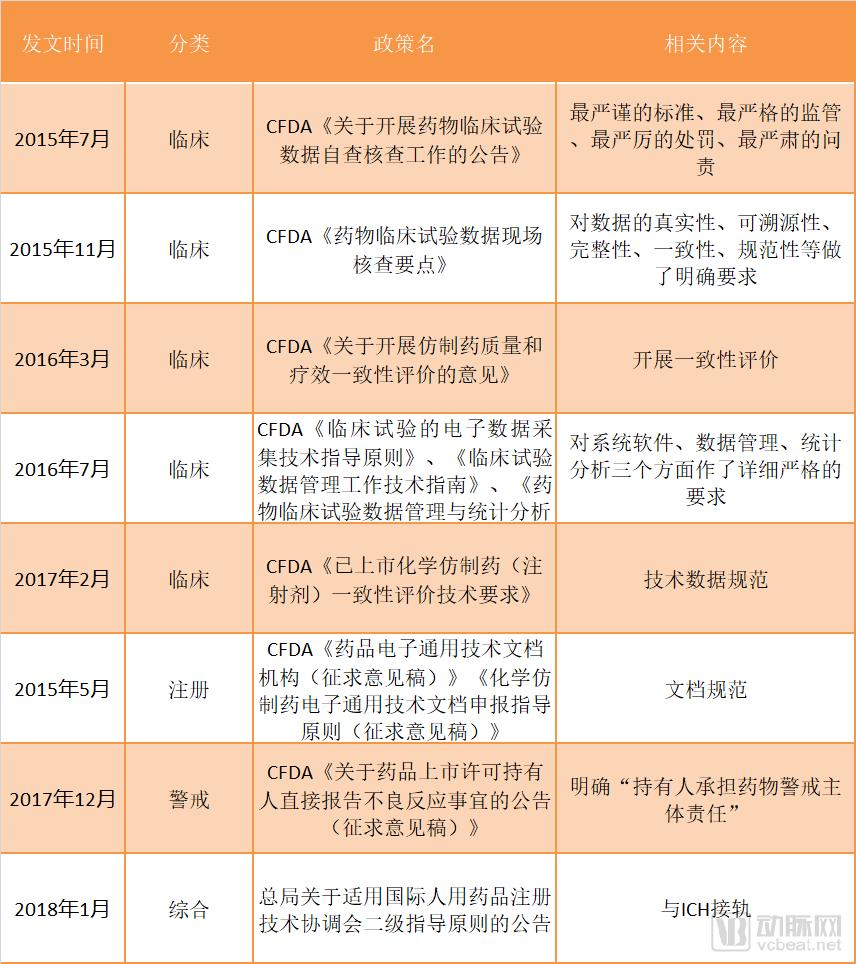
First, let’s examine the policy landscape: a series of policies have driven the development of pharmaceutical informatization in clinical research, pharmacovigilance, and regulatory registration.
Policies Related to Pharmaceutical Informatics
Source: VCBeat
Furthermore, as China’s pharmaceutical market gradually aligns with international standards, the demand for informatization in clinical research and marketing approval submissions is accelerating. Globally, to enhance the quality and efficiency of drug development, multinational corporations are increasingly adopting global simultaneous drug development strategies, aiming to reduce investments in both time and capital. Meanwhile, with the FDA imposing increasingly stringent requirements on clinical studies, biopharmaceutical companies must conduct larger-scale clinical trials and establish additional clinical R&D centers to comply with relevant regulations.
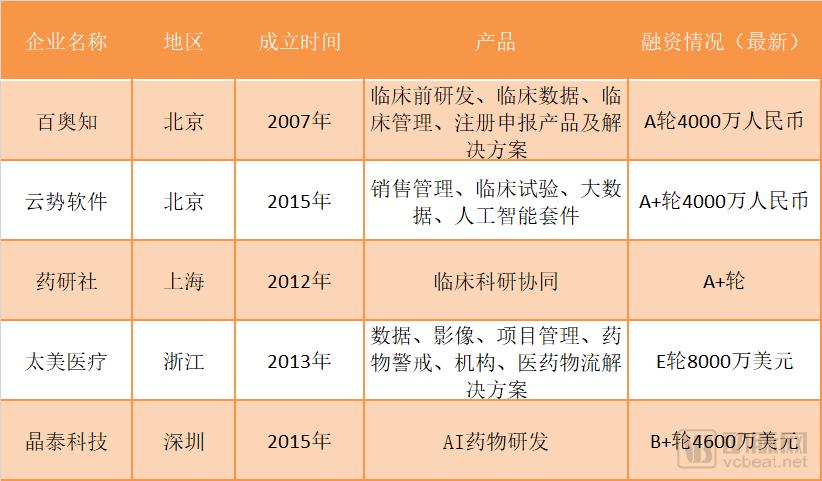
In China’s pharmaceutical informatics services market, a cohort of enterprises that originated in the local market is beginning to gain traction, while multinational corporations remain strong competitors; as previously mentioned, Veeva and Medidata have already launched operations in China.
Overview of Domestic Pharmaceutical Informatics Companies
Data Source: VCBeat, VBInsight
The domestic pharmaceutical informatics services market is characterized by two main features. First, the market is small and fragmented, with numerous lesser-known companies holding sufficient market share in their respective regional markets and having no ambition to expand outward. Second, many CRO organizations come with their own pharmaceutical informatics systems; most CROs have dedicated information technology departments that develop corresponding products to meet their needs.
Pharmaceutical informatics systems and CROs are not in a competitive relationship but rather maintain a collaborative one. Some pharmaceutical informatics companies, such as BioKnow, also provide auxiliary services for EDC database construction and data management to address the shortage of manpower and experience in these modules among small and medium-sized CROs or sponsors during practical implementation.
In recent years, several new companies have entered the pharmaceutical informatics market, primarily medical big data firms such as LinkDoc Technology, Simpai Health, and Senyi Intelligence. This trend is quite understandable, as medical big data companies mainly focus on hospitals—a core healthcare setting—where clinical drug trials are also conducted, resulting in significant overlap between their respective business areas.
Below, we take BioKnow as an example to provide a detailed analysis of case studies on domestic pharmaceutical informatics companies.
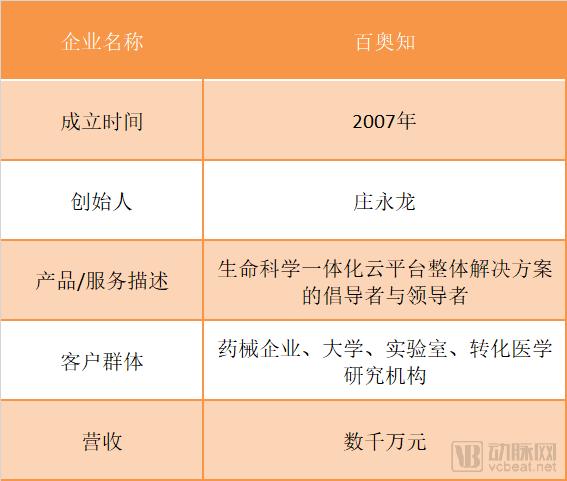
Data Source: BioKnow
BioKnow was established in 2007 by a team led by Dr. Zhuang Yonglong. A graduate of Tsinghua University, Dr. Zhuang studied under Academician Li Yanda and has published more than 20 papers in the field of bioinformatics. He previously served as the project leader for the “Standardization of Molecular Disease Classification and Software Development,” a key initiative under the National 11th Five-Year Plan’s Information Technology Special Program, and brings extensive experience in the informatization industry. Eighty percent of BioKnow’s management team members have over ten years of experience in pharmaceutical research, and the company’s workforce grew to more than 180 employees in 2018.
BioKnow is a pioneer and leader in providing integrated cloud-based solutions for the life sciences, offering products and services that cover the entire drug development process, including precision medicine, preclinical R&D, clinical research, pharmacovigilance, and regulatory submissions. Its comprehensive informatics + AI solution consists of two components: the Integrated Platform and the MEDAI Platform. The former includes product suites for preclinical R&D and clinical research, while the latter features solutions for enterprise drug development and pharmaceutical clinical trials.
BioAid comprehensively supports pharmaceutical research and enhances the industry’s level of informatization. Its core advantages can be summarized by the following keywords: Compliance – Strict adherence to domestic and international regulations and guidelines, with technical and physical measures employed to strengthen regulatory compliance in research; Security – Real-time backup of data and information, enabling users to monitor research progress in real time; Quality – Integrated platform operation alongside standardized systems helps users improve the quality of clinical research; Cost – Parallel execution of multiple projects helps enterprises reduce overall comprehensive project costs by 40%; Time – Helps enterprises shorten data cleaning and research management time by 30%.
After nearly 13 years of development, BioKnow has become a leading enterprise in China’s pharmaceutical informatics industry. It works closely with regulatory authorities and industry organizations to provide recommendations for industry governance. The company has successfully completed over 2,300 clinical research projects for drugs or medical devices; it is the preferred vendor of informatics products for more than 1,000 pharmaceutical and medical device companies, and collaborates with over 200 CROs to deliver services. More than 180 hospitals and clinical research institutions use BioKnow’s products to collect and process clinical research data, encompassing study information from over 600,000 subjects.
Building on its mature pharmaceutical informatics products, BioKnow’s next strategic move is to pioneer a line of medical AI products—AI-empowered drug R&D—to comprehensively accelerate new drug development and expand therapeutic applications. Key focus areas include AI-assisted analysis and prediction of drug targets, drug safety reporting and large-scale literature data mining, as well as exploring drug repurposing through big data mining in genomics and pharmacomics.
Building an international intelligent pharmaceutical research and precision medicine platform, empowering the pharmaceutical industry with information technology and AI to enhance research efficiency and the conversion rate of achievements, thereby promoting the advancement of human health, is the long-term vision of BioKnow.
If EDC, RTSM, and PV represent relatively “traditional” domains within pharmaceutical informatics, then the development of medical big data and medical artificial intelligence technologies, along with their ensuing diverse applications, constitutes the most “cutting-edge” frontier, poised to propel the industry into a new phase.
In the past, although healthcare institutions generated vast amounts of data, they lacked appropriate technical means to effectively extract it, let alone conduct analysis and applications based on big data. The emergence of medical big data companies has addressed this issue by creating “datasets” through more structured data storage methods and effective data cleaning, thereby meeting the data needs for clinical practice and scientific research.
Medical artificial intelligence (AI) has created a richer array of applications based on big healthcare data, such as clinical decision support, medical imaging, supply chain management, patient management, health management, and health insurance. It also involves using AI tools to evaluate inclusion/exclusion criteria for clinical trials, identifying clinical activities in Phase II clinical trials, extracting data from unstructured text, and automating administrative tasks.
Integrating IT services, big data, and artificial intelligence to deliver superior products and solutions for the industry is also a key focus for pharmaceutical informatics companies. For instance, building on its pharmaceutical IT services, BioKnow established the MedAI Institute of Intelligent Pharmaceutical Research, developing capabilities in AI-driven knowledge discovery, AI data analytics, AI cloud research, and AI omics analysis to empower pharmaceutical R&D.
Comprehensive pharmaceutical information systems will also create more opportunities for drug research, such as drug repurposing. Many marketed drugs are found to have new indications during clinical use, which not only extends their product lifecycle but also brings greater benefits to patients. In the early stages of pharmaceutical information dissemination, when processes were relatively “primitive,” the discovery of new indications was largely incidental. However, with advanced pharmaceutical information systems, the potential for drug repurposing will be significantly enhanced.
Furthermore, there are applications in real-world studies (RWS). This refers to evaluating treatment outcomes achieved under real-world conditions—where therapeutic decisions are influenced by actual clinical status, patient treatment preferences, and economic factors—in large sample sizes that cover a broader spectrum of clinical patients. Such studies facilitate assessments of drug safety, pharmacoeconomics, and indications in settings that more closely reflect real-world practice. Both the U.S. Food and Drug Administration (FDA) and China’s National Medical Products Administration (NMPA) have issued guidelines accepting the use of real-world data (RWD) in drug research.
We collectively refer to these changes as the digital upgrade of the pharmaceutical industry. Built upon medical informatization, the healthcare sector is undergoing a technology-driven systemic upgrade. Firstly, AI can assist in target identification, drug discovery, crystal form construction, clinical trial design, and clinical data processing. Meanwhile, technologies such as the Internet of Things (IoT) and wearable devices are standardizing health management and improving individual health outcomes.
In the future, the pharmaceutical industry will become data-driven and highly intelligent. As the sector continues to evolve, a cohort of “unicorns” will also emerge in China’s pharmaceutical informatics landscape.