

Global Top 100 AI in Healthcare Leaders: Only Two from China, Signaling an Intensifying Global AI Talent War
By: Cao Xian, Li Qin
In recent years, pharmaceutical companies and healthcare providers have begun conducting in-depth research on the application of AI across various domains, including medical image analysis, electronic health records (EHRs), and fundamental research such as identifying disease origins, preclinical drug discovery, and clinical trials. The demand for talent in machine learning (ML) and AI technologies is growing within the pharmaceutical and healthcare industries, driving the emergence of new interdisciplinary sectors, notably “data-driven healthcare.”
Consequently, a growing number of AI startups and emerging enterprises are dedicated to providing technological solutions for drug discovery and healthcare. In February 2019, the prominent investment firm Deep Knowledge Ventures released the “Report on the Application of AI in Drug R&D in Q4 2018” (hereinafter referred to as the “Report”). The Report summarized the 100 most innovative and entrepreneurial AI leaders of 2018, who are committed to driving the data-driven transformation of the pharmaceutical and healthcare industries. VCBeat New Medicine (WeChat Official Account: biobeat1) has compiled and translated this section. The content of the report is as follows:
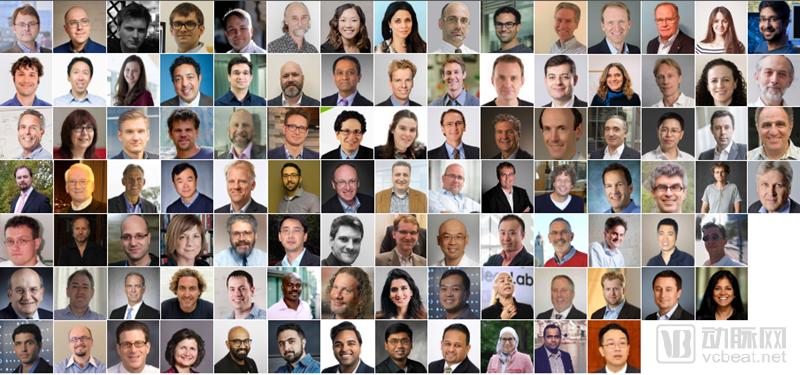
To understand how to build effective interdisciplinary teams that achieve meaningful milestones on the path toward AI-driven drug discovery and healthcare transformation, it is essential to analyze experienced leaders in this field, including their backgrounds, technical expertise, strengths, competitive advantages, roles within their organizations, and their influence on the industry as a whole.
The objective of this report is to compile a list of 100 successful leaders who leverage ML/AI-driven approaches in the fields of drug discovery and healthcare, through a global “bird’s-eye view” perspective.
The assessment of the list of 100 AI leaders in drug discovery and advanced healthcare is determined by their cumulative impact (CI) in advancing AI technologies within pharmaceutical research (including basic biological research, drug discovery and development, drug repurposing, etc.) and healthcare research (including diagnostics, medical data management, therapeutic prescription, etc.).
CI is measured by the sum of three highly overlapping categories:
Scientific and Technological Innovators—Reflecting scientific and technological contributions to the development of artificial intelligence technologies within the context of their applied life sciences missions;
Business Leaders – Demonstrating the contributions of entrepreneurial spirit, business leadership, and industry ecosystem development to the advancement of AI technologies in life sciences;
AI Thought Leader – Recognizing contributions to the dissemination of AI applications in life sciences and healthcare (through books, conferences, events, educational programs, etc.).
The top 100 AI leader nominations also have a prerequisite, namely possessing interdisciplinary skills or business, entrepreneurship, and decision-making skills, mainly including:
1. AI/ML, statistics, science, and computer science data.
2. Drug discovery, drug development, clinical trials, healthcare, and diagnostics.
Another prerequisite is whether it has outstanding achievements in AI or applied artificial intelligence for solving life science tasks, specifically:
1. Significant Innovation, Technological Breakthroughs.
2. Significant impact on research (e.g., high citation counts).
3. Significant achievements in organizational or entrepreneurial endeavors (founding or leading startups, early-stage companies, or established firms with substantial financing or market capitalization, or influential non-profit organizations or academic institutions).
4. Significant achievements in thought leadership (influential books, articles, public activities, etc.).
In most cases, AI-driven startups are born in the cradle of academic institutions, where early-stage academic concepts and undeveloped, unvalidated prototypes exist, prior to securing angel financing.
Another significant source of advanced AI expertise in drug discovery and healthcare is large technology companies such as Google, Microsoft, and Tencent. These companies are increasingly focusing on leveraging their technological resources to address health-related issues, or assisting life science professionals in research and analysis through project collaborations or leasing arrangements.
On the other hand, leading pharmaceutical giants such as GlaxoSmithKline, AstraZeneca, and Novartis have begun to take measures by adjusting internal research processes, recruiting talent in machine learning (ML), artificial intelligence (AI), and data science, and formulating development strategies, thereby embarking on large-scale adoption of AI-driven digital transformation.
However, compared with more traditional consumer sectors such as finance and retail, the pharmaceutical industry as a whole still lags behind in the adoption of AI applications. While technological trends are driving the use of AI in pharmaceuticals and advanced medical research, overall success largely depends on seasoned interdisciplinary leaders who can innovate, organize, and provide direction in this field.
Undoubtedly, talent acquisition and team building appear to be the most challenging aspects of any AI strategy. Pharmaceutical companies and drug R&D institutions alike agree that drug discovery and knowledge acquisition in healthcare are the most complex components, requiring years of theoretical training and practical experience to understand how to model with ML/AI. In other words, without a certain level of expertise to understand data, semantics, features, and general entities, it is impossible to effectively apply ML/AI to such tasks, which indeed differ significantly from “traditional” AI tasks.
Image processing and modeling are easily understood even without in-depth specialized knowledge. In contrast, interpreting datasets from gene expression studies to identify novel biological modulators, or understanding genetic polymorphisms within the context of various pathogenic mechanisms across species, requires a profound understanding of biology, genetics, and related fields.
Meanwhile, ML/AI itself is a complex, multidisciplinary field that requires a strong theoretical foundation in statistics and probability, calculus, and linear algebra, as well as expertise in data analysis and domain-specific knowledge such as graph theory, advanced programming skills, and hands-on experience in developing, training, and deploying ML models in distributed (cloud) environments.
In addition to the aforementioned “hard” skills in technology and research, certain “soft” skills are often prerequisites for “ideal” candidates for AI leadership roles in pharmaceutical companies. These “soft” skills include leadership capabilities, project or product management experience, administrative experience, or industrial project management experience.
These unique demands aptly explain the severe shortage of highly skilled talent in this field, as well as the hefty “price tags” commanded by such experts: we predict that AI specialists with extensive expertise in the life sciences will become among the highest-paid professionals worldwide within a few years.
More practically, pharmaceutical companies will address the demand for dual expertise in ML/AI and life sciences through high-level innovation, bringing together experts from both fields into interdisciplinary teams for close communication and collaboration. However, whether relying on a single leader or a group of leaders, a strong foundation in both domains is essential to develop a comprehensive project roadmap and ensure effective cooperation between the two “camps.”
The initial candidate pool (approximately 500 individuals) for the list of top AI leaders was sourced from project lists at premier pharmaceutical and healthcare AI conferences, Google Scholar searches, databases, Google News and PR distribution services (SEO tools), and company websites.
Meanwhile, the list is based on an analysis of narrative task criteria (including personal profiles, biographies, LinkedIn and Bloomberg page profiles, public awards, article titles, news and PRs, and other textual resources) and formal quantitative criteria (including the number of research citations in Google Scholar, ResearchGate RG scores, the number of publications or lectures, papers, social media activities, etc.).
The first batch of approximately 500 top candidates has been shortlisted. Using an iterative approach, start with the list of 100 below and specify distinctly different parameters (top-tier technologies, business achievements, highest citation counts), gradually incorporating additional criteria for the final ranking.
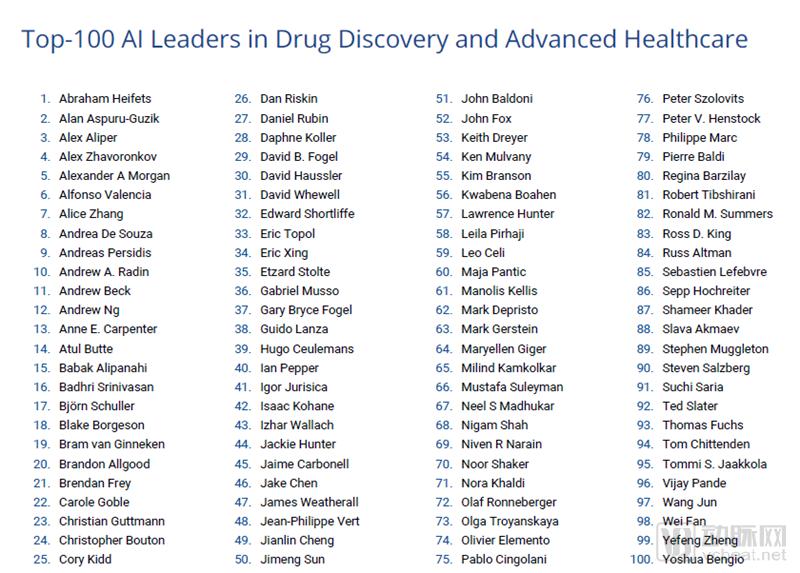
Top 100 AI Leaders in Drug R&D and Advanced Healthcare
1. Academia. Academia has long been the cradle of innovative ideas in both theory and practice, including theories on the application of machine learning, deep learning, and artificial intelligence systems in drug discovery and biomedical research. Evaluation criteria in this field include: a high volume of peer-reviewed publications; high citation metrics (elevated h-index and i10-index, high ResearchGate RG Score); leadership in the theoretical or engineering aspects of applying ML/AI to drug discovery; and significant theoretical breakthroughs, technological inventions, or widely adopted business models.
2. AI Companies. The number of new companies providing AI solutions for pharmaceuticals and biotechnology is steadily increasing. Candidates in this field are primarily founders or top executives of these companies, with evaluation criteria reflecting: exceptional business leadership in introducing AI-driven drugs in the areas of drug discovery, biotechnology, and healthcare; high-level interdisciplinary expertise in high-tech and life sciences; public engagements and thought leadership activities.
3. Pharmaceutical Companies. Despite the surge in life sciences startups, emerging biotechnology firms, and AI-focused vendors, large pharmaceutical companies remain the primary drivers of the pharmaceutical industry and the innovative drug market. The extent to which these companies successfully leverage ML/AI technologies will largely determine their momentum in advancing AI-driven drug discovery. Leaders in this category include pharmaceutical executives who formulate AI-driven strategies and make major strategic decisions. Evaluation criteria for this segment are: C-suite executive positions or Chief Scientist roles at large pharmaceutical companies; proficiency in digital technologies, cheminformatics, or bioinformatics; strong technical leadership capabilities; and familiarity with ML/AI (through professional or amateur training).
4. Technology Companies. Major technology companies have developed the most powerful capabilities and required infrastructure in machine learning (ML) and artificial intelligence (AI). They are now attempting to shift their focus toward healthcare, and even into the realms of foundational pharmaceutical research and drug discovery. Top AI leaders in this field typically possess strong technical backgrounds in computer science, artificial intelligence, data science, engineering, statistics, or mathematics. Some have also acquired expertise in the life sciences. The evaluation criteria for this category are: senior research or business leaders at major technology companies who are involved in applying ML/AI technologies to pharmaceutical or medical tasks.
5. Others. This category summarizes top AI leaders from various uncategorized organizations who have helped advance this technology in pharmaceutical research or healthcare. The specific evaluation criteria are: holding a leadership role in research or business within the organization; possessing extensive technical expertise in AI/ML or life sciences (with at least foundational professional knowledge in one of these two disciplines); and making significant leadership or research contributions to the development of AI in the pharmaceutical industry or healthcare sector.
By Country
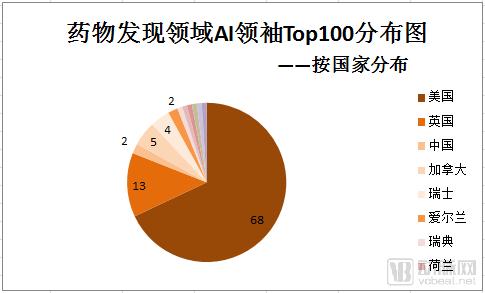
The figure below illustrates the national distribution of top leaders in the field of artificial intelligence within the global pharmaceutical and healthcare industries. Specifically, there are 68 from the United States, 13 from the United Kingdom, 2 from China, 5 from Canada, 4 from Switzerland, 2 from Ireland, and 1 each from Sweden, the Netherlands, Belgium, Australia, France, and Spain, totaling 100 individuals.
It is perhaps no surprise that the United States and the United Kingdom still boast the largest number of top-tier artificial intelligence experts in the fields of pharmaceutical and medical R&D. Particular attention should be paid to China: although only two experts were selected, it holds the greatest potential in AI-driven pharmaceutical and medical research. The Chinese experts included areWang Jun of iCarbonX, Zheng Yefeng of Tencent YouTu Lab.There are actually three people in China, and there are alsoFan Wei, Director of Tencent AI Lab, classified under the United States due to work location.
There are relatively few Chinese AI leaders selected, mainly for two reasons:
(1) China’s AI talent pool is experiencing explosive growth, but the assessment of the top 100 AI leaders prioritizes historical achievements (with the United States and the United Kingdom having numerous pioneering advancements in this field historically) and currently recognized leadership (rather than future potential).
(2) Chinese experts working at the Western offices of Chinese companies and residing in the United States or the United Kingdom shall participate in the evaluation based on their work location or place of residence; for example, Tencent’s Fan Wei is categorized under the United States.
We predict that China’s statistical figures may undergo significant changes in the coming years. First, the government is strongly supporting the transformation of the AI-driven healthcare industry and drug R&D. Second, bureaucratic and regulatory hurdles for “controversial” research within AI-driven medical and pharmaceutical initiatives are relatively low. Finally, there is a clear trend of top Chinese experts “returning” to China from Western countries.
Classification by Tissue Type
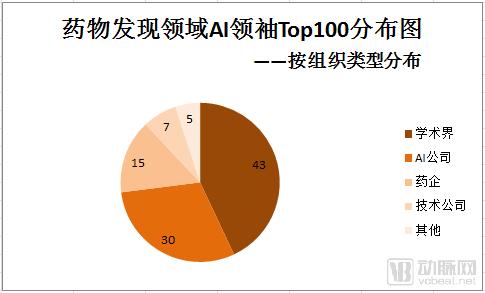
From a traditional perspective, academia should be the stronghold of the top researchers in the pharmaceutical and medical AI fields, which is consistent with current statistical data. The majority of leading AI experts are involved in founding and operating AI startups, while the remaining top-tier experts are distributed across pharmaceutical companies, technology firms, and other uncategorized entities.
Research has found that among the top 100 individuals on the list, the majority work in academia (43%);
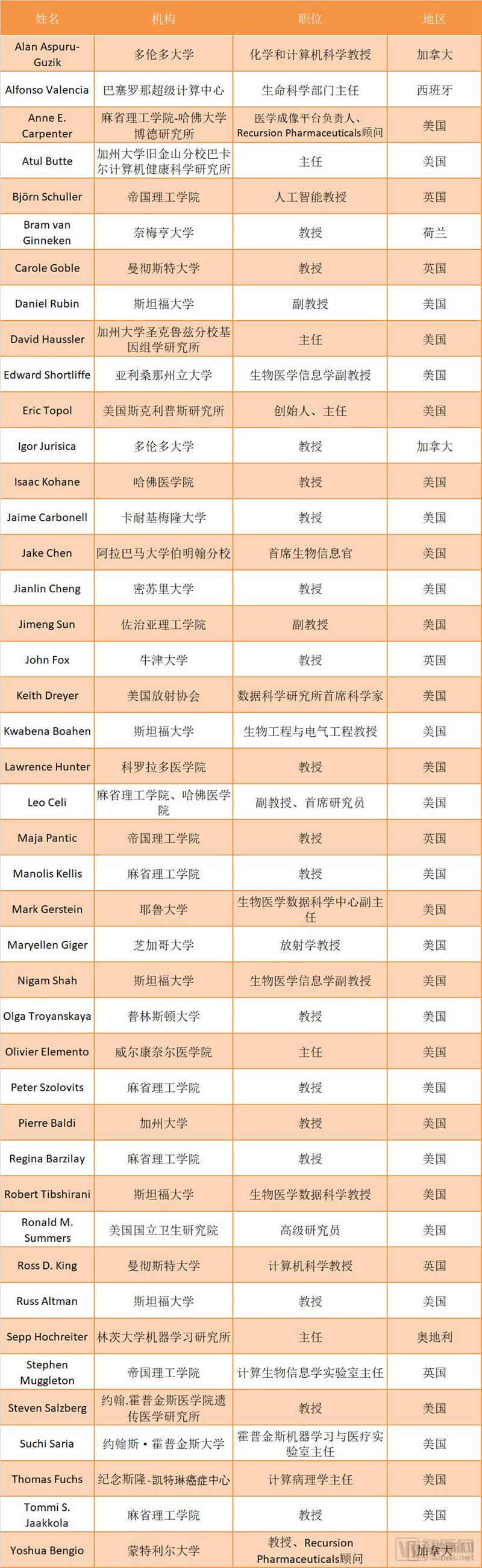
List of 43 AI Leaders in Academia
Founders and research executives of AI-driven drug discovery startups account for the second-largest share (30%) among the top 100 leaders. The surge in emerging companies in this field is a result of the growing demand for AI-driven solutions.
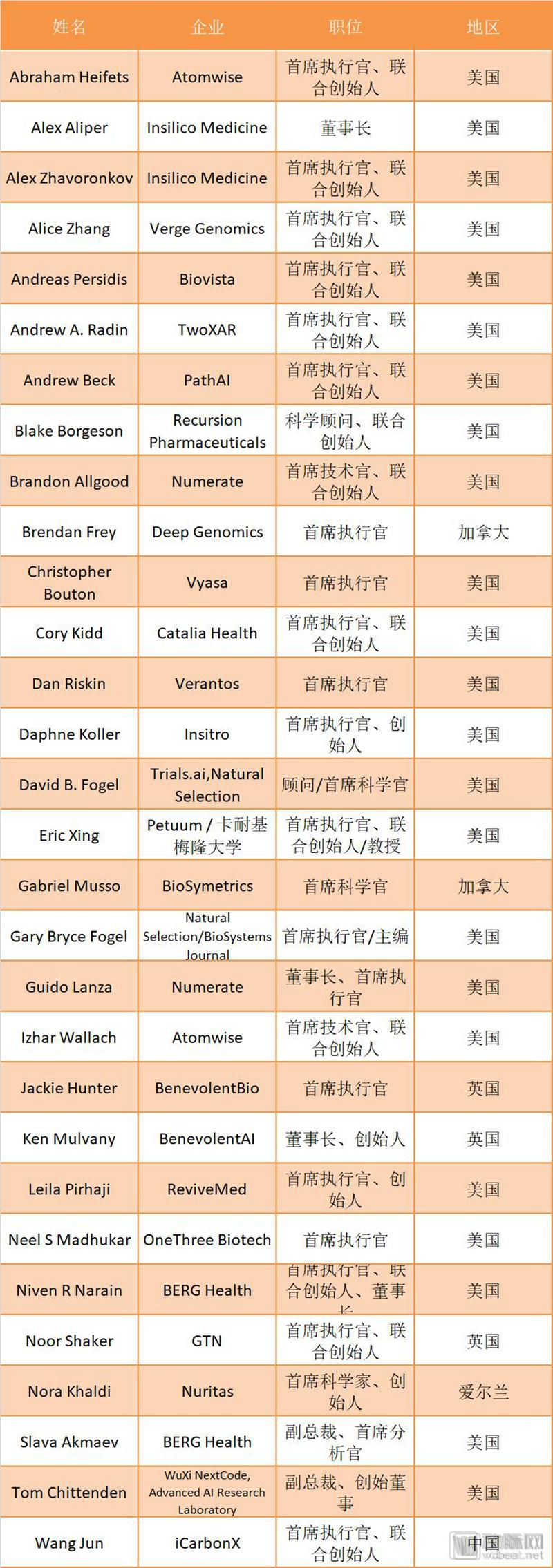
List of 30 Leaders in AI Startups
Among the top 100 AI leaders, 15% work at large pharmaceutical companies, reflecting the somewhat slow recognition by pharma firms of AI-driven drug discovery and healthcare transformation. However, we anticipate significant expansion in this category in the near term, as pharmaceutical companies aggressively recruit AI talent and leaders.
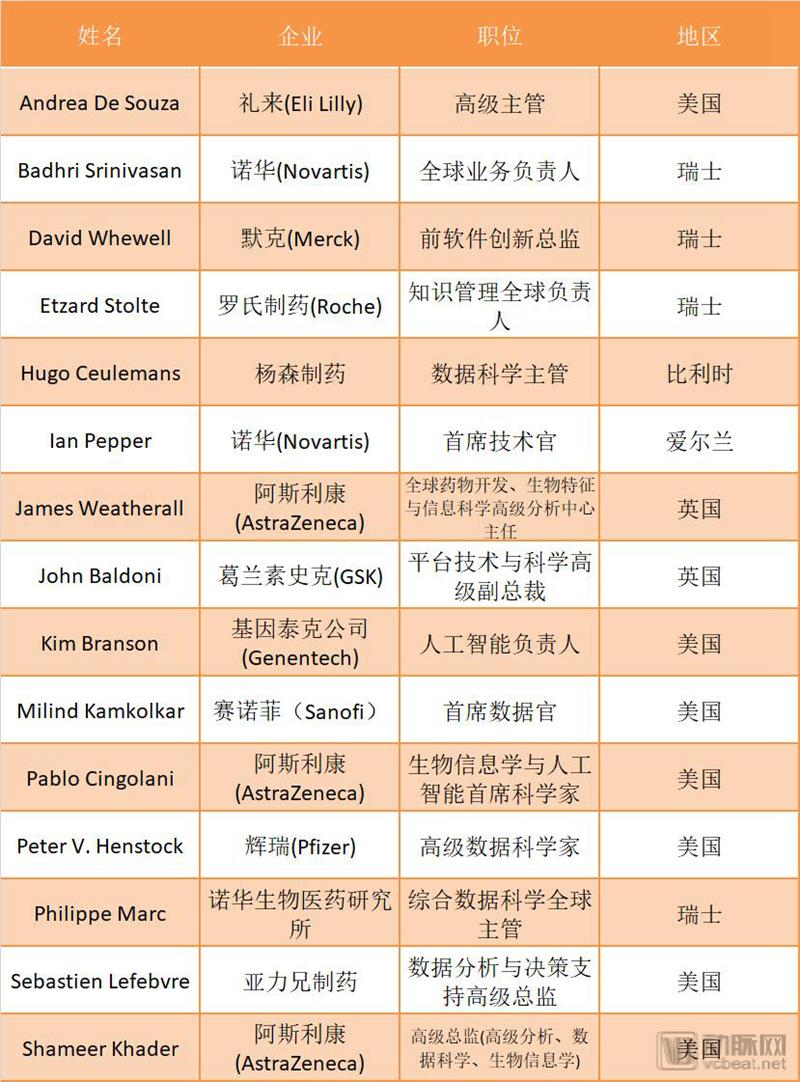
List of 15 AI Leaders in Pharmaceutical Companies
The other AI leaders in the top 100 of the list hail from the world’s largest non-pharmaceutical technology companies, including tech firms such as Google and Tencent (7%), as well as companies from various other industries (5%).
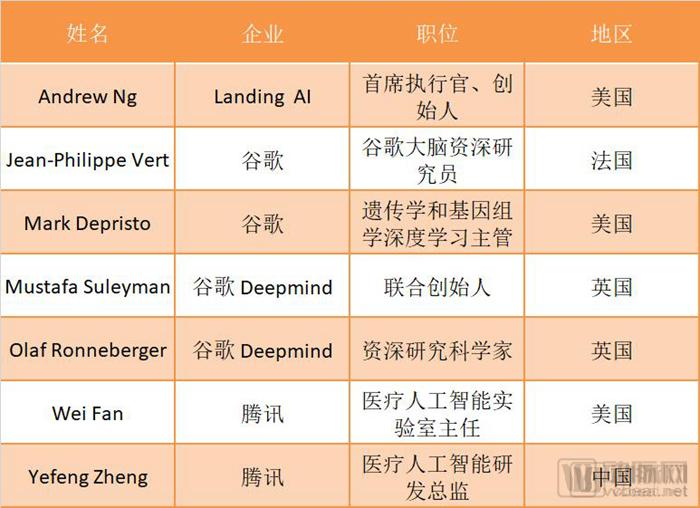
List of 7 AI Leaders at Tech Companies
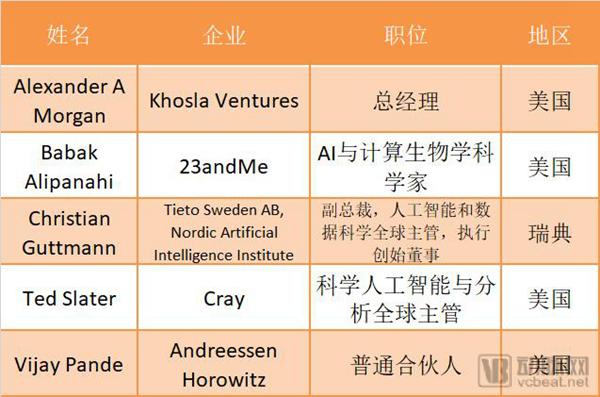
List of AI Leaders in Other Fields
Among these non-pharmaceutical technology companies, particular attention should be paid to the segment labeled “technology companies,” as they already possess the world’s most advanced ML/AI technologies and first-class IT infrastructure.
Currently, although tech giants are unable to enter the pharmaceutical R&D market on a large scale, their progress is extremely rapid. We anticipate that major technology companies may, at some point, exert significant competitive pressure on mainstream pharmaceutical and biotechnology organizations. In this scenario, once the “democratization” of ML/AI technologies gains widespread recognition, a large number of non-pharmaceutical enterprises will enter the pharmaceutical R&D market.
Classification by Role in the Organization
Among the 100 AI leaders recognized for their contributions to advancing AI in the pharmaceutical and healthcare sectors, encompassing both research professionals and entrepreneurs, the approximate distribution is 2:1 (with a precise ratio of 63% to 37%). Specifically, 63% of these AI leaders are primarily engaged in research-related activities, while only 37% serve as entrepreneurs and executives.
Classified by Primary Actions Performed
Classify 100 AI leaders according to their primary activities, with the following distribution: Business 17%, AI Research 46%, and Life Sciences Research 37%. More specifically, 16.8% are primarily focused on general business and management; 46.5% are more involved in ML/AI and research (including both scientific and commercial aspects); and 36.8% are more concentrated in the life sciences field (including both scientific and commercial aspects).
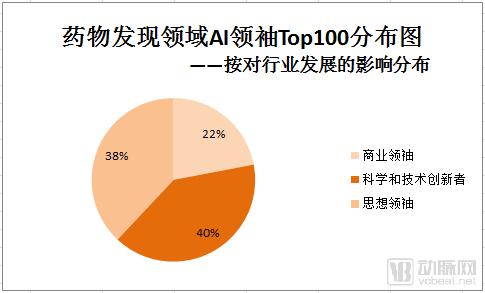
Classification by Impact on Industry Development
This chart illustrates the distribution of influence types exerted by top AI leaders on industry development. It shows that business leaders account for 22%, scientific and technological innovators for 40%, and thought leaders for 38%.
A review of the top 100 list clearly shows that successful AI leaders in the pharmaceutical and healthcare sectors come from diverse professional backgrounds and domains, assuming a wide variety of roles within projects—ranging from purely scientific positions to those focused on entrepreneurship and management. This indicates that any effective AI talent acquisition strategy should aim to foster broad organizational adoption of AI technologies and enable seamless mobility across different roles and departments, rather than being limited to hiring highly specialized staff to expand R&D or IT divisions.
People are increasingly recognizing that AI technology presents a transformative opportunity for the pharmaceutical industry. It is easy to predict the impending fierce competition for AI talent, particularly those with experience in the life sciences. In the coming years, the demand for such specialized professionals will grow at a rate far outpacing supply.
Another challenge in AI talent acquisition strategies is the intensifying competition from external companies and organizations for a company’s existing talent pool. Tech giants such as Google, Microsoft, Tencent, and Amazon are increasingly focusing on the life sciences and healthcare sectors. Consequently, pharmaceutical giants must compete for talent not only with their peer pharmaceutical companies but also with a growing number of AI startups in the pharmaceutical industry and global technology firms.
To sustain long-term growth momentum and prepare for AI-driven performance gains, pharmaceutical companies will need to focus on the most efficient talent acquisition strategies:
1. Emphasize collaboration with academia: Academic institutions are not only incubators for AI innovation but also primary sources of scientific and technological talent. Pharmaceutical companies should engage with these highly skilled experts early in their careers, encouraging them to join the pharmaceutical industry rather than drifting along in tech company career paths. This strategy should strike a balance to avoid causing a “brain drain” from academia.
2. M&A Strategy: Mergers and acquisitions are a critical component of efforts to acquire AI talent. The growing wave of AI-driven drug discovery and healthcare startups is fostering high-skilled teams with deep expertise in both ML/AI and life sciences. We anticipate that the most successful startups in this field will soon become the primary targets for M&A by pharmaceutical and technology companies.
3. Strengthening Internal Corporate Culture: The creation of internal corporate projects and enterprise incubators will inevitably become a crucial component of AI talent acquisition strategies for pharmaceutical companies. Companies like Google are renowned worldwide for their exceptional internal innovators. Although pharmaceutical companies are known to be highly conservative, they will need to adopt more flexible strategies for cultivating internal innovators and intrapreneurs.
About Deep Knowledge Ventures
Deep Knowledge Ventures is a venture capital firm established in 2014, headquartered in Hong Kong, with branch offices in London, Geneva, and San Francisco. The company’s primary investment areas include blockchain technology, artificial intelligence, and biomedicine. It regularly produces and publicly releases analytical reports on various themes, including innovative technology, AI, and longevity, to accelerate the development of these industries.