

Regenxbio: A Rising Star in AAV Gene Therapy with Novartis Securing Exclusive License to Its NAV Platform

ReGenXBio
Gene Therapy Developer
Editor’s Note: This article is republished from the WeChat official account TiPLab, authored by Mu Tao. VCBeat has been authorized to repost it.
ReGenXBio is a clinical-stage biotechnology company dedicated to the development and commercialization of AAV (adeno-associated virus) gene therapies.
REGENXBIO’s NAV Technology Platform is a proprietary AAV gene delivery platform comprising more than 100 novel AAV vectors, such as AAV7, AAV8, AAV9, and AAVrh10.
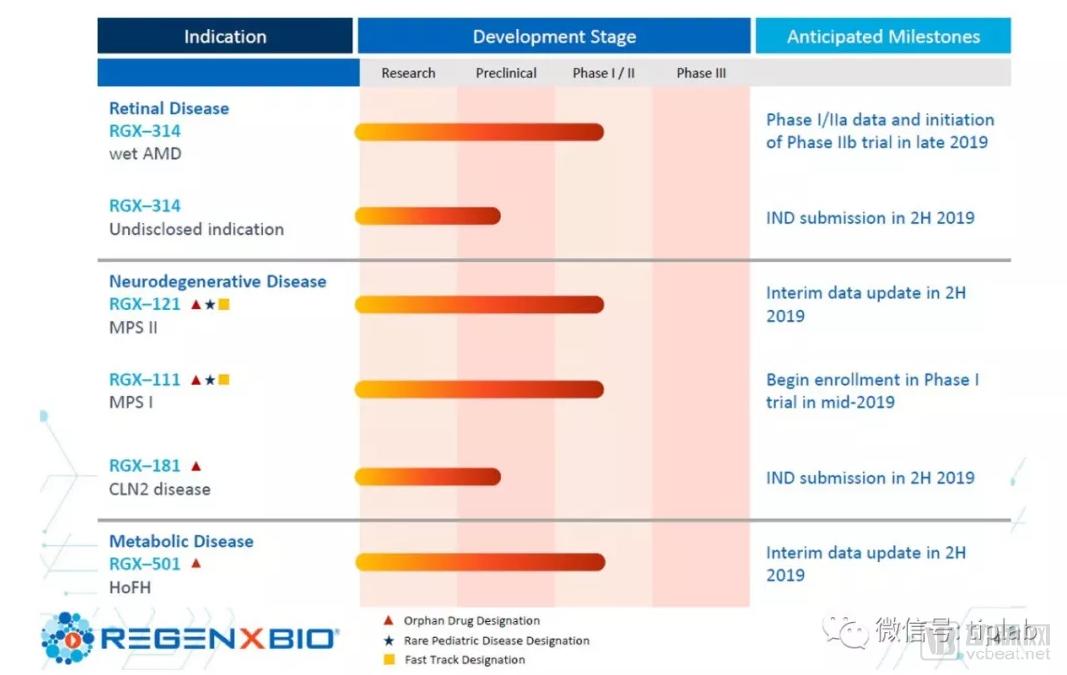
REGENXBIO’s product candidates, all developed using its NAV Technology Platform, primarily employ adeno-associated virus (AAV) vectors to deliver genes into cells for correcting genetic defects or producing therapeutic proteins within in vivo cells. The company is currently developing gene therapy candidates for the treatment of retinal, metabolic, and neurodegenerative diseases.
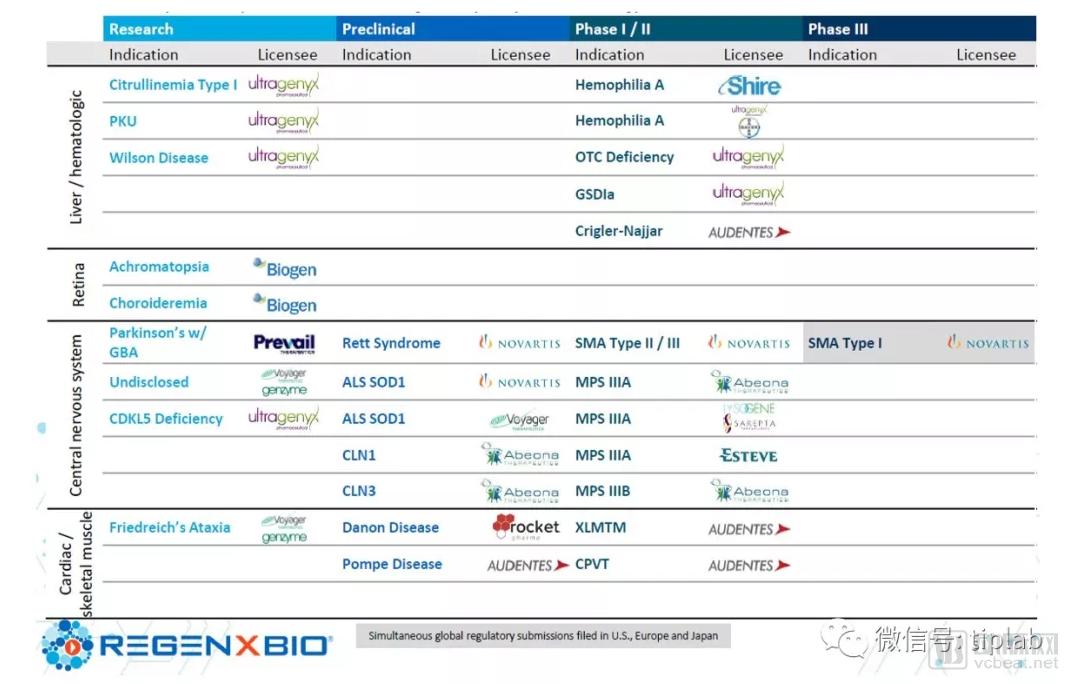
In addition to in-house development, Regenxbio licenses its NAV Technology Platform to numerous leading biotechnology companies. To date, at least 10 companies have obtained licenses for the NAV platform technology and developed more than 20 candidate products based on it. This licensing strategy enables Regenxbio to better focus on the development of its internal product pipeline while generating additional revenue.
Another gene therapy company, AveXis (acquired by Novartis), licensed the NAV technology and developed its candidate product AVXS-101, which is currently in clinical trials and has received FDA Priority Review. As a follow-up to this acquisition, Novartis paid Regenxbio $100 million to secure an exclusive license for its gene therapy technology platform.
Source: REGENXBIO official website
NAV vectors are modified adeno-associated virus (AAV) vectors capable of overcoming issues such as the immunogenicity associated with early-generation AAV vectors (AAV1–AAV6). Furthermore, pathogenic genes have been removed from the NAV vector itself, ensuring that it does not cause disease in humans.
The main advantages of the NAV technology platform are: low immunogenicity, ease of manufacturing, high and sustained gene expression, and diverse tissue specificity.
The NAV technology platform comprises more than 100 novel AAV vectors, which can target diverse anatomical sites and enable a range of therapeutic applications. For instance, gene therapies delivered to the liver hold promise for treating metabolic disorders such as hemophilia, while those targeted to the central nervous system (brain and spinal cord) are primarily used to treat conditions affecting the brain and cognition.
NAV vectors are an in vivo gene therapy. When a gene of interest (i.e., a missing/defective gene or a therapeutic protein gene) is inserted into the NAV vector and administered directly to patients via injection or infusion, the NAV vector can reach target cells and enable them to produce the proteins required by the human body.
Due to the long-lasting effects of gene therapy, a single administration of NAV gene therapy may achieve outcomes equivalent to those of long-term treatment with traditional chronic therapies.

Source: REGENXBIO Official Website
Relevant Patents for the NAV Technology Platform
Following the shadow cast by the first clinical trial of adenovirus vector gene therapy, James Wilson’s team at the University of Pennsylvania (UPenn) reported in 2004 that they had discovered more than 100 novel adeno-associated viruses (AAVs)—next-generation AAV vectors—which form the foundation of the NAV platform technology.
UPenn Has Filed for Patent Protection for Next-Generation AAV Vectors.
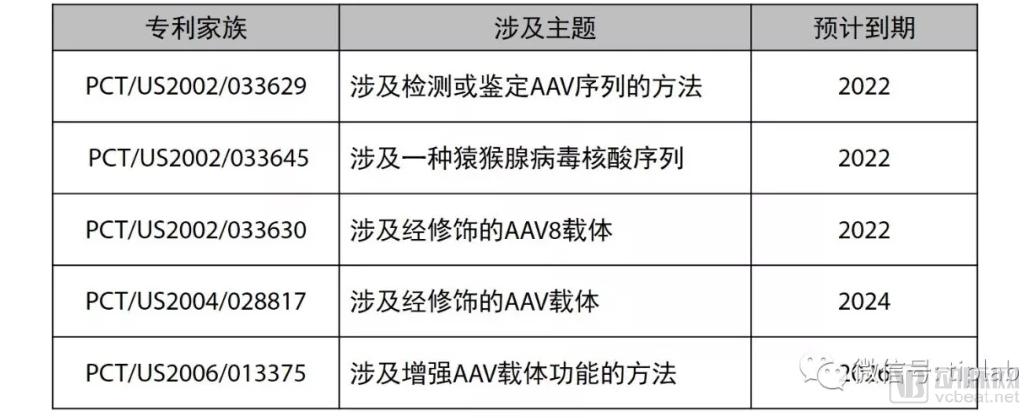
In 2009, Regenxbio obtained an exclusive license from the University of Pennsylvania (UPenn) for next-generation AAV vectors. The patent assets comprise over 100 global patents (and patent applications) covering NAV™ vectors, including those involving AAV7, AAV8, AAV9, and AAVrh10 vectors, as well as their methods of preparation and therapeutic uses.
These patent families are expected to expire by 2026 at the latest.
REGENXBIO is developing gene therapy product candidates for the treatment of retinal, metabolic, and neurodegenerative diseases.
Source: REGENXBIO official website
RGX-314
Age-Related Macular Degeneration (AMD) is a potentially progressive maculopathy, in which wet AMD leads to blindness due to excessive fluid leakage caused by neovascularization. Wet AMD is the leading cause of vision loss in the United States, Europe, and Japan, affecting more than 2 million patients.
The emergence of anti-vascular endothelial growth factor (VEGF) antibodies has significantly improved the therapeutic outcomes for wet age-related macular degeneration (AMD), establishing them as the standard of care. However, these therapies require repeated intravitreal injections, typically every four to eight weeks, leading to poor patient adherence.
RGX-314 is a novel, one-time subretinal gene therapy containing an AAV8 vector encoding an anti-VEGF antibody fragment for the treatment of wet AMD. The AAV8 vector delivers the gene to cells in the retina, enabling them to produce anti-VEGF proteins that neutralize VEGF activity, thereby reducing leaky angiogenesis and fluid accumulation.

Source: REGENXBIO Official Website
In May 2017, REGENXBIO Inc. initiated clinical trials of RGX-314 for the treatment of wet AMD.
Current Phase I/IIa clinical results show:
In terms of safety, RGX-314 was well tolerated (n=24), with no drug-related adverse events (AEs) or drug-related serious adverse events (SAEs) reported;
In terms of efficacy, all subjects exhibited dose-dependent increases in protein expression; in Cohort 3, the number of anti-VEGF injections required was the lowest after 6 months of RGX-314 administration, and protein levels were sustained for 6 months.
ReGenXBio will initiate Phase IIb clinical trials for the treatment of wet AMD in 2019 and launch clinical studies for new indications.
On the eve of recruiting subjects for the Phase I clinical trial, UPenn filed a PCT patent application (PCT/US2017/027529) involving the active ingredient of RGX-314.
On the same day, REGENXBIO Inc. also filed a PCT patent application (PCT/US2017/027650) concerning the therapeutic use of RGX-314, with Claim 1 relating to:
A method of treating a human subject diagnosed with neovascular age-related macular degeneration (nAMD), comprising delivering to the retina of said human subject a therapeutically effective amount of anti-human vascular endothelial growth factor (hVEGF) antigen-binding fragment produced by human retinal cells.
Claim 1 of PCT/US2017/027650 relates to a method for treating a subject diagnosed with neovascular AMD, comprising delivering a therapeutically effective amount of an anti-human VEGF antibody fragment to the retina of said subject, wherein the antibody fragment is produced by human retinal cells.
Interestingly, this does not directly limit the use of AAV vectors for treatment, but rather specifies that the antibody fragments are produced by human retinal cells.
Currently, these two PCT applications are entering the national phase in different countries; if granted, they will expire in 2037.
RGX-501
Homozygous familial hypercholesterolemia (HoFH) is a monogenic disorder caused by LDLR gene abnormalities.
LDLR regulates cholesterol by promoting the uptake and degradation of low-density lipoprotein (LDL) in the liver. In patients with homozygous familial hypercholesterolemia (HoFH), LDLR dysfunction leads to markedly elevated blood cholesterol levels, which may result in arterial plaque accumulation, coronary artery disease, or cerebrovascular and cardiovascular diseases.
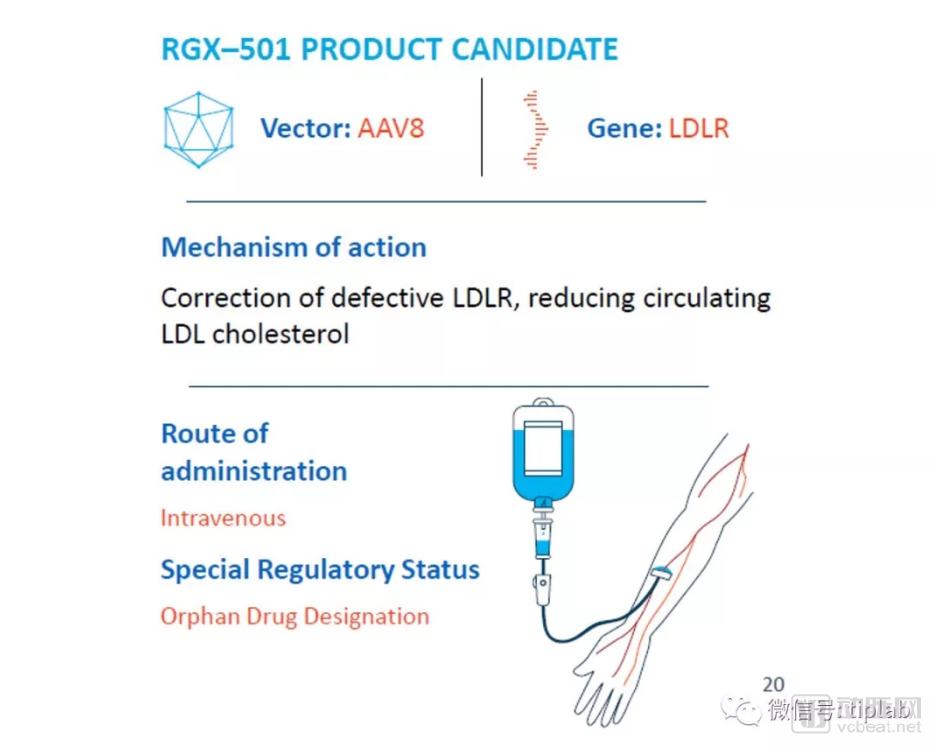
RGX-501 is an AAV8 vector encapsulating a functional copy of the LDLR gene. Administered via intravenous injection, the AAV8 vector targets the liver, delivering the normal LDLR gene to hepatocytes. This enables these cells to produce the required LDLR protein, which captures and breaks down low-density lipoprotein, thereby treating homozygous familial hypercholesterolemia (HoFH).
Source: REGENXBIO Official Website
In March 2017, Regenxbio initiated a clinical trial of RGX-501 for the treatment of HoFH. Initial results from the Phase I/II trial showed that at 12 weeks, the three subjects in Cohort 1 exhibited no clinically meaningful changes in LDL-C levels; these subjects experienced elevated transaminases, which resolved following treatment with corticosteroids. Regenxbio submitted an amended clinical trial protocol to continue the study.
UPenn has filed patents (applications) covering the active ingredient of RGX-501, such as the already granted US8962330B2, whose Claim 1 protects an AAV8 viral vector comprising an AAV8 capsid and a heterologous gene linked to expression regulatory sequences, wherein the heterologous gene encodes LDLR. Considering patent term adjustment, US8962330B2 is expected to expire in 2026.
In 2016, the University of Pennsylvania filed another PCT patent application concerning the RGX-501 formulation—PCT/US2016/065984—which is currently under examination in both the U.S. and Chinese national phases.
Other Candidate Products
The product pipeline for treating neurodegenerative diseases, including RGX-121, RGX-111, and RGX-181, all utilize the NAV AAV9 vector. The AAV9 vector can cross the blood-brain barrier, thereby delivering relevant genes to the central nervous system.
One of the U.S. patents protecting the active ingredient of RGX-111, US Patent No. US10137176B2, is set to expire in 2034.
Five PCT applications involving RGX-121 or RGX-111 were also filed between 2014 and 2017.
Regarding platform technology, Regenxbio obtained an exclusive patent license for NAV technology from UPenn. It subsequently operates its patent assets through out-licensing, generating substantial licensing fees that provide robust support for the development of its internal product pipeline.
For our internal product pipeline, we continuously build patent portfolios around multiple candidate products to safeguard post-launch exclusivity and secure sustained revenue.
REGENXBIO Inc. relies on the ongoing maintenance of its patent assets, combined with its trade secrets, to solidify its leading position in the field of gene therapy.