

CStone Pharmaceuticals Debuts on HKEX with 18% Surge, Highlighting Clinical-Stage Pipeline Led by PD-L1 Candidate CS1001

CStone Pharmaceuticals
Innovative Oncology Immunotherapy and Precision Medicine Drug Developer
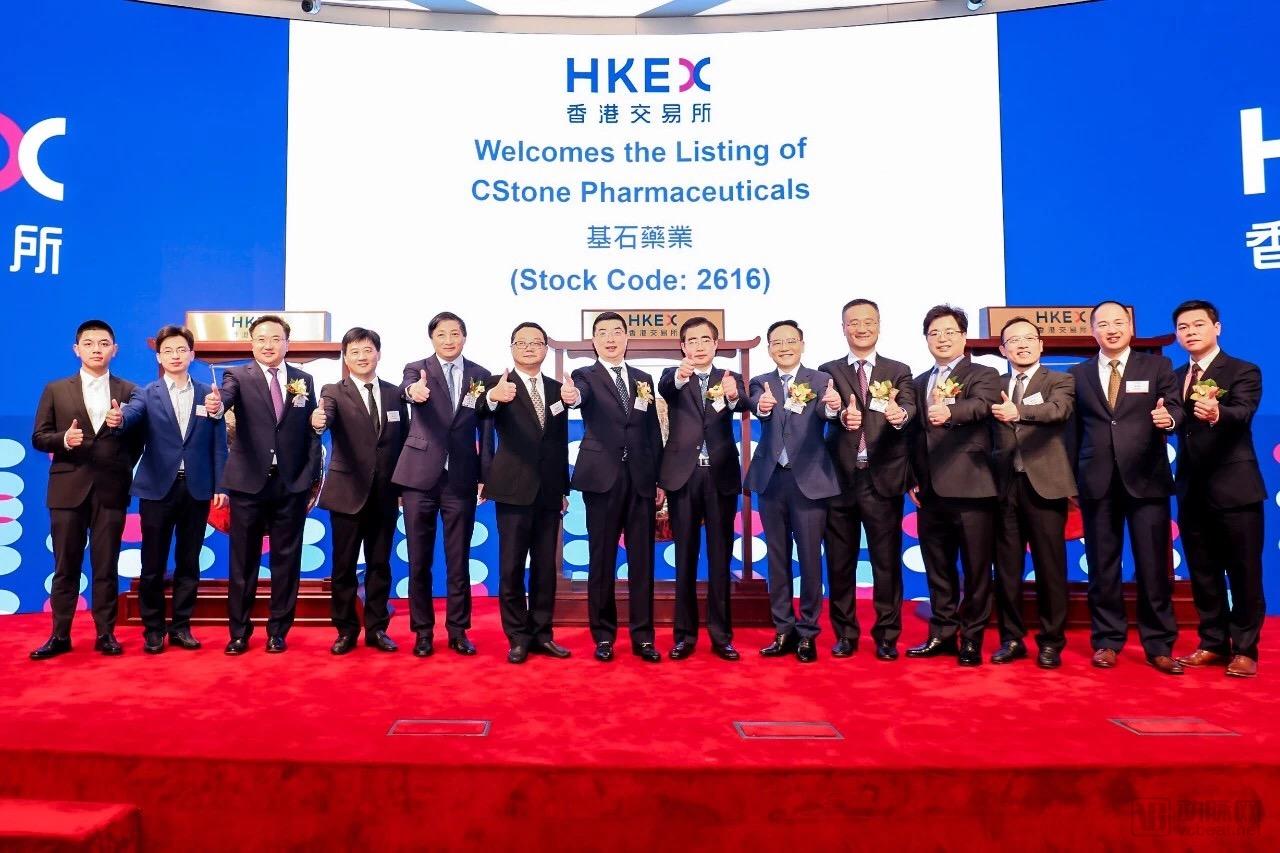
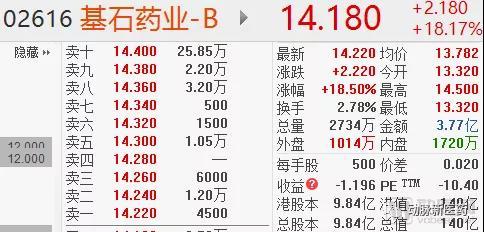
Biobeat1 reported: On February 26, 2019, CStone Pharmaceuticals rang the opening bell and listed on the Hong Kong Stock Exchange (HKEX), becoming the sixth mainland Chinese biotechnology company to go public on the HKEX before turning a profit, following Ascletis Pharma, Hua Medicine, Innovent Biologics, BeiGene, and Junshi Biosciences. CStone Pharmaceuticals issued 186 million shares at HK$12 per share, raising a total of HK$2.232 billion. The stock opened 11% higher at HK$13.32, reaching an intraday high of HK$14.50.
As of the publication of this article, the share price stood at HK$14.18, representing an 18.17% increase, with a total market capitalization nearing HK$14 billion.
According to CStone Pharmaceuticals, 30% of the proceeds from its Hong Kong stock exchange listing will be used to support its core candidate drug CS1001, 40% to support the rest of its clinical pipeline, 20% for the research and development of preclinical drugs and new drug licensing, and the remaining 10% for working capital and other general corporate purposes.
CStone Pharmaceuticals, established in 2015, is a clinical-stage biopharmaceutical company focused on the development and commercialization of innovative tumor immunotherapies and molecularly targeted drugs. Prior to its initial public offering, CStone completed two rounds of financing: a $150 million Series A round in July 2016, with investors including Yucheng Capital, Yuanhe Venture Capital, and Boyu Capital; and a $260 million Series B round in May 2018, led by GIC (Government of Singapore Investment Corporation) and participated by Sequoia Capital China, Yunfeng Capital, Tonghe Yucheng (formed by the merger of Tonghe Capital and Yucheng Capital), CITIC Private Equity Funds Management, Taikang Insurance Group, ARCH Venture Partners, Hillhouse Capital, King Star Capital, Sanwan Capital, AVICT, Hongling Capital, Yuanhe Origin, and Boyu Capital. Both financing rounds set records for their respective stages in China’s biopharmaceutical sector at the time. The investor lineup includes many renowned investment firms with deep expertise in the healthcare sector, such as Tonghe Yucheng (Yucheng Capital), Sequoia China, ARCH Venture Partners, and Hillhouse Capital, reflecting strong confidence from the investment community in CStone Pharmaceuticals.
CStone Pharmaceuticals’ appeal to investors is closely tied to its management team, nearly all of whom have held senior positions at multinational pharmaceutical companies. This leadership structure gives CStone a natural advantage in advancing drug development. Its founder and CEO, Dr. Jiang Ningjun, earned a medical degree in China before pursuing a Ph.D. in immunology in Canada and completing postdoctoral research at the University of Washington in the United States, where he also became a board-certified physician. After leaving academia, Dr. Jiang joined Sanofi in the U.S., and by 2014 had risen to serve as Global Vice President of Sanofi and President of its Asia-Pacific R&D Center. During his tenure at Sanofi, Dr. Jiang led a series of Phase I–IV clinical trials. His extensive experience in drug development prompted new perspectives on pharmaceutical research. In July 2016, Dr. Jiang left Sanofi to officially assume the role of CEO at CStone Pharmaceuticals.
Dr. Yang Jianxin, the Chief Medical Officer (CMO) of the team, earned his Ph.D. from the University of Texas Southwestern Medical Center in the United States, where he studied under Nobel laureates Dr. Michael S. Brown and Dr. Joseph L. Goldstein. He has held positions at several renowned pharmaceutical companies, including Covance, Pfizer, and Tularik, primarily focusing on drug development. Prior to joining CStone Pharmaceuticals, Dr. Yang served as Senior Vice President and Head of Clinical Development at BeiGene, a company already listed on the Hong Kong Stock Exchange, where he oversaw the clinical development of oncology R&D projects, including the first anti-PD-1 monoclonal antibody originating from China. Before joining CStone Pharmaceuticals, Dr. Yang had accumulated twenty years of experience in biomedical research and clinical development. His addition has further accelerated the advancement of CStone Pharmaceuticals’ clinical research.
In addition to the aforementioned two individuals, CStone Pharmaceuticals’ Chief Financial Officer, Lin Ye, comes from Goldman Sachs Asia Pacific’s healthcare equity research team in Hong Kong; Chief Business Officer Dr. Bin Yuan, Chief Scientific Officer Dr. Xinzhong Wang, and Chief Translational Medicine Officer Dr. Yizhao Xie are former Merck & Co. executives; and Dr. Jingrong Li, Senior Vice President of Product Development and Manufacturing, previously worked at Roche. The team’s strong industry background has enabled CStone Pharmaceuticals to achieve remarkable success in fundraising, securing a total of $410 million across two financing rounds within less than three years of its establishment.
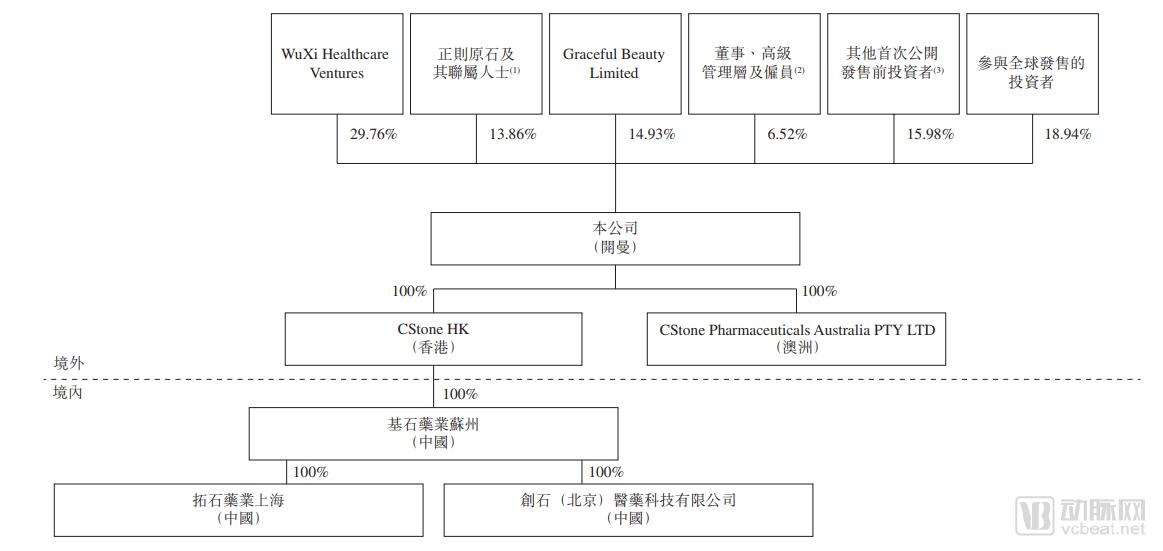
Image source: CStone Pharmaceuticals’ prospectus
Figure: Equity Structure of CStone Pharmaceuticals After Its IPO
According to the prospectus of CStone Pharmaceuticals, its largest shareholder is currently Yucheng Capital, an investment firm that was spun off from WuXi AppTec’s venture capital division. This indicates that CStone Pharmaceuticals maintains extensive ties with WuXi AppTec. In fact, CStone Pharmaceuticals does not yet have its own R&D facilities, and its non-current assets amount to only RMB 22.3 million. The majority of its preclinical drug development and pharmaceutical manufacturing activities are outsourced to WuXi AppTec. WuXi AppTec transfers the intellectual property rights generated during the R&D process only after achieving certain R&D milestones stipulated in the relevant contracts. CStone Pharmaceuticals is primarily responsible for advancing clinical trials. This operational model enables CStone Pharmaceuticals to focus on progressing clinical trials while reducing investments in R&D and manufacturing, particularly significantly lowering capital expenditures on fixed assets.
In 2016, CStone Pharmaceuticals incurred a loss of approximately RMB 250 million, which increased to around RMB 340 million in 2017. In the first nine months of 2018 alone, the company’s losses reached approximately RMB 1.16 billion. The primary expense was research and development (R&D), accounting for more than 60% of total expenditures. As of September 30, 2018, CStone Pharmaceuticals reported total current assets of approximately RMB 1.74 billion, non-current assets of RMB 22.3 million, total liabilities of approximately RMB 680 million, and total equity of approximately RMB 1.08 billion. Given that CStone Pharmaceuticals has not yet commercialized any products, consecutive annual losses are considered normal. Furthermore, as clinical trials progress and the drug pipeline expands, R&D expenditures are expected to continue rising. Had CStone Pharmaceuticals not adopted its current operational model—outsourcing manufacturing while focusing primarily on clinical trials—its annual expenses would have been significantly higher, making it impossible to aggressively advance 14 drug pipelines simultaneously.
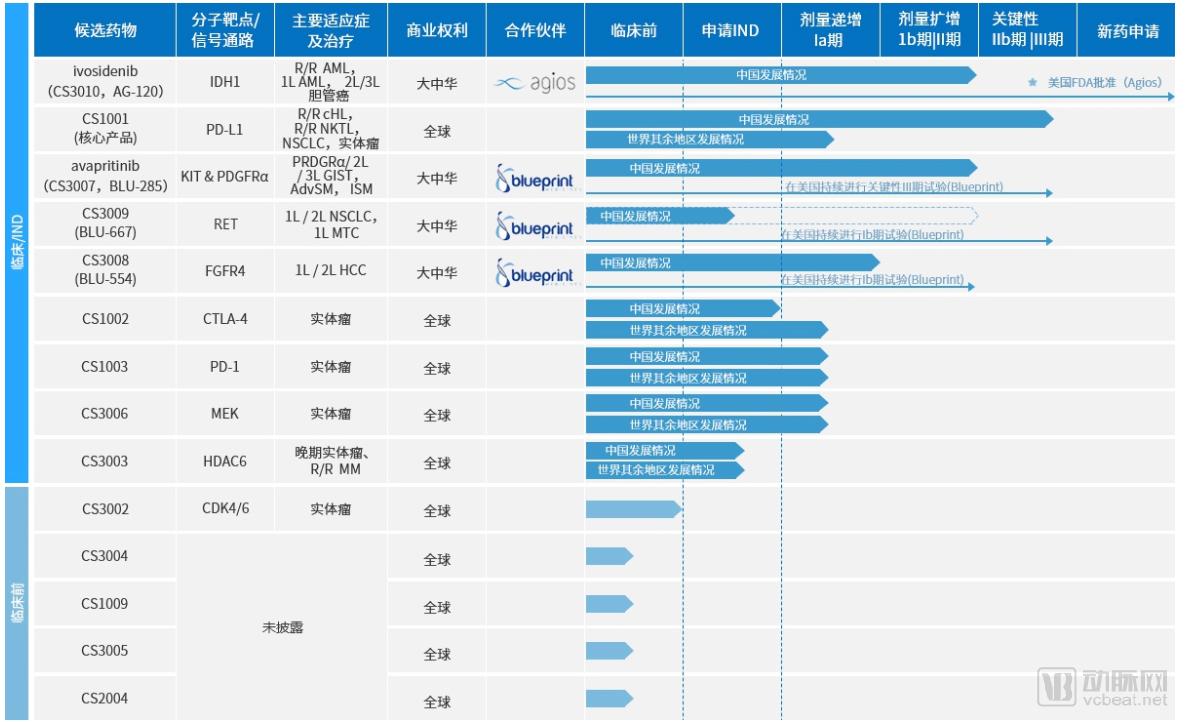
Figure: CStone Pharmaceuticals’ Drug Pipeline. Image source: CStone Pharmaceuticals official website
CStone Pharmaceuticals has 14 oncology-focused drug candidates, which are at various stages from preclinical to late-stage clinical development, with no products currently marketed. Among these 14 drugs, four are under clinical investigation as in-licensed agents, while ten constitute CStone’s self-developed pipeline. For CStone Pharmaceuticals to achieve profitability as soon as possible after its IPO, the launch timelines of two key drug candidates, CS1001 and Ivosidenib, are critical.
CS1001 is the first fully human, natural full-length anti-PD-L1 monoclonal antibody independently developed by CStone Pharmaceuticals in China, and it represents the most clinically advanced asset in the company’s drug pipeline. As a monoclonal antibody that closely mimics the body’s native immunoglobulin G4 (IgG4), CS1001 reduces the risk of immunogenicity and related toxicities in patients, offering potential unique advantages over comparable agents. Currently, CStone Pharmaceuticals is conducting clinical studies of CS1001 in patients with non-small cell lung cancer (NSCLC), T-cell lymphoma, and classical Hodgkin lymphoma. The most rapidly progressing study is the Phase III clinical trial in NSCLC, which was initiated in November 2018. Additionally, a Phase III clinical trial evaluating CS1001 in combination with platinum-based chemotherapy was launched in January 2019. Meanwhile, CStone Pharmaceuticals is actively expanding CS1001 into overseas markets and commenced a Phase I clinical trial in the United States in December 2018.
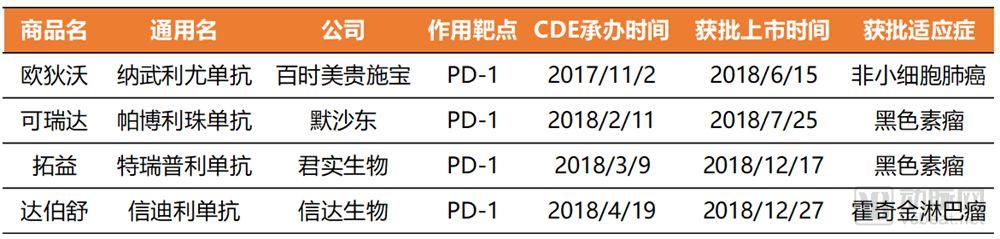
Figure: PD-(L)1 Monoclonal Antibodies Already Marketed in China
Currently, four PD-1 monoclonal antibodies have been approved for marketing in China, originating from Bristol Myers Squibb, Merck & Co., Junshi Biosciences, and Innovent Biologics, respectively. No PD-L1 targeted therapies have yet received approval. CStone Pharmaceuticals’ CS1001 is one of the PD-L1 targeted agents with the most advanced clinical development progress and is a strong contender for first approval. If Phase III clinical trials and the regulatory review proceed smoothly, CS1001 is expected to enter the New Drug Application (NDA) review process in the first half of 2020.
Another drug pipeline with rapid clinical progress at CStone Pharmaceuticals is Ivosidenib. In June 2018, CStone Pharmaceuticals partnered with Agios to advance the clinical development and commercialization of Ivosidenib in Greater China. Shortly thereafter, in July 2018, good news came from across the ocean: Ivosidenib received marketing approval from the U.S. FDA for the treatment of adult patients with relapsed or refractory acute myeloid leukemia (AML) harboring an IDH1 mutation. Overseas regulatory approval is expected to significantly accelerate the market launch of Ivosidenib in China. Currently, Ivosidenib has entered Phase III clinical trials in mainland China, but its specific launch date remains uncertain, and timing may differ between Hong Kong, Taiwan, and mainland China.
In addition to CS1001, CStone Pharmaceuticals has four other self-developed pipeline candidates that have entered clinical stages, targeting CTLA-4, PD-1, MEK, and HDAC6, respectively. All are targeted anti-tumor drugs, with the two most advanced candidates having entered Phase I clinical trials. Additionally, five other pipeline candidates are in the preclinical stage, with specific details undisclosed. Beyond its self-developed drugs, CStone Pharmaceuticals has also secured the commercialization rights for three drug pipelines from BluePrint Medicines in the Greater China region; these drugs are currently in clinical trials both domestically and internationally.