

Opportunities in China's Elderly Care Industry: From Market Liberalization to Bed Subsidies
By Li Yanyu, Cai Aoxue
Since the beginning of spring 2019, the elderly care sector has continuously benefited from favorable policies, with a series of significant measures being introduced. On February 19, the National Development and Reform Commission (NDRC) and 17 other departments jointly issued the “Notice on Printing and Distributing the Action Plan for Strengthening Weak Links, Improving Quality, and Expanding Public Services in Social Sectors to Foster a Strong Domestic Market” (hereinafter referred to as the “Action Plan”). The plan outlines specific goals and requirements to be achieved by 2020 and 2022, addressing key areas of public concern such as childcare, education, healthcare, and elderly care.
Just three days after the joint issuance of a document by 18 ministries and commissions, the National Development and Reform Commission (NDRC), in conjunction with the Ministry of Civil Affairs and the National Health Commission, issued the Implementation Plan for the Special Action on City-Enterprise Collaboration for Inclusive Elderly Care. On February 22, a special launch meeting for the “City-Enterprise Collaboration for Inclusive Elderly Care Special Action” was held in Beijing.
The special campaign focuses on inclusive elderly care, advancing city-enterprise cooperation around the principles of “government support, social operation, and reasonable pricing.” At the meeting, the National Development and Reform Commission (NDRC) signed strategic cooperation agreements with financial institutions including China Development Bank, Agricultural Development Bank of China, Industrial and Commercial Bank of China, Bank of China, and Everbright Group. These institutions pledged to provide comprehensive support and high-quality financial services throughout the process.
Can two successive policy initiatives rescue elderly care services—including senior living, geriatrics, and long-term care—from the predicament of an uncertain market landscape? What will be the trajectory of the eldercare industry in 2019? Below, we explore these questions:
1. Addressing the Shortcomings in Elderly Care Services: Focusing Primarily on Communities, with the Initial Promotion of Meal Assistance Programs;
2. City-Enterprise Collaboration for Inclusive Elderly Care: How to Resolve the Core Funding Shortfall?
3. Review of elderly care and caregiving policies since 2018;
4. Multiple Policies Rolled Out Simultaneously: How Do Entrepreneurs View Them?
5. With government subsidies and opening up to foreign investment, where do the market opportunities lie?
Bridging the Gap in Elderly Care Services: Focusing on Communities and Introducing Meal Assistance Programs for the First Time
In a document recently released under the names of 18 ministries and commissions, it was proposed to intensify efforts to address shortcomings, strengthen weak links, and improve the quality of public services in the social sector, thereby fostering a robust domestic market. According to the action plan, by 2020, significant progress was to be made in educational modernization; a basic medical and health system covering both urban and rural areas was to be fundamentally established; and an elderly care service system—based on home care, supported by community services, supplemented by institutional care, and integrating medical and elderly care—was to be further improved.
Although the initiative is not limited to a single industry but rather targets weaknesses across the entire public service sector, healthcare, as one of the “three major drivers,” occupies a significant portion of the document. Additionally, with the accelerating aging of society, elderly care services have become a policy priority due to their distinct public-welfare nature. VCBeat has noted that among the 27 action tasks outlined in the three major sections, 10 pertain to the medical and health industry, half of which involve the elderly care sector. As China’s population continues to age, how can we address the shortcomings in the elderly care field? How can the goals of “ensuring support for the elderly” and “providing security for the elderly” be effectively guaranteed?
The Action Plan outlines the main objectives related to elderly care as follows: “By 2020, the elderly care service system—home-based, community-supported, institution-supplemented, and integrating medical and elderly care—will be further improved, with nursing-care beds accounting for no less than 30% of all elderly care beds.”
Specifically, the action tasks related to elderly care services fall into the following three sections:
·Address weaknesses in basic public services and accelerate the realization of equal access to basic public services.
·Strengthen weak areas in non-basic public services and focus on enhancing the provision of public services for the people.
· Fully leverage the roles of an efficient market and a capable government to enhance the quality and standards of public services.
Overall, the aim is to enhance the quality of public services as a whole. To address weaknesses in public service provision, four key priorities have been identified: first, strengthening the basic elderly care service system; second, fully opening up the elderly care service market; third, enhancing the health service system for older adults; and fourth, promoting meal-assistance services in urban and rural communities.
Among the fundamental tasks for improving the basic elderly care service system, in addition to emphasizing further strengthening the construction of public elderly care institutions, there is also an emphasis on increasing the proportion of nursing-type beds and meeting the basic elderly care service needs of seniors with disabilities. Furthermore, efforts should be made to strengthen “poverty alleviation through elderly care” and further optimize resource allocation.
As part of the fundamental tasks for fully liberalizing the elderly care service market, emphasis was placed on the goal of establishing by 2022 a comprehensive elderly care service system that is home-based, community-supported, institution-supplemented, and integrates medical and elderly care services, with well-developed functions, appropriate scale, and coverage across both urban and rural areas. Meanwhile, it is required that services for the elderly be extended down to the community level, emphasizing grassroots-level health protection for older adults. The coverage rate of community day-care institutions should exceed 90%, emergency rescue systems for home- and community-based elderly care should be widely established, and a “15-minute” home-based elderly care service circle should be basically formed.
In terms of the market, multiple measures have been implemented to encourage private capital investment and promote the development of privately operated elderly care institutions. The licensing requirement for establishing elderly care institutions has been abolished, domestic and foreign capital are supported in investing in and operating such facilities, and equal preferential policies are being fully implemented.
In strengthening the health service system for the elderly, it is required to establish and improve a comprehensive and continuous service system that covers the entire population and all life stages, including prevention, healthcare, treatment, rehabilitation, nursing, and palliative care. Emphasis is placed on improving the accessibility of medical and health services for the elderly.
Yang Jinyu, a former IBM healthcare consulting advisor, told reporters,The health needs of the elderly extend beyond medical treatment to include care for those with disabilities and dementia.Regarding diseases, the elderly generally have acute-phase needs.In medicine, emergency response capability is measured by the emergency radius and response time. He revealed that, taking Shanghai as an example, its emergency radius is 2.5 kilometers, with a response time of 15–20 minutes. However, many high-end senior living real estate projects are built in suburban areas. In layman’s terms, “elderly care” is often equated to “providing for the elderly.” Therefore, using the term “elderly care” alone to summarize the range of services for older adults fails to address the fact that medical resources largely fall short of demand.
For instance, the decline of Beijing Sun City illustrates that healthcare accessibility is determined by population distribution. Primary hospitals and community health service centers equipped within communities typically serve a population of 50,000, whereas Beijing Sun City served only slightly more than 2,000 residents in the Beijing area. The earliest signal foreshadowing Sun City’s downfall was the closure of its self-built affiliated facility, Sun City Hospital, due to insolvency.
Healthcare accessibility is extremely poor in the suburban areas where elderly care institutions acquire land, while self-funded medical facilities by enterprises would face oversupply, inevitably leading to their collapse.Therefore, the configuration of nursing homes should align with the principles of medical service catchment areas.
In addition to medical services, which have consistently remained a key focus, many industry insiders revealed to reporters that the promotion of meal assistance services in urban and rural communities is indeed being implemented for the first time. The current proposal suggests incorporating community meal assistance into the national capability evaluation index system for the Medium- and Long-Term Plan to Proactively Respond to Population Aging, with a particular emphasis on addressing the dining needs of empty-nest elderly individuals receiving home- and community-based care.
Zhang Hao, founder of Xiaotao Aijia, stated, “This is the first time that the issue of meal assistance in urban and rural areas has been discussed at such a high-profile platform, indicating that the phenomenon of ‘empty-nest’ elderly in regions with significant labor outflow has garnered attention. The aging care crisis is severe, and it is even more acute in rural areas.”
Following the launch of two batches of smart elderly care demonstration projects, intelligent technologies have been regarded as a critical factor in enhancing the quality of elderly care services. Particular emphasis should be placed on supporting the design and development of smart products tailored for older adults, health management devices, and mobile health and elderly care applications (apps).
Regarding auxiliary services such as smart elderly care and meal assistance mentioned in the policy, Yao Yuan, Planning Director of Guangzhou Golden Years Cultural Elderly Care Studio, stated: “Smart elderly care is experiencing accelerated development, with numerous manufacturers entering the sector. Under the current model where the government is the primary payer, many technology companies may fail. However, addressing practical issues highlighted in the policy—such as ensuring a basic safety net for stability, effectively implementing the integration of medical and elderly care, and providing meal assistance for seniors—will promote the growth of the smart elderly care industry.”
City-Enterprise Collaboration for Inclusive Elderly Care: How to Resolve the Core Issue of “Funding Shortages”?
This is not the first time that the requirement to build a rational elderly care service system has appeared in documents issued by national ministries. As early as during the 13th Five-Year Plan period, it was proposed that China would establish a multi-tiered elderly care service system characterized by “home-based care as the foundation, community support as the reliance, institutional care as the supplement, and the integration of medical and elderly care.”
An entrepreneur in the elderly care sector told reporters that a significant portion of China’s elderly care challenges stems from a lack of funding, noting that “neither the elderly nor enterprises have sufficient funds.” Consequently, many services designed to safeguard the health of older adults are effectively financed by the government. The marketization process has been hindered as private capital struggles to identify viable and profitable business models.
Among the many industry insiders interviewed by reporters, the most frequently raised issue concerned payment.Some argue that, without addressing the issue of payment, macro-level directives serve merely as encouragement; the fundamental challenge remains to clarify the payers for elderly health care. For instance, the pilot program for long-term care insurance represents a tangible benefit.
The urban-enterprise inclusive elderly care projects released in the wake of the Action Plan directly address a key concern for all stakeholders in the elderly care industry: funding has arrived. Prior to the launch meeting for the urban-enterprise collaborative inclusive elderly care initiative, the Beijing Municipal Development and Reform Commission and the Beijing Municipal Civil Affairs Bureau had issued the Announcement on Publicly Soliciting the First Batch of Candidate Elderly Care Service Enterprises and Reserve Projects for the Special Campaign on Urban-Enterprise Collaboration for Inclusive Elderly Care Services on February 12.
The scope of support and eligibility criteria for enterprises participating in the special initiative are as follows:
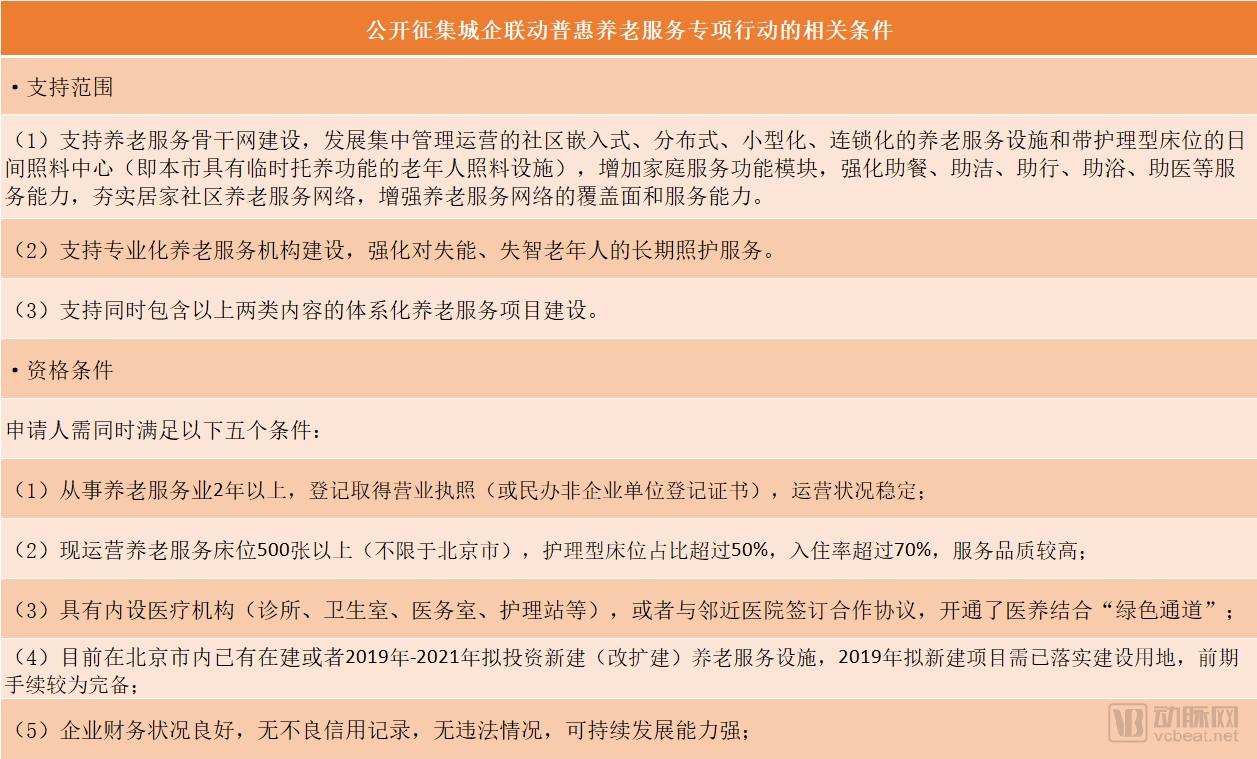
This means that government subsidies will no longer be limited to public elderly care institutions; private enterprises will also have access to subsidy opportunities. In particular, companies providing elderly care and nursing services at the community level—such as day care centers and embedded elderly care facilities—will be able to alleviate some of their operational cost pressures.
A Review of Elderly Care and Long-Term Care Policies Since 2018
VCBeat previously reviewed the policy orientations for elderly care from 2015 to 2017. Since 2018, there has been a surge in the issuance of elderly care policies. In particular, starting in 2019, a series of measures were intensively introduced, including the abolition of licensing requirements for establishing elderly care institutions, the release of standards for classifying elderly care institutions by grade, efforts to address shortcomings in public services, and the launch of special initiatives for inclusive elderly care through city-enterprise collaboration. These developments have bolstered confidence in the elderly care market.
From the policy direction in 2018, the government is comprehensively promoting the development of the elderly care cause and industry from various aspects such as financial support, institutional reform, elderly care services, tax and fee incentives, integration of medical and elderly care, smart elderly care, and construction of elderly care facilities. Compared with the policies of the previous three years, (for details, see the VCBeat article “Interpreting Elderly Care Policies from the Past Three Years: Shifting from Service Requirements to Industry Support—Which Directions Will Become New Growth Engines for the Elderly Care Industry??》)Overall, the 2018 policies were more practical and offered greater practical guidance.
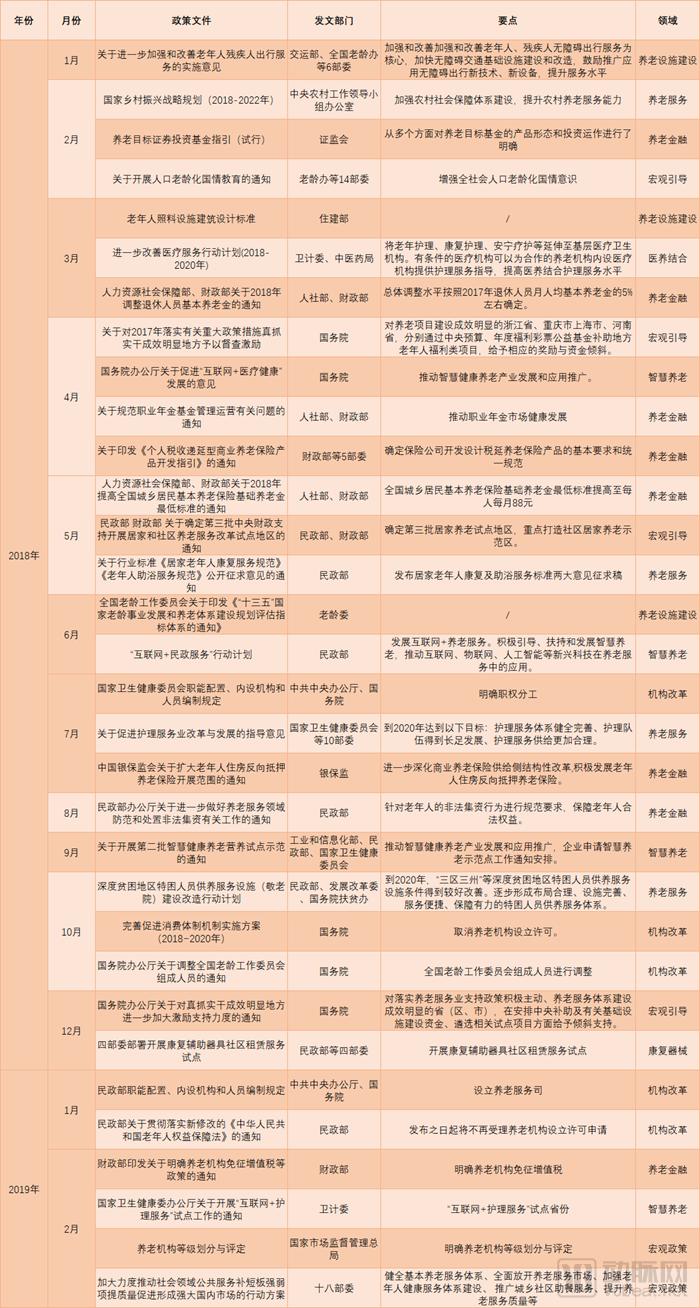
Note: For policies addressing the same key point, only representative policies are listed here.Source: Compiled by VCBeat based on public information
Compared to the 2017 policies, which emphasized smart elderly care and macro-level planning, elderly care policies from 2018 to the present have initiated reforms at the institutional level, using policy measures to guide societal attention toward aging issues, ultimately focusing on funding and service delivery. An analysis of policies from 2018 to the present reveals the following trends:
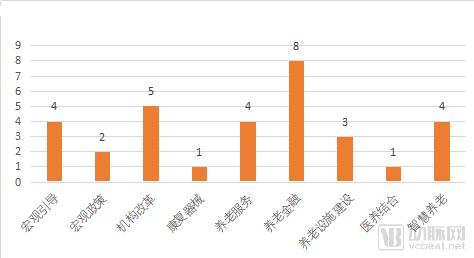
Statistical Classification of Elderly Care Policies from 2018 to Present
Funding is essential
Dang Junwu, Deputy Director of the China Research Center on Aging Science, believes that global aging trends will become more severe in the future. Against this backdrop, it is essential to actively promote the transition from short-term capital to long-term capital, so as to maintain the nation’s core long-term financial competitiveness, facilitate economic structural adjustment, and cultivate a nationwide awareness of long-term investment, while conducting robust medium- to long-term planning and research.
According to incomplete statistics, there have been eight policies related to pension finance from 2018 to the present. At the beginning of the year, channels for “increasing revenue” were standardized. Subsequently, in addition to raising pension benefits and enhancing old-age insurance, regulating enterprise annuities, and promoting tax-deferred commercial pension insurance, the state also introduced relevant regulations to safeguard the financial security of the elderly.
In fact, since 2017, China has been advancing reforms of its pension system, with a series of policy documents issued in rapid succession. In June 2017, the General Office of the State Council officially issued the “Several Opinions on Accelerating the Development of Commercial Pension Insurance.” In December, the Ministry of Human Resources and Social Security and the Ministry of Finance jointly issued the “Measures for Enterprise Annuities.” Subsequently, several policies introduced intensively from 2018 to the present have provided policy support for improving China’s pension system from various perspectives.
Industry insiders predict that as funds originally allocated to family planning are redirected to the elderly care sector, financial constraints will be alleviated to some extent in 2019, and the state will further intensify ongoing reforms of the pension system.
As a key component of the Healthy China 2030 Planning Outline, the state will undoubtedly continue to refine policies on the integration of medical and elderly care services. While streamlining market access procedures, preferential policies will be provided in areas such as land use, taxation, and subsidies. Meanwhile, the elderly care industry is heavily policy-driven; whether for institutional care or home- and community-based care, the initiation, implementation, and profitability of many projects rely significantly on government endorsement and procurement.
The superstructure is gradually being perfected
From 2018 to the present, changes have ranged from personnel adjustments and division of labor to the abolition of licensing requirements for establishing elderly care institutions and the establishment of the Department of Elderly Care Services… Both personnel and institutions are undergoing transformation.
Demographer He Yafu once stated, “These institutional adjustments signify that the state is attaching increasing importance to the challenges of population aging.” Further clarifying the responsibilities and authorities of personnel and institutions can also help mitigate interdepartmental buck-passing to some extent.
The newly established Department of Elderly Care Services has integrated the Ministry of Civil Affairs’ original elderly care functions, facilitating the “de-fragmentation” of these responsibilities within the Ministry and strengthening its guidance and management over aging-related initiatives. Meanwhile, the restructuring has established a framework in which the Department of Elderly Care Services under the Ministry of Civil Affairs and the Department of Elderly Health under the National Health Commission jointly guide and manage China’s aging-related undertakings.
On January 3, the Ministry of Civil Affairs issued the “Notice on Implementing the Newly Amended Law of the People’s Republic of China on the Protection of the Rights and Interests of the Elderly” (hereinafter referred to as the “Notice”), announcing further simplification of the approval process for elderly care institutions. The “Notice” requires that, effective from the date of promulgation of the newly amended Law on the Protection of the Rights and Interests of the Elderly (December 29, 2018), civil affairs departments at all levels shall no longer accept applications for establishment permits for elderly care institutions, nor shall they grant such permits or conduct disguised approvals under other pretenses. For applications accepted but not yet approved prior to the date of promulgation, the approval process shall be terminated.
Abolishing the licensing requirement for establishing elderly care institutions, reducing additional barriers to private investment in the elderly care sector, helping address challenges related to land, funding, and talent, fully opening up the elderly care services market, and further streamlining administrative approval procedures. The implementation of these policies has significantly facilitated the entry of social capital into the elderly care industry.
Enhanced Guidance, Yet Specific Rules Remain Inadequate
A categorical statistical analysis of elderly care policies reveals that macro-level guiding policies have been strengthened from 2018 to the present. A typical example is the January 2018 joint issuance of the Notice on Carrying Out National Education on Population Aging by 14 ministries and commissions, including the National Development and Reform Commission, the Ministry of Civil Affairs, and the National Health Commission. The notice proposed launching national education on population aging for the entire society to guide it in accurately grasping the opportunities and challenges posed by population aging to China.
In addition to raising public awareness, preferential support should be provided to cities, regions, and enterprises that excel in elderly care services, sending a positive signal to encourage localities to actively develop such services. However, policies for specific sub-sectors remain inadequate, and there is a lack of concrete implementation pathways and actionable measures.
The Policies Are Promising: How Do Entrepreneurs View Them?
The effectiveness of public policy often does not hinge on the good intentions of policymakers. Reality shows that societal sensitivity to elderly care policies has not been as high as expected, and policy-driven benefits have failed to elicit an effective response in the absence of a mature service system. Although Chinese policymakers have become aware of this issue, various levels of implementation remain mired in difficulties and exploratory efforts.
For many entrepreneurs seeking policy guidance, what they wish to see is not merely trends, but more importantly, direct guidance and measures, or specific provisions related to industry standardization, including the implementation of regulatory measures.
In response to the aforementioned policies, many industry insiders have stated that macroeconomic policies not only demonstrate the government’s determination and strength but also will strengthen supporting publicity and shifts in public awareness through policy-driven initiatives. However, there is a greater expectation for detailed implementation guidelines.
Liu Jin, founder of Bu’en Elderly Care, an embedded elderly care institution, stated that the newly released Action Plan is quite comprehensive, reflecting the government’s “urgent needs” in the context of the current aging population.Whether embedded elderly care institutions and day care centers, such as Bu’en Elderly Care, can achieve practical development ultimately depends on genuine market demand and the existence of a viable business model.
“Furthermore, with both domestic and foreign capital being encouraged to invest in elderly care, will there be subsidies for this sector? Previously, subsidies were provided only for infrastructure (‘bricks and mortar’), bed capacity, and staffing. Will financial subsidies now also be available in this area? We remain hopeful that the next round of policies will be effectively implemented,” said Liu Jin.
For overseas investors entering the market, is an open market truly attractive? Zhang Bing, Executive Director of NanShan Care Solutions Ltd, believes that from the perspective of industry professionals abroad, Article 14—“Fully Open the Elderly Care Services Market”—stands out as the most prominent provision. It holds some degree of appeal for overseas capital. However, given the current practical implementation of preferential policies in China, national subsidies have not played a decisive role in turning nursing homes from loss-making to profitable operations. Most overseas investors entering the Chinese market undoubtedly pursue the high-end elderly care segment. Therefore, considerable efforts are still needed to attract this group of investors through government subsidies.
Meanwhile, Zhang Bing believes that this policy still represents a gesture of goodwill from the government. “Having something is better than having nothing. The policy itself will not cause significant turbulence, but it will attract some previously conservative investors to start exploring this market. In the past, some overseas investors perceived domestic investments as highly unstable due to the substantial impact of policy changes.”
Zhang Hao believes that “many policies have not been effectively implemented at the community level, making it extremely difficult for enterprises like Xiaotao Aijia to operate in these areas. Another issue is the absence of a benchmark case or successful model to reference, which hinders the effective implementation of these policies.”
Community-Based Elderly Services: Prioritizing the Development of the Care Industry
Globally, the deepening aging of the population has led to a significant increase in long-term care expenditures in many countries. According to data cited in the paper “The Impact of Family Caregiving on Older Adults’ Willingness to Enter Institutional Care: An Empirical Analysis Based on CLASS Data,” authored by Ji Jingyao from the Research Institute of the National Bureau of Statistics, projections indicate that Germany’s long-term care expenditure for the elderly as a share of GDP will increase by 168% in 2050 compared with 2000; China’s long-term care expenditure is expected to continue rising, reaching 1.1% of GDP by 2050.
To reduce long-term care expenditures, governments around the world have successively introduced corresponding policies. A key strategy in this regard is to revitalize the role of family-based elderly care, thereby alleviating the burden on socialized care systems. To this end, China’s social policies regarding the definition and orientation of elderly care responsibilities are gradually shifting from “society providing for the elderly” to “supporting families in effectively caring for their elderly members.” This policy shift is premised on the belief that family caregiving can, to a certain extent, effectively reduce institutionalized elderly care—particularly the costs associated with institutional care—thereby achieving the goal of lowering long-term care expenditures for the elderly.
Yang Jinyu stated that what elderly people in China actually need are “three major safeguards”: first,Support and Security, which means that society must have a pension mechanism with adequate pension funds to ensure “elderly care”; second,Medical Security, it is necessary to establish a comprehensive healthcare system for the elderly to ensure access to medical care in old age; thirdly,Care Coverage, among the elderly population, a significant proportion consists of individuals with disabilities and dementia, who exhibit "care dependency," reflecting the principle of "support in old age." While care is referred to as "care" abroad, the concept of "elderly care" (yanglao) in China is largely associated with medical services and caregiving, rather than its literal meaning of "financially supporting the elderly." Currently, China's long-term care system remains highly underdeveloped, lacking even a well-defined industrial framework.
Zhang Guoliang, Chairman of Anhui Fuyan Yiletang Integrated Medical and Elderly Care Apartment, shares the same view, believing that the full opening of the elderly care market will have a significant impact on private elderly care institutions and day care centers. First, day care centers need to strengthen the coordination among three systems: community, social workers, and society at large. Second, as social capital invests in the elderly care sector, the relaxation of government policies can better promote the participation of social capital in this field.
Drawing on Japan’s care system, China still has significant room for development in its care industry. Over the past two decades, Japan has been establishing its long-term care system, with cognitive care expenditures reaching 3% of its GDP.Yang Jinyu emphasized, “Medical treatment addresses health issues, while caregiving addresses functional capacity.” Reforms in geriatrics aim to improve the healthcare system; for older adults, what matters more is restoring their functional abilities through high-quality care.
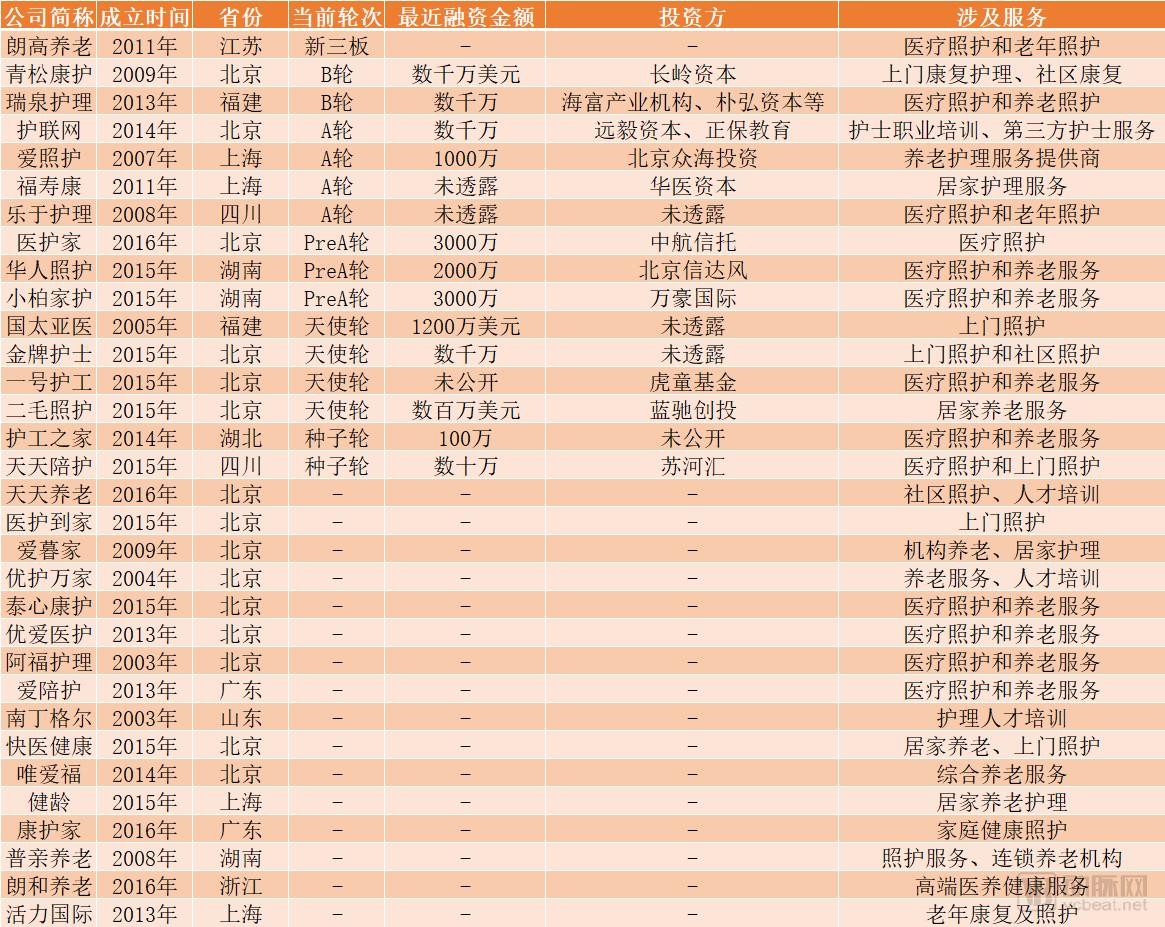
VCBeat’s Statistics on 33 Care-Related Companies and Their Business Areas (Incomplete List)
Data sources: VCBeat database, IT Juzi, Tianyancha
According to Deloitte’s report, “Exploring the ‘Last Mile’ of Healthy Aging: Outlook on the Integration of Medical and Elderly Care in China,” within the government-encouraged community- and home-based elderly care service system, the business model of most home and community elderly care service providers primarily involves initially securing market presence and expanding their commercial footprint through B2B operations. This typically entails the establishment of elderly care service stations in communities funded by the government. After achieving a certain coverage radius, these providers then proceed to develop B2C businesses within the region, either by acquiring new customers or by offering value-added services beyond government-procured offerings to the elderly already under their care.
Over the next three to five years, the government is expected to remain the primary payer for home- and community-based elderly care services. The B2C segment is still in a phase of exploration and demand discovery, accounting for a relatively small share of the market; therefore, market participants should focus on cultivating individual payment habits. Despite the significant market potential, home-based elderly care services currently face a major challenge: the excessive “domestication” of elderly care, whereby professional care services are being reduced to mere housekeeping tasks.
Currently, home- and community-based elderly care services primarily include daily living assistance, respite care, psychological support, and cultural activities. These services are not significantly differentiated from general domestic housekeeping, as many tasks can also be performed by traditional domestic workers. Consequently, individual paying customers have only moderate recognition of such service providers. Therefore, even when families have elderly members who are disabled or semi-disabled, many traditional Chinese households still prefer to hire nannies through conventional channels rather than engaging specialized elderly care institutions. Hence, establishing a care system tailored to elderly individuals with disabilities and dementia is of paramount importance.
The “Action Plan,” jointly issued by 18 ministries and commissions, calls for the comprehensive opening of the elderly care services market. In the view of industry insiders, this entails not only establishing precise categories to facilitate foreign investment entry but also, in terms of its impact on China, signifies the introduction of advanced care systems through such foreign participation.The liberalization of the market is not merely a policy benefit in terms of subsidies, but also an opening of China’s vast market to the global stage.
Yang Jinyu believes that foreign investment entering China may proceed from the following three aspects:
1. Start with training to provide a professional, systematic training program for caregiving services;
2. Establish specialized care institutions, such as those for dementia;
3. Acquire domestic rehabilitation institutions and then transfer the technology to China.
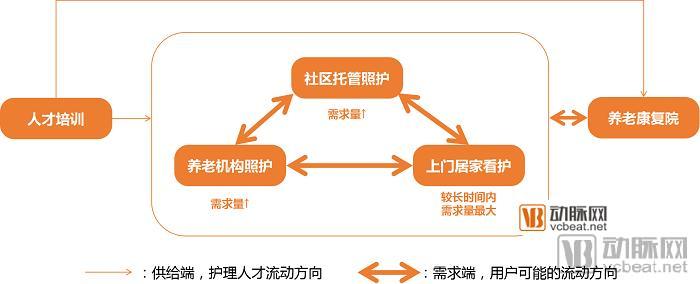
This is a flowchart of key elements in nursing services based on different models, created by VCBeat during its previous review of elderly care companies (see “A Care Market Exceeding RMB 500 Billion: 31 Nursing Enterprises Focus on Four Key Areas, with the Broadest Coverage of Supply-Side Talent Training》As can be seen from the figure, talent training constitutes the upstream segment of the care industry. Whether it involves home-based nursing or institutional care, the essence remains human-to-human service; therefore, building a robust nursing workforce is crucial for enterprises involved in nursing services. As shown in the figure above, talent training on the supply side serves various types of care enterprises and has the broadest coverage.
Currently, third-party service providers primarily targeting the nursing industry include Nightingale, which specializes in cultivating elderly care talent, and HuLianWang, which focuses on professional training for nurses.
In terms of market conditions, large companies such as Haier and CITIC are acquiring nursing homes and rehabilitation hospitals, with talent shortages being a key challenge they must address. In contrast, small-scale overseas nursing training programs have established relatively complete business models, representing one of the few avenues capable of achieving rapid commercial monetization.