

Roche to Acquire Spark Therapeutics for $5 Billion, Expanding Its Gene Therapy Portfolio
Artery New Medicine (WeChat ID: biobeat1) has learned that, according to a February 23 report by The Wall Street Journal, Roche aims to acquire Spark Therapeutics, a star company in the gene therapy field, for $5 billion. The announcement of Roche’s acquisition of Spark could be made as early as Monday, with the price close to $5 billion.
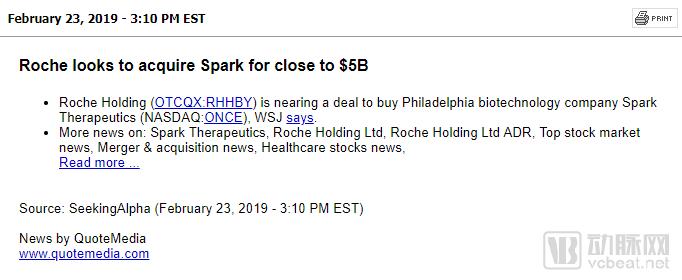
Spark Therapeutics was founded in 2013, but it has more than 20 years of gene therapy research foundation, and its technology platform is derived from the Children's Hospital of Philadelphia. In the early stage of establishment, Spark received a $50 million Series A financing invested by the Children's Hospital of Philadelphia in the United States. The following year, the company again obtained a $72.8 million Series B financing led by Sofinnova Ventures. In early 2015, Spark went public on NASDAQ in the United States. At Friday's close on February 22, Spark's stock price was $51.56, with an intraday high increase of nearly 5%, and its overall market value was $1.943 billion. Spark's revenue in 2018 was only $64.7 million, and Roche paid a significant premium to ensure the acquisition.
Why Spark Is Roche’s Acquisition Target
Spark is a pioneer in gene therapy. Luxturna, one of the few gene therapy drugs currently on the market, was developed by Spark and approved in late 2017. Luxturna received Orphan Drug Designation, Breakthrough Therapy Designation, and Priority Review from the U.S. FDA. Dr. Scott Gottlieb, then Commissioner of the U.S. FDA, highly praised Luxturna, hailing it as a landmark drug.
Luxturna is the first gene therapy utilizing adeno-associated virus (AAV) vectors, indicated for the treatment of patients with inherited retinal dystrophies (IRDs) caused by genetic defects. This therapy employs AAV to deliver a functional RPE65 gene into the patient’s body, enabling the production of normally functioning protein to improve vision. It is effective not only in treating Leber congenital amaurosis but also in managing other ocular disorders caused by RPE65 gene mutations.
Spark’s research pipeline includes programs targeting inherited retinal diseases (IRDs), liver-mediated disorders, hemophilia, lysosomal storage disorders, and Huntington’s disease. Each program in the development pipeline utilizes adeno-associated virus (AAV) vectors developed and manufactured by Spark and its collaborators.
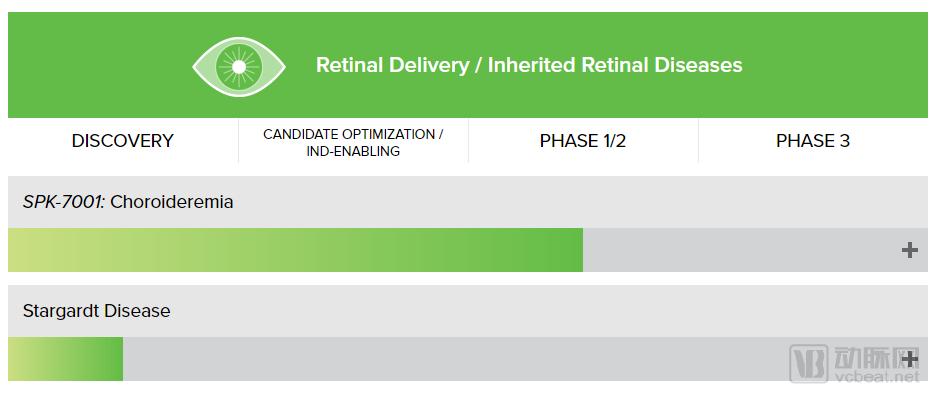
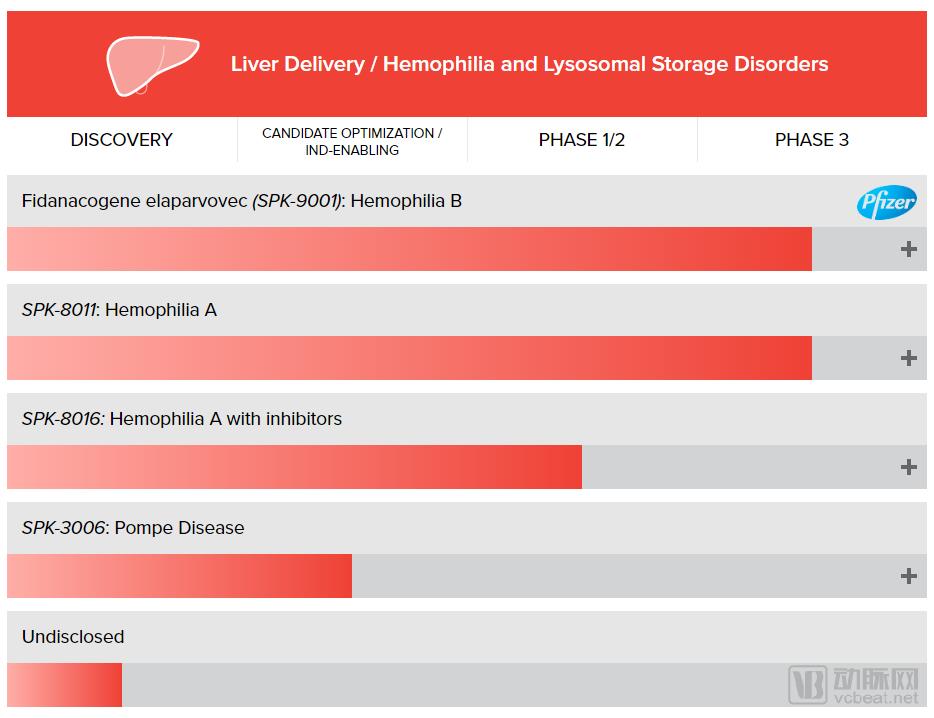
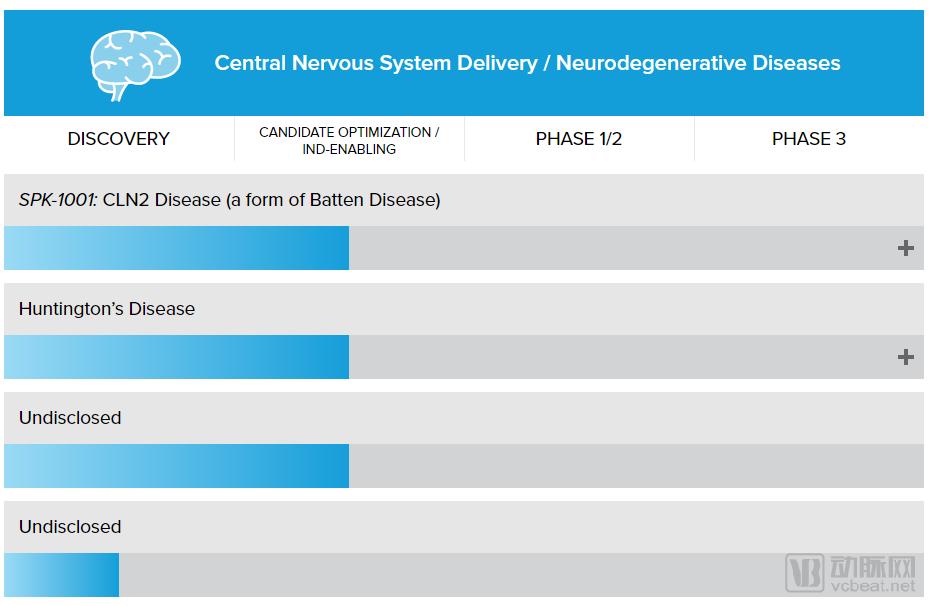
Spark TherapeuTics' R&D Pipeline
Spark Therapeutics’ two fastest-advancing drug candidates in its pipeline are both related to hemophilia and have entered Phase III clinical trials. Among them, SPK-9001, developed in collaboration with Pfizer for the treatment of hemophilia B, demonstrated highly favorable outcomes in Phase I/II clinical studies. Data from 15 patients showed sustained, therapeutic-level expression of coagulation factor IX, exceeding the threshold considered sufficient to reduce the risk of joint bleeding and eliminate the need for prophylactic factor infusions. Meanwhile, no serious adverse events or thrombotic complications were reported. Additionally, Phase I/II clinical results for SPK-8011, a gene therapy for hemophilia A, were also highly promising, with a 97% remission rate observed among 12 patients treated with SPK-8011. The Phase III clinical trial for SPK-8011 was initiated at the end of last year.
Hemophilia is an emerging therapeutic area within Roche’s product portfolio. In 2017, the U.S. Food and Drug Administration (FDA) approved Hemlibra, Roche’s breakthrough therapy for hemophilia A, with analysts projecting its annual sales to reach billions of dollars. Should Spark’s gene therapy for hemophilia prove successful, Roche would be able to expand its product footprint in this field, thereby enhancing its competitiveness against rivals such as Takeda Pharmaceutical and Sanofi.
Big Pharma’s Strategic Layout in the Field of Gene Therapy
Gene therapy is a treatment approach that addresses diseases at their root cause. Many human diseases are caused by genetic mutations or defects, particularly monogenic inherited disorders. Since the first clinical trial was approved in 1989, gene therapy has experienced numerous setbacks and challenges; however, significant achievements have emerged in recent years.
With the maturation of viral vector and gene editing technologies, gene therapy has transitioned from a theoretical concept to a clinical reality. The market approval of three landmark gene therapies in 2017—Kymriah, Yescarta, and Luxturna—heralded the dawn of the gene therapy era. Since 2013, companies engaged in gene therapy research and development have been highly sought after by European and American capital markets, securing substantial venture capital investment. Moreover, numerous gene therapy firms, including Bluebird Bio, Celladon, uniQure, Orchard Therapeutics, and Spark Therapeutics, have successfully completed initial public offerings (IPOs).
In recent years, major pharmaceutical companies have also begun to deeply engage in the field of gene therapy, often supplementing their gene therapy portfolios through mergers and acquisitions or collaborations. The broad prospects of the gene therapy and immunotherapy markets have sparked active competition among pharmaceutical giants. Compared with traditional medical approaches, gene therapy based on genetic technologies is more targeted, can achieve relatively ideal therapeutic outcomes, and significantly alleviate patient suffering; its application is widely favored within the industry. Currently, numerous startups focused on gene therapy technologies have made significant progress and are expected to enter the clinical application stage in the near future. The market has long anticipated consolidation in the gene therapy sector. In addition to acquisitions by large pharmaceutical companies, multiple biopharmaceutical and gene therapy leaders are aggressively pursuing mergers and acquisitions in the gene therapy industry, striving to combine strengths and seize first-mover advantages.
Below, VCBeat’s New Medicine has compiled a summary of acquisitions and collaborations in the gene therapy sector involving major pharmaceutical companies in recent years.
In addition to yesterday’s breaking news of its acquisition of Spark, Roche has long been active in the gene therapy sector. In 2018, it entered into a broad, long-term partnership with 4D Molecular Therapeutics to develop and commercialize multiple ophthalmic products.
In 2017, Kite Pharma was acquired for $11.9 billion. Kite, also known as Kite Pharma, is a cell therapy company with a leading position in the industry. At the time of the acquisition, Kite’s CAR-T therapy was nearing market approval. Following the completion of the acquisition, Kite’s Yescarta, a treatment for B-cell lymphoma, was launched in October 2017.
In February 2018, Kite, a Gilead company, announced a global collaboration and development agreement with Sangamo Therapeutics to leverage Sangamo’s zinc finger nuclease (ZFN) technology platform for the development of next-generation autologous and allogeneic cell therapies for the treatment of various cancers.
In September 2018, Gilead Sciences and gene-editing company Precision BioSciences announced a strategic collaboration aimed at developing innovative in vivo therapies to eliminate the hepatitis B virus (HBV) using the latter’s proprietary ARCUS genome editing platform.
In 2018, Celgene acquired Juno Therapeutics for $9 billion. Juno, one of the three major CAR-T players, focused on the development of CAR-T and TCT cell therapies. Although Juno encountered setbacks in CAR-T clinical development, including multiple patient deaths, its product JCAR017 demonstrated outstanding efficacy in treating relapsed or refractory B-cell non-Hodgkin lymphoma and was expected to be launched in 2019. Celgene’s decision to acquire Juno was not impulsive. As early as 2015, Celgene had invested $1 billion in Juno for the collaborative development and global commercialization of cancer immunotherapies. This investment included the acquisition of 9.1 million shares of Juno at $93 per share, along with $150 million in cash, under a partnership agreement spanning ten years.
In April 2018, Novartis announced the acquisition of AveXis, a U.S.-based gene therapy company, for $8.7 billion in cash. AveXis develops and commercializes gene therapies using the AAV9 vector. Its novel drug candidate AVXS-101, designed to treat spinal muscular atrophy (SMA), has received Breakthrough Therapy Designation from the FDA and has the potential to become the first one-time gene therapy for SMA. Currently, Phase III clinical trials for SMA Type 1 are underway, while Phase I trials are being conducted for SMA Type 2. Additionally, preclinical development is progressing for two rare monogenic neurological disorders: Rett syndrome (RTT) and amyotrophic lateral sclerosis (ALS).
AveXis licensed Regenxbio’s NAV technology and developed its candidate product, AVXS-101. As a follow-up to this acquisition, Novartis paid Regenxbio $100 million to secure an exclusive license for its gene therapy technology platform.
In 2018, Novartis entered into a license and supply agreement with Spark Therapeutics, which was acquired by Roche as mentioned in this article, covering the development, registration, and commercialization rights for Luxturna in markets outside the United States.
In 2018, Bioverativ was acquired for $11.6 billion. Sanofi and Alnylam are collaborating to develop the RNAi therapeutic fitusiran, primarily targeting hemophilia A and B. The acquisition of Bioverativ serves to complement Sanofi’s business portfolio in the global development and commercialization of treatments for rare diseases. Spun off from Biogen’s hemophilia division, Bioverativ already has two marketed hemophilia drugs, Eloctate and Alprolix. Additionally, Bioverativ has two drug candidates, BIVV-001 and BIVV-002, as well as BIVV003, a candidate gene therapy for sickle cell disease.
Following the completion of the Bioverativ acquisition in May 2018, [the Company] jointly announced with Sangamo that the U.S. FDA had accepted the Investigational New Drug (IND) application for BIVV003, a candidate gene therapy for the treatment of sickle cell disease.
Bioverativ and OXB Enter into a Significant New Collaboration and License Agreement to Develop and Manufacture Lentiviral Vectors for the Treatment of Hemophilia; The Agreement Includes a License for Bioverativ to Use OXB’s Proprietary LentiVector Enabled Technology and Its Industrial-Scale Manufacturing Technology.
SPK-9001, developed through the collaboration between Pfizer and Spark Therapeutics, has entered Phase III clinical trials, as previously described. In January 2018, Pfizer acquired Sangamo’s gene therapy program for motor neuron diseases with a $12 million upfront payment. This program utilizes zinc finger transcription factor (ZFP-TF) gene therapy to treat neurodegenerative diseases caused by C9ORF72 gene mutations. Previously, the two companies had collaborated on SB-525, a gene therapy for hemophilia A, which is currently undergoing Phase I/II clinical trials.
In March 2018, MSD acquired the Australian oncolytic virus company Viralytics for $394 million. Upon completion of the acquisition, Viralytics became a wholly-owned subsidiary of MSD, and MSD obtained full rights to Viralytics’ lead candidate product, CAVATAK (CVA21).
Acquired biopharmaceutical company BeneVir Biopharm for $1 billion in 2018. BeneVir leverages its proprietary T-Stealth oncolytic virus platform to design oncolytic viruses capable of infecting and destroying cancer cells.
GSK holds Strimvelis, the second gene therapy approved by the European Union for a rare genetic disorder, but its sales have been sluggish over the years (with only 15 new cases diagnosed annually in Europe). In April this year, the therapy was sold to Orchard Therapeutics as part of a portfolio of rare disease gene therapies. In exchange, GSK acquired a 19.9% equity stake and a board seat in the company, along with undisclosed royalties and commercial milestone payments associated with the portfolio.
In October 2017, AbbVie announced a global research and development collaboration agreement with Turnstone Biologics, a Canadian oncolytic virus company. Under this agreement, AbbVie secured exclusive development rights to three next-generation oncolytic virus immunotherapies. In February 2018, AbbVie announced a partnership with Voyager Therapeutics to develop gene therapies using adeno-associated virus (AAV) vectors for the treatment of neurodegenerative diseases such as Alzheimer’s disease.
In 2011, it acquired BioVex for $425 million in cash, gaining ownership of the first oncolytic virus therapy, talimogene laherparepvec (T-VEC, Imlygic), indicated for the local treatment of melanoma. In September 2016, Amgen partnered with Italy’s Genenta Science to develop cancer gene therapies; the latter possesses a lentiviral vector gene therapy platform based on hematopoietic stem cells.
In July 2018, MedImmune, AstraZeneca’s global biologics R&D arm, and 4D Molecular Therapeutics (4DMT) announced a collaboration to jointly leverage 4DMT’s novel discovery platform to generate optimized AAV vectors, with the aim of delivering gene therapies for patients with chronic lung diseases. 4DMT is a world leader in technology for vector development and product development in adeno-associated virus (AAV) gene therapy.

Scan the QR code to follow the official WeChat account of VCBeat New Medicine (biobeat1)