

Guangdong's First TCM Internet Hospital Launches Prescription Sharing with Medical Insurance Reimbursement at Pilot Pharmacies
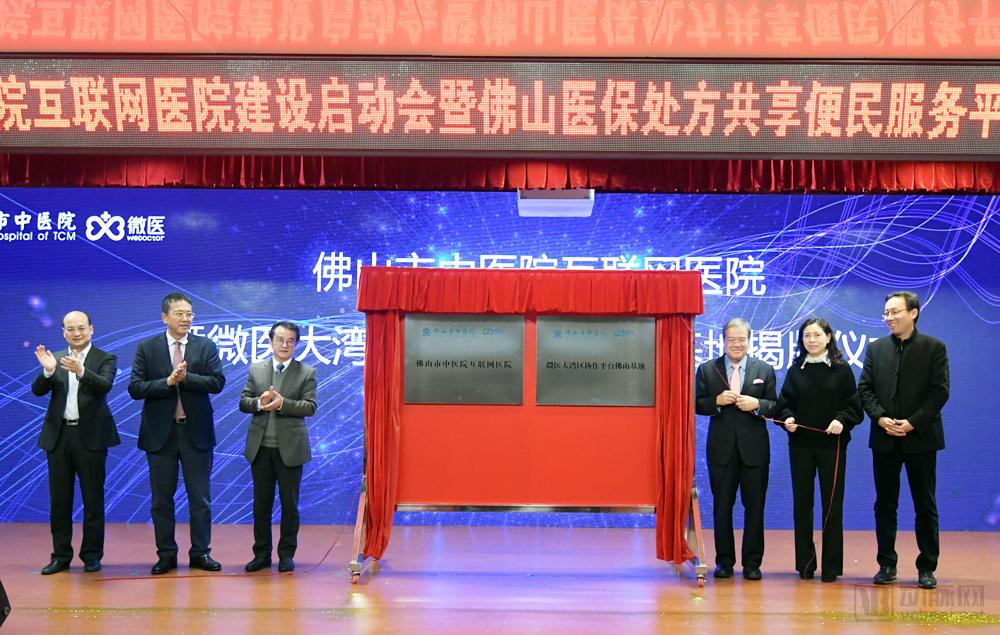
On February 24, the Internet Hospital of Foshan Traditional Chinese Medicine Hospital was officially launched and joined the WeDoctor Greater Bay Area Collaboration Platform.
On the same day, the Foshan Medical Insurance Prescription Sharing Convenience Service Platform was piloted at this internet hospital. In the future, Foshan residents will be able to complete online follow-up consultations, settle medical insurance claims, and have medications delivered by courier or quickly picked up from nearby pharmacies—all via their mobile phones.
This is the first TCM internet hospital to be established in the Guangdong-Hong Kong-Macao Greater Bay Area following the issuance of the Outline Development Plan for the Guangdong-Hong Kong-Macao Greater Bay Area (hereinafter referred to as the “Outline”) by the Central Committee of the Communist Party of China and the State Council.The Outline mentions the goal of building a Healthy Bay Area, emphasizing close collaboration in healthcare and medical services, promoting tight cooperation among high-quality healthcare resources, and repeatedly highlighting the need to deepen cooperation in the field of Traditional Chinese Medicine (TCM). It supports Macau and Hong Kong in leveraging their respective advantages—the Partner Laboratory of the State Key Laboratory of Quality Research in Chinese Medicine in Macau, and the Chinese Medicine Testing Institute under the Government of the Hong Kong Special Administrative Region—to work jointly with mainland research institutions in establishing internationally recognized quality standards for TCM products, thereby advancing the standardization and internationalization of TCM. In the futureCooperation in traditional Chinese medicine will be a key focus area for health technology innovation in the region.
At the inaugural Guangdong-Hong Kong-Macao Greater Bay Area Health and Healthcare Cooperation Conference held in Huizhou in early 2018, the three regions had already reached a“Framework Agreement on Health and Healthcare Cooperation in the Guangdong-Hong Kong-Macao Greater Bay Area.” The agreement stipulates numerous areas of cooperation, including collaboration in “Internet Plus” healthcare, as well as in traditional Chinese medicine (TCM) medical services, scientific research, education, and industry, to promote the flourishing development of TCM products.
The official launch of the Internet Hospital of Foshan Hospital of Traditional Chinese Medicine marks a significant milestone. It is not only the first TCM internet hospital in Guangdong Province, but also the sole pilot institution in the province offering an integrated service model encompassing “online follow-up consultations, medical insurance settlement, and medication delivery.” Furthermore, it serves as a key component of the “Healthy Bay Area” initiative following the release of the Outline Development Plan for the Guangdong-Hong Kong-Macao Greater Bay Area.
So why has Foshan Traditional Chinese Medicine Hospital piloted so many services this time? What are the features of its internet hospital? What is the significance for the development of the Guangdong-Hong Kong-Macao Greater Bay Area? And what is the relationship between the Foshan Medical Insurance Prescription Sharing and Convenience Service Platform and these initiatives? VCBeat (WeChat: vcbeat) provides an analysis of these questions.
“We have made multiple attempts to provide internet-based medical services,” Liu Xiaofang, President of Foshan Hospital of Traditional Chinese Medicine, told VCBeat.
Foshan Traditional Chinese Medicine Hospital, Foshan Hospital of Traditional Chinese Medicine, established in 1956, is a large-scale, modern, Grade A tertiary TCM hospital integrating medical care, teaching, research, rehabilitation, health preservation, and elderly care. It is renowned both domestically and internationally for its TCM orthopedics and traumatology department and serves as a network hospital of the International Emergency Rescue Center.It is also China's first mobile internet-based hospital of traditional Chinese medicine.
Liu Xiaofang stated that on July 8, 2014, the patient mobile service and payment system was successfully launched and integrated with the WeChat Service Account, making it the first “micro-hospital” in Foshan City to offer online services such as appointment registration, payment, and report inquiry.Its features, including fee inquiries, in-hospital navigation, and completion of satisfaction surveys, are all accessible via the WeChat Service Account. Even patients without an existing medical record card can apply for a new one through WeChat and then proceed directly to schedule an appointment; upon arrival at the hospital, they need only pick up their physical card to begin their consultation. Subsequently, additional functionalities were introduced on the WeChat Service Account, such as self-service application for parking discounts via mobile payment. Upon discharge, the system automatically applies the parking fee discount, eliminating the need to present invoices and offering greater time efficiency and convenience.
One year later, the hospital launched mobile healthcare services through a smart healthcare collaboration project, establishing a hospital mobile service platform, a hospital mobile workforce platform, and a hospital mobile supply chain e-commerce platform. This ultimately connected the hospital with patients, internal staff, partner hospitals, and suppliers, driving a leap forward in the hospital’s informatization development.
It was not until last year, with the issuance of new regulations on internet-based diagnosis and treatment by the National Health Commission, that the designation “internet hospital” gained official recognition. “In 2018, Foshan Hospital of Traditional Chinese Medicine recorded over 4.97 million outpatient and emergency visits, with an appointment rate for follow-up outpatients at its main campus reaching 80%,” stated Liu Xiaofang. To further facilitate access to medical care, particularly for patients requiring long-term follow-up, and to leverage the leading role of high-quality medical resources, the hospital collaborated with Guangzhou WeDoctor Internet Hospital to jointly establish the Foshan Hospital of Traditional Chinese Medicine Internet Hospital. This initiative explores convenient services such as online appointment scheduling, virtual consultations, remote follow-up visits, medication delivery, online payment, and direct settlement through medical insurance.
According to Liao Jieyuan, Chairman and CEO of WeDoctor and the platform’s builder, the establishment of the “One Hospital, One Platform” model has enabled Foshan Traditional Chinese Medicine Hospital to achieve online prescription sharing for both pooled medical insurance drugs and out-of-pocket medications, thereby promoting interoperability among healthcare services, pharmaceuticals, and medical insurance in terms of data, services, and payments.We will continue to deepen our services in the future, transforming this initiative into Foshan’s “Internet + Traditional Chinese Medicine” public service platform, a data interoperability platform for medicine, healthcare, and insurance, and an academic exchange platform for Lingnan schools of Traditional Chinese Medicine.
In short, patients can have follow-up consultations via the Foshan Traditional Chinese Medicine Internet Hospital. With the electronic prescription voucher issued by the doctor, they can purchase medications at designated medical insurance pharmacies near the hospital. For six common medications used to treat diabetes and hypertension, payments can be made directly from the pooled fund account of their medical insurance card.
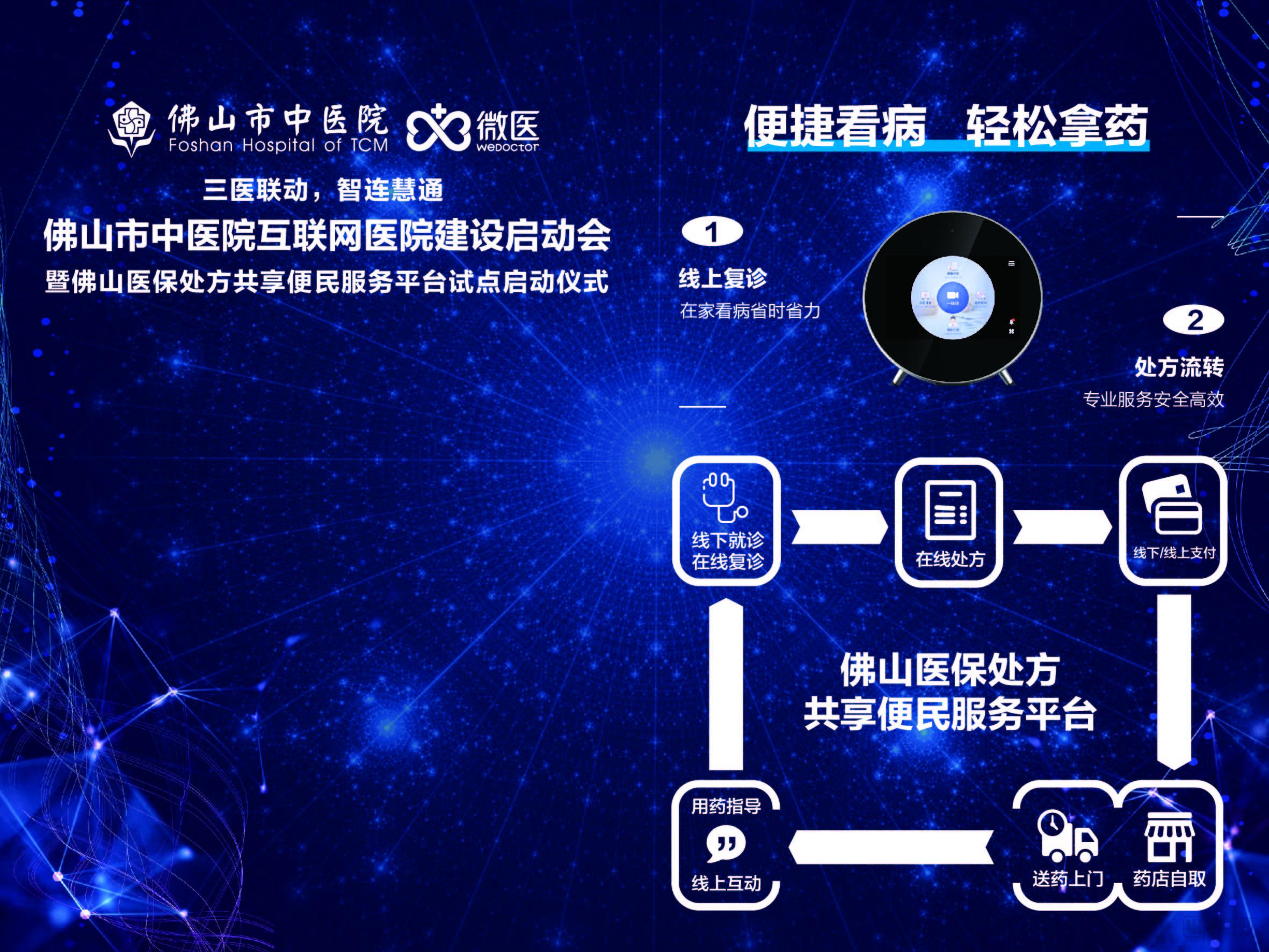
This is all thanks to the innovative healthcare reforms in Foshan City.Since 2017, Foshan has taken the lead in advancing the integrated reform of the medical insurance system, achieving the unification of urban and rural medical insurance schemes. At the beginning of 2019, the Foshan Medical Insurance Prescription Sharing and Convenience Service Platform was officially launched. With the fundamental aim of facilitating medical care for residents, the platform explores convenient services such as prescription sharing and medical insurance settlement, and was initially piloted at the Foshan Hospital of Traditional Chinese Medicine.
Foshan’s Medical Insurance Prescription Sharing and Convenience Service Platform enables information sharing among hospitals, medical insurance authorities, and pharmacies. Patients undergoing follow-up consultations at internet hospitals can opt for external medication purchases. After the physician issues a prescription, the patient receives both a paper prescription and an electronic prescription voucher. By presenting their medical insurance card at a partnered pharmacy, patients can conveniently obtain medications nearby while simultaneously utilizing personal account settlements and pooled fund reimbursements under the medical insurance scheme.
Previously, 91-year-old Grandma Xu, who suffered from chronic conditions such as diabetes and hypertension, persisted in visiting Associate Chief Physician Wang Wenhui of the Cardiology Department at Foshan Traditional Chinese Medicine Hospital for follow-up appointments every week, despite her advanced age and limited mobility. On the launch day of the Foshan Traditional Chinese Medicine Hospital Internet Hospital, Grandma Xu, with the assistance of her son, completed an online follow-up consultation with Dr. Wang via her mobile phone. After Dr. Wang issued the prescription, her son completed the payment online, and the medications were delivered directly to their home by courier.
Another patient, Uncle Zhu, also enjoyed the convenience of prescription sharing on the day of the event. Normally, when returning to Foshan Traditional Chinese Medicine Hospital for follow-up visits, Uncle Zhu had to wait more than 30 minutes to pick up his medication. On that day, after receiving the doctor’s prescription through the internet hospital platform, he was able to use his medical insurance card and obtain his medication at an off-site pharmacy within just 3–5 minutes.
Currently, many physical hospitals in cities across China have implemented card-free payment (or online payment via personal medical insurance accounts), but very few retail pharmacies participating in prescription sharing have access to the pooled medical insurance fund.
Liu Xiaofang believes that although this prescription-sharing model is currently being piloted in only a subset of retail pharmacies and may appear to be a small step, it actually represents a significant leap forward in the new healthcare reform process. Only through such small-scale pilots, with iterative trials, can widespread adoption become feasible in the future.
Whether as China’s first mobile internet TCM hospital, establishing an online TCM hospital, or even sharing prescriptions with pilot retail pharmacies, Foshan Traditional Chinese Medicine Hospital always seems to stay at the forefront of innovation?
Let’s first look at the location of Foshan University of Traditional Chinese Medicine—Foshan.This city, with over 400 years of history in Traditional Chinese Medicine (TCM) culture, is known as the “birthplace of Lingnan proprietary Chinese medicines.” It has not only produced numerous renowned TCM masters but also enjoys strong public trust and utilization of TCM. A range of appropriate TCM technologies has been widely adopted across medical institutions at all levels in Foshan. Furthermore, Foshan’s bone injury treatment and bone-setting techniques are highly reputed throughout Guangdong, Hong Kong, Macao, and even Southeast Asia, attracting many patients from both domestic and overseas regions.
Under the “Healthy China” strategy, Foshan Hospital of Traditional Chinese Medicine has continuously innovated and integrated new concepts, technologies, and models, adopting multiple measures to improve medical services and institutionalize and normalize these improvements. Meanwhile, by sustaining efforts in quality, safety, and service, the hospital has effectively fostered harmonious doctor-patient relationships.
For example, many enthusiasts of Traditional Chinese Medicine (TCM) frequently follow the official WeChat account of Foshan Hospital of Traditional Chinese Medicine. This platform not only provides timely health education resources but also offers numerous convenient services. For instance, its recently launched AI triage mini-program enables preliminary diagnostic guidance through intelligent human-computer dialogue. As of last November, the account had amassed 780,000 followers, with an outpatient appointment booking rate exceeding 60%.
To advance the development of a tiered diagnosis and treatment system, and in accordance with the "Guiding Opinions on Promoting the Construction of Medical Consortia in Foshan City," Foshan Hospital of Traditional Chinese Medicine (TCM) established a “trusteeship” relationship with Gaoming District Hospital of TCM last year. Currently, the medical consortium initiated by Foshan Hospital of TCM has expanded to Sanshui, Chancheng, and Gaoming districts. It has also established a specialized alliance for chest pain centers and a TCM hospital medical alliance covering 41 hospitals across 11 provinces. Listed below are selected member units of the medical alliance, as featured on the official website of Foshan Hospital of TCM:
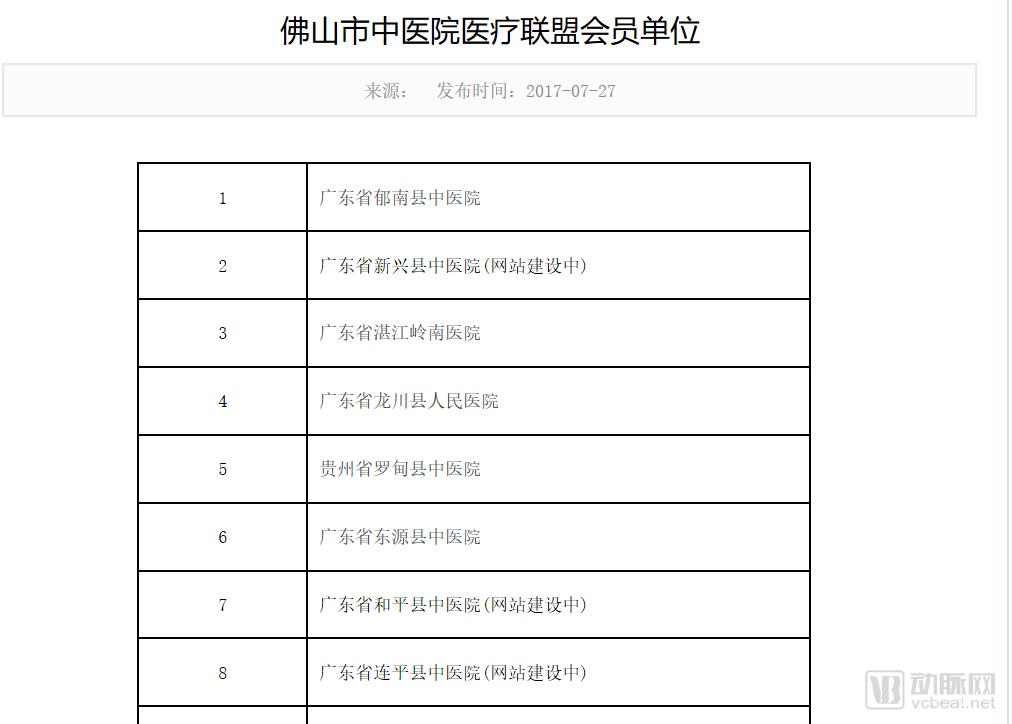
“Leverage multi-form medical consortia to channel high-quality medical resources down to the community level, refine two-way referral mechanisms, and promote the implementation of mutual recognition of medical examination and test results.”Liu Xiaofang introduced that many non-local patients, after their conditions stabilized at the Foshan Traditional Chinese Medicine Hospital, were referred to hospitals within their local medical consortiums. Through the internet-based shared service platform of the medical alliance, the Foshan Traditional Chinese Medicine Hospital can provide these patients with continuous, high-quality rehabilitation and nursing care.
In the process of deepening medical and healthcare cooperation within the Guangdong-Hong Kong-Macao Greater Bay Area, Foshan Hospital of Traditional Chinese Medicine (TCM) has gained renown both domestically and internationally for its TCM orthopedics and traumatology department. The hospital boasts four national-level key TCM specialties and ten provincial-level key TCM specialties, with its comprehensive competitiveness ranking first among all prefecture-level cities in China for seven consecutive years. As early as 2015, the Foshan Hospital of TCM established a long-term partnership with the School of Chinese Medicine at Hong Kong Baptist University. This collaboration has strengthened close communication and coordination not only in teaching but also in scientific research and clinical care, and includes hosting two cohorts of supervised students annually for clinical internships.
With the development of transportation hubs such as Foshan West Railway Station and the new Pearl River Delta trunk line airport, travel between Foshan and Hong Kong and Macao has become more convenient. For instance, it takes only 70 to 90 minutes to travel from Hong Kong to Foshan West Railway Station via the Guangzhou-Shenzhen-Hong Kong Express Rail Link with a transfer. The advancement in transportation has further facilitated residents of Hong Kong and Macao in seeking medical treatment and pursuing medical education in Foshan, gradually forming a high-quality healthcare circle characterized by “90 seconds online and 90 minutes offline.”
“TCM diagnosis and treatment emphasize the course of therapy. Many patients from Hong Kong and Macao who seek medical care here also face difficulties such as challenges in follow-up visits and limited daily guidance. At this point, the value of the Internet is fully demonstrated,” said Liu Xiaofang. The Foshan base will actively leverage Internet technology to explore more integrated TCM services covering pre-diagnosis, during-diagnosis, and post-diagnosis stages, serving the vast number of “TCM enthusiasts” in Guangdong, Hong Kong, and Macao.
Qiao Yu, Vice Mayor of Foshan City, stated that the healthcare industry in Foshan should seize the opportunity presented by the development of the Greater Bay Area (GBA) to effectively connect medical resources across Guangdong, Hong Kong, and Macao via the internet. This would facilitate the convenient flow and optimized allocation of resource elements within the GBA. He expressed hope that Foshan’s healthcare system would further strengthen cooperation with Hong Kong, Macao, and other cities in the Bay Area, accelerate the coordinated reform of medical care, health insurance, and pharmaceutical supply (“three-medical linkage”), and achieve new breakthroughs in Foshan’s healthcare reform efforts.
Notably, the launch of the Foshan Hospital of Traditional Chinese Medicine Internet Hospital also marks the establishment of the Foshan base of WeDoctor’s Greater Bay Area Collaboration Platform.
It is reported that to support the development of a Healthy Bay Area and promote innovation and integration in healthcare services within the Guangdong-Hong Kong-Macao Greater Bay Area, the WeDoctor Greater Bay Area Collaboration Platform was officially launched in Hong Kong on November 2. Dr. Wu Ting-hsu, Standing Committee Member of the National Committee of the Chinese People's Political Consultative Conference and former Chairman of the Hospital Authority of Hong Kong, has assumed the role of Chairman of the platform. As of the end of February 2019, the platform had established four service bases in Guangzhou, Shenzhen, Zhuhai, and Foshan, creating a high-quality health ecosystem for the 70 million residents of the Greater Bay Area, characterized by “90 seconds online and 90 minutes offline.”
Building a Healthy Bay Area is a core component of constructing a high-quality living circle that is livable, business-friendly, and tourist-friendly. Driven by information technologies such as the Internet, big data, and artificial intelligence, the WeDoctor Greater Bay Area Collaboration Platform focuses on innovating doctor-patient services, promoting physician-to-physician collaboration, and facilitating academic exchanges. Through these three pillars, the platform aims to become an efficient matching hub for medical and health resources within the Bay Area, a collaborative network among medical institutions and physicians, and a platform for academic exchange and talent development.
Currently, the WeDoctor Greater Bay Area Collaboration Platform has connected 79 hospitals and over 10,000 doctors across 21 prefecture-level cities in Guangdong Province and the Hong Kong Special Administrative Region, establishing 32 internet-based medical consortia, dozens of specialty collaboration alliances, and 500 pharmacy-clinic outlets.Among them, Zhuhai People’s Hospital, Guangdong Provincial Maternal and Child Health Hospital, Southern Medical University Shenzhen Hospital, and Foshan Traditional Chinese Medicine Hospital have joined the WeDoctor Greater Bay Area “9+2” City Medical Service Base network as the Zhuhai Base, Guangzhou Base, Shenzhen Base, and Foshan Base, respectively, providing high-quality, convenient online and offline services to residents of the Bay Area.
Furthermore, the platform continuously promotes medical collaboration among healthcare institutions and physicians, providing a secure and efficient collaborative platform for medical and health cooperation as well as academic exchanges in the Guangdong-Hong Kong-Macao Greater Bay Area.
In his view, residents of Hong Kong and Macao have long maintained traditional practices of using Traditional Chinese Medicine (TCM) for treatment and healthcare. In recent years, there has been a growing demand to seek TCM services and study TCM in Guangdong Province. The establishment of the Foshan Hospital of Traditional Chinese Medicine Internet Hospital and its Foshan Base represents an innovative practice in deepening TCM service collaboration among Guangdong, Hong Kong, and Macao, serving as a pilot initiative for pharmaceutical and medical services within the Greater Bay Area. Moving forward, the collaborative platform will continue to integrate medical care, pharmaceutical, and health insurance service capabilities across the three regions, promote healthcare cooperation, and contribute to the development of a Healthy Greater Bay Area.
“Later, we will establish bases in the nine cities mentioned in the Outline,” said Hu Dingxu.