

Rehabilitation Industry Holds Great Promise: China-US Market Size Gap Stands at 35x, with Some Private Rehabilitation Hospitals Achieving Over 15% Profit Margins [Rehabilitation Special Report III]
On November 4, 2018, VCBeat published an article titled “Interpretation of the Rehabilitation Medical Market: The U.S. Physical Therapy Market Exceeds $30 Billion, with Community Clinics as the Dominant Model, While China Is Just Getting StartedThe article “》” provides a detailed report on the U.S. rehabilitation industry, whose total market size exceeds $200 billion. As the world’s most populous country, China currently has a rehabilitation market size of only RMB 38 billion (source: Qianzhan Industry Research), representing a 35-fold gap between China and the United States. In recent years, favorable factors—including health insurance coverage, capital investment, policy support, and talent availability—have been driving the rapid development of China’s rehabilitation sector, indicating significant growth potential in the years ahead.
Content Guide:
China's Rehabilitation IndustryMarket Potential: The future scale will approach RMB 200 billion;
China's Rehabilitation IndustryDeficiencies exist.: Weak public awareness of rehabilitation, insufficient number of rehabilitation hospitals in China, shortage of rehabilitation beds, limited range of services offered, inadequate supply of professionals, need for upgrading rehabilitation equipment, and payment/insurance systems requiring strengthening and improvement;
China's Rehabilitation IndustryOpportunity: Private capital is being invested, policies are providing impetus, medical insurance and commercial insurance systems are undergoing reform, and private rehabilitation hospitals have achieved successful cases; however, no industry giants have yet emerged. Talent development is accelerating, and equipment upgrades are receiving government support.
China's Rehabilitation Industry Has Market Potential
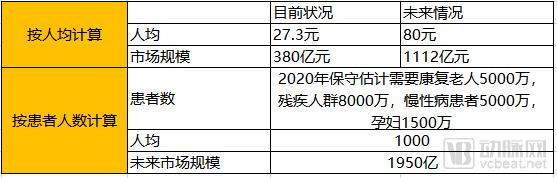
China, with its vast population, is home to 214 million elderly individuals, over 85 million people with disabilities, and more than 50 million patients suffering from chronic diseases. Additionally, there are at least 15 million newborns each year, along with at least 15 million postpartum women requiring rehabilitation. Annually, the country performs over 40 million orthopedic surgeries and more than 200,000 cardiac surgeries. Furthermore, there are over 10,000 retired athletes and a rapidly growing fitness community. Such substantial demand will inevitably propel rehabilitation into a massive industry.
Data sources: Qianzhan Industry Research, Soochow Securities, VCBeat, China Disabled Persons' Federation
According to research by Qianzhan Industry Research Institute, China’s rehabilitation market size was RMB 38 billion in 2017. In contrast, with a population of 320 million, the U.S. rehabilitation industry had already reached $200 billion in 2013 (including long-term care). This vast market potential will inevitably intensify the rapid transformation of the rehabilitation sector in the coming years.
Shortcomings in China's Rehabilitation Industry
Shortcomings in China's Rehabilitation Industry Are Mainly Manifested in the Following Aspects:
Although China has long had the saying, “It takes one hundred days to heal injured tendons and broken bones,” public understanding of rehabilitation largely remains at the level of “resting more for fractures” and “moving more for hemiplegia,” with many people unfamiliar with how to undergo proper rehabilitative therapy.
A report by 21st Century Business Herald pointed out that the “Survey and Analysis of the Current Status of Community-Based Stroke Rehabilitation in Beijing,” published in 2010 by Wang Yan and colleagues from Beijing Tiantan Hospital and the Beijing Neurosurgical Institute, showed that although patients had a substantial demand for rehabilitation services, they still lacked adequate knowledge about stroke rehabilitation treatment, and the implementation rate of community-based rehabilitation remained low.
Among the respondents, only 9.7% of patients and 9.3% of caregivers reported having a good or fairly good understanding of rehabilitation therapy, while the vast majority had only a partial or no understanding at all. Only 21.7% of stroke patients indicated that they had received formal rehabilitation therapy during their hospitalization, whereas 78.3% stated that they had not. The most commonly cited reason for not receiving rehabilitation during hospitalization was lack of awareness of its availability; additionally, a significant proportion (34.1%) believed that rehabilitation was entirely ineffective.
Furthermore, patients surveyed still tend to seek rehabilitation services at public institutions.
In China, patients and physicians share an interdependent relationship, with patients adhering to medical advice and recommendations. Although patients possess decision-making authority, clinical decisions are significantly influenced by clinicians. Therefore, while rehabilitation has not yet gained universal acceptance, proper guidance and education from clinicians can enhance public awareness and understanding of rehabilitation.
According to data from the China Health Talent Network, in 2016, China had 1,000 large-scale comprehensive rehabilitation institutions, and more than 7,000 general hospitals had established rehabilitation departments.
The United States, with a population only about one-fourth that of China,2015: 29,117 Rehabilitation Institutions. Adequate hospital resources provide sufficient rehabilitation services. Statistics show that the disability rate for stroke in developed countries is around 30%, whereas in China, it exceeds 75%, primarily due to the lack of rehabilitative treatment for patients.Among survivors of cerebrovascular accidents, active rehabilitation enables 90% of patients to regain walking ability and independence in activities of daily living, with 30% returning to work. In contrast, if rehabilitation is undertaken for the aforementioned two chronic conditions, only 6% and 5% of patients, respectively, achieve recovery.
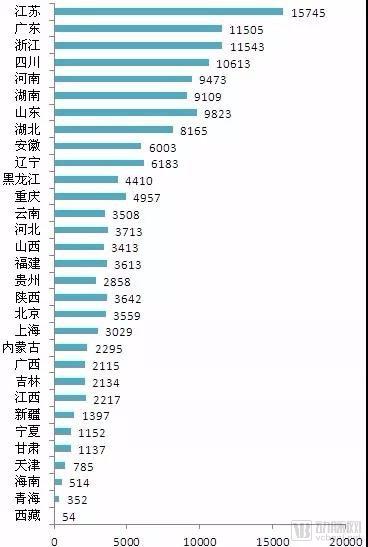
According to statistics from the Qianzhan Industry Research Institute, there were a total of 144,665 rehabilitation beds nationwide in China in 2016, with significant disparities among provinces and municipalities. Jiangsu Province had the highest number of rehabilitation beds, reaching 15,745 in 2016, whereas Tibet had only 54. This unreasonable distribution of bed resources has resulted in an inability to meet the public’s demand for rehabilitation services.
Data Source: Qianzhan Industry Research Institute
In April 2016, the Hefei Rehabilitation Medicine Quality Control Center conducted a survey on the current status of rehabilitation medicine institutions in Hefei. The survey employed a combination of questionnaires and telephone interviews to assess the departments of rehabilitation medicine in 11 medical institutions in Hefei, including three tertiary hospitals, four secondary hospitals, three specialized hospitals, and one rehabilitation center affiliated with the Municipal Disabled Persons’ Federation.
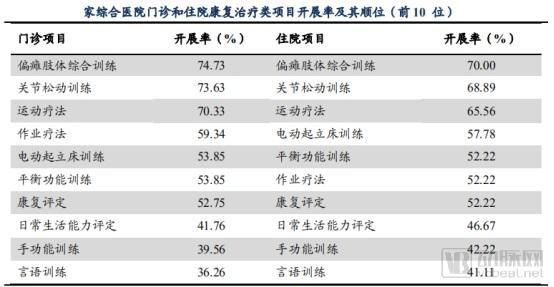
A total of 35 items were covered by the technical operation standards, including kinesiotherapy, physical agent therapy, speech therapy, and traditional Chinese medicine therapies. The results showed that the overall implementation rate of these therapeutic services was 76.1%. Specifically, the implementation rates were 84.8% in tertiary hospitals, 63.6% in secondary general hospitals, and 97.1% in specialized hospitals. Therapeutic services with an implementation rate below 50% included motor imagery and constraint-induced movement therapy within kinesiotherapy, as well as ultraviolet therapy and laser therapy within physical agent therapy.
Similarly, a study surveyed registered medical institutions in Shanghai, including 116 general hospitals, 5 rehabilitation hospitals, and 98 community health centers. The survey results showed that the highest implementation rate for rehabilitation services reached 94.12%, while the lowest was no more than 5%. This indicates an overall low implementation rate of rehabilitation services, with significant disparities among different services; furthermore, the provided services are relatively concentrated and homogeneous.
Data Source: Soochow Securities
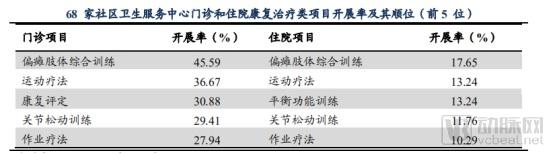
Compared with the implementation rate of rehabilitation programs in general hospitals, the status of community-based rehabilitation treatment programs is far from optimistic. The implementation rate of outpatient programs is higher than that of inpatient programs, but it remains below 50%.
Data Source: Soochow Securities
The lack of an explosive growth in China’s rehabilitation industry is closely tied to the supply of talent. According to the China Health Talent Network, the future demand for various types of professional and technical personnel in rehabilitation is estimated at around 1 million, while the current total stands at approximately 500,000. Among these, only 6,028 rehabilitation therapists were registered in 2014, highlighting the immense gap that can be imagined.
The insufficient supply of talent is primarily related to education,In China, there are only 128 undergraduate programs related to rehabilitation therapy and sports rehabilitation; this figure stands at 219 in the United States, 280 in Germany, and 241 in Japan. Moreover, China faces a severe shortage of professionals with master’s or doctoral degrees in speech-language pathology.。
Taking Japan as an example, in 2010, there were 241 schools offering physical therapy (PT) programs, 173 schools offering occupational therapy (OT) programs, and 63 schools offering speech therapy (ST) programs throughout the year. These institutions annually trained 13,300 PT professionals, over 6,700 OT professionals, and more than 2,300 ST professionals.
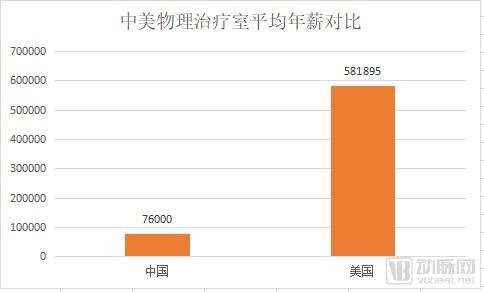
The shortage of talent is linked to subpar compensation. According to users on Zhihu, the annual contractual salary for physical rehabilitation therapists in Beijing is RMB 76,000. Nationwide, 67% of rehabilitation department staff in tertiary hospitals earn less than the average income of other medical professionals in the same region, while 24% of employees at rehabilitation institutions receive monthly wages of only around RMB 2,000. In the United States, hourly wages for physical therapists range from $27.43 to $57.59, with an average annual salary of $84,020. Such income levels have significantly dampened the motivation of practitioners.
Data source: Zhihu, Internet; Unit: RMB
In 2016, Meng Qingyuan from the People’s Hospital of Yuanyang County, Henan Province, conducted a survey in Yuanyang County, northern Henan. The results revealed that among the county’s population of 600,000, its 14 township health centers, 4 county-level hospitals, and 5 medium-sized private specialized hospitals, none had a rehabilitation department. Except for “New Oriental Cerebral Palsy Hospital,” which possessed a limited number of assistive devices for hemiplegia rehabilitation, there were no adequately stocked therapeutic rehabilitation devices available for patients throughout the entire county.
Meng Qingyuan’s investigation of more than 80 pharmacies revealed that, aside from three pharmacies offering a limited selection of basic rehabilitation devices, none of the others displayed or sold rehabilitative assistive devices. At the county’s primary medical service center—the County People’s Hospital’s “Specialty Clinic for Neck, Waist, Shoulder, and Leg Pain”—only a small number of medical rehabilitation devices were available, all of which were in constant use (utilization rates exceeding 100%). The clinic’s main rehabilitation services included acupuncture, cupping, gua sha (scraping therapy), magnetic heat therapy, and physical therapy.
In addition to upgrading rehabilitation equipment at the primary care level, the translation of research findings into practice should be accelerated. The research and application of technological products such as rehabilitation robots, brain-computer interface devices, and rehabilitation informatics also need to be expedited.
Over the past 30-plus years of development in China’s rehabilitation medicine sector, rehabilitative care was initially considered an “optional choice” for many patients due to its exclusion from medical insurance coverage. It was not until 2010, when the Ministry of Human Resources and Social Security included nine rehabilitation services—such as exercise therapy—within the basic medical insurance reimbursement scope, and later expanded this list to 29 items in 2016, that the majority of the population gained genuine access to rehabilitation medical services.
However, due to funding and policy constraints, the current basic rehabilitation reimbursement period available to Chinese residents is limited to six months., but many rehabilitation needs are lifelong, so there is still room for improvement.
In developed countries, represented by the United States, Japan, the United Kingdom, and France, basic medical insurance systems have integrated rehabilitative care, emergency services, and comprehensive clinical care into a unified framework. These nations have established a full-process rehabilitation model that spans from emergency care to comprehensive clinical treatment, early-stage rehabilitation, mid-stage rehabilitation, and finally community- and home-based rehabilitation.。
This also represents an area for our future improvement; additionally, the integration of commercial insurance is another sector that will require strengthening in the future.
Opportunities in China's Rehabilitation Industry
Although China lags significantly behind foreign countries in the field of rehabilitation, recent developments in investment, payment mechanisms, and private enterprises/hospitals have highlighted the immense potential for growth in China’s rehabilitation industry.
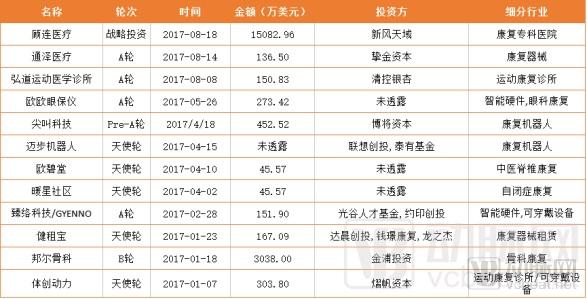
According to VCBeat’s database, there were 12 financing deals in the rehabilitation sector in 2017. Based on publicly disclosed data, the total amount was approximately $194 million (equivalent to RMB 1.286 billion). Notably, RMB 1 billion of this total came from GooLian Medical. The remaining RMB 286 million was shared among 11 companies.
Source: VCBeat
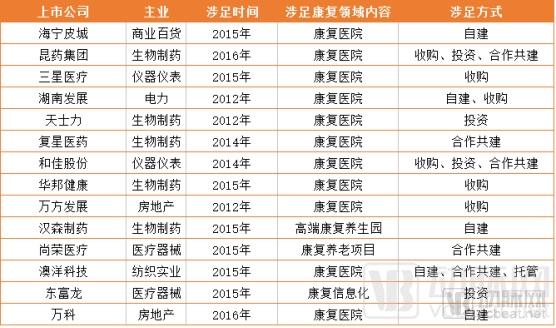
In recent years, with the relaxation of policies, private rehabilitation hospitals have experienced rapid growth. According to incomplete statistics from VCBeat, as of 2017, 14 listed companies had entered the rehabilitation sector.
Most of these hospitals have already achieved profitability,Shunkang Hospital, a subsidiary of Aoyang Technology, reported rehabilitation medical service revenue of RMB 13 million and net profit of RMB 1.95 million in 2014, with a net profit margin exceeding 15%. Hunan Xiangya Boai Rehabilitation Hospital has generated cumulative revenue of over RMB 50 million in three years.

Data Source: Hunan Development Annual Report
Samsung Medical announced that Mingzhou Rehabilitation Hospital achieved profitability in less than three years since its establishment.Mingzhou Rehabilitation Hospital was established in November 2014. In the first half of 2017, it achieved operating revenue of RMB 45.58 million and net profit of RMB 6.23 million. The counterparty to the transaction has committed that the hospital’s net profit (net profit after deducting non-recurring gains and losses) for the years 2017, 2018, and 2019 shall be no less than RMB 20 million, RMB 23 million, and RMB 26.45 million, respectively.
While some rehabilitation hospitals are profitable, the majority of private rehabilitation hospitals, being newly established, are still operating at a loss. For instance, Aoyang Hua’an Rehabilitation Hospital reported revenue of RMB 4.73 million and a net loss of RMB 4.87 million in 2017. Nevertheless, Aoyang Technology continued to invest RMB 259 million in new rehabilitation healthcare projects, including the construction of a new Gangcheng Rehabilitation Hospital and the joint establishment of 30 chain rehabilitation departments. The projected construction period is three years. Upon completion, the projects are expected to generate average annual sales revenue of RMB 178 million and average annual after-tax profit of RMB 45.22 million.
VCBeat has noted that, while China has not yet produced rehabilitation chain giants with annual revenues in the tens of billions of dollars comparable to U.S. players such as Compass (formerly Southern Health), Select Medical, and Kindred Healthcare, such industry leaders are bound to emerge in China’s rehabilitation sector in the future.。
The article “An Analysis of the Rehabilitation Healthcare Market: The U.S. Physical Therapy Market Exceeds $30 Billion, with Community Clinics as the Dominant Model, While China Is Just Getting Started” mentions that since 1982, U.S. Medicare has implemented a prospective payment system based on Diagnosis-Related Groups (DRGs) for acute care.
DRGs are a typical representative of the prospective payment system, under which the health insurance department determines a relatively fixed payment standard for healthcare providers before services are rendered. At that time, DRGs were still in their nascent stage, primarily indicated for acute conditions with clear diagnoses, relatively consistent treatment methods, stable treatment protocols, and short hospital stays. Due to the specific characteristics of four categories of treatments—including inpatient rehabilitation and mental disorders—such as prolonged hospital stays, complex treatment regimens, and high costs, the DRG payment method was not adopted; instead, the fee-for-service model continued to be used.
DRG policies have served as a catalyst for enhancing efficient hospital referrals and advancing rehabilitative medical services, ushering in an explosive golden age of growth for the rehabilitation industry in the United States. Within ten years of DRG implementation, the number of rehabilitation beds doubled, while specialized rehabilitation institutions and long-term care facilities proliferated rapidly.
Currently, China includes 29 rehabilitation services in its medical insurance coverage, still adopting the U.S. Phase I fee-for-service payment model. This has led to overutilization of certain covered rehabilitation services, while non-covered services have seen slow progress.
Encouragingly, the “Guiding Opinions of the General Office of the State Council on Further Deepening the Reform of Basic Medical Insurance Payment Methods,” issued by the State Council in 2017, called for launching pilot programs for Diagnosis-Related Groups (DRGs)-based payment.
In the commercial insurance sector, nursing and rehabilitation insurance products are gradually gaining traction. During the 2019 Spring Festival, when I purchased critical illness insurance, it included coverage for nursing and rehabilitation. The sales representative explained that such policies have been growing in popularity recently, and as the number of policyholders increases, more patients will seek rehabilitation services in the future.
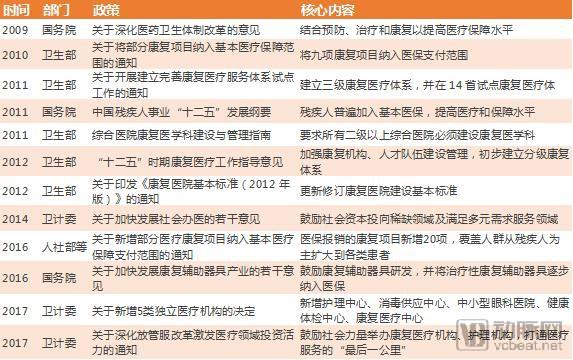
China’s healthcare development cannot be separated from policy support. Since 2009, the national government has promoted the development of the rehabilitation industry from three aspects: medical device development, rehabilitation departments, hospital construction, and payment mechanisms.
Medical Device R&D: Enhance the R&D capabilities of rehabilitation equipment, actively develop products such as rehabilitation training systems, and increase the penetration rate of rehabilitation devices;
Rehabilitation Department, Hospital Construction: Explore the establishment of a three-tier rehabilitation medical service system; mandate that general hospitals at Level II and above establish departments of rehabilitation medicine; encourage private capital to directly invest in rehabilitation hospitals; support the transformation of Level II general hospitals into specialized rehabilitation hospitals;
Medical Insurance Payment: Therapeutic rehabilitation assistive devices will be gradually included in the scope of medical insurance reimbursement; the number of rehabilitative medical services covered by medical insurance has increased from 9 to 29 items, with the eligible population expanding from primarily individuals with disabilities to various patient groups, and the reimbursable items extending from predominantly physical therapy to encompass a wide range of therapeutic interventions and rehabilitation assessment services.
A major constraint on the development of China’s rehabilitation industry is talent cultivation, particularly the training of specialized professionals. Among the more than 8,000 rehabilitation graduates in China each year, over 70% hold associate degrees. Only 34 universities offer master’s programs in Rehabilitation Medicine and Physiotherapy, and merely nine institutions enroll doctoral candidates, resulting in a significant shortage of high-level talents relative to demand.
Encouragingly, the China Disabled Persons’ Federation (CDPF) is currently preparing for the establishment of the University of Rehabilitation. On June 29, 2018, a special meeting on the preparatory work for the University of Rehabilitation was held at the China Rehabilitation Research Center. Attendees included relevant officials from the National Development and Reform Commission, the Ministry of Finance, the Ministry of Human Resources and Social Security, the National Health Commission, the Department of Development and Planning under the Ministry of Education, the School Planning, Construction and Development Center, the Shandong Provincial Department of Education, the Shandong Provincial Disabled Persons’ Federation, the Qingdao Municipal People’s Government and related departments, as well as the General Office, the Department of Rehabilitation, the Department of Education and Employment, and the Department of Planning and Finance of the CDPF, along with representatives from the China Rehabilitation Research Center, the Chinese Hearing and Speech Rehabilitation Research Center, and Beijing Massage Hospital.
The meeting pointed out that, with the high-level attention of State Council leaders and strong support from ministries such as the Ministry of Education and the National Development and Reform Commission, the “establishment of a University of Rehabilitation” was incorporated into the national 13th Five-Year Plan, thereby elevating it to a national initiative.
In addition, the rehabilitation industry is not only seeking ways to cultivate talent but also striving to retain it. In terms of compensation, for instance, the contracted annual salary for hospital directors at private hospitals has exceeded one million yuan, while Weidu Sports offers physical therapists contract salaries ranging from 10,000 to 15,000 yuan per month on Lagou.com. The income of rehabilitation physicians has been gradually increasing, and the number of professionals in the rehabilitation sector is expected to continue growing in the future.
The growth of the rehabilitation industry also presents opportunities for upstream enterprises in the supply chain, particularly in the field of rehabilitation devices.
In 2016, the State Council issued the Several Opinions on Accelerating the Development of the Rehabilitation Assistive Devices Industry (hereinafter referred to as the “Opinions”), which pointed out that by 2020, the scale of China’s rehabilitation assistive devices industry would exceed RMB 700 billion, basically forming an industrial pattern with reasonable layout, complete categories, and abundant products. The “Opinions” encouraged localities with appropriate conditions to study the gradual inclusion of basic therapeutic rehabilitation assistive devices into the coverage of basic medical insurance payments. It also supported commercial insurance companies in innovating product designs to include the provision of rehabilitation assistive devices within the scope of insurance payments.
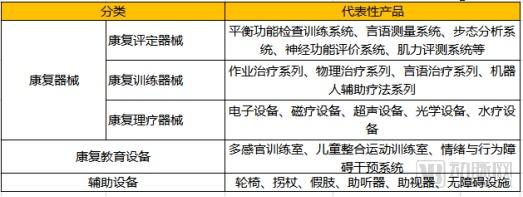
The wide variety of product types has led to a “high-mix, low-volume” production pattern for rehabilitation devices in China. Although the overall rehabilitation device market is sufficiently large, there are significant differences among its segments, with distinct customer bases and market strategies for each.
According to data from the Qianzhan Industry Research Institute, the scale of the rehabilitation medical device market has been growing year by year. In 2017, the market size for mechanical therapy and ward nursing equipment in China reached RMB 23.05 billion, while that for other rehabilitation medical devices was RMB 44.95 billion, bringing the total market size of rehabilitation medical devices to RMB 68 billion.
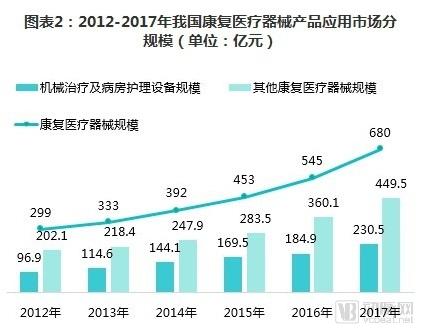
Source: Qianzhan Industry Research Institute
Data from major domestic manufacturers show that gross profit margins across companies range from 32% to 70%, classifying it as a high-margin industry.
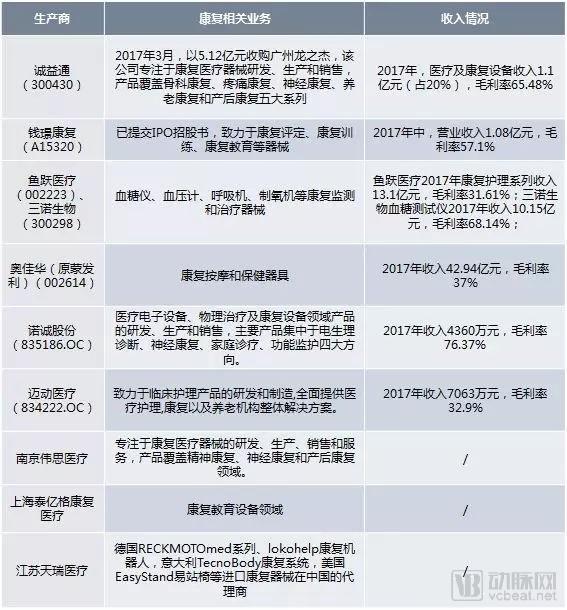
Data Source: Haier Medical Finance
In addition to the five opportunities mentioned above, inSports Rehabilitation, Speech Rehabilitation, Postpartum Rehabilitation, Pediatric RehabilitationIn these and other fields, China is still in a phase of rapid development; the future of China’s rehabilitation industry is promising.