

160 Health Unveils Its Integrated Ecosystem: Internet Hospitals, Physicians, and Healthcare Institutions
2018 marked a pivotal turning point for internet healthcare enterprises. Not only did the national government endorse the internet healthcare model, but it also provided a clear definition of internet hospitals.
At this time, numerous internet healthcare companies are vying for market share. As the first publicly listed internet healthcare company, the Health 160 platform is also continuously exploring and piloting new products.
In early 2019, Luo Ningzheng, founder of Health 160, stated in an exclusive interview with VCBeat that he believes internet hospitals represent the digital transformation of the entire healthcare industry, rather than merely an upgrade for specific hospitals or patient groups.
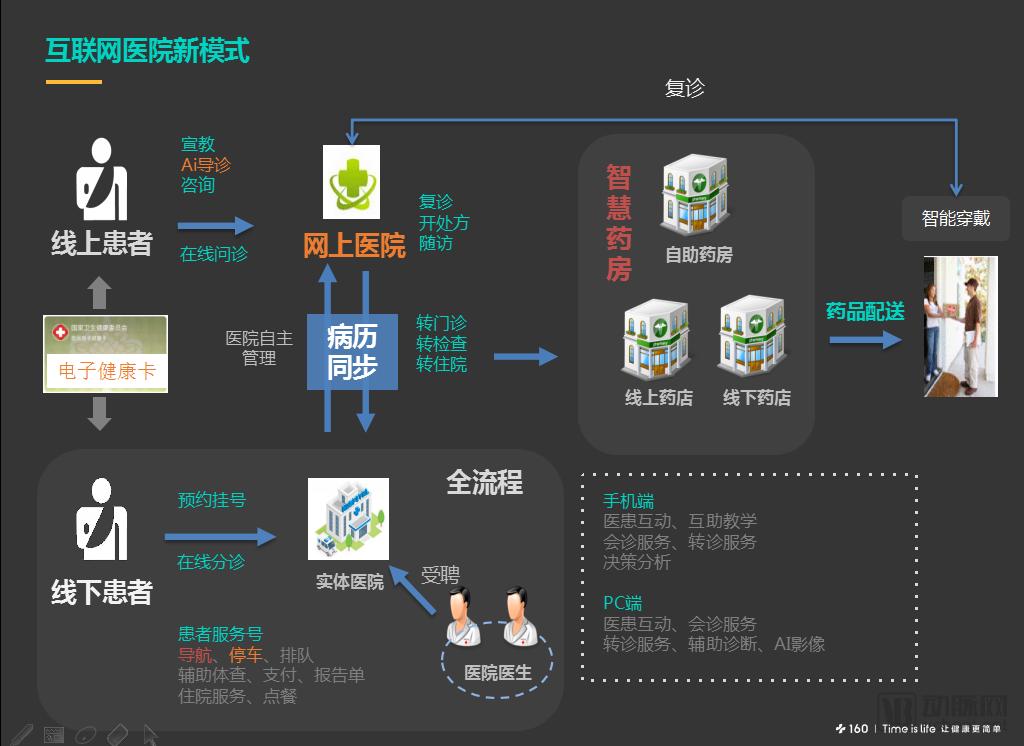
According to Luo Ningzheng’s definition of internet hospitals, Health 160 has been continuously developing new products and has initially established an internet-based ecosystem encompassing internet hospitals, physicians, and healthcare institutions.
How Should We Understand That Internet Hospitals Represent the Digital Transformation of the Entire Healthcare Industry?
Luo Ningzheng stated that focusing solely on serving public hospitals would likely relegate them to the role of mere IT providers. Instead, he aims to help and empower various institutions within the industry, as well as physicians in different roles, by delivering deep, specialized services.
To this end, he proposes a three-dimensional framework: the first dimension is internet hospitals oriented toward public hospitals; the second dimension is the digital transformation of small-scale medical institutions such as clinics; and the third dimension is empowering physicians in the process of digitalization.
This also represents the internet footprint of the Health 160 platform, which provides comprehensive empowerment across public hospitals, small medical institutions, and physicians.
Luo Ningzheng candidly acknowledged that while building the platform is relatively easy, the needs of the three parties involved are actually quite different. For instance, large hospitals, which do not lack patients, may focus on improving operational efficiency; small medical institutions are concerned with brand building and patient acquisition; and physicians are focused on whether they can practice independently and manage their own patient panels.
With the introduction of new regulations for internet-based medical consultations, a vast industry has been ushered in. All healthcare institutions should proactively upgrade their IT capabilities and embrace this transformation to foster healthier development across the sector. Otherwise, the strong will become stronger, while the weak will grow weaker.
Amidst this major trend, what should hospitals do? What role should doctors play? To help these healthcare professionals find a balance, Luo Ningzheng established the Health 160 platform, assisting large public hospitals in building internet-based IT capabilities and migrating offline processes such as appointment registration and payment to online platforms. With the accumulation of data, the platform has already launched new products equipped with AI capabilities.
As Luo Ningzheng delved deeper into the healthcare sector, he increasingly recognized that transforming the medical and health industry required influencing multiple facets, not just a single stakeholder. Therefore, in addition to large public hospitals, he extended this service model to clinics, aiming to support physicians who were relatively disadvantaged and lacked adequate resources.
“We have not only established extensive collaborations with large public and private hospitals in the realm of internet hospitals, but also developed representative partnership models with primary healthcare institutions, which account for the largest proportion of medical institutions in China,” said Luo Ningzheng. The Health 160 platform has partnered with Yunshan Clinic and Quankang Kexing Clinic, and has successively launched internet hospital collaborations with primary healthcare institutions such as community health centers (or community health service centers) in Shenzhen, Zhuhai, Henan, Shandong, Tianjin, and other regions.
Collaboration with internet hospitals affiliated with primary care institutions is mainly reflected in the following three aspects:
First, empower primary healthcare institutions. Leverage the applicable functionalities of the 160 Internet Hospital to empower primary healthcare institutions, such as online appointment registration, online consultations, electronic health records, e-prescriptions, and post-consultation follow-ups.
Second, resource support from the Health 160 platform. After more than a decade of development, the Health 160 platform has accumulated resources from over 7,000 hospitals and more than 500,000 physicians, offers nearly 20,000 SKUs of pharmaceuticals and medical devices, and provides various healthcare- and health-related products and services. By leveraging the extensive resources of the Health 160 platform, primary care institutions can be efficiently supported in delivering higher-quality healthcare services, such as health information dissemination, expert-led courses, remote multidisciplinary consultations, online referrals, and extended prescriptions.
Third, tiered diagnosis and treatment. By leveraging functions such as online contracting, electronic health records, telephone customer service, and online referrals, we provide community residents with services including family physician care, basic public health services, and bidirectional referrals between different levels of healthcare institutions.
Leveraging the high-quality medical resources of private hospitals, Health 160 builds virtual online hospitals for these institutions. By integrating virtual online campuses with physical offline facilities, it achieves seamless coordination between online appointment scheduling and consultations, and offline examinations, tests, and medication delivery, thereby creating a closed-loop healthcare service ecosystem. Capitalizing on Health 160’s mature technology and platform advantages, the online hospital outpatient services integrate end-to-end functionalities—including appointment registration, online payment, and report inquiry—and connect with medication delivery systems. This provides patients with an efficient, convenient, and fully closed-loop internet-based healthcare experience that spans both in-hospital and out-of-hospital settings.
Moreover, the Health 160 platform also collaborates with a wide range of healthcare institutions, including those specializing in maternal and child care, insurance, medical aesthetics, physical examinations, dentistry, ophthalmology, traditional Chinese medicine, and mental health.
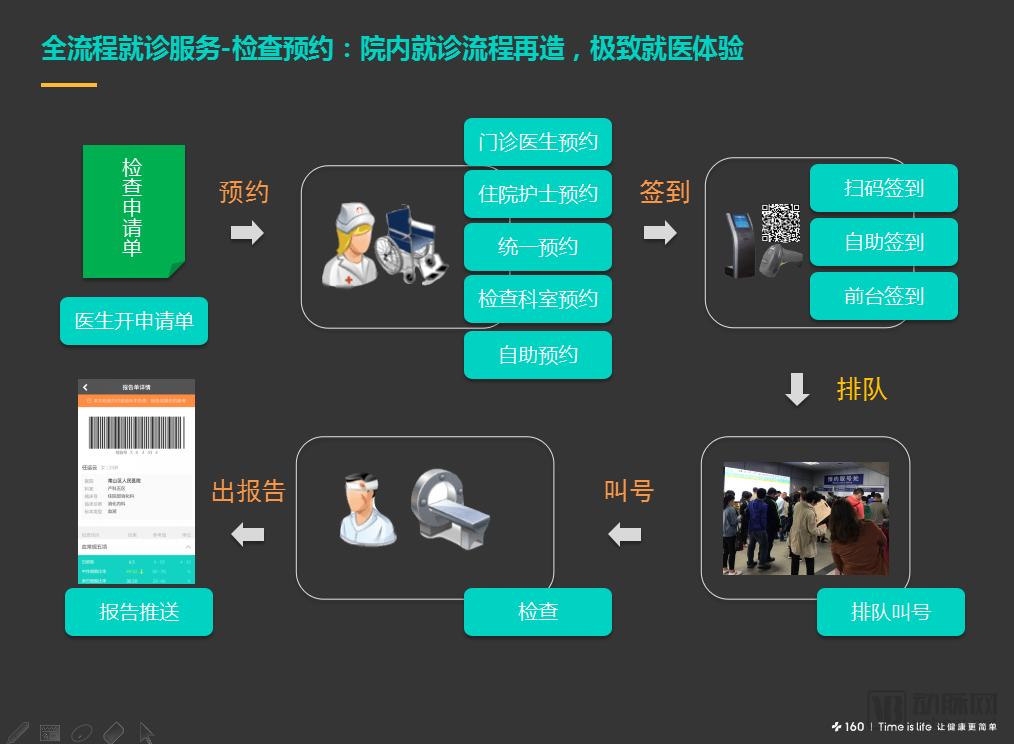
Luo Ningzheng stated that, in the area of health checkups, Health 160 covers 800 examination institutions across 16 provinces and municipalities, including more than 120 Grade A tertiary public hospitals. In 2018, the platform’s transaction volume for health checkup services exceeded RMB 50 million, representing a ninefold year-on-year increase.
The reason lies in the fact that the Health 160 platform provides these big health institutions with end-to-end medical consultation services, creating an ultimate healthcare experience.
In addition to the medical consultation process, Health 160 has also launched "Fun Health"—a socialized 160 Sports and Health Channel—in the health sector. It went live in December 2018, with its first-day user count exceeding 10,000.
On the internet hospital platform, doctors play a crucial role. Reviewing the full year of 2018, Luo Ningzheng noted many encouraging achievements in physician-related services: the Health 160 platform saw over 40,000 weekly active physicians, a 51% year-on-year increase; total daily revenue rose by 92%, creating greater value for more doctors; and the refund rate decreased by 28%, reflecting broader patient recognition of physicians’ efforts.
Meanwhile, in January 2019, the daily peak user payment volume exceeded RMB 10 million, with over 20,000 online prescribing physicians and an average of more than 1,300 online prescription orders per day.
The reason for such impressive achievements is that the Health 160 platform is committed to building doctor-patient social interactions. Its core approach:
1. Continue to interact based on the asymmetric relationship between doctors and patients;
2. Leverage doctor-patient groups to disseminate and reach doctors with announcements, as well as distribute and facilitate the use of medical tools;
3. Disease progression management and paid conversion for core users;
4. Patient-to-patient interaction for information synchronization.
In the realm of physician-led health education, many doctors have shared their journeys in providing general medical knowledge, with numerous articles garnering over 100,000 views. Regarding physician brand building, Dr. Li Jiaxi, who was awarded the “2018 Health 160 Science Popularization Star,” shared insights on how “junior doctors” can cultivate their personal brands. In 2018, articles on the 160 platform accumulated over 30 million views, while audio and video content achieved more than 80 million plays across various platforms. The platform has successfully disseminated health knowledge and fostered a content ecosystem centered on medical creators and original audio-visual productions.
Health 160 has also launched Micro-Classrooms to help physicians enhance their brand visibility and acquire targeted users. According to incomplete statistics, it has cumulatively reached over 400,000 users to date.
As various regions across China successively introduced detailed regulations on “Internet + Healthcare,” the Guangdong Provincial Government officially released the Action Plan for Promoting the Development of “Internet + Healthcare” on June 14, 2018.
The content primarily highlights the following points: Medical institutions are permitted to use "Internet Hospital" as a secondary name, leveraging internet technologies to provide safe and appropriate medical services on the basis of physical hospitals. Licensed physicians who are registered or filed are allowed to conduct online follow-up consultations for certain common and chronic diseases, and to issue online prescriptions for such conditions after reviewing patients' medical records. Support is provided for medical and health institutions, as well as qualified third-party organizations, to establish internet information platforms for delivering telemedicine, health consultation, and health management services.
In this regard, Health 160, which has been deeply engaged in the internet healthcare industry for many years, has demonstrated significant advantages. For example:
In terms of big data, the platform has accumulatedOver 500,000 physicians,Thousands of Partner Hospitals、160 millionPatient Group. Can Help UsersPrecisionMatched Medical Care.
In terms of product offerings, we have developed an online hospital platform and family doctor services that are ready for operational deployment. These solutions feature comprehensive operational products, enabling physicians to issue electronic prescriptions to patients.
In our pharmaceutical warehouse, we feature modern, specialized medical storage with over 10,000 SKUs in reserve. Additionally, holding an online hospital license and partnered with a physical Tier-3 Grade-A hospital, we possess a sophisticated operational system for advanced online prescribing and offline medication pickup, backed by extensive practical experience.
“We can help our partners integrate functions such as appointment registration, payment, consultation, and pharmaceutical services to provide hospitals with comprehensive online hospital solutions. These solutions assist hospitals in delivering convenient healthcare services that support patients with off-site consultations, appointment scheduling, medical consultations, and rehabilitation, as well as facilitating in-hospital visits. Additionally, we offer physicians a manageable, transparent, and compliant platform for multi-site practice,” said Luo Ningzheng. He added that the company will maintain an even more open mindset in the future to welcome partners from various industries.