

Yasen Technology Partners with Siemens to Accelerate Commercialization of Brain-Neuro AI Solutions
With the festive atmosphere of the Lunar New Year still lingering, China’s medical AI companies have once again gathered.
The 2019 Smart Healthcare Summit, initiated by medical device giant Siemens, was held in Beijing. Executives from AI healthcare companies—including Alibaba Health, Ping An Good Doctor, Tencent Medical, Deepwise, Yitu Technology, Infervision, iFlytek, BoShi Medical, Shukun Technology, Tuma Shenwei, Yasen, Zhuyitai, Ande Yizhi, and Xishi Yigou—participated in the conference. They jointly explored the current status and trends of healthcare digitalization globally and in China, as well as the attempts and insights of the healthcare industry in the application of artificial intelligence and digital technologies.
As the internet wave sweeps through the healthcare sector, the era of companies going it alone has become a thing of the past. Giants at various nodes of the industry chain—such as Meinian, Alibaba, and NVIDIA—are attempting to transcend their traditional businesses, build healthcare industry ecosystems, and establish new models to attract more cutting-edge technologies and cover more medical institutions.
Now it is Siemens’ turn. How to continuously provide innovative digital healthcare solutions, build a digital healthcare ecosystem, and fulfill its corporate value proposition in digital healthcare has become the company’s top priority. To this end, Siemens needs to identify a cohort of outstanding artificial intelligence companies and leverage cutting-edge technologies to enhance the competitiveness of its ecosystem.
Beijing Yasen Technology Development Co., Ltd. (hereinafter referred to as “Yasen”) has been selected as one of the first batch of companies to partner with Siemens. Established in 2006, this veteran medical imaging company has secured an early advantage through its AI technologies focused on neurology. Through this collaboration, both parties will jointly advance R&D in artificial intelligence, integrate big data technologies with traditional medical devices, develop new business models, connect upstream and downstream segments of the healthcare ecosystem, and achieve synergistic development. Furthermore, Yasen’s AI-driven medical products and services will be accelerated for global deployment and application via Siemens’ imaging equipment.
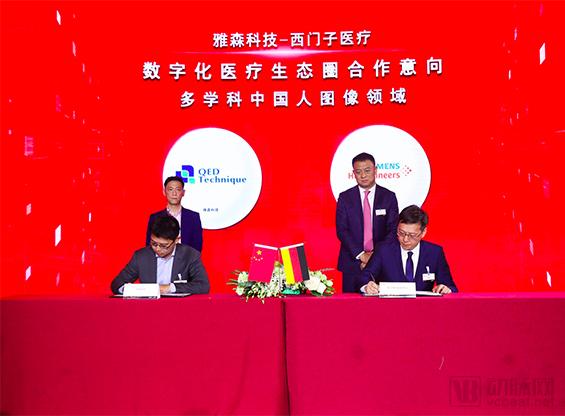
Yasen Signs Memorandum of Understanding with Siemens
Yasen Technology has positioned digital healthcare for specialized neurological disorders as its strategic direction in medical AI. Leveraging decades of accumulated expertise, the company has established a robust technological moat in the field of neurological (brain) diseases.
In the absence of a definitive cure for Alzheimer’s disease (AD), early detection and trend prediction represent the most effective strategies for managing the condition, enabling timely intervention with cholinesterase inhibitors to slow cognitive decline. Yasen Technology’s AI-powered diagnostic and predictive system for Alzheimer’s disease integrates multimodal data—including clinical scales, MRI, and EEG—by applying artificial intelligence to synthesize findings from neurology, radiology, and electroencephalography departments, thereby rapidly generating comprehensive AD analysis results for patients.
Currently, Yasen Technology’s products for brain diseases are being deployed and utilized at top-tier Grade 3A hospitals such as Peking Union Medical College Hospital and Beijing Tiantan Hospital. The company has also developed a tailored AI diagnostic system for Alzheimer’s disease (AD), generating personalized models for health checkup institutions with varying levels of medical infrastructure. By deeply integrating with these institutions, Yasen is extending the value of AI imaging to the grassroots level, enabling more patients to detect conditions early and receive timely treatment.
Yasen’s other product, the Intelligent Lymphocyte Micronucleus Inspection System, leverages artificial intelligence to assess lymphocyte micronucleus rates, enabling a fully automated workflow that covers slide preparation, scanning, identification, and statistical analysis. Currently, the system achieves an automatic micronucleus detection rate of over 90%, addressing the issues of time-consuming procedures and low efficiency associated with traditional micronucleus testing.
Nowadays, the Intelligent Lymphocyte Micronucleus Inspection System has completed compatibility with mainstream domestic and international manufacturers of automated microscope scanners, and is gradually being applied in specialized disease hospitals and hospital clinical laboratories.
In the fields of Parkinson’s disease, epilepsy, and stroke, Yasen has also leveraged its Tianji AI platform to develop corresponding multimodal feature solutions, enabling AI-driven detection and precise localization of epileptogenic foci, as well as early screening and diagnosis of stroke.
To enable the aforementioned AI products to better analyze patient data and integrate into clinical workflows, Yasen has begun structuring its product offerings around the decomposed care pathways of specific diseases. Specifically, the entire clinical workflow is divided into three stages: pre-diagnosis, intra-diagnosis, and post-diagnosis.
In the pre-consultation scenario, Yasen focuses on physical examination centers and community hospitals as its primary service settings, providing guidance services to patients lacking experience with community hospital visits and to healthy individuals participating in population-based screening programs.
During the consultation phase, Yasen focuses on primary hospitals in second- and third-tier cities, empowering them with artificial intelligence to perform image analysis and generate corresponding results. This approach addresses their deficiencies in technical capabilities and human resources, leveraging AI as a key mechanism for facilitating the downward dissemination of high-quality domestic medical resources.
In the post-consultation phase, patients may switch hospitals for treatment. Due to the lack of interoperability of medical information between different hospitals, such patients often experience missing medical record information in subsequent treatments.
To enhance the consistency of patient information during medical consultations, Yasen will leverage entry points such as WeChat Mini Programs to assist patients in entering their consultation data. By utilizing mobile internet technologies, Yasen aims to facilitate long-term communication and data collection between doctors and patients, while also breaking down information silos across different hospitals to achieve true end-to-end patient management.
Compared with the medical ecosystems of other industry giants, Siemens possesses a series of advantages to support artificial intelligence enterprises. On one hand, AI companies will gain access to high-quality, structured data through Siemens’ CT, MRI, and PET products, thereby avoiding the inevitable information loss associated with processing data in disparate formats. On the other hand, corresponding AI products will be distributed globally alongside Siemens’ medical equipment.
Chen Hui, CEO of Yasen Technology, told VCBeat: “Siemens will provide strong support for the implementation of Yasen’s business model. Siemens can not only introduce AI companies’ products into hospitals, thereby addressing our channel challenges, but also, leveraging its TEAMPLAY-based medical cloud platform in the future, better support the cloud deployment of our products and facilitate the extension of services through internet hospitals. In building this business model, whether we supply AI products to Siemens or jointly serve hospitals with Siemens, it will generate recurring service revenue for us.”
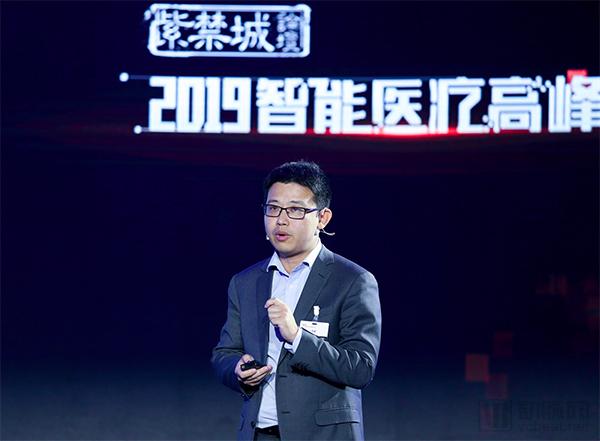
Chen Hui, CEO of Yasen Technology
“The primary payers for AI-based neurology products remain hospitals. Although business models are still being explored, two approaches are expected to become the mainstream revenue models in the future: one is fee-per-examination, and the other is time-based buyout service fees. In the second half of 2017, after Yasen Intelligence’s products received Class II medical device certification, commercial operations became feasible. We provide physicians with auxiliary diagnostic services, and generate revenue once physicians confirm the patient reports. As the AI business model matures, or upon obtaining Class III medical device certification, Yasen’s existing commercial layout will be rapidly advanced.”
Regarding the value of medical imaging, Chen Hui stated, “The value of radiology departments will increasingly shift toward clinical diagnosis, which involves obtaining more valuable information through in-depth image analysis and providing guidance for clinical treatment. By conducting more extensive and precise quantitative image analysis, performing correlative analysis of multimodal imaging, and introducing machine learning-based disease feature mapping, Yasen helps radiology departments reduce image analysis time, improve analytical accuracy, and provide reference opinions for clinicians’ decision-making, thereby minimizing unnecessary patient examinations.”
Nowadays, although AI products are emerging in the market, their accuracy still needs to be improved after they leave the laboratory and are implemented in hospitals. Deepening the precision of existing products and enhancing their practical usability is one of the important development strategies that AI companies can choose at this stage.
With the initial product layout completed, Yasen’s development path has become increasingly clear: “Yasen’s current focus will rest on two key areas. The first is specialization, namely further model optimization, functional modularization, and accuracy enhancement for its existing product portfolio. The second is commercialization, achieved through collaborations with service providers and hospitals to facilitate market implementation and establish a closed-loop business model, thereby enabling the true commercial operation of its AI products.”
Therefore, at the current stage, horizontal expansion of the product line is not Yasen’s top priority. Instead, Beijing Yasen Technology Development Co., Ltd. will focus on deepening product operations in its next phase. As collaborations with high-quality partners such as Siemens advance, the realization of Yasen’s commercial applications is imminent.