

Saiweier Bio: A Leading Chinese CRO Serving Peking and Tsinghua Universities Reports Nearly RMB 40M Net Profit in 2018 and Files IPO Prospectus
Basic scientific research is a crucial foundation for pharmaceutical R&D. Statistics show that the current market size for reagents and consumables in China ranges from RMB 30 billion to RMB 40 billion. However, the domestic scientific research services market is nearly monopolized by foreign companies, with imported services accounting for as high as 95%, indicating substantial potential for domestic substitution. On the other hand, for individual laboratories or research institutes, certain basic experiments are conducted infrequently, yet they incur high costs in terms of reagents, consumables, labor, and time.
Saiweier Biology is a leading comprehensive provider of laboratory solutions in China, equipped with both scientific research service capabilities and the ability to independently develop, manufacture, and sell research reagents and consumables. The company has established laboratories in 13 cities across China, cumulatively serving approximately 30,000 clients. “We aim to help researchers improve the efficiency of basic scientific research through our services,” said Zhao Hongzhou, founder of Saiweier Biology, in an interview with VCBeat.
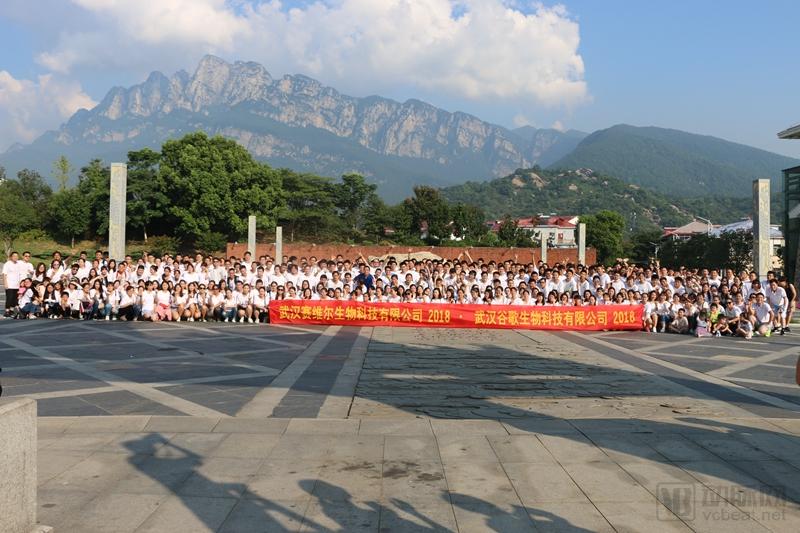
Saiweier Biology was established in 2007, with its headquarters located in Wuhan, Hubei Province. Prior to founding the company, Zhao Hongzhou studied Medical Laboratory Science at Hubei University of Chinese Medicine and subsequently worked as a technician at third-party testing companies Dian Diagnostics and Kindstar Global. After several years of professional experience, Zhao Hongzhou developed the aspiration to start his own business.
Given his prior work experience, Zhao Hongzhou attempted to enter the market by focusing on the instruments and reagents required for third-party testing, providing agency sales services for various reagent and consumable manufacturers. However, in reality, the first- and second-tier distribution channels for such products were already well-established, making it difficult to break into the industry. Consequently, Zhao Hongzhou devised a strategy to penetrate the product market by offering basic scientific research services.
Like many startups, Saier Biology was founded through trial and error. “Our initial market was at Tongji Medical College,” recalls Zhao Hongzhou. By selling reagents and consumables to university researchers and providing basic scientific research services, Saier Biology gradually broke into the local sales market, but also unexpectedly discovered a huge demand for basic scientific research services.
“Unlike the third-party testing services available on the market, basic scientific research demands are substantial in volume and broad in scope, yet few domestic companies have ventured into this area,” said Zhao Hongzhou. According to VBInsight, there are currently 175 third-party testing companies in China offering gene sequencing services. Over years of operation, Zhao Hongzhou and his team ultimately established scientific research services as their core business, with direct sales and agency distribution of reagents and consumables serving as secondary business lines.
Currently, Sailwei Biology has achieved ten consecutive years of revenue growth, reporting a net profit of nearly RMB 40 million and revenue exceeding RMB 140 million in 2018, with a remarkable compound annual growth rate (CAGR) of over 50% in the past three years. Of this, income from scientific research services accounted for 83%, while sales of reagents and consumables contributed 17%.
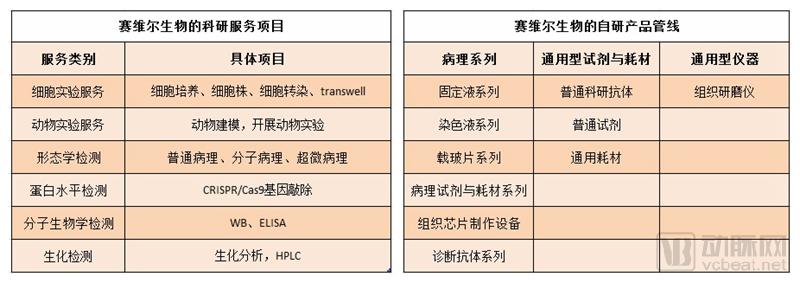
Saville Biotech provides six major categories of research services to frontline researchers at scientific research institutions and independent research organizations, as well as universities and hospitals. These services primarily include: cell-based assay services, animal experimentation services, morphological analysis, protein-level detection, molecular biology testing, and biochemical assays.
In addition, Saier Biotechnology has incorporated the sales of reagents and consumables into its third-party service business model, eliminating all intermediaries and significantly boosting product gross margins. The company’s Wuhan central laboratory offers more than 1,300 types of commonly used reagents and consumables, and is currently establishing an integrated park combining R&D, testing, and production. To date, it has successfully developed nearly 30 products and experimental service solutions.
Seville Biotech has also improved and innovated nearly 10 traditional experimental protocols to enhance experimental quality. For instance, in the preparation of traditional eye specimen sections, improper handling often leads to corneal detachment; however, Seville Biotech’s services reduce the probability of corneal detachment to 20%–30%. In antibody labeling experiments, cross-reactivity between antibodies and challenges in multi-color imaging are common issues. Seville Biotech has optimized the original protocol by labeling only one antibody at a time, thereby resolving the issue of antibody cross-interference. Additionally, the company has developed an enhancer capable of amplifying fluorescent signals by 10-fold, thus reducing antibody consumption in experiments.
“Our basic scientific research services may not involve revolutionary methods, but it is precisely these incremental improvements and small, cumulative breakthroughs that enable us to deliver optimized results for our clients,” said Zhao Hongzhou.
Currently, Sairui Biotech has established one central laboratory in Wuhan, along with 13 branch laboratories and 20 sales outlets across China. The central laboratory is equipped with SPF animal facilities, sterile laboratories, transmission electron microscopes (TEM), scanning electron microscopes (SEM), mass spectrometers, HPLC systems, and other instruments. It primarily handles low-frequency, complex research services to reduce costs through economies of scale. The branch laboratories are responsible for research services that are less technically demanding but time-intensive, such as common pathological procedures including embedding, sectioning, and staining.
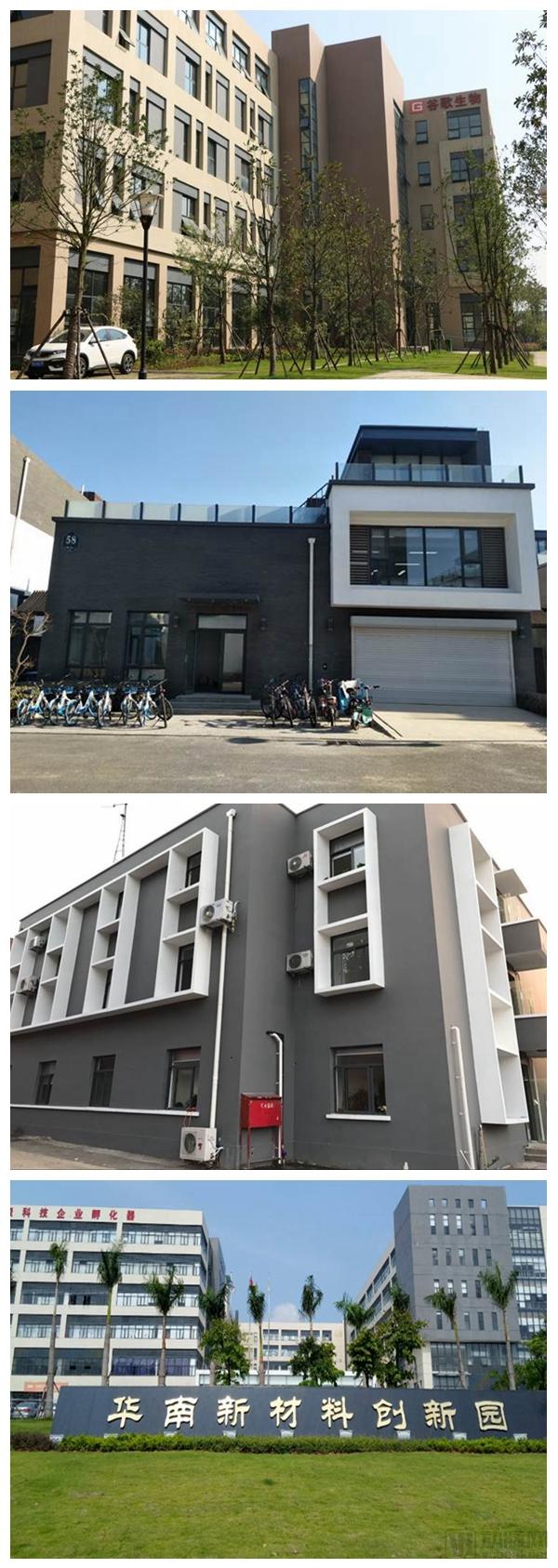
Saiwei Biological Laboratories (from top to bottom: Wuhan, Beijing, Shanghai, and Guangzhou Laboratories)
The laboratory’s client base encompasses research institutes at China’s “Double First-Class” universities, including Wuhan University, Sun Yat-sen University, Tongji Medical College of Huazhong University of Science and Technology, Peking University, and Tsinghua University, as well as scientific research laboratories in numerous Grade A tertiary hospitals across the country. The cumulative number of clients has reached approximately 30,000, primarily concentrated in Beijing, Shanghai, Guangzhou, Wuhan, and Nanjing. Notably, the compound annual growth rate (CAGR) of sales revenue in the Wuhan and Shanghai regions over the past three years was 20.7% and 38.8%, respectively.
Furthermore, the company expanded into the U.S. market last year by establishing a satellite laboratory in Boston to provide routine pathological testing services, with clients including internationally renowned research institutions such as Harvard University and MIT.
In the future, Xaver Bio will focus on establishing a sales outlet or sub-center laboratory in each provincial capital city across China, while expanding into the global market. It is expected to establish 10 laboratories in Europe and the United States within the next three years.
Currently, Saville Biotech is undergoing its first round of financing, with Probe Capital (WeChat ID: 13717606110) serving as the exclusive financial advisor for this round. The company plans to raise RMB 150 million, which will be used for the construction of its Wuhan Optics Valley campus, product research and development, and the establishment of laboratories in China, Europe, and the United States.