

Rare Disease Day | How 99 Companies Are Tackling Rare Diseases with Gene Therapy: Pipeline and Product Overview
February 28th each year is International Rare Disease Day. Rare diseases are conditions with very low prevalence and are seldom seen; to date, nearly 7,000 rare diseases are internationally recognized. Approximately 80% of rare diseases are genetic disorders, about 50% manifest at birth or during childhood, and around 30% of children affected by rare diseases do not survive beyond the age of 15. It is estimated that there are more than 10 million patients with various rare diseases in China.

Image source: China Rare Disease Information Network
Currently, fewer than 5% of rare diseases have available treatment options. Patients with rare diseases are often unable to lead normal lives, and some even face premature death. Nevertheless, these patients have not lost hope for a cure.
Qin Kejia and Song Tao, a married couple who are both senior engineers at the China Academy of Launch Vehicle Technology, served as executive personnel for the Shenzhou-10 launch mission. Their daughter, Yoyo, was diagnosed with Mucopolysaccharidosis Type III (MPS III), a lysosomal storage disorder, at the age of two and a half. Upon learning that this rare disease is currently incurable, Qin Kejia did not give up; instead, she endeavored to find hope for a cure through her own efforts. With the help of friends, Qin established the “cureYoyo” website, aiming to access the latest international clinical treatment outcomes to aid her daughter and assist other patients with mucopolysaccharidosis.
Similar to Qin Kejia’s experience, Karen Acker, the founder of the gene therapy company Lysogene, is also the mother of a child with mucopolysaccharidosis. Previously an audit expert with no professional background in the biological sciences, Karen entered the biotech sector after learning of her daughter’s rare disease. She connected with scientists, funded research projects, and established Lysogene, which has now initiated clinical trials for mucopolysaccharidosis.
Advances in biotechnology have given us hope for curing rare diseases. Many Phase III clinical trials for various conditions are already underway abroad, and some drugs have even reached the market. Gene therapy has the potential to fundamentally address certain rare diseases and even incurable conditions such as cancer. In China, policies supporting rare disease treatment have been significantly relaxed, which is bound to stimulate R&D enthusiasm among biotechnology companies. Meanwhile, introducing mature gene therapies from overseas represents the fastest route to benefiting patients.
Gene Therapy Holds Promise for Curing Rare Diseases
Gene therapy refers to the introduction of exogenous normal genes into target cells to correct or compensate for diseases caused by defective and abnormal genes, thereby achieving therapeutic goals. Gene therapy technologies involve targeted gene delivery using viral vectors, non-viral vectors, and genetically modified cells, and also encompass CAR-T cell therapy and gene editing techniques such as CRISPR-Cas9.
Many human diseases are caused by genetic mutations or defects, particularly monogenic hereditary disorders. Given that 80% of rare diseases result from genetic defects, isn’t gene therapy a treatment approach that addresses diseases at their root cause?
Within living organisms, genetic information is transmitted hierarchically in the direction of “DNA → RNA → Protein” (the Central Dogma). Proteins represent the phenotypic expression of genetic information; diseases often manifest as abnormalities at the protein level. Currently, the vast majority of drugs target proteins, treating diseases by modulating protein function. In contrast, gene therapy targets DNA, the upstream regulator of proteins. By modulating DNA to alter the flow of genetic information and consequently change protein characteristics, gene therapy aims to treat diseases at their source.
Gene therapy is a treatment approach that addresses the root cause of disease. Scientists use viruses as vectors to deliver normal gene fragments into the human body, thereby replacing the disease-causing genes.
However, whenever foreign substances enter the human body, the immune system attacks these invaders. Consequently, cells modified by gene therapy are also targeted by the immune system, thereby diminishing the efficacy of the treatment. Immune responses have thus become a major challenge in gene therapy. Furthermore, serious adverse events such as oncogenesis caused by off-target effects have occurred, which once led to a significant decline in the field of gene therapy from its peak.
Major Events in the Field of Gene Therapy
As early as the 1960s, Howard Temin, an American geneticist and later recipient of the 1975 Nobel Prize in Physiology or Medicine, discovered through his research on Rous sarcoma virus that viruses could introduce genetic material into cells and ensure its stable inheritance. This finding sparked considerable interest among scientists, as the experiment theoretically demonstrated that viruses could be used to deliver any desired gene into cells.
In 1972, prominent American biologist Theodore Friedmann and colleagues published a widely regarded landmark perspective article titled “Can Gene Therapy Be Used for Human Genetic Diseases?” in the journal Science, offering prescient insights into the potential and challenges of gene therapy for treating human genetic disorders.
In numerous experiments, gene therapy has been conducted on laboratory mice. Professor Martin Cline of the University of California, Los Angeles (UCLA) pioneered the successful insertion of an active gene into mice, creating the world’s first transgenic mouse. However, he initiated human trials in patients with beta-thalassemia without obtaining approval from UCLA and the FDA, ultimately leading to the termination of the trials.
The first trial approved by the U.S. National Institutes of Health (NIH) to label human genes was conducted in May 1989. The protocol involved inserting a neomycin resistance gene into a retrovirus that had been rendered non-infectious but retained the ability to carry and activate the aforementioned gene. The virus was introduced into tumor-infiltrating lymphocytes (TILs) isolated from cancer patients, and the cells were then reinfused into the patients. Periodic cell sampling was used to assess the persistence of TILs in circulating blood, while periodic tumor tissue biopsies were performed to evaluate the presence of TILs within the tumor tissue and to quantify the labeled TILs.
In July 1990, William French Anderson, hailed as the father of gene therapy, selected two children, Ashanti DeSilva and Cynthia Cutshall, who suffered from the rare disease adenosine deaminase deficiency (a form of severe combined immunodeficiency, SCID), to undergo the first human gene therapy. White blood cells were extracted from the patients’ blood, functional adenosine deaminase genes were introduced into these cells, and the modified cells were then reinfused into the patients. Following the gene therapy, the treatment showed initial efficacy; the two young patients were able to leave their sterile, isolated environments and resume normal lives. Although they are still alive today, they require gene therapy every few months to “correct” newly produced white blood cells that carry the fatal defect.
The preliminary success of this case gave scientists hope for gene therapy. In the following decade, more than 500 gene therapy clinical trials were conducted worldwide, with over 4,000 patients enrolled, and the range of targeted diseases continued to expand.
In 1999, Jesse Gelsinger, an American boy with ornithine transcarbamylase deficiency, a rare genetic disorder, participated in a gene therapy clinical trial at the University of Pennsylvania. Four days after treatment, he died from multiple organ failure caused by a severe immune response triggered by the viral vector. This event marked a turning point in the development of gene therapy, prompting scientists to re-emphasize the serious immune responses generated when viral vectors enter the human body.
In the same year, four of the nine infants with severe combined immunodeficiency (SCID) who had received gene therapy were found to have developed leukemia within three to six years after treatment. This adverse event once again set back the field of gene therapy. The U.S. Food and Drug Administration (FDA) temporarily halted all clinical trials using retroviruses to modify the genes of hematopoietic stem cells in 2005, but after three months of rigorous review and risk-benefit assessment, it allowed gene therapy clinical trials to resume.
Since 2006, the success of clinical trials has renewed researchers’ interest in gene therapy. Hemophilia represents one of the key areas of focus. In 2006, Dr. Katherine’s team published a paper in Nature, demonstrating that gene therapy could elevate factor IX levels in patients, although this therapeutic effect was rapidly undermined by the human immune response.
In 2012, UniQure’s Glybera was approved for marketing in the European Union for the treatment of lipoprotein lipase deficiency. In the same year, Jennifer Doudna and Chinese scientist Feng Zhang invented the CRISPR/Cas9 gene-editing technology, breaking through certain bottlenecks in gene therapy and improving both its efficacy and safety, thereby ushering in a new wave of development in the industry.
In the field of gene therapy, the National Institutes of Health (NIH) is playing a significant role. Data shows that as of 2018, there were more than 3,500 clinical trials for approved gene therapies worldwide, with over half in Phase I clinical trials.
With the maturation of viral vector and gene editing technologies, gene therapy has transitioned from a theoretical concept to a clinical reality. The market launch of three major gene therapy products—Kymriah, Yescarta, and Luxturna—in 2017 heralded the advent of the gene therapy era. Since 2013, companies engaged in gene therapy research and development have been highly sought after by European and American capital markets, securing substantial venture capital investment. Several enterprises, including Bluebird Bio, Celladon, UniQure, and Orchard Therapeutics, have completed initial public offerings (IPOs). Major domestic companies in China have also begun to make significant strategic investments in the field of gene therapy. For instance, BGI Genomics made a strategic investment in He Eye Specialist Hospital, fostering deep collaboration on gene therapies for hereditary retinal diseases associated with RPE65 gene mutations. Similarly, WuXi AppTec has expanded its layout in gene therapy clinical trials.
Not long after the 2018 Christmas holiday, Scott Gottlieb, Commissioner of the U.S. Food and Drug Administration (FDA), together with Peter Marks, Director of the FDA’s Center for Biologics Evaluation and Research (CBER), jointly issued a statement on new policies to promote the development of safe and effective cell and gene therapies. The field of gene therapy is poised for an explosion in the next two to three years, potentially offering definitive solutions for patients with rare diseases.
Vectors for Gene Therapy
Gene therapy requires delivering normal DNA into cells to replace defective DNA, which involves identifying suitable vectors for DNA delivery.
Clever scientists have chosen viruses as the “vectors” for gene therapy. Viruses are the smallest living entities on Earth, and all viruses contain a segment of double-stranded or single-stranded DNA. By binding to their hosts and introducing their genetic material into host cells as part of their replication cycle, viruses replicate extensively. Scientists then remove the pathogenic genes from the virus to eliminate its virulence, insert the target gene, and leverage the virus’s ability to integrate and replicate its genetic material, thereby transforming it into a vector for gene therapy.
Retroviruses (RV): The genetic material of retroviruses is single-stranded RNA. They can efficiently infect various types of cells, randomly insert exogenous genes into the host cell genome, and achieve stable integration for sustained expression. Among them, gamma-retroviruses were the earliest to be engineered and have been widely used as vectors in gene therapy, achieving considerable success. However, retroviruses can only infect dividing cells, exhibit relatively high toxicity, and are prone to inducing excessive immune responses.
Lentivirus (LV): A gene therapy vector developed based on HIV-1 (Human Immunodeficiency Virus Type 1). As a member of the retrovirus family, it can effectively infect both dividing and non-dividing cells. It randomly inserts into and stably integrates within the host cell genome, enabling sustained expression. Lentiviruses are capable of infecting human non-dividing cells, offer a large cargo capacity for genetic fragments, provide long-term expression, and are less likely to induce host immune responses. A series of clinical studies have demonstrated highly favorable outcomes, indicating broad application prospects. LV vectors are used in gene therapy products such as Strimvelis, Kymriah, and Yescarta.
Adenovirus (AdV): A non-enveloped, linear double-stranded DNA virus. Adenoviral vectors have a broad host cell range, effectively infecting both dividing and non-dividing cells. They do not integrate into the host cell genome, thereby eliminating the risk of insertional mutagenesis, and offer a large cargo capacity.
Adeno-Associated Virus (AAV): A class of defective single-stranded DNA viruses with the simplest structure discovered to date, having a genomic DNA size of less than 5 kb and requiring helper viruses (typically adenoviruses) for replication. Due to their favorable safety profile, broad host cell range, low immunogenicity, and ability to sustain long-term expression of exogenous genes in vivo, they are regarded as the most promising vectors for gene therapy and have been widely used in gene therapy and vaccine research worldwide.
Despite optimization and engineering, the various viral vectors currently in use still present a range of challenges, including viral toxicity and immunogenicity, insertional mutagenesis risk, limited gene cargo capacity, and targeting specificity. These limitations fall far short of meeting the diverse requirements for vector characteristics in gene therapy. Over the foreseeable future, key priorities in gene therapy research and development will include advancing biological studies and optimization of existing vectors, as well as developing a more diverse array of viral and non-viral vectors.
CAR-T, or chimeric antigen receptor T-cell immunotherapy, is a form of gene therapy. Its fundamental principle involves utilizing the patient’s own immune cells to eliminate cancer cells. CAR-T therapy currently represents the most successful clinical application of ex vivo gene therapy and has achieved breakthroughs in the treatment of hematologic malignancies.
In recent years, gene-editing technology has advanced rapidly. Compared with traditional gene therapy approaches, newer genome-editing technologies enable gene addition, deletion, and modification at the genomic level, thereby repairing genetic defects or performing targeted modifications to treat diseases that are currently incurable. Gene editing first requires precise localization of the problematic gene segment, akin to GPS navigation. Next, the problematic gene segment must be excised using appropriate technical methods. Finally, the DNA is re-ligated in the correct manner.
During the gene editing process, “precise targeting” is the most challenging aspect and represents the core technical differentiator among all current gene editing technologies. Early genomic editing research relied on zinc finger nuclease (ZFN) technology; however, due to factors such as patent monopolies and incomplete risk assessments, it has not been widely implemented in clinical projects. Subsequently, transcription activator-like effector nucleases (TALENs), and particularly CRISPR/Cas9 technology, emerged with unparalleled advantages over other gene editing techniques, being regarded as the most effective and convenient editing tools. In recent years, the advent of CRISPR/Cpf1, which features a lower off-target probability, has made the guided weapons and molecular scissors available to scientists increasingly accurate and user-friendly.
Statistics on 99 Gene Therapy-Related Companies
Since the first gene therapy protocol was approved in 1989, how many clinical trials have been conducted? Online data indicate that more than 3,700 clinical trials have been carried out. A search of the NIH database using “gene therapy” as a keyword yields 3,952 results. However, neither the NIH database nor other clinical trial databases offer precise criteria to filter for gene therapy–related clinical trials. Search results vary substantially depending on the search options and keywords used.
NIH’s search function splits the keywords “gene” and “therapy.” Upon reviewing the 3,952 trials sequentially, it becomes evident that the relevance to gene therapy gradually diminishes in later results. Some projects are entirely unrelated to gene therapy, while most are associated solely with “gene” or “therapy,” which are high-frequency terms in many clinical trials. Only 725 clinical trials exactly match the phrase “gene therapy.” Although some trials may be overlooked, these identified projects still allow for meaningful analysis. The United States remains the country with the highest participation in gene therapy clinical trials. In East Asia, there are 92 such projects, 50 of which are conducted in China.
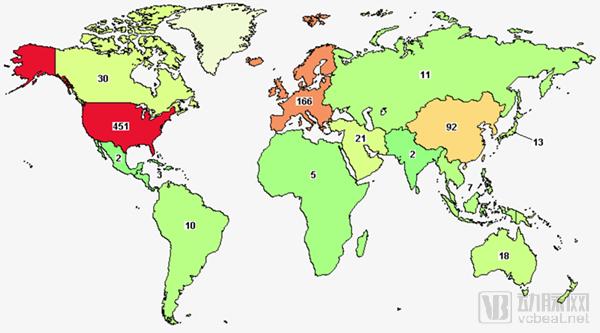
www.clinicaltrials.gov, 725 gene therapy projects in the pipeline.
In the corporate sector, after screening through VCBeat’s Global Healthcare Enterprise Database, we identified a total of 99 companies related to gene therapy. Among these, 14 are Chinese companies, and 85 are overseas companies. Of the overseas companies, 15 are major pharmaceutical firms such as Gilead, Pfizer, Novartis, GSK, Celgene, and Sanofi. Since these large pharmaceutical companies have largely established their gene therapy portfolios through acquisitions and collaborations, this dataset includes both the major pharmaceutical companies and the startups that have been acquired and become their subsidiaries. This article will first provide a statistical analysis of the financing rounds and drug pipelines of the 85 startup or NASDAQ-listed companies in the gene therapy field, followed by a separate description of the strategic layouts of the 15 major pharmaceutical companies in the gene therapy sector.
Analysis of 84 Gene Therapy Startups
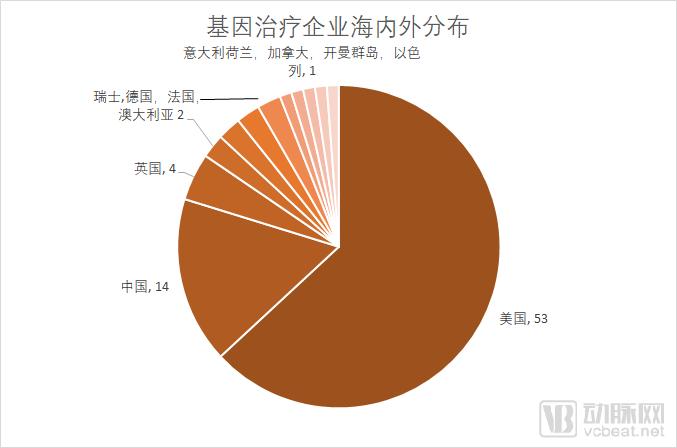
Global Distribution of Gene Therapy Companies
Both China and the United States hold significant advantages in the field of gene therapy. The United States ranks among the world’s leaders in gene therapy, immunotherapy, and gene editing, while China also boasts world-leading technologies in this domain, with a leading number of gene therapy-related companies. However, multiple gene therapy drugs have already been approved for market in the United States and Europe, whereas most such products in China remain in the clinical development stage. Although Gendicine, approved for Shenzhen SiBiono GeneTech in 2003, was the world’s first gene therapy drug, its clinical application has encountered substantial challenges.
Disease Portfolio in Gene Therapy
Since the first gene therapy clinical trial in 1989, gene therapy has undergone three decades of development. The technology has gradually matured, with comprehensive improvements in both efficacy and safety, and corresponding therapeutic products have progressively received regulatory approval for market launch. From the perspective of its underlying principles, pharmaceutical companies initially focused on genetic disorders caused by gene defects, followed by cancers and neurodegenerative diseases. These conditions represent rare and severe diseases that currently remain incurable.
VBInsight compiled statistics on the currently marketed drugs and R&D pipelines of 84 companies, with a primary analysis of the disease types targeted by gene therapies.
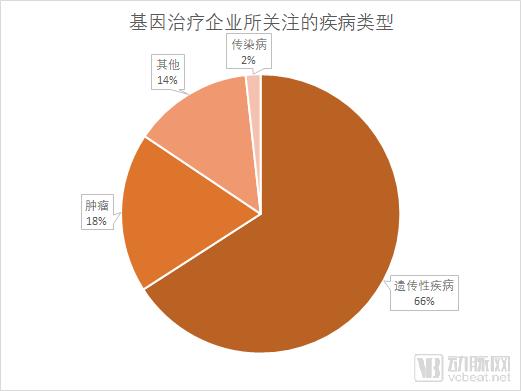
Gene therapy is strategically focused on hereditary rare diseases. These conditions typically have well-defined pathogenic mechanisms, with patients inheriting disease-causing genes through chromosomal transmission. Moreover, most of these diseases are currently incurable, with existing medications offering only symptomatic relief. Under current medical paradigms, there is virtually no possibility of a cure for these disorders, which often lead to severe outcomes. Gene therapy offers hope for curing hereditary diseases.
On the other hand, oncology is another key focus area for gene therapy. Chimeric Antigen Receptor T-cell (CAR-T) immunotherapy represents the most successful clinical application of gene therapy to date, with approved products such as Kymriah and Yescarta already on the market. Other areas of interest primarily include neurodegenerative diseases with less clearly defined pathogenic mechanisms and genetic underpinnings, such as Alzheimer’s disease, as well as conditions like chronic pain and hypertension.
Among the thousands of monogenic genetic disorders identified worldwide to date, the vast majority lack effective treatments. Many of these conditions severely impair human development and can even be fatal. In the following section, we categorize the non-oncology diseases in our R&D pipeline according to the nine major human body systems to identify which genetic and rare diseases are currently the primary focus of technological breakthroughs.
In our statistical analysis, we first identify the physiological system affected by the pathogenic causes of genetic diseases that are the primary focus of gene therapy companies. Additionally, metabolic genetic disorders classified under the endocrine system often manifest symptoms in other systems; these are also included in our statistics.
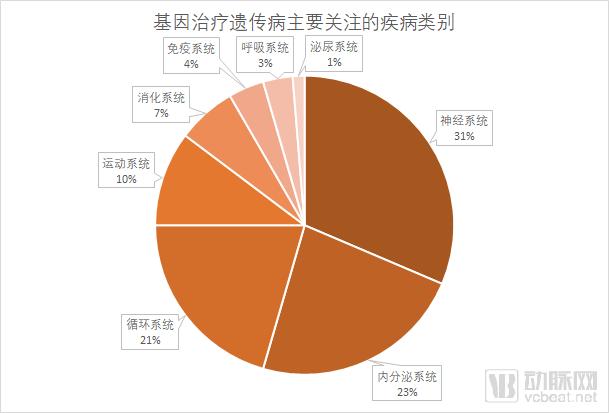
Currently, gene therapy companies are focusing most of their preclinical and clinical trials on diseases related to the nervous system, endocrine system, circulatory system, and musculoskeletal system.
Top Priorities in Neurological Disorders:Age-related macular degeneration (AMD) and hereditary retinal degenerations associated with the visual nervous system, followed by Huntington's disease and Alzheimer's disease.and other neurodegenerative diseases.
The Endocrine System: Key Areas of Focus IncludeLysosomal storage diseases, including mucopolysaccharidosis, Fabry disease (alpha-galactosidase A deficiency), and alpha-1 antitrypsin deficiency. Such diseases are often caused by genetic defects that prevent the production of certain enzymes, leading to metabolic disorders and ultimately resulting in degenerative changes in the nervous and motor systems.
Diseases of the circulatory system are among the top priorities:Hemophilia, Thalassemia, and Sickle Cell Disease, most of which are blood-related diseases.
The most prominent diseases in the musculoskeletal system are:Amyotrophic Lateral Sclerosis (ALS) and Duchenne Muscular Dystrophy。
In summary, oncology, hematologic disorders, metabolic diseases, and neuro-ophthalmic conditions are currently the four sub-specialty disease areas commanding the highest attention and experiencing the most rapid development.
Gene Therapy Companies’ Marketed Drugs
In January 2003, Gendicine, approved by China’s CFDA for the treatment of head and neck squamous cell carcinoma, was considered the world’s first gene therapy drug. However, due to significant controversies surrounding its clinical trials and patent disputes involving the company, Glybera by UniQure is generally recognized globally as the first gene therapy drug. Nevertheless, Glybera was withdrawn from the market after 2017 due to a small patient population and a treatment price exceeding $1 million. Since 2016, gene and cell therapies have experienced a surge in development. Notably, GSK’s Strimvelis achieved the first successful gene therapy for a severe immunodeficiency disorder. The approvals of Novartis’s Kymriah and Kite Pharma’s Yescarta propelled CAR-T therapy to new heights. Furthermore, many investigational gene therapies are advancing rapidly; for instance, LentiGlobin BB305, a gene therapy for β-thalassemia, has reached Phase III clinical trials. Early-stage candidates such as SPK-9001 have also made significant breakthroughs in the treatment of hemophilia B, warranting close attention.
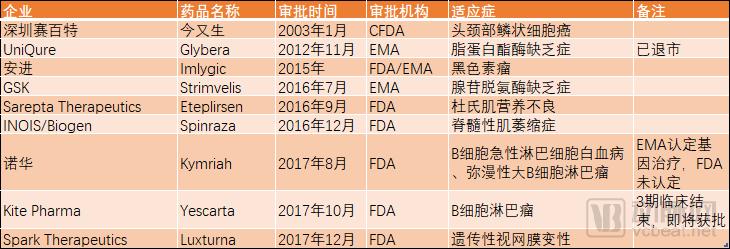
Currently Marketed Gene Therapy Drugs
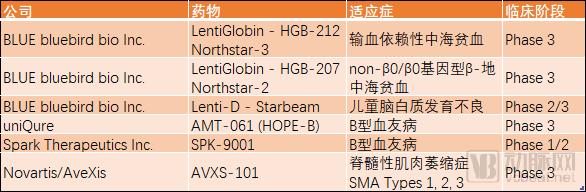
Gene Therapy Drugs Poised for Breakthroughs and Their Corresponding Indications
$48.07 Billion in Total Funding: Gene Therapy Companies Are Strengthening Their Fundraising Capabilities
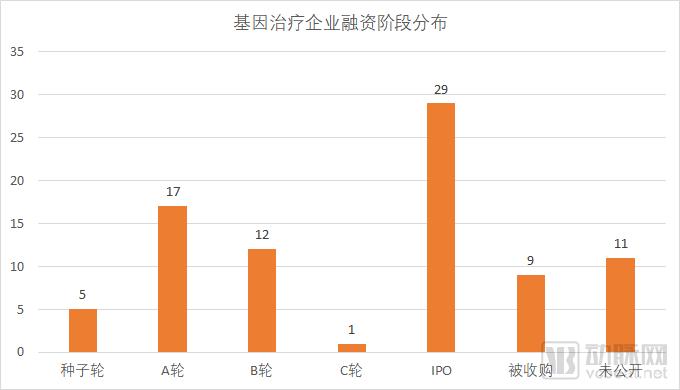
The product pipelines of gene therapy companies are all in the preclinical and clinical research stages, with many generating no revenue yet, let alone achieving profitability. Pharmaceutical R&D involves substantial investment and long development cycles, creating an urgent need for funding to support the high upfront costs. Consequently, a significant number of these companies choose to go public via initial public offerings (IPOs) on the Nasdaq. Once their investigational products yield favorable clinical trial results, they stand to reap substantial returns.
On the other hand, large pharmaceutical companies have been strategically positioning themselves in the gene therapy sector through collaborations and acquisitions, with nine companies being acquired. Some of these acquired firms were previously listed on the NASDAQ before delisting to become subsidiaries of major pharmaceutical companies.
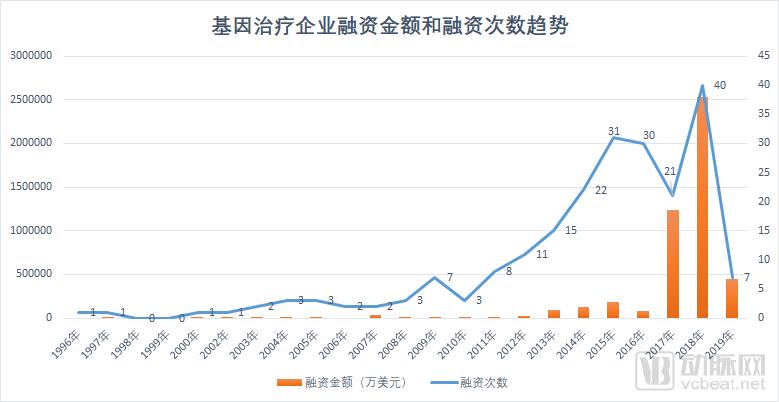
We compiled statistics on the financing amounts raised by gene therapy companies over the past two decades, with data for 2019 current as of February 27. VCBeat typically tracks only primary-market financing rounds and amounts when compiling data for startups. However, given the high frequency of IPOs among gene therapy firms on the NASDAQ, we also included proceeds from IPOs and acquisition amounts, while excluding post-listing equity transfers and private placements.
The total financing amount for gene therapy companies reached $48.07 billion, with a surge in market trading activity and transaction values particularly in 2017 and 2018. During this period, gene therapy technologies matured, with many projects advancing to Phase II/III clinical trials, leading to numerous mergers and acquisitions by large corporations. Starting with Gilead’s $11.9 billion acquisition of Kite Pharma in 2017, major pharmaceutical companies began acquiring gene therapy firms to strategize their next steps. In 2018 alone, seven gene therapy companies were acquired. Notable deals included Sanofi’s $11.6 billion acquisition of Bioverativ, Novartis’ $8.7 billion acquisition of AveXis, and Johnson & Johnson’s $1.04 billion acquisition of Benevir, all of which made headlines that year. On February 26, 2019, Roche announced the acquisition of Spark Therapeutics, a star player in the gene therapy sector, for $4.3 billion.
Major pharmaceutical companies are deeply embedding themselves in the gene therapy sector, often filling gaps in their gene therapy portfolios through mergers and acquisitions or collaborations. The broad prospects of the gene therapy and immunotherapy markets have sparked active competition among pharmaceutical giants. Compared with traditional medical approaches, gene therapy—based on genetic technologies—is more targeted, can achieve more favorable therapeutic outcomes, and significantly alleviate patient suffering, earning widespread optimism within the industry. Currently, numerous startups focused on gene therapy technologies have made significant progress and are expected to enter the application stage in the near term. The market has long anticipated consolidation in the gene therapy industry; beyond acquisitions by large pharmaceutical companies, firms are seeking to join forces to integrate capabilities and seize first-mover advantage.
Major Pharmaceutical Companies' Gene Therapy Layout
In addition to Roche’s recent $4.3 billion acquisition of Spark Therapeutics, the company had already established a foothold in the gene therapy sector. In 2018, Roche entered into an extensive long-term partnership with 4D Molecular Therapeutics to develop and commercialize multiple ophthalmic products. Roche, Gilead Sciences, Novartis, and Pfizer are among the major pharmaceutical companies that made early strategic moves in gene therapy, typically engaging through collaborations, investments, and acquisitions. VBInsight has compiled a summary of M&A and collaboration activities involving large pharmaceutical companies in the gene therapy field in recent years.
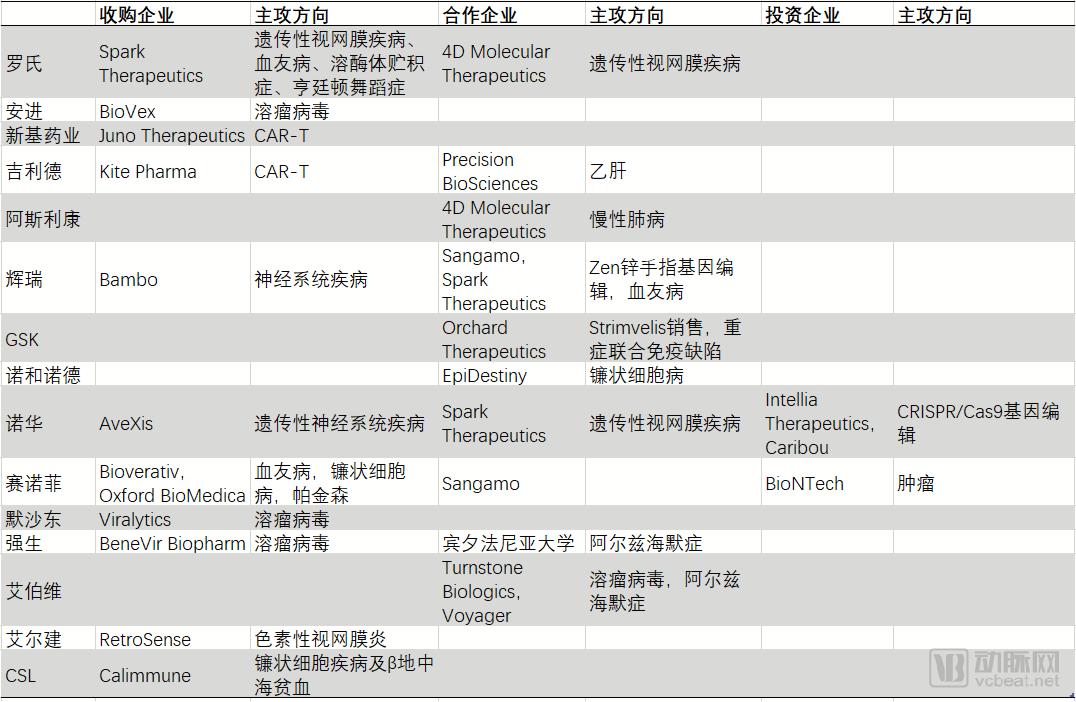
Strategic Layouts of 15 Major Pharmaceutical Companies in the Field of Gene Therapy
The United States Has Included CAR-T Therapies in Medicare Coverage
The Dawn of Gene Therapy Has Begun to Break, Offering Hope for a Cure to Patients with Rare Diseases. However, the Prices of Approved Gene Therapies Are Astronomical. Costs Often Reaching $300,000, $470,000, $850,000, or Even $1 Million Are Difficult for Patients to Bear. Glybera Did Not See Its First Patient Until One Year After Launch and Was Eventually Withdrawn from the Market. Spark Therapeutics’ Luxturna Is Priced at $850,000 per Eye. High R&D Costs Combined with the Small Patient Population for Rare Diseases Make Premium Pricing the Only Way for Pharmaceutical Companies to Recoup Their Investments. For Patients with Rare Diseases, This Means Not Only Enduring Long Waits but Also Bearing an Enormous Financial Burden for Treatment.
Sustainable development in drug R&D must meet patients’ medication needs. On the 15th of this month, the United States finally approved the inclusion of CAR-T cell therapy in its national health insurance coverage. We firmly believe that treatments for rare diseases will be conquered one by one through technological advances, and that new insurance products and business models will inevitably emerge to address the issue of treatment costs.

Scan the QR code to follow the VCBeat New Medicine official account (biobeat1)