

Olympus Integrates AI into Endoscopy, Ushering in a New Era of Intelligent Diagnosis
With the advent of the information age, the data foundation and information environment underpinning human production and daily life have improved significantly. In recent years, artificial intelligence (AI) technology has experienced explosive growth. AI applications have permeated various industries, including transportation, retail, and healthcare, among others. Moreover, AI is evolving from specialized intelligence toward general intelligence, bringing numerous conveniences to our lives.
In recent years, with growing health awareness and an increasingly aging population, the development of smart healthcare has gained momentum both domestically and internationally. According to the “2018 Report on the Medical Big Data and Artificial Intelligence Industry,” AI technology for medical imaging has emerged at the forefront of the industry.
On February 25, Japan’s Olympus Corporation announced new technological advancements in the field of medical endoscopy. Artificial intelligence (AI) technology, jointly developed by several Japanese universities, will be integrated into medical endoscopic examinations. This technology quantifies endoscopic images, enabling rapid and accurate assessment of whether lesions are present at the examined site, whether they are malignant, and the likelihood of future lesion development. Reportedly, the AI-based diagnosis is completed in approximately 0.2 seconds, which will significantly reduce the duration of endoscopic procedures.
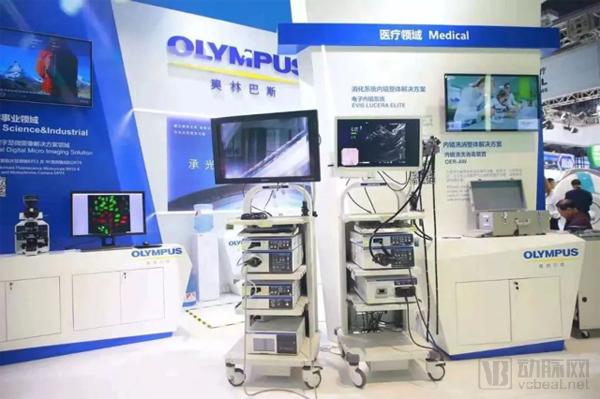
Left: EVIS EXERA III System
Right side: EVIS LUCERA ELITE Electronic Endoscopy System
Endoscopy has long been regarded as the gold standard for early cancer screening. However, significant rates of missed diagnoses can occur due to factors such as the quality of bowel preparation, the physician’s skill level and experience, and physician fatigue. Olympus has now integrated AI technology into its endoscopes to better assist physicians in detecting cancer. This AI technology, designed for colorectal endoscopy, is scheduled for market launch in March. By analyzing magnified images of cell nuclei and blood vessels in the large intestine, the system can instantly provide a numerical indication of whether a tumor is potentially cancerous. Trained on approximately 60,000 images, the AI achieves accuracy comparable to that of experienced physicians and can substantially reduce the rate of missed diagnoses.
“This technology is revolutionary in the medical field,” stated a gastroenterologist at Showa University Hospital. The value of AI in healthcare lies in leveraging technology to improve access to scarce medical resources. By integrating AI technology, Olympus endoscopes will significantly shorten examination time, reduce patient discomfort and physician workload, and facilitate the early detection and treatment of gastric cancer, thereby fundamentally transforming the quality of endoscopic diagnosis and therapy.
In the medical field, Olympus has never ceased its innovation. In 2018, it launched the groundbreaking VISERA 4K UHD ultra-high-definition imaging system, a high-tech diagnostic and therapeutic device that integrates advanced endoscopy, optical technologies, and digital imaging. This innovation ushered in a new era of 4K ultra-high-definition medicine, effectively assisting physicians in performing precise surgical treatments, improving procedural efficiency, and minimizing patient discomfort to the greatest extent possible.
Technological innovation is the inexhaustible driving force behind corporate development. For a century, Olympus has continuously advanced its technologies, safeguarding the health, peace of mind, and well-being of people worldwide through innovative solutions and products. The integration of AI technology into endoscopes marks a significant leap forward in practical application. Looking ahead, Olympus will continue to harness the power of innovative technologies to provide physicians with more exceptional solutions and make sustained contributions to the advancement of medicine.