

Alibaba and Ruijin Hospital Launch World's First Machine Intelligence-Powered Diabetes Knowledge Graph, Built by Nearly 2,000 Developers from 8 Countries

AliHealth
Medical and Health Services Network Service Provider
Data indicate that the prevalence of diabetes in China remains persistently high on a global scale, with six out of every ten Chinese adults exhibiting abnormal blood glucose levels. This condition has become one of the most critical and challenging public health issues in China. However, shortcomings such as an insufficient number of physicians—particularly at the primary care level—and uneven professional competency have adversely affected the treatment and recovery of patients with diabetes.
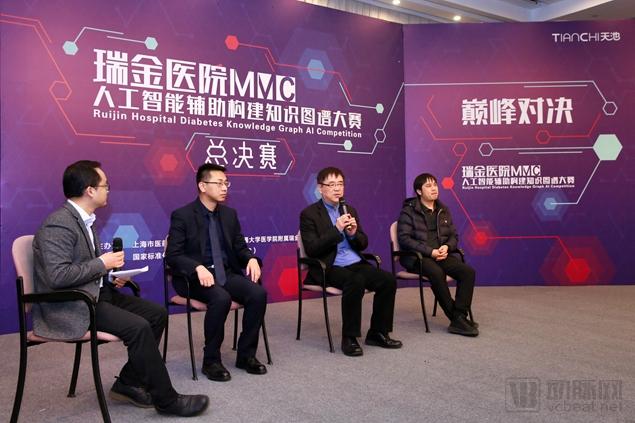
On March 1, 2019, the final results of the new round of the Tianchi Competition—the “Ruijin Hospital MMC AI-Assisted Knowledge Graph Construction Competition,” jointly organized by Alibaba Cloud, Shanghai Ruijin Hospital, and AliHealth—were announced. Two 22-year-old graduate students from Harbin Institute of Technology stood out among nearly 2,000 developers worldwide to claim the championship. Meanwhile, China’s first machine intelligence-based knowledge graph in the field of diabetes was officially released after the competition.
As early as September 2018, the Alibaba Cloud “Tianchi” Competition launched a challenge to leverage artificial intelligence in assisting the construction of a diabetes knowledge graph. Over the past six months, it has attracted a total of 1,629 teams and 1,817 developers from eight countries and regions worldwide to participate in its collaborative development.
When discussing his original motivation for participating, one developer stated, “My father is a diabetic patient. I initially joined the competition because of him. I hope to leverage my technical expertise to help more diabetes patients like him. Technology should not exist merely for showmanship; it should contribute to the well-being of all humanity.”
Through annotation efforts, the competition team has created China’s first text-annotated dataset in the field of diabetes, comprising nearly 190,000 annotated Chinese entities. As the most fundamental and critical dataset for artificial intelligence applications in healthcare, it holds substantial scientific and practical value and is poised to become the benchmark for AI in diabetes care.
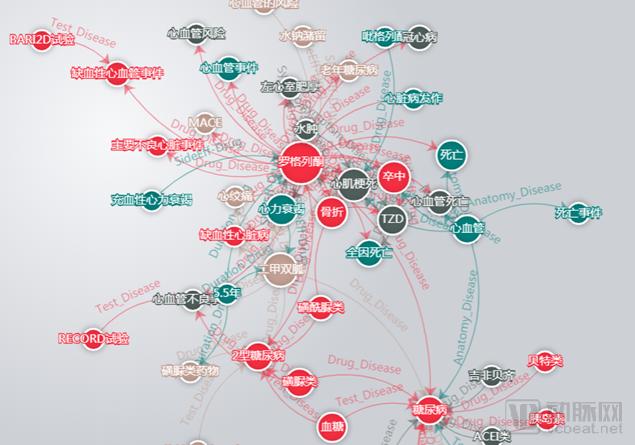
Academician Ning Guang, Vice President of Ruijin Hospital, Shanghai Jiao Tong University School of Medicine, stated that constructing a comprehensive knowledge graph for diabetes facilitates closed-loop management encompassing prediction, intervention, monitoring, and education. This approach maximally replicates the medication reasoning employed by experts in diabetes treatment, assists primary care clinicians in making more scientific decisions, enhances their prescribing skills, and further improves consultation efficiency while lowering barriers to healthcare access. Meanwhile, it holds significant importance for medical research on diabetes.
In 2016, AliHealth and Academician Ning Guang’s team jointly incubated the first AI-powered diabetes doctor, “Rui Ning Zhu Tang.” The knowledge graph not only enables AI to learn expert treatment experience from medical record data but also provides support based on evidence-based medicine, allowing physicians to access the latest research advances in treatment plans with maximum speed during clinical diagnosis and treatment.
The integration of an AI engine and knowledge graph for diabetes will provide dual support through expert experience and evidence-based knowledge in the field of diabetes. The upgraded "Rui Ning Zhu Tang" is expected to be first used at Ruijin Hospital in March, officially launched in May, and further promoted across China to serve more doctors and patients.
In addition to diabetes, over the past few years, numerous developers have participated in various life and health-related challenges through Alibaba Cloud’s “Tianchi” Competition, including leveraging AI technologies for early-stage lung cancer diagnosis and risk prediction for dual-high diseases.
Since its launch in 2014, the Alibaba Cloud “Tianchi” Competition has attracted 250,000 developers from 93 countries and regions worldwide, delivering solutions across diverse sectors—including healthcare, transportation, astronomy, government services, and industry—for governments, enterprises, and social organizations.
As a developer community and crowdsourcing platform for global AI experts and technology enthusiasts, the Tianchi Platform currently hosts over 190,000 active tech enthusiasts and more than 200 innovative startups in the big data sector worldwide. By 2020, the platform is projected to train 300,000 AI engineers.