

29 Rare Disease Drugs Included in China's National Reimbursement Drug List, as Highlighted in the '2019 China Report on Rare Disease Drug Accessibility'
February 28, 2019 marked the 12th International Rare Disease Day. Rare diseases are conditions with very low prevalence and rarity; they are generally chronic and severe, often life-threatening. Currently, there is no unified and universally accepted definition of the scope of rare diseases at the global level, and the World Health Organization (WHO) has not issued an official definition for rare diseases.
The following are definitions of rare diseases in some countries and regions:
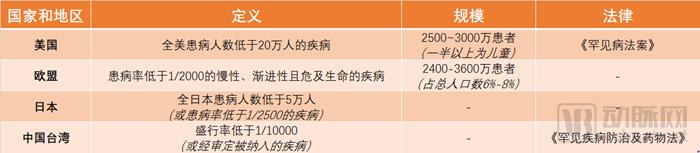
Definitions of Rare Diseases in Selected Countries and Regions Source: China Rare Disease Drug Accessibility Report 2019
According to statistics from the U.S. Food and Drug Administration (FDA), there are more than 7,000 known rare diseases worldwide, accounting for 10% of all human diseases. The global population of patients with rare diseases has exceeded 250 million, with nearly 50% being children. Among the more than 7,000 known rare diseases, fewer than 10% have approved therapeutic drugs or treatment regimens. Most rare diseases pose a threat to patients' lives or severely impact their quality of life; however, with pharmacological intervention, the progression of some rare diseases can be gradually controlled and ultimately managed as chronic conditions.
In China, there is no clear legal definition for rare diseases. In May 2018, five departments—the National Health Commission, the Ministry of Science and Technology, the Ministry of Industry and Information Technology, the National Medical Products Administration, and the National Administration of Traditional Chinese Medicine—jointly released the First Batch of the Rare Disease Catalog, which includes 121 rare diseases. This marks the first time the Chinese government has defined rare diseases in the form of a disease catalog. According to epidemiological literature and calculations based on public data, these 121 rare diseases affect approximately 3 million patients in mainland China.
On February 28, the Shanghai Clover Rare Disease Family Care Center (also known as the Center for Rare Disease Development, CORD) held a grand launch event and symposium in Beijing at the JW Marriott Hotel Beijing Financial Street to mark International Rare Disease Day 2019. At the event, Mr. Huang Rufang, founder and director of CORD (who is also a patient with pseudoachondroplasia), released the Report on Accessibility of Rare Disease Medicines in China 2019 (hereinafter referred to as the “Report”), which provides a global overview of available therapies for the 121 conditions included in the first National List of Rare Diseases.

Mr. Huang Rufang's On-Site Remarks
When outlining the objectives of the report, Mr. Huang Rufang pointed out that rare diseases represent the greatest medical challenge facing humanity, and patients with rare diseases are among the most easily overlooked and abandoned groups in society. For patients in China, many of the few available treatment options worldwide remain inaccessible. “In nearly every month of my work, I hear news of fellow patients passing away due to the lack of effective treatments,” said Mr. Huang.
In October 2018, the Center for Rare Diseases (CORD) established a project team to conduct a comprehensive review of global therapeutic drugs (from the United States, the European Union, and Japan) corresponding to the 121 diseases listed in the First Batch of Rare Diseases Catalogue. Although this task appeared to be a straightforward process of retrieval and verification, it actually required substantial human resources and time. The team needed to search various public and non-public databases, verify the standardization and consistency of disease and drug names, and make professional decisions on various data points. After nearly four months of effort, the work was completed, and the resulting data are presented below:
Data 1

Data 2
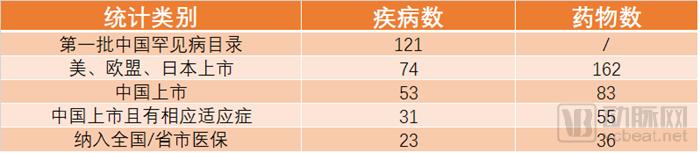
Low Drug Accessibility: 21 Diseases Face the Dilemma of “Available Abroad, Unavailable Domestically”
The Report points out that 21 diseases in China face the dilemma of “available abroad but not domestically,” a formidable barrier that patients cannot overcome on their own. Being diagnosed with a rare disease is unfortunate; however, it is fortunate to learn that one’s condition is among the few rare diseases—out of more than 7,000 globally—that have available treatments. Yet, when effective therapies exist but are not yet marketed in China, this deprives patients of their health and hope for survival. The Report lists these 21 rare diseases along with the registration status of their respective drugs.
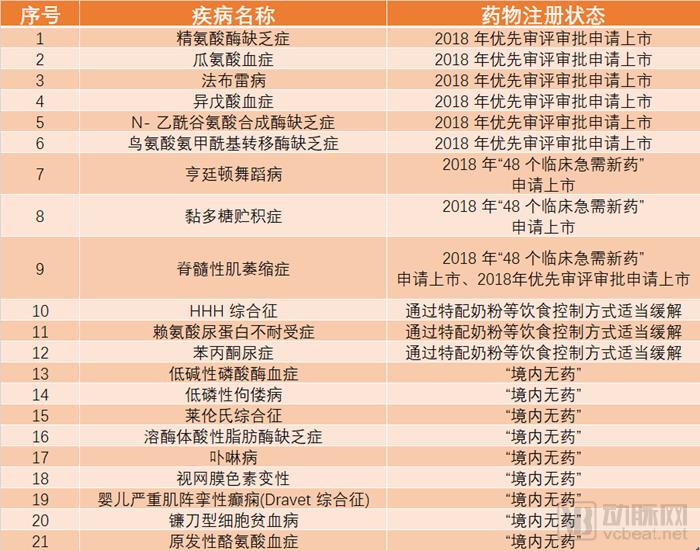
Registration Status of 21 Rare Diseases and Their Medications. Source: "China Rare Disease Drug Accessibility Report 2019"
Heavy Patient Burden: Poverty Caused by Illness, Disability Caused by Illness, and Return to Poverty Due to Illness
“The Report” shows that a total of 5,810 patients with rare diseases are registered in the CORD registry. Among them, 42% (2,448 patients) have not received any treatment, and among the 58% who have received treatment, the vast majority have failed to take their therapeutic medications in a timely and adequate manner.
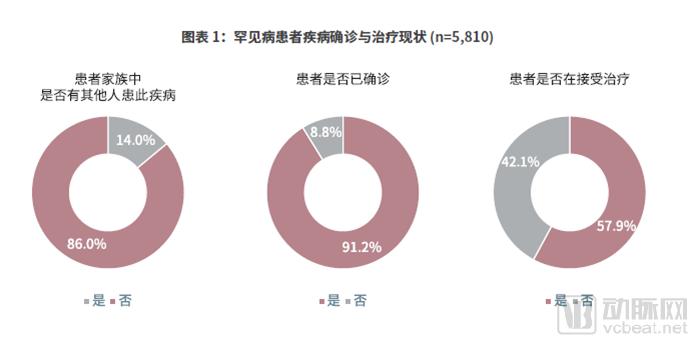
Excerpted from the “2019 Report on Access to Rare Disease Medicines in China”
More than half of the patients became disabled due to the disease, with 29% having physical disabilities and 15% having multiple disabilities (i.e., two or more types of disabilities simultaneously). Among the 3,174 patients who exhibited disabilities, 17% were classified as Grade I disability, 17% as Grade II, 8% as Grade III, and 5% as Grade IV.
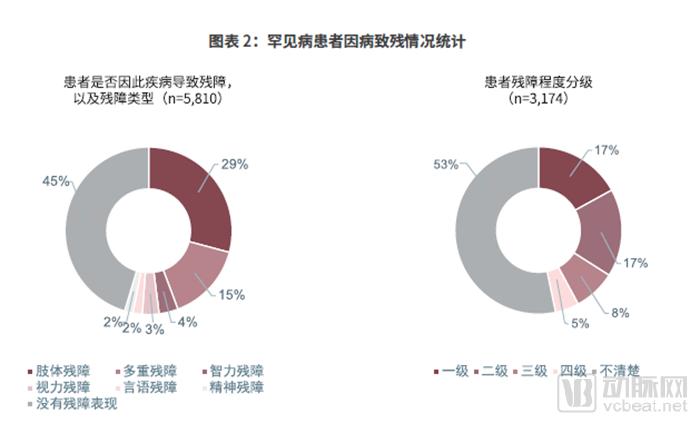
Excerpted from the 2019 Report on Accessibility of Rare Disease Drugs in China
Eighty percent of patients come from households with an annual income below 50,000 yuan, while the majority spend 80% of their household’s annual income on disease treatment each year. According to the World Health Organization’s defined safety threshold of 40%, the treatment costs for most rare disease patients have become catastrophic health expenditures.
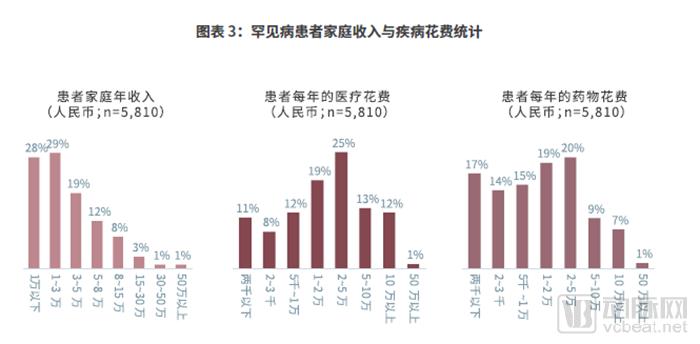
Excerpted from the “2019 Report on the Accessibility of Rare Disease Medicines in China”
Social integration is not optimistic: 40% of patients are single, and the employment rate is only 43%.
The lack of pharmacological treatments leads to disability and poverty due to illness, imposing multiple adverse social impacts on patients and their families. For patients with rare diseases and their families, poverty and illness are intertwined, creating a vicious cycle that is difficult to break, characterized by a severe disease burden and challenges in social integration. The report shows that among the 5,810 patients registered in CORD, 45% are adults; of these adult patients, 40% are single, the illiteracy rate is 2%, and the employment rate is only 43%.
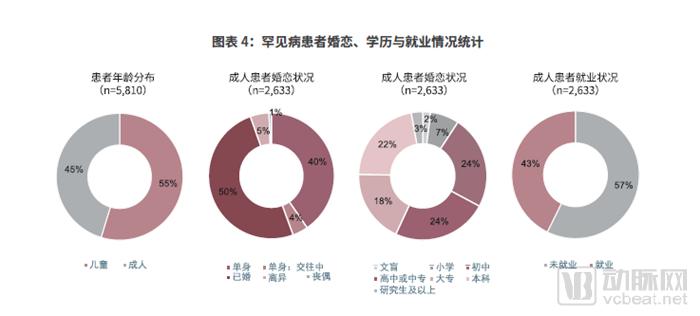
Excerpt from the "2019 Report on Accessibility of Rare Disease Drugs in China"
The Report shows that among the 55 drugs currently marketed in China with indications for rare diseases, 29 have been included in the National Reimbursement Drug List (NRDL), covering 18 rare diseases. Of these 29 drugs, nine are classified as Category A under the NRDL, providing full reimbursement without patient cost-sharing for the treatment of 11 rare disease indications.
Rare disease drugs have been featured in the previous two rounds of national medical insurance negotiations. In 2017, the Ministry of Human Resources and Social Security included recombinant human coagulation factor VIIa for hemophilia, recombinant human interferon β-1b for multiple sclerosis, and everolimus for tuberous sclerosis complex in Category B of the National Reimbursement Drug List through negotiations. In 2018, the National Healthcare Security Administration included octreotide, used to treat acromegaly, in Category B of the National Reimbursement Drug List through anti-cancer drug negotiations; however, acromegaly is not listed in the First Batch of the Rare Disease Catalogue.
The Chinese government has taken proactive steps to ensure access to medicines for rare diseases. Below is a list of 29 rare disease drugs included in the National Reimbursement Drug List, as compiled in this report.
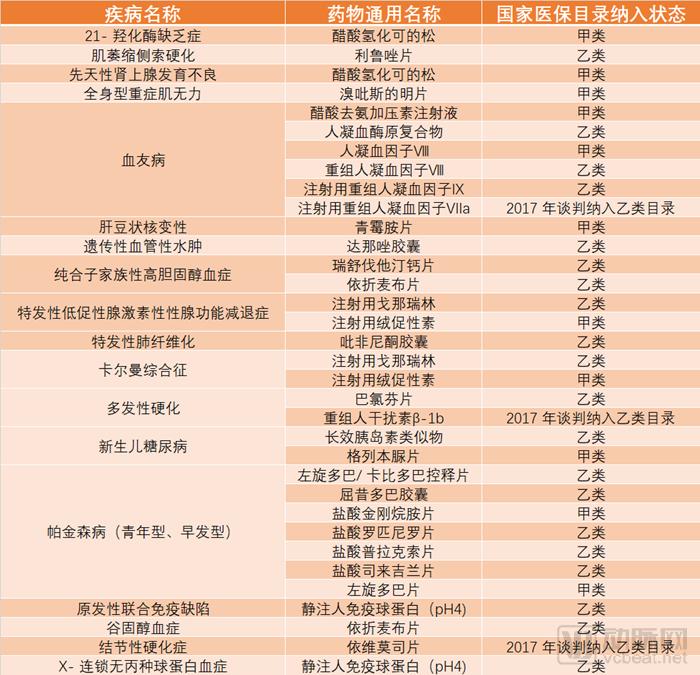
29 Rare Disease Drugs Included in the National Medical Insurance: Excerpt from the "2019 Report on the Accessibility of Rare Disease Drugs in China"
The challenges facing medical security for rare diseases in China are a microcosm of the broader issues in drug pricing and market access. They starkly illustrate the dilemmas of public governance in the healthcare sector: How can limited social public resources be allocated to those in need? And how can patient access to and affordability of medications be improved without compromising the sustainable development of the medical insurance fund?
"The Report" provides a detailed analysis of the beneficial initiatives undertaken by pilot provinces and cities in China, such as Shanghai, Qingdao, and Zhejiang, to improve access to rare disease medications. It also deconstructs, through case studies, the experiences of the United States, Japan, Australia, the European Union, and other regions in providing healthcare coverage for rare diseases.
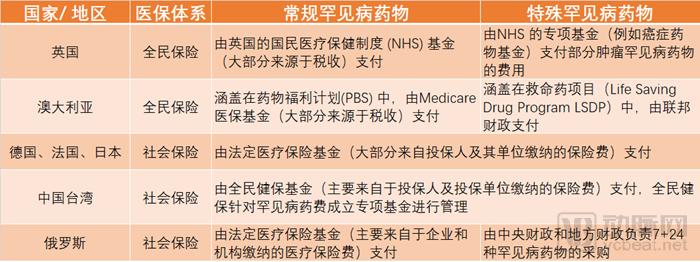
Regarding the sources of funding for medical security,By examining global practices in ensuring access to orphan drugs, the Report finds that while healthcare security systems vary across countries and regions, they all demonstrate a value orientation in which governments take the lead and assume responsibility for financing and coverage of orphan drugs.
In the United Kingdom and Australia, the majority of funding for their national health insurance systems is derived from taxation, with tax revenues and fiscal income also serving as the primary sources for reimbursing rare disease medications. Germany, France, Japan, Russia, and the Taiwan region of China operate under social insurance systems, where medical insurance funds are predominantly financed by premiums paid by insured individuals and their employers; this model is more closely aligned with China’s current hybrid approach that combines social insurance with savings-based insurance.
In regions implementing the social insurance system, payment for conventional orphan drugs is directly covered by statutory health insurance funds. Unlike countries and regions with more mature systems for ensuring access to orphan drugs, Russia, in its initial exploration of such guarantees, attempted to have central and local fiscal authorities jointly responsible for the procurement of 31 specific orphan drugs (the “7+24” list).
Excerpted from the 2019 Report on Accessibility of Rare Disease Drugs in China
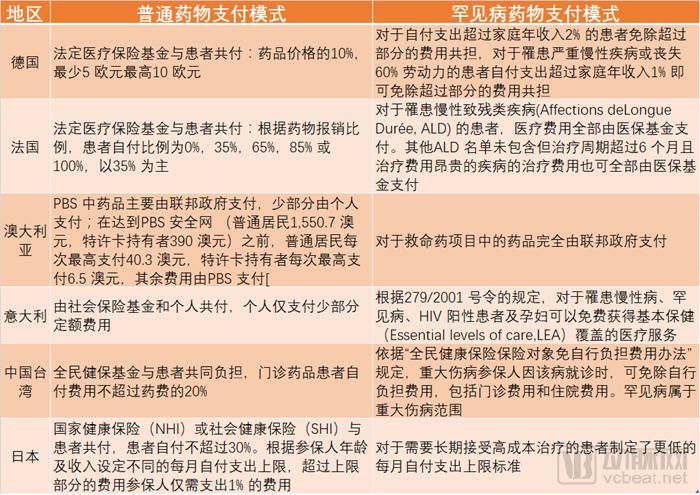
In terms of the use of medical security funds,In most countries and regions, the cost of drugs covered by medical insurance is paid through a cost-sharing mechanism between the health insurance fund and patients. Given the high cost and long-term treatment nature of rare disease medications, setting patient out-of-pocket caps or waiving certain co-payments are common international practices to enhance patients’ affordability.
Excerpted from the “2019 Report on the Accessibility of Rare Disease Drugs in China”
On this basis, the Report puts forward 10 recommendations for improvement, taking into account China’s actual conditions:
1. Establish a separate Office for Rare Disease Drugs under the Center for Drug Evaluation of the National Medical Products Administration;
It is recommended to establish a separate Rare Disease Drug Office under the Center for Drug Evaluation (CDE) of the National Medical Products Administration (NMPA), so as to further consolidate professional evaluation resources and capabilities, centralize the administration of review and approval for rare disease drugs, and lay the administrative foundation for implementing a differentiated registration and review system for rare disease drugs.
2. Prioritize support for the introduction of innovative drugs for rare diseases that are diagnosable and treatable;
It is recommended that the government draw on successful experiences from the introduction of anticancer drugs to further provide appropriate tax incentives and differentiated regulatory requirements for the importation of innovative rare-disease medications.
3. Establish a National Expert Committee on Medical Security for Rare Diseases;
It is recommended to establish the Rare Disease Branch of the Chinese Medical Association as soon as possible. Meanwhile, it is advised to set up the National Expert Committee on Rare Disease Healthcare Security under the National Healthcare Security Administration, with its primary responsibility being to provide professional recommendations for the health insurance access assessment of rare disease drugs.
4. Establish a national special fund for medical security of rare diseases;
The fund is primarily sourced under the leadership of the National Healthcare Security Administration (with basic medical insurance as the main component, accounting for >60% of the funding), supplemented by diversified financing from fiscal appropriations, civil affairs departments, and social forces.
5. Prioritize addressing the accessibility of medications for rare diseases that have available treatments;
Based on the First Batch of Rare Diseases Catalogue, compile a sub-catalogue of rare diseases with established diagnosis and treatment guidelines and approved therapeutic agents that are not yet marketed in China. Prioritize the inclusion of therapeutic agents for these rare diseases in the reimbursement list, and implement categorized management for their medical insurance coverage by classifying the drugs into competitive and non-competitive categories.
6. Establish an annual out-of-pocket expenditure cap for the treatment of patients with rare diseases, recommended to be no higher than RMB 80,000;
It is recommended that an annual out-of-pocket maximum for patients’ treatment expenses be established when designing medical insurance payment standards and multi-party cost-sharing mechanisms.
7. Improve the mechanism for updating the list of rare diseases;
Under the current update mechanism for the List of Rare Diseases, the principles for disease selection should be further clarified, and the list should be updated at least once every two years.
8. Support the innovative R&D and generic production of domestically developed drugs for rare diseases;
It is recommended that the government provide varying degrees of policy incentives to enterprises developing new drugs for rare diseases with innovative and breakthrough therapies, or those producing the first generic versions, including reductions in value-added tax (VAT) burdens in production and distribution channels, waivers of drug registration fees, and market exclusivity protection. For domestic rare disease drug registration and marketing applications, requirements for clinical trial sample sizes and methods for evaluating trial endpoints should be appropriately relaxed.
9. Gradually establish national and regional rare disease diagnosis and treatment centers;
It is recommended that medical institutions in each region apply independently to establish a national list of Rare Disease Diagnosis and Treatment Centers, with updates every two years; led by these national centers, a disease-specific diagnosis and treatment map should be developed for each condition included in the National Rare Disease Catalogue; furthermore, key performance indicators should be established for the management of both national and regional Rare Disease Diagnosis and Treatment Centers.
10. Strengthen the participation of patients and patient organizations in rare disease affairs.
It is recommended that the future “National Action Plan for Rare Diseases” further strengthen the participation of patients and patient organizations in all matters related to rare diseases, thereby truly achieving a “patient-centered” approach.
The “Report on the Accessibility of Rare Disease Medicines in China (2019)” is not merely an academic study; it draws on extensive interviews with patient families, clinicians, industry experts, and researchers. By examining the domestic status quo, global experiences, and recommendations for national action, and through systematic data research, case presentations, and lessons from international practice, the report puts forward ten constructive action plans. The purpose of the Report is not to criticize existing shortcomings, but to align closely with China’s current national conditions, centering on the core principle of “ensuring patients have access to their medicines,” and to provide the government and society with a framework for effective solutions.
Follow the “VCBeat New Medicine” WeChat Official Account (biobeat1) and reply with “Rare Diseases” to receive the full text of the Report free of charge.

Scan the QR code to follow the VCBeat BioPharma WeChat Official Account (biobeat1)