

Ro Files for IPO: Solving What Viagra Can't in Men's Health with Nearly $100M Raised

Trak
A Medical Company Dedicated to Men's Reproductive Health

Yo
A Single-Click Zero-Character Communication Tool
Erectile dysfunction (hereinafter referred to as ED) is a common male health condition. According to data from Healthline, up to 30 million men in the United States are affected by this condition. Due to the stigma associated with it, fewer than 25% of patients are willing to consult a doctor and receive treatment (data from Johns Hopkins University). Many individuals choose to purchase Viagra online on their own; however, according to statistics from the World Health Organization (WHO), more than 50% of Viagra sold online is counterfeit, making it difficult for patients to distinguish between genuine and fake products.
Based on this, a young man in his 20s in the United States joined forces with his friends to found a digital healthcare company named Ro. They aim to improve the care experience for patients with men’s health conditions by providing online medical services, while also raising their health awareness.
When Ro was founded in October 2017, it secured $3.1 million in seed funding led by General Catalyst. A year later, leveraging its $3.1 million in initial capital and a five-person team, Ro generated nearly $10 million in revenue, far exceeding the founding team’s expectations. Today, less than two years after its inception, the startup has raised nearly $100 million in financing, expanded its market presence to cover nearly the entire United States, and grown its workforce from the initial five employees to over 100.
On its official website, Ro states that the company is reshaping the healthcare experience. VCBeat (WeChat ID: vcbeat) has found that their confidence in claiming to “reshape” stems from accurately addressing patients’ core needs.
Ro has three co-founders: Zachariah Reitano, Rob Schutz, and Saman Rahmanian. The company’s primary founder, Reitano, was a young man under the age of 30. At 17, he was diagnosed with a heart condition. Following cardiac surgery, he experienced side effects from his heart medications, which led to erectile dysfunction (ED).
Reitano’s personal struggle with erectile dysfunction (ED), and the lack of dignified access to treatment, became the original motivation for founding Ro. This experience is said to have also served as his “secret weapon” in securing investment and expanding into the market. The other two co-founders, Rob Schutz and Saman Rahmanian, already had children; driven by the desire to help their children live healthier lives, they left their previous company to partner with Reitano.
Ro is the first and only full-stack healthcare company in the United States to provide end-to-end services, offering patients online diagnoses, personalized treatment plans, prescription issuance, medication delivery, and long-term care through its platform. To drive true innovation, Ro has restructured its operational framework by establishing its own team of physicians (Medical Advisory Board), patient applications (Morning Glory and Quit Kit), pharmacy software, and pharmacy fulfillment centers, in addition to its website.
Reitano once stated in a media interview, “The strength of a male erection is an important indicator of his overall health.” Erectile dysfunction (ED) is often a precursor to conditions such as diabetes, heart disease, high cholesterol, hypertension, obesity, or depression, serving as a “check engine light” for health. Therefore, to help men address these health issues, Ro focused on ED as its core business at its inception and has since gradually expanded its offerings to include premature ejaculation, oral herpes, genital herpes, and hair loss.
In September 2018, less than a year after its founding, Ro completed an $88 million Series A financing round led by FirstMark Capital. The funding was aimed at promoting Ro’s new business venture—smoking cessation. With this development, Ro established two core business segments: Roman, which focuses on men’s health issues with an emphasis on erectile dysfunction (ED), and Zero, which primarily helps people quit smoking.

Ro’s Two Business Segments: Roman and Zero (Screenshot from Ro’s Official Website)
“Hiding behind the screen, patients are more willing to communicate with doctors.” With a deep understanding of patients’ healthcare needs, Ro provides remote services through both PC and mobile platforms across its different business segments. The PC platform comprises two segments, Roman and Zero, while the mobile platform correspondingly features two apps: Morning Glory and Quit Kit. The operational models of Ro’s two business segments are similar.
The PC platform’s primary functions include information entry, remote diagnosis, and purchasing prescription medications. Before contacting a physician, patients are required to spend approximately five minutes completing their personal profiles on Ro’s corresponding websites (Roman or Zero). This includes providing identification and credit card details, as well as information on lifestyle, medical history, symptoms, and medical records.
Step 2: The patient connects with a licensed physician for an online consultation to discuss a personalized treatment plan. Leveraging Ro’s digital infrastructure, physicians are available around the clock, allowing patients to communicate securely via text, phone, or video at their convenience. Step 3: Once the diagnosis is established, if the patient chooses to purchase prescription medications through Ro’s cloud pharmacy, Ro will deliver the packaged medication directly to the patient’s home, offering complimentary two-day shipping.
Generally, Ro encourages patients to use its cloud pharmacy, allowing them to enjoy more competitive prices than those offered by other pharmacies. Medications are individually packaged according to the patient’s prescribed dosage and placed in a stylish box without any conspicuous markings. The cost of prescription drugs ranges from $2 to $63. Meanwhile, Ro displays the pricing of relevant medications on its official website, striving for price transparency.

Roman Pill Pack (Image from Ro's official website)
Mobile functionalities are primarily used for health monitoring and management. Ro has launched two separate apps: Morning Glory, which corresponds to Roman, helps men track their morning erections; and Quit Kit, the app for Zero, assists users in quitting smoking.
Using Morning Glory is straightforward: patients register for an account and log in; tap the “Did you wake up with an erection?” button; and undergo erectile function assessment. Based on the information provided by the patient, the app offers recommendations on whether medical consultation is needed and can even arrange a free consultation with a clinician on the Ro platform. The company stated, “We hope this app will help men develop healthier habits regarding their physical well-being and seek medical advice early when health issues arise.”
Like the backend technology used by Roman, Zero is also a telemedicine-based service product. Users gain access to personalized smoking cessation plans developed by physicians through online consultations. Ro ships a monthly “Quit Kit,” valued at $129, to users, which includes bupropion (a medication that suppresses cravings for smoking), nicotine gum, and a behavioral health app called Quit Kit. The app helps users manage cravings, tracks progress when users maintain abstinence for consecutive days, and enables them to communicate with their assigned physician at any time via Quit Kit.
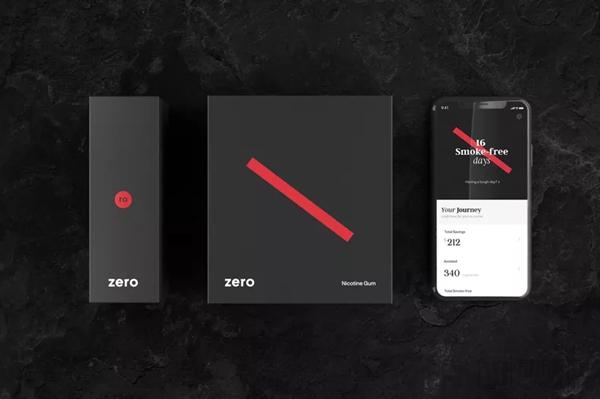
Zero’s packaging and brand design deliberately avoid the overly cheerful blue-and-white color scheme (image from Ro’s official website)
To ensure the accuracy of diagnostic outcomes, Ro has established its own Medical Advisory Board by collaborating with leading medical experts in the industry. The Medical Advisory Board comprises renowned American surgeons, as well as chairs and program directors from New York University, Cornell University, and the University of Minnesota. Currently, Ro has engaged more than 20 physicians. During online consultations, patients are required to pay a $15 consultation fee to the physician, with the cost of prescribed medications billed separately. Physicians retain the consultation fees earned on the platform but must pay a monthly subscription fee to Ro to maintain long-term engagement with users, who may request follow-up phone or video calls.
Certainly. If, during the consultation, the physician determines that the patient is not suitable for telemedicine—for example, if the patient cannot receive pharmacological treatment or if the patient’s condition is too complex—the physician will fully refund the consultation fee to the patient and may even provide a referral for further care.
This is precisely where Ro generates its profits: by taking a commission on consultation fees, driving medication sales, and reducing retail pharmacy management costs through online drug sales. However, since Ro has not yet partnered with insurance companies, patients must pay out-of-pocket for services such as the $15 telemedicine consultation, Roman medications, or the Zero smoking cessation package. This requirement inevitably limits its customer base to those with greater financial means.
Ro co-founder Reitano is clearly aware of this as well. To that end, he has stated that Ro will accept payments from patients using Flexible Spending Account (FSA) cards, allowing them to leverage tax-exempt spending to help reduce out-of-pocket costs. (An FSA card is linked to a Flexible Spending Account, designed to provide employees with a way to pay for eligible medical expenses not covered by other health plans using pre-tax income.) Meanwhile, Reitano also expressed that he is “absolutely willing to collaborate with insurance companies.”
Generally speaking, for healthcare services to enhance accessibility, they must be better, faster, and cheaper. In The Innovator’s Prescription, Clayton Christensen points out that the healthcare industry can improve quality, reduce costs, and increase accessibility through disruptive innovation—namely, technological innovation, business model innovation, and enabling network innovation. Currently, most healthcare companies, when established, can typically fulfill only one or two of these three criteria, whereas Ro delivers all three simultaneously.
On Ro, the cost of a doctor’s visit is lower than traditional out-of-pocket expenses, with consultation fees as low as $15. Although patients currently pay out of pocket, Ro is considering accepting FSA cards and plans to partner with insurance companies in the future, which will significantly reduce patient costs.
In addition to collaborating with specialists and professors in niche fields to establish a Medical Advisory Board, Ro maintains its own team of nurses, clinicians, pharmacists, brand designers, cybersecurity engineers, product managers, and more, ensuring the quality of its healthcare services. To some extent, Ro’s service quality even surpasses that of its industry peers.

Some Members of Ro’s Medical Advisory Board (Screenshot from Ro’s Official Website)
Furthermore, as mentioned above, Ro is the first full-stack digital healthcare company in the United States to cover diagnosis, prescription, treatment, and management, turning its services into a commodity by providing personalized treatment plans. Patients can consult any healthcare provider on the Ro platform at any time and speak with a doctor within just a few minutes, without the need for prior appointments or long waiting times. This means that through end-to-end involvement, Ro’s operational model can rapidly iterate and upgrade, offering continuous support to patients, doctors, and pharmacists via its platform.
Meanwhile, patients complete information forms prior to their consultations, which streamlines the visit process, saves physicians’ time spent on gathering information, and facilitates Ro’s provision of follow-up care. Ro’s automated system flags issues and simplifies the workflow for approving or denying consultation requests, while the documentation also helps physicians focus on more complex patient cases.
It is understood that Ro is not the first digital health company to attempt to address sensitive men’s health issues. Currently, a large number of startups have emerged in this field.
Earlier in 2017, Trak, a digital health company specializing in male fertility testing, launched a home sperm testing kit. This tool allows men to avoid visiting fertility clinics, thereby sparing them potential embarrassment. Another digital health company, Yo, addresses male infertility by analyzing sperm motility through a smartphone app. Yo’s smartphone-based sperm testing solution has also received approval from the U.S. FDA.
Of course, like Ro, these companies do not aim to completely replace physicians. Instead, as a complementary force in the healthcare industry, they help patients better understand their health status and cultivate health awareness.
Ro encourages users to proactively consult physicians. Patients who undergo medical examinations at hospitals and submit their results on the Ro platform will receive discounts, which can be applied to subsequent consultations or prescription medication costs. Additionally, Ro arranges free blood tests for patients and assists with the interpretation of diagnostic results. Furthermore, Ro enables patients to share their medical information from the platform with their primary care physicians to facilitate coordinated care.
More importantly, the speed and ease of use of this system can deter men from purchasing counterfeit Viagra online and encourage them to proactively discuss their health with physicians, thereby providing a safe and dignified channel for medical consultation for those who are hesitant to seek help.
According to CB Insights, funding for telehealth companies has surged in recent years. Since 2013, telehealth startups have raised more than $1.2 billion. However, many established telehealth companies focus exclusively on serving health plans and employers, with few businesses directly targeting consumers like Ro does. This presents a significant growth opportunity for Ro.
In the future, Ro will launch new men’s health products under its Roman business segment and introduce new addiction treatment programs under its Zero business segment. Additionally, Ro plans to develop new brands, such as one focused on women’s health. As Reitano, co-founder of Ro, stated, “Our goal is by no means limited to building a men’s health company; rather, we aim to reshape how everyone experiences healthcare.”
Shifting focus back to China, VCBeat has found that the niche market for men’s health in China holds significant potential, driven by factors such as a large population base and a high prevalence of related conditions. Although numerous medical institutions—including public hospitals with andrology departments, specialized private hospitals, and dietary supplement companies—are available to address men’s health issues, few accurately target patients’ core pain points.
“YouNan Angel,” a domestic online consultation platform launched in early July 2016, bears some similarities to Ro.
“YouNan Angel” is a platform specializing in online consultations for male health issues, founded by He Linfeng. The platform primarily provides online consultation services to men through its WeChat Official Account and guides them to purchase medications.
It is understood that to establish its image as a professional mobile consultation expert in andrology, Younan Angel has vertically positioned itself in the field of men's health and collaborates with teams of professional physicians. Meanwhile, to address the poor experience associated with offline hospital visits, Younan Angel cultivates a strong service-oriented mindset among its doctors to enhance user consultation experiences. By introducing the concept of private physicians, it engages teams comprising associate chief physicians and above from Grade 3A hospitals, providing efficient one-on-one and comprehensive point-to-point premium services.
According to a report by 36Kr, from its launch in early July 2016 through the end of September 2016, the Younan Angel WeChat medical consultation platform attracted over 120,000 followers, including approximately 5,000 paying users. In September 2016, Younan Angel secured several million yuan in angel-round funding.
However, VCBeat discovered that Younan Angel’s official WeChat account was shut down by WeChat in the first half of 2017 due to repeated use of sensitive keywords.
Another mobile app operating in the male health sector is “Jiaonan.” Reportedly, Jiaonan was developed to address pain points in male medical consultations, providing specialized health advisory services for men. It is affiliated with Chongqing Jieke Technology Co., Ltd. The founder, Zhang Yang, is 28 years old. In early 2015, he led his team to launch the “Jieke” app, entering the male health market with a tool-plus-community product designed to help users quit detrimental habits such as masturbation, smoking, and alcohol consumption. Within one year, it accumulated over 2 million users.
In January 2017, to genuinely help men address their health concerns, Zhang Yang launched the “Jiaonan” app. “Jiaonan” collaborates with physicians from Grade A tertiary hospitals who have at least five years of experience in andrology, implementing a paid consultation model with a fee of RMB 58 per consultation, while other features remain free of charge.
It is reported that to ensure the quality of consultations, “Jiaonan” strictly vets the credentials of physicians joining its platform and has established a 7-step Standard Operating Procedure (SOP) for online responses. Physicians are required to address patient inquiries in accordance with this SOP, adhering rigorously to evidence-based medical principles while prohibiting deceptive practices and hollow platitudes. The platform has also launched a Men’s Health Encyclopedia section to provide science-based education on male health, aiming to prevent patients from being misled during the care-seeking process. Furthermore, “Jiaonan” has disclosed the costs and procedures for common andrological examinations, benchmarked against the standards of tertiary Grade A hospitals.
Regrettably, less than six months after its launch, the “Jiaonan” app ceased to receive updates. Users were unable to log in to the app, whether using social media accounts such as WeChat or Weibo, or mobile phone verification codes. The official Weibo account of the “Jiaonan” app also entered a state of discontinuation in June 2017.
VCBeat has found that these domestic and international companies are similarly focused on the field of men's health, all emerging to address the pain point of inconvenient access to medical care for men. The difference lies in the fact that Ro has gained favor from capital investors and shows a trend of expanding growth, while domestic platforms such as Younan Tianshi and Jiaonan App have ultimately faded into obscurity.
Certainly, there are still some enterprises and platforms involved in the field of men's health developing domestically, such as Jianke, an Internet + pharmaceutical health service platform, and Yi Yun Bang, an infertility intervention center. Perhaps there are also some companies focusing on this field that are on their way. However, the domestic men's health sector is still at a stage of development that has not been deeply explored. Faced with such huge development opportunities, how to learn from Ro’s successes and draw lessons from the failures of Younan Angel and Jiaonan App may be issues that new entrants need to carefully consider.