

China Releases Draft Technical Specifications and Validation Criteria for eCTD Implementation
Source: DeepIntel AI | Reposted by VCBeat
VBInsight: In-Depth Analysis
As one of the system supporters for the implementation of the eCTD standard in China (2), DeepBioscience’s Global Regulatory Registration Team promptly interpreted the draft for comments. Michael Zhang, the team leader, believes that this draft combines the historical experience of global ICH eCTD implementation with the next-generation eCTD standards, integrating China-specific regional standards into technical and validation specifications. Key highlights and areas worthy of attention include:
01 Benchmarking Against the Highest Global Standards: The overall technical specifications are primarily aligned with the latest U.S. FDA eCTD standards, particularly achieving convergence with U.S. requirements for the Study Tagging File (STF). By benchmarking against the only country globally that has implemented STF, this approach reflects the high standards and stringent requirements of China's eCTD implementation;
02 Integration of Internationalization and Regionalization“3-Regional Schema Files,” “5-Regional Style Files,” and international standards such as the “14-Chinese Translation Draft (V3.2.2) of the ICH eCTD Technical Specifications,” which has been in implementation for over a decade, collectively constitute the core technical specifications of this draft for comment;
03 Laying the Groundwork for Future 4.0 Standards: We are pleased to see the “4-Controlled Vocabulary Package” included in the supporting documents. Controlled Vocabulary, originally a concept under the eCTD 4.0 standard, is featured as part of these supporting materials, demonstrating the Center for Drug Evaluation’s (CDE) commitment to laying the groundwork for next-generation regulatory information standardization.
Domestic Enterprises Will Face Greater Implementation Challenges
01. The Growing Pains of Digital Transformation: According to the “Chinese Translation Draft of the ICH eCTD File Format Specifications (Version 16),” starting from the formatting standards for submission documents, every enterprise and service provider conducting regulatory submissions in China must face the new challenges brought about by the new standards;
02 The gap between the leap to eCTD and the shortage of professional operational talent in China may expose companies to submission risks;
03 “System + Process” Capabilities Are Becoming Increasingly Important: The era of paper-based printing for registration submissions has come to an end; companies now need to invest significant human resources and implement process controls to ensure that submission materials comply with eCTD standards.
The Next-Generation eCTD Standard Has Emerged in China’s Implementation Plan
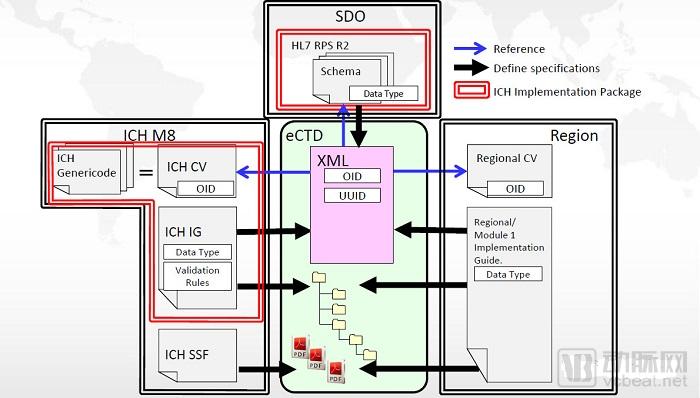
Reference: Support Documentation for eCTD v4.0 Implementation Package
A Standard Technical Architecture Diagram for eCTD 4.0: What Insights Emerge When Compared with Tonight’s Draft for Comments? We will continue to provide “in-depth interpretations” as China’s eCTD standards are implemented, empowering Chinese pharmaceutical companies to advance toward a future of digitalization and intelligence.
With the convergence of international regulatory and technical requirements for registration filings, along with the widespread adoption of electronic information technologies, higher standards and greater challenges have been imposed on document iteration management across all stages of pharmaceutical R&D, culminating in the final step of regulatory submission. The resonance between internationally harmonized registration standards and electronic information technologies will accelerate drug approval and market distribution, ultimately benefiting patients worldwide. Echoing ICH’s motto, “Harmonization for better health,” the implementation of eCTD in China will gradually unify various specifications within the domestic drug registration and filing landscape, thereby playing a pivotal role in better safeguarding patient health.
Reference Content:
1) Decoding the “Pyramid” Standard for Electronic Drug Registration Submissions—eCTD
2) DeepGlint Participates in the Construction of China’s eCTD Submission Management System
About Deep Intelligence
DeepIntel is a rapidly growing international company that empowers the entire new drug R&D process with advanced artificial intelligence technology. The company is committed to building an end-to-end AI-driven new drug R&D platform, empowering and accelerating global pharmaceutical companies to bring drugs from the laboratory stage to the market stage with high quality and efficiency. The company's core team comes from the new drug R&D departments of multinational pharmaceutical companies and top internet companies, operating and conducting R&D in China, the United States, and Japan simultaneously, with offices located in Beijing, Shanghai, Tokyo, Boston, and other places. Phone: 400-898-9956 Email: contact@dip-ai.com