

Shirley Ryan AbilityLab Files IPO Prospectus: The Global Leader in Translational Rehabilitation Medicine
In China, where the rehabilitation industry remains lukewarm, challenges such as insufficient patient volumes, low reimbursement rates under medical insurance, imperfect referral mechanisms, and a lack of differentiation in rehabilitation services are widespread. With social capital having strategically positioned itself in the rehabilitation healthcare sector well in advance, rehabilitation hospitals have become attractive targets for listed companies due to their relatively short payback periods. For specialized hospitals, beyond robust clinical capabilities, management excellence, scientific research, and distinctive services serve as powerful “weapons” to capture market share.
U.S. News & World Report, an authoritative magazine that publishes the widely referenced “Best Hospitals” rankings used by the American public, releases its annual list of top hospitals. In the field of rehabilitation, the same institution has claimed the number one spot for 28 consecutive years since 1991: Shirley Ryan AbilityLab (formerly the Rehabilitation Institute of Chicago). The hospital is also hailed as the world’s first “translational research” rehabilitation hospital. To provide new insights for rehabilitation services in China, VCBeat reviewed relevant materials and presents a detailed analysis of Shirley Ryan AbilityLab’s distinctive features.
From RIC to Shirley Ryan AbilityLab: A Rehabilitation Hospital’s Rebranding
According to the hospital rankings by the authoritative U.S. magazine U.S. News & World Report, Shirley Ryan AbilityLab, a nonprofit rehabilitation hospital located in Chicago, Illinois, ranked first among rehabilitation hospitals nationwide in 2018. This marks the 28th consecutive year since 1991 that it has topped the list for rehabilitation hospitals. Spaulding Rehabilitation Hospital of Massachusetts General Hospital and TIRR Memorial Hermann ranked second and third, respectively.
Here is a brief overview of the methodology behind U.S. News & World Report’s Best Hospitals rankings. For 12 specialties, including cancer, cardiology and heart surgery, diabetes and endocrinology, and ear, nose, and throat (ENT), the rankings are determined by a composite of four metrics: survival rates (37.5%), patient safety (5%), other nursing-related indicators (30%), and expert opinion (27.5%). In contrast, rankings for four additional specialties—ophthalmology, psychiatry, rehabilitation, and rheumatology—are based solely on results from a three-year physician expert survey.
Prior to its renaming in 2017 as the Shirley Ryan AbilityLab (hereinafter referred to as “AbilityLab”), the hospital was globally renowned as the Rehabilitation Institute of Chicago (hereinafter referred to as “RIC”). Established in 1954 in Chicago, Illinois, in the Midwestern United States, the institution was founded by Dr. Paul B. Magnuson, a distinguished orthopedic surgeon who dedicated himself to the treatment and care of individuals with disabilities in response to the large number of trauma patients emerging after World War II.
In 1967, RIC established an academic affiliation with Northwestern University and launched a residency program in Physical Medicine and Rehabilitation (PM&R). Over the past six decades, RIC has emerged as a preeminent leader in sports medicine and rehabilitation services, delivering high-quality therapeutic care through the integration of research, scientific discovery, and education to achieve optimal patient outcomes.
RIC is committed to addressing patients’ rehabilitation needs by providing comprehensive medical services for their physical recovery, and most importantly,, it shifts the therapeutic focus from disability to recovery capacity, and from the rehabilitation process to rehabilitation outcomes.The hospital is renowned for its diagnosis and treatment of patients with severe and complex conditions, such as spinal cord injury, stroke, traumatic brain injury, amputation, and chronic pain. It provides specialized services for pediatric, geriatric, and adult patients, including assistive technology, prosthetics, orthotics, and vocational rehabilitation, as well as addressing clinical issues such as arthritis, sports injuries, lymphedema, and women’s health.

In 2016, through donations and fundraising efforts by the U.S. non-profit organization Pathways,The new Shirley Ryan AbilityLab hospital, built at a cost of $550 million, has risen from the ground. The 27-story building covers a floor area of over 110,000 square meters and includes 242 beds—60 more than the original RIC—increasing patient capacity by 40%.Within this 27-story building,It comprises five innovation centers and five capability laboratories dedicated to specific functional training (e.g., the Lower Limb and Gait Laboratory), along with their associated interdisciplinary specialized training areas. Furthermore, it operates a hospital alliance and a regional chain of daytime rehabilitation clinics, providing comprehensive around-the-clock patient care services.
Any discussion of the transition from RIC to the Shirley Ryan AbilityLab would be incomplete without mentioning Dr. Joanne C. Smith, the current President and Chief Executive Officer of AbilityLab.

Dr. Joanne C. Smith, current President and Chief Executive Officer of Shirley Ryan AbilityLab
Joanne C. Smith joined RIC in 1992 as a practicing clinician, holding various clinical, service development, and operational roles before becoming Chief Executive Officer in 2006. Additionally, Ms. Smith serves on the faculty of Northwestern University’s Feinberg School of Medicine (NU-FSM) and holds board positions at Madison Dearborn Partners’ Healthcare Advisory Roundtable, Performance Health, and AptarGroup.
At AbilityLab, she leads a team of 2,000 clinicians, scientists, and staff members. Under her leadership, the hospital has experienced unprecedented growth and visibility. During her tenure as CEO, net income increased by 93%, cash reserves grew by 92%, and grant revenue rose by 107% over the same period.
Joanne C. Smith has long been an advocate for research-oriented hospitals. Prior to the opening of AbilityLab, she emphasized: “The $550 million, 1.2-million-square-foot Shirley Ryan AbilityLab will become the first ‘translational’ research hospital in history, where clinicians, scientists, innovators, and technologists will work together in the same space to apply research in real time.”
A Fundamental Paradigm Shift: The First “Translational Research” Hospital
Dr. Richard Lieber, Chief Scientific Officer at AbilityLab, stated, “RIC (Shirley Ryan AbilityLab) boasts the largest research scale in the world, with our scientists conducting significant research across multiple fields, including neuroscience, robotics, and bionics.” Data from its official website shows that AbilityLab is currently undertaking more than 350 studies and trials, covering areas such as exoskeleton robotics, fall monitoring, clinical trials for aphasia, and movement therapy.
For example, Dr. Todd Kuiken, Director of the Center for Bionic Medicine (CBM), pioneered targeted muscle reinnervation, a surgical procedure that redirects brain signals from nerves severed during amputation to intact muscles, enabling patients to control their prosthetic devices simply by thinking about the desired movement.
Using this technology, Dr. Kuiken and his team developed the world’s first neurally controlled bionic arm. Since then, the AbilityLab Center for Bionic Medicine has continued to create new breakthrough technologies, including the world’s first non-invasive, thought-controlled bionic leg.
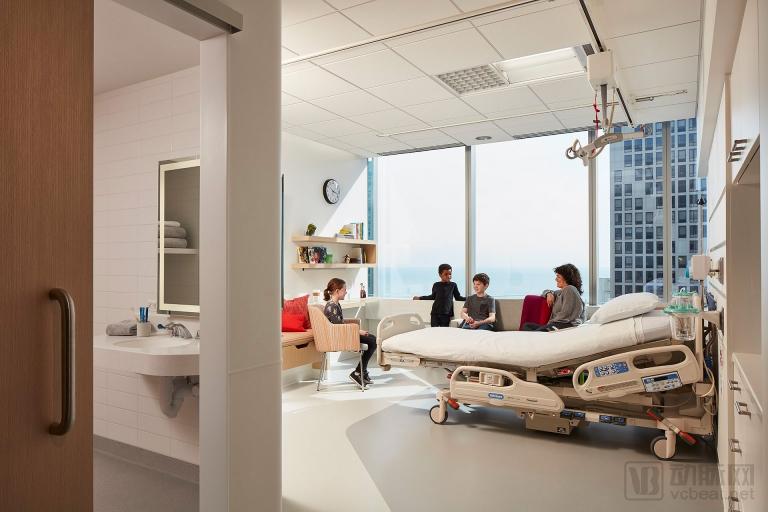
Shirley Ryan AbilityLab Ward
According to the definition on Wikipedia:"Translational Research"It is often used interchangeably with “translational medicine,” “translational science,” or “bedside research.” It refers to efforts to establish basic scientific research aimed at developing new therapies, medical procedures, or diagnostic methods. The term “translation” denotes the process of translating basic scientific discoveries from the laboratory setting into potential treatments for diseases.
Shirley Ryan AbilityLab is designed around patients, not only for their diagnosis, treatment, and care, but also because rehabilitation interventions can enhance patients’ functional abilities and reduce the time required to translate scientific discoveries into practical applications. This is the primary driving force behind the development of a new “translational medicine” model.
Therefore, AbilityLab focuses its research on projects that can benefit patient populations. This structure disrupts the traditional model of university-based research followed by clinical translation, where researchers conduct studies based on their individual scientific interests and achieve translation within functional laboratories.
In clinical trials, patients can benefit from treatment and research programs specifically designed for various conditions. For example, the Intensive Aphasia Treatment Program is a one-month initiative that leverages the latest data and research findings from the Hospital’s Center for Aphasia Research and Treatment. Patients with spinal cord injury (SCI) can also participate in the “Second Look” program, which employs novel approaches to research and therapy, including spasticity management and exoskeleton devices. Designed by an SCI expert team, this program assesses each individual’s current condition during implementation and provides recommendations for subsequent steps in their treatment plan.
When conducting clinical trials, participants are recruited directly from the patient population. Patients can apply independently through the corresponding pages on AbilityLab’s website. Each trial listing details the study objectives, eligibility criteria, relevant research background, and compensation, among other information. The trials are conducted by the respective Innovation Centers and Functional Laboratories.
Currently, 86% of scientific discoveries never make it out of the laboratory. Countless treatments, including potential therapies that could accelerate recovery or even save lives, have never been fully or effectively developed. Based on AbilityLab’s research practices, integrating research with clinical care is crucial and should have been implemented long ago.
One of the most significant challenges in healthcare is that scientific breakthroughs are not communicated to patients quickly enough, if at all. Most scientific research is conducted in laboratories physically separated from clinical settings, often in different environments—researchers quietly perform experiments in labs, while doctors are busy working around the clock across various departments. As a result, research conducted in healthcare or educational settings often does not align with patient needs. Only 14% of new scientific discoveries make it into daily clinical practice, and it is estimated that an average of 17 years is required to translate new research into practical application.
Joanne C. Smith stated, “This translational research model will transform how people work and how patients improve, increasing the likelihood that promising research ideas are translated into viable medical treatments.”
5 Major Innovation Centers + 5 Functional Laboratories: Excellence in Nursing Combined with Cutting-Edge Research
Shirley Ryan AbilityLab has designed five innovation centers focused on the field of rehabilitation medicine and science. These centers include the Brain Innovation Center; the Spinal Cord Innovation Center; the Neuromuscular + Musculoskeletal Innovation Center; the Pediatric Innovation Center; and the Cancer Rehabilitation Innovation Center. Patient care at these centers is augmented by cutting-edge intelligent control systems, electronic technologies, and mobile therapeutic devices. The specific details of these five major innovation centers are as follows:
Brain Innovation Center
The entire center is AbilityLab’s largest innovation hub in terms of patient volume and staffing. The center focuses on promoting brain healing and recovery, delivering the world’s best medical care, nursing, diagnostic support, and translational neuroscience research.
Its research activities encompass the application of pharmacotherapy, neuromodulation using external or implanted brain stimulators, the use of smart devices and emerging technologies, and the potential applications of biomaterials and therapies specific to neurobehavior. It also investigates pioneering interventions, such as regenerative medicine.
Spinal Cord Innovation Center
The Innovation Center continuously conducts clinical trials to promote neural repair and recovery. Research encompasses pharmacological interventions, the application of biomaterials, and stem cell therapy. Primary recovery goals for patients include the emergence of meaningful motor function, sensory coordination, and endurance; the resolution of respiratory and hemodynamic instability; and overall recovery from wounds or disease.
Center for Innovation in Neurology, Musculoskeletal and Bone
The primary mission of the Center for Innovation in Nerves, Muscles, and Bones is to treat patients with injuries and conditions affecting bodily movement, providing treatment and rehabilitation for a wide range of injuries and diseases.
The rehabilitation process for patients with neurological, muscular, and skeletal disorders requires precise medical and nursing expertise, as well as advanced diagnostic and therapeutic tools. Patient indications at this innovation center include: general disability; postoperative weakness; burns; cancer (such as lymphoma); transplantation; major orthopedic conditions such as fractures; primary muscle diseases (such as muscular dystrophy); primary joint diseases (such as arthritis); and back/spinal disorders.
Children's Innovation Center
AbilityLab’s pediatric rehabilitation program is the only one of its kind in the U.S. Midwest, leading the way in addressing conditions that affect children’s function and development through rehabilitation. The Pediatric Innovation Center delivers cutting-edge care within a vibrant, child-centered environment, creating a relaxed and enjoyable atmosphere for young patients, their families, and caregivers.
Cancer Innovation Center
Shirley Ryan AbilityLab is the only rehabilitation hospital in the region and one of the few institutions nationwide to provide comprehensive, integrated rehabilitation therapies for adults and children battling cancer. By integrating rehabilitation with primary cancer treatment through an interdisciplinary team, the center enhances patient outcomes.
Aligned with the treatment and care models of the Innovation Center, the core element that truly translates research into application during the rehabilitation period is the functional laboratory. Interdisciplinary teams develop novel studies to help patients regain greater functionality, achieve better rehabilitation outcomes, and enjoy the restoration of their capabilities. Each laboratory features a unique setup, configured based on target functions and the types of experiments conducted within:
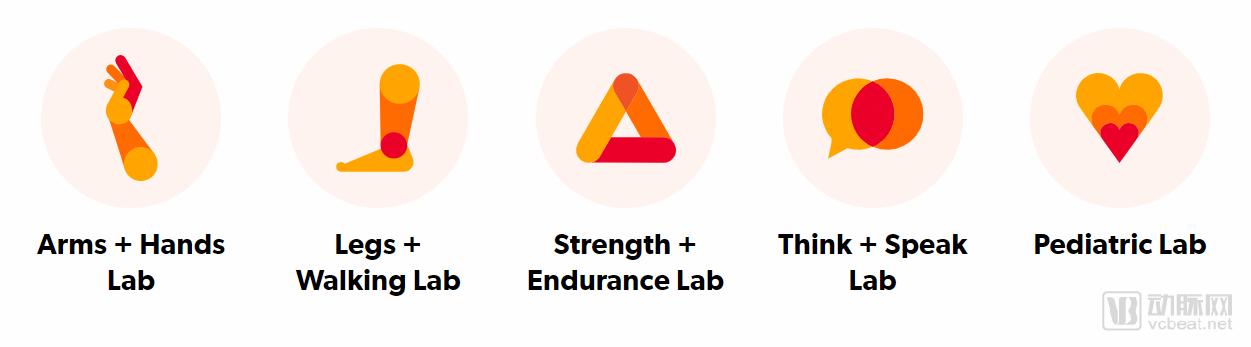
• Speech + Cognition Lab:Treatment of Basic Brain Functions: Arousal, Consciousness, Thinking, Communication, Perception, Memory, and Learning.
• Leg + Gait Laboratory:Improve movement, gait, and walking through trunk and pelvic stability; position and control the hips, knees, and ankles for stepping and propulsion.
• Arm + Hand Laboratory:Improve hand function and movement, promote body and upper limb coordination, strength and flexibility, shoulder biomechanics, and hand/finger control.
• Strength + Endurance Laboratory:Improve endurance and resilience, complex movements and endurance activities, coordination, and higher-level activities of daily living (e.g., cooking, housework, sports, exercise).
• Pediatric Laboratory:Treatment for all the aforementioned aspects, with tailored approaches specific to the brain, body, and medical conditions of children (from infants to adolescents).
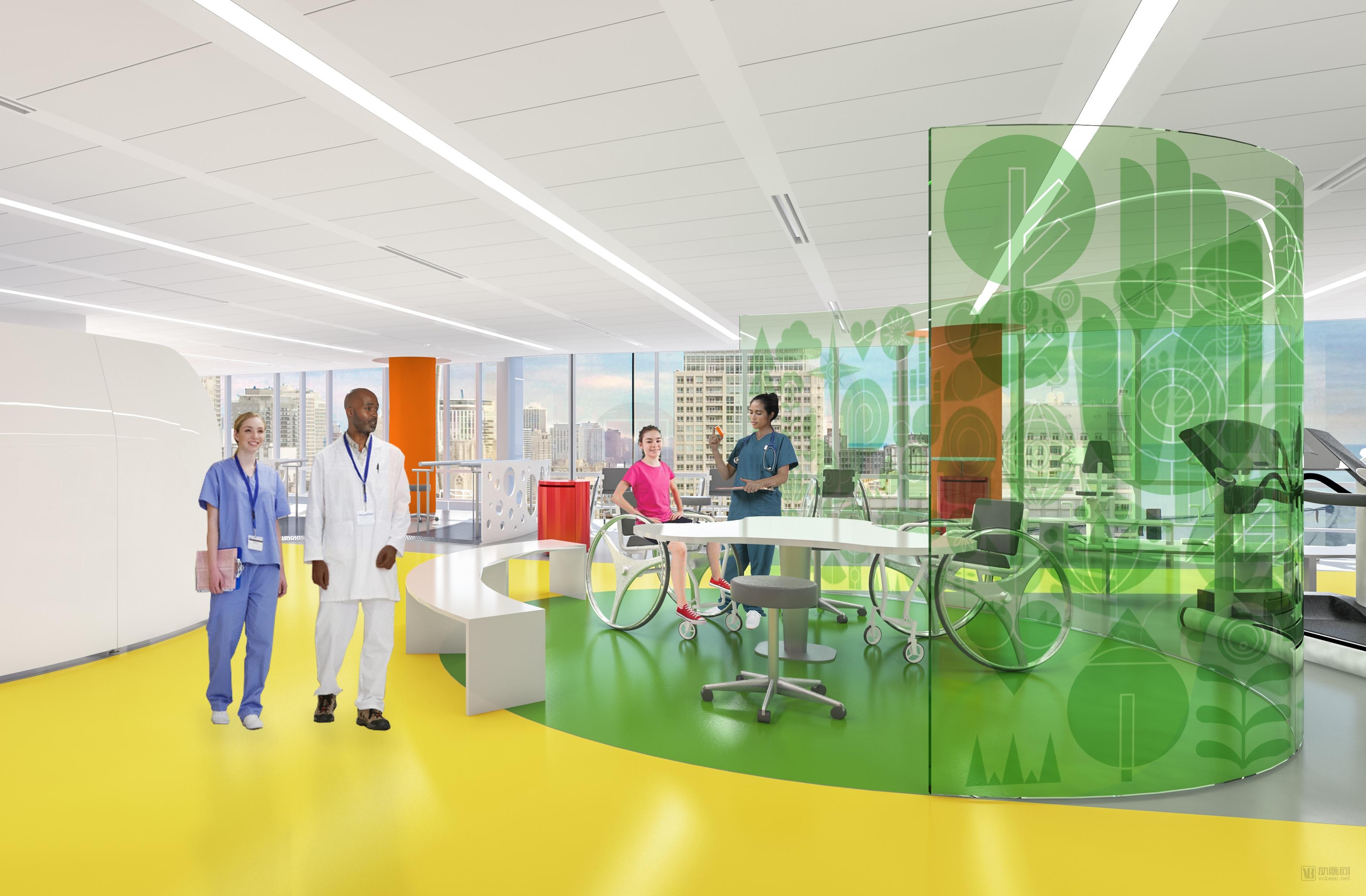
Pediatric Laboratory
Through the comprehensive design of its laboratories and innovation centers, AbilityLab can serve diverse patient populations and maximize the restoration of patients’ functional abilities to achieve optimal rehabilitation outcomes. Taking stroke as an example, the six-month (180-day) period represents a critical window for achieving maximal functional recovery after stroke. The longer the wait, the more difficult the recovery becomes. Stroke survivors have two rehabilitation options: inpatient rehabilitation facilities such as Shirley Ryan AbilityLab, or healthcare institutions primarily focused on subacute rehabilitation.
The following outlines the differences between AbilityLab and traditional healthcare institutions in rehabilitation, along with the resulting rehabilitation outcomes (based on official website data):
In inpatient rehabilitation facilities, patients will receive8xImprovements in cognitive abilities (reading, using the telephone, following complex instructions, etc.) are greater when undertaken at an inpatient rehabilitation facility compared to receiving treatment at a skilled nursing facility.5xmobility (walking, bending, lifting weights, and carrying items).
In nursing facilities, physicians are required to evaluate patients within 14 days of admission; whereas in inpatient rehabilitation facilities, physicians must, upon the patient's arrival,Day 1Timely assessment.
In nursing facilities, registered nurses are required for only 8 hours per day; in inpatient rehabilitation facilities, registered nurses must be available daily24 HoursServices.
At AbilityLab, it is expected to receive weekly17.5 hoursThe above treatment duration; whereas nursing facilities provide less than 9 hours of therapy per week.
Each layer’s color is designed for therapeutic purposes and has won a Gold Award in design.
In addition to its robust capabilities in medical services and clinical research, Shirley Ryan AbilityLab boasts a world-class environment, having been awarded the Gold Award at the 32nd Annual Design Awards by Modern Healthcare in 2017, and in 2018
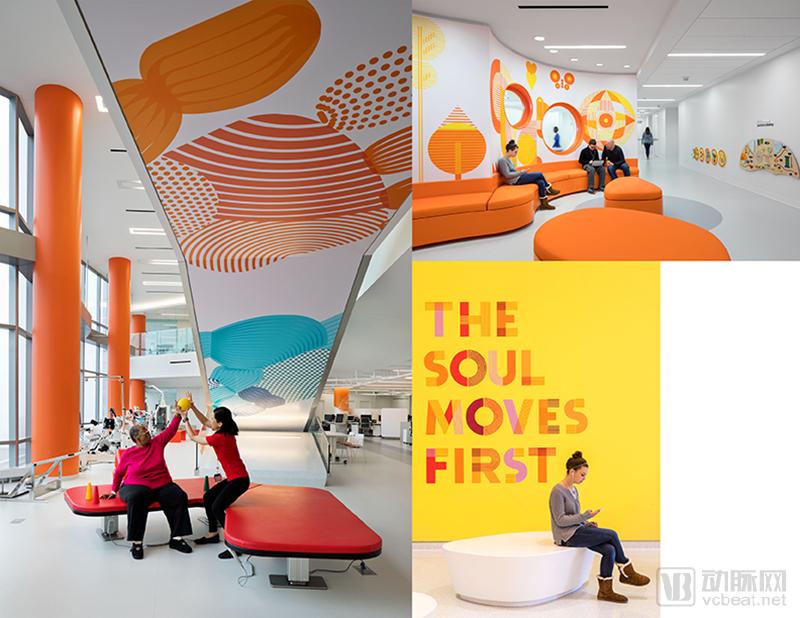
The building housing AbilityLab offers views of downtown Chicago and Lake Michigan. Unlike traditional hospitals, its interior features a bold color scheme of orange and gray. The $550 million facility distinguishes itself from the stark white walls typical of most hospitals through its distinctive architecture and environment. The hospital’s spaces leverage the building’s scenic vistas and abundant natural light, embodying Joanne C. Smith’s statement: “We are opening up to the city with light.” This design conveys the philosophy that “science and care coexist.”
In addition to the bold use of colorful decorations such as orange, graphics are incorporated to create a vibrant hospital environment. Many engaging graphics can be seen at AbilityLab, helping to alleviate people’s anxiety in the hospital setting.
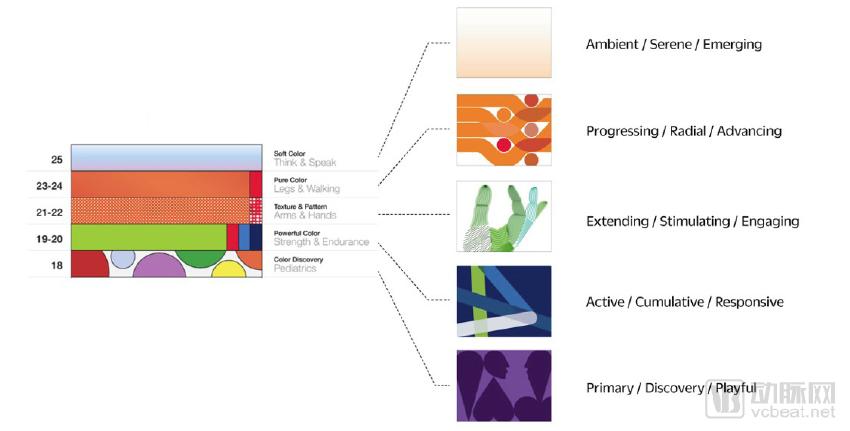
In fact, the color scheme of each floor serves a therapeutic purpose. For instance, the Leg + Gait Lab features bright orange, red, and yellow hues; in contrast, the top floor of the Brain Innovation Center creates a soothing “skyscape” that transitions from pale pink to soft blue, designed to protect patients with traumatic brain injury from excessive stimulation.
In addition to its pleasing color schemes and abundant leisure-oriented public spaces, AbilityLab’s spatial configuration offers unique advantages in therapeutic care. The hospital features five Innovation Centers and their affiliated AbilityLabs. The Innovation Centers are state-of-the-art patient care facilities, while the AbilityLabs serve as dedicated therapeutic zones. Through design implementation and optimization of clinical workflows, researchers and clinicians can engage directly with patients, observing and documenting their responses to specific tools and interventions in real time to assess rehabilitation outcomes.
Between the two levels of the capability laboratory, there are lift tracks designed by specialized suspension engineers. Installed on the ceiling and spanning across the floor and central staircase, these anti-gravity lifting tracks support patients’ body weight, enabling them to feel secure while practicing walking and climbing stairs.
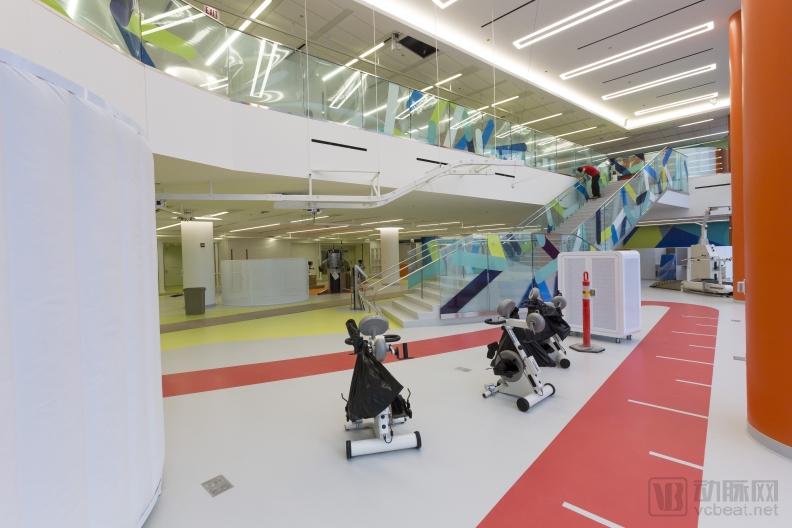
Leg and Gait Laboratory
Unique custom-built glide tracks have been installed on the stairs in the leg and gait laboratory, enabling the collection of patient data during track usage. This data is synchronized with electronic medical records to facilitate timely analysis for improvement or direct application, thereby providing researchers and clinicians with valuable reference information.
Most patients spend an average of 24 days in various rehabilitation facilities. During the rehabilitation process, patients must have access to appropriately designed quiet and active spaces. According to foreign media reports, AbilityLab’s rooms are each equipped with shower beds, patient-controlled curtains, and sofa beds for family members, as well as state-of-the-art digital technologies, including customizable data and entertainment systems. In consideration of patients’ length of stay, the hospital also allows personalization of room decor.
In addition, the hospital is equipped with a heated therapeutic pool and devices capable of lifting patients into the water. According to Joannne C. Smith, although hydrotherapy services are not covered by insurance reimbursement, the hospital still chose to install the hydrotherapy pool. In another innovation, the hospital features several activities of daily living (ADL) studios, complete with kitchen and other living spaces. These areas simulate household environments with high cabinets and countertops, allowing adult patients to practice cooking and relearn these skills before returning home.
Medical Education and Continuing Education: Strengthening the Rehabilitation Workforce
In terms of academic partnerships, as a partner of Northwestern University, Shirley Ryan AbilityLab has access to the extensive resources of Northwestern University, its Feinberg School of Medicine, and Lurie Children’s Hospital, and many Feinberg faculty members hold privileges at Shirley Ryan AbilityLab.
Furthermore, the hospital collaborates with Northwestern University on medical student education and residency programs. The Department of Physical Medicine and Rehabilitation (PM&R) at Northwestern University requires its medical students to complete clinical rotations between the university and the hospital as part of AbilityLab’s residency program. AbilityLab provides clinical training for medical students, who rotate through all inpatient units, including centers specializing in brain injury, spinal cord injury, pediatrics, and cancer care. They also participate in select outpatient rotations, ensuring a balanced clinical experience and exposure to patients in need of services.
In addition to AbilityLab itself, training also takes place at other pain management centers and affiliated hospitals, including Northwestern Memorial Hospital, Illinois Masonic Medical Center, and the Jesse Brown VA Medical Center, to ensure that medical students receive comprehensive training across various levels of care.
In addition to expert clinical services, AbilityLab also provides consulting and staff training services to healthcare institutions around the world seeking to improve operational performance, clinical staff development, or facility design support.

AbilityLab Scholar Program Details
This includes the AbilityLab Scholars Program, which disseminates clinical and operational best practices in rehabilitation. It enhances the capabilities of healthcare professionals by sharing the latest scientific discoveries and clinical practices that transform patient outcomes. Through continuing education programs, it aims to help thousands of physicians, nurses, and allied health therapists advance in their fields and deliver the highest level of care to patients.
On AbilityLab’s official website, academic training courses in rehabilitation and a Rehabilitation Measurement Database (RMD) for practical application are provided for clinicians, therapists, and researchers. The rehabilitation curriculum covers topics such as stroke rehabilitation, aphasia, spinal cord injury, traumatic brain injury, and burn rehabilitation. A total of 87 courses are offered in three formats—in-person instruction, online teaching, and e-books—with prices ranging from $0 to $1,000.
Additionally, the Rehabilitation Measures Database (RMD) features over 400 measures and is supported by the world’s leading clinicians, therapists, and researchers in physical medicine and rehabilitation, making it the premier resource for rehabilitation assessment.
A series of educational and training programs constitute both an integral part of AbilityLab’s business model and a crucial component in building its talent pipeline. By collaborating directly with university medical schools to provide clinical training for medical students, AbilityLab effectively cultivates a reserve talent pool for hospitals. Given that China’s rehabilitation industry is currently constrained by a shortage of professionals, it would be beneficial to adopt this approach of direct collaboration with medical schools to supply reserve talent to rehabilitation hospitals and other rehabilitation healthcare institutions.
After reviewing the case analyses above, you will undoubtedly be struck by the gap between U.S. and Chinese rehabilitation hospitals, whether in terms of the external environment, medical conditions, or research capabilities. In fact, the disparity extends beyond hospital infrastructure; the market size difference between China and the United States exceeds sixfold. Despite current shortcomings, China’s rehabilitation industry boasts both market potential and opportunities for development.
Starting with an analysis of the Shirley Ryan AbilityLab, which has been ranked the #1 rehabilitation hospital in the United States for 28 consecutive years, VCBeat will continue to publish its “No. 1 Rehabilitation Hospital” special series and conduct scans of China’s rehabilitation industry. We encourage professionals across the rehabilitation industry value chain who read this article to contact VCBeat to strengthen collaboration.