

HeRui Genomics Holds PreCar Investigator Meeting Advancing Prospective Multi-Center Liver Cancer Early Detection Study
On March 1, 2019, in the vibrant spring month of March, the investigator meeting for the “National Multicenter, Prospective Screening Project for Ultra-Early Warning Biomarkers of Hepatocellular Carcinoma” (hereinafter referred to as the “PreCar Project”), led by Berry Genomics’ subsidiary Huirui Gene, was held at the National Liver Cancer Center. In the conference room on the first floor of the Liver Cancer Center, top hepatology experts—including Academician Wang Hongyang, Director of the National Center for Liver Cancer and affiliated with the Eastern Hepatobiliary Surgery Hospital of Naval Medical University, and Professor Hou Jinlin from Nanfang Hospital of Southern Medical University—along with representatives from leading hospitals such as Naval Medical University Hospitals, gathered to share and discuss project progress and summarize experiences.
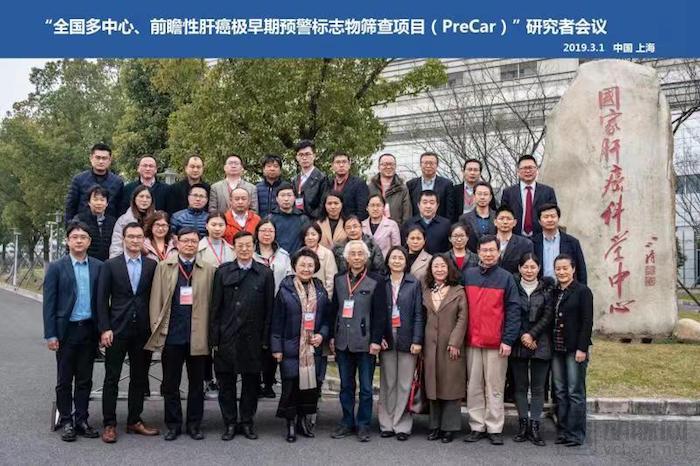
Group Photo of Experts
It has been 10 months since the “PreCar Project” was officially launched in April 2018. During this period, the research team at the National Center for Liver Cancer announced the interim results of its pilot study at the 2018 CSCO conference. The data showed that the sensitivity of liver cancer detection exceeded 90% at a specificity of 95%; even when the specificity threshold was set at 99%, the sensitivity reached 87%. At this investigators’ meeting, experts from the multicenter research consortium once again reported on the project’s progress.
Professor Chen Lei from the National Center for Liver Cancer first presented the research findings. Subsequently,, the First Affiliated Hospital of Xinjiang Medical University, Nanfang Hospital of Southern Medical University, and Mengchao Hepatobiliary Hospital of Fujian Medical University presented their work reports and shared experiences on patient enrollment, project quality control, and other aspects.
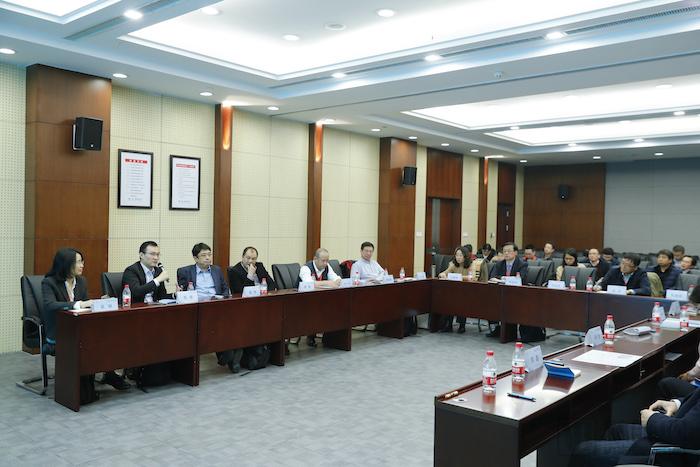
On-Site Investigator Meeting
China is a country with a high burden of liver disease. Liver cancer ranks fourth globally in terms of cancer incidence, with over 50% of new cases occurring in China. Due to the nonspecific nature of early symptoms, most patients in China are diagnosed at an advanced or late stage, when treatment options are severely limited. The frequent presence of hematogenous metastasis and tumor thrombus formation directly contributes to a significantly lower five-year postoperative survival rate for liver cancer in China compared to developed countries in Europe and America.
Due to the lack of effective treatment options, the prognosis for liver cancer remains poor, with a high mortality rate. Furthermore, both the incidence and mortality rates of liver cancer in the United States have been rising in recent years. In addition to viral hepatitis, non-alcoholic fatty liver disease, alcoholic liver disease, and drug-induced liver injury can all contribute to the development of liver cancer, leading to a growing global risk of the disease.
In the early stages of tumor development, the vast majority of imaging modalities—such as X-ray computed tomography (CT), ultrasound imaging, positron emission tomography-computed tomography (PET-CT), and magnetic resonance imaging (MRI)—are unable to detect lesions, as these imaging methods can only identify masses with a diameter greater than 1–50 px. Furthermore, both domestic and international studies have demonstrated that existing serological diagnostic markers for liver cancer, such as alpha-fetoprotein (AFP), still exhibit insufficient specificity and sensitivity for the diagnosis and early warning of very early-stage hepatocellular carcinoma, resulting in a high rate of missed diagnoses in the early stages.
Among novel detection methods, liquid biopsy is considered the most promising. By applying tumor molecular markers to detect genomic alterations in tumor cells—such as mutations, deletions, rearrangements, methylation, amplifications, and insertions—during the early stages (Stage I and II) of cancer, it provides guidance for the selection of early diagnostic strategies.
Therefore, there is an urgent need to conduct prospective, multicenter cohort studies based on peripheral blood genetic testing to validate the reliability of the aforementioned methods. This is also the reason why Huirui Gene, in collaboration with the National Center for Liver Cancer, has launched a prospective cohort project involving 10,000 participants.
This project is led by Academician Wang Hongyang, Director of the National Center for Liver Cancer Science and affiliated with the Eastern Hepatobiliary Surgery Hospital of Naval Medical University, and Professor Hou Jinlin from Nanfang Hospital of Southern Medical University, and is implemented in collaboration with Genetron Health.
Since its inception, Huirui Gene’s industrial ambitions have extended beyond the market for mid- to late-stage cancers, instead establishing early and ultra-early cancer screening and diagnosis as the strategic direction and core mission of its corporate development.
HeRui Gene will invest over 100 million yuan in technology development and clinical trial validation. The collaboration between the National Center for Liver Cancer and HeRui Gene signifies an organic integration of their respective strengths, connecting domestic experts in the field of liver cancer through this research project to form a “national team” for collaborative efforts, thereby leveraging gene testing technologies to further advance the time window for early tumor detection.
It is reported that, drawing on the implementation experience of this project, He Rui Gene plans to roll out a series of early screening and diagnostic research initiatives targeting malignant tumors that pose a serious threat to the health of the Chinese population.
Meanwhile, Berry Genomics, a shareholder of Herui Gene, held the launch meeting for the National Science and Technology Major Project on “Development of Kits and Related Equipment for Warning and Early Diagnosis of Hepatitis Virus-Associated Liver Cancer” on the morning of March 1.
This project is the only one focused on early cancer diagnosis among the first batch of 54 major science and technology projects for the prevention and control of major infectious diseases, announced in 2018. It is understood that the project was implemented by Berry Genomics as the lead institution, in collaboration with 29 other institutions, including the Eastern Hepatobiliary Surgery Hospital of Naval Medical University, Nanfang Hospital of Southern Medical University in Guangzhou, and Xiangya Hospital of Central South University.
About Huirui Genomics
As a member company of Berry Genomics, Huirui Gene has fully inherited Berry Genomics’ oncology business. Building on the cSMART technology, which holds independent intellectual property rights both domestically and internationally, Huirui Gene has successfully developed the cSMART 2.0 technology. This advancement has pioneered a comprehensive new model for precision medicine in tumor genetic testing and personalized cancer treatment, encompassing everything from tumor tissue sample analysis to liquid biopsy, and transitioning from traditional tumor detection to non-invasive cancer screening.
In collaboration with Herui Supercomputing Center, we integrate two patented bioinformatics analysis systems and a baseline detection background database comprising one million Chinese individuals to deliver genetic testing reports that are more tailored to the Chinese population.
Herui Genomics currently offers a comprehensive suite of testing services, including targeted therapy selection, treatment response monitoring, medication monitoring, cancer susceptibility testing, and personalized oncology care, thereby achieving full coverage of tumor molecular diagnostics.