

ZhuoDao Medical: Pioneering Clinical-Driven Rehabilitation Robotics for Sustainable Innovation in High-End MedTech

ZDROID MEDTECH
Rehabilitation Robot R&D and Manufacturer

Med-Fine Capital
Venture Capital Firm
This report is supported by the Shanghai Rehabilitation Assistive Devices Industrial Park. Centered on the “intelligent” manufacturing of assistive devices, the park has laid out the upstream and downstream industry chain for rehabilitation assistive devices, creating an integrated incubation and acceleration service platform.
VCBeat (WeChat ID: vcbeat) partners with the industrial park to support startups by providing free premiere coverage for entrepreneurial enterprises within the park. For inquiries, please contact VCBeat via WeChat at xiaopeiling185052.
In April 2016, Wang Daoyu, founder of ZD Medical, made a bold decision to suspend the company’s nearly year-long R&D efforts on upper-limb exoskeleton robots. He sent engineers out of the office and into hospitals and clinical frontline settings, where they collaborated with rehabilitation physicians and therapists to study the user demographics, usage procedures, frequency of use, and costs associated with imported rehabilitation robots.
More than two weeks later, ZD Medical convened its own “Zunyi Conference,” temporarily freezing the R&D of its first-generation exoskeleton-based upper-limb rehabilitation robot. The company initiated a new project for ArmGuider (AG), an upper-limb rehabilitation robot that better addresses the urgent clinical needs of current rehabilitation practice, effectively assists therapists, and enables planning of arbitrary trajectories within a two-dimensional plane.
Unlike previous technology-driven initiatives, the AG project originated from a clinical scenario observed by the team in the field: during upper-limb functional rehabilitation training for stroke patients with hemiplegia, therapists typically provide “one-on-one,” hands-on guidance. However, due to a shortage of therapists who cannot meet the demand of multiple patients, patients are often left to perform self-directed exercises on a tabletop, using their unaffected side to drive movement in the affected side. During this process, patients tend to “cut corners,” leading to compensatory movement patterns that ultimately impair the recovery of normal motor function in the affected limb.
Consequently, the medical and engineering teams at ZD Medical decided to design a powered robotic arm, integrated with robust and sophisticated real-time algorithms, as well as interaction logic and treatment protocols aligned with clinical guidelines in rehabilitation medicine. Thus emerged a rehabilitation training robot capable of comprehensively simulating therapists’ training maneuvers while enabling full patient participation throughout the interactive process. This robot can assist, or even replace, therapists in delivering rehabilitation treatments, thereby helping patients achieve a superior rehabilitation experience.
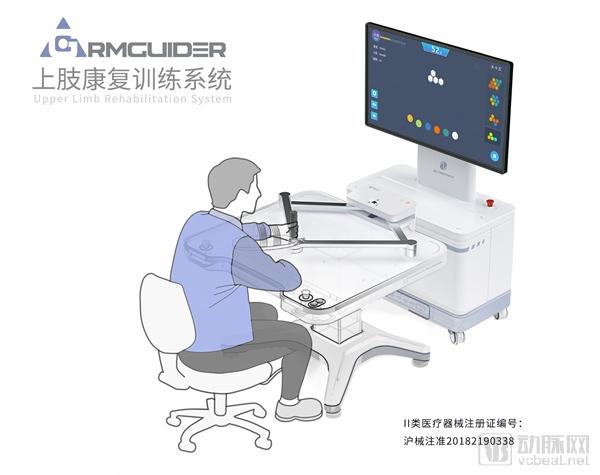
ArmGuider (Image source: provided by the company)
Thus, new product concepts born out of actual clinical needs have progressed through project initiation, R&D, prototyping, improvement, testing, regulatory approval, and mass production... ZD Medical has gradually gotten on the right track. VCBeat (WeChat ID: vcbeat) has learned that, to date, ZD Medical has completed two rounds of financing, has two products available for sale, and has two robots undergoing testing and review, at various stages of obtaining regulatory approval.
What exploratory path did ZD Medical take to forge its current course, and what twists and turns marked this journey? What distinguishes its products? To address these questions, VCBeat conducted an exclusive interview with Wang Daoyu, CEO of ZD Medical.
Clinical application scenarios are the core of rehabilitation robots.
“At first, we aimed to push technology to its limits and outperform all competitors. As one of the earliest groups in China to systematically study and develop rehabilitation robots, we had accumulated nearly a decade of technical expertise. We wanted to prove that our generation of Chinese rehabilitation professionals was no less innovative than our foreign predecessors, and we aspired to build the world’s most advanced rehabilitation robots.” Wang Daoyu recalled, his tone shifting from initial passion to a self-amused laugh: “When we started the company, I had already been graduated from my master’s program for over four years. Looking back, I realize how naive we were. Entrepreneurship is not about leading in a specific technology or relying on the allure of flashy concepts; it is about diligently developing truly useful products. The value delivered by these products should generate revenue, sustain the team, and support business operations.”
More than two years ago, the then-nascent Zhuodao used the most advanced upper-limb rehabilitation robots abroad as benchmarks, scrutinizing every detail. Its engineers fully simulated the five degrees of freedom of the human shoulder complex at the most complex bionic mechanical shoulder joint, a design that leads the global industry. In addition, the company adopted a comprehensive solution encompassing remote power transmission, flexible drive technology, flexible mechanical joints, and force feedback (haptic) technology. To secure an absolute technological advantage, Zhuodao re-engineered any components with overlapping intellectual property rights with imported products, even those potentially subject to dispute. Through independent innovation, it filed dozens of invention and utility model patents. Thus, the prototype of the first-generation upper-limb exoskeleton rehabilitation robot, NimBot (NB), was completed.
“The prototype is out,” Wang Daoyu told VCBeat. “Looking at this behemoth that seems to have stepped straight out of a science fiction movie, I felt initial excitement but quickly fell into concern, increasingly puzzled about where its reasonable clinical scenarios lie: competitors’ prices reach millions, while the per-use fee on the clinical side is only around 100 yuan; furthermore, excessive complexity has led to product instability, and the user experience falls far short of ideal.” On one hand, the NimBot robot “looks impressive”; on the other, the extensive application of numerous new technologies makes it impossible to guarantee device stability. The prolonged product improvement cycle, coupled with an even lengthier process for obtaining medical device registration certificates, has plunged Shanghai ZD Medical Technology Co., Ltd. into unprecedented difficulties.
“Our goal is to develop robots that enhance efficiency and reduce costs. Instead, this approach has driven costs higher, introduced numerous issues during patient use, and extended the payback period for hospitals purchasing such a robot to ten years. With frequent system downtimes during operation, it is unrealistic to expect hospitals to continue purchasing next-generation models. This contradicts our original intention.”
Constrained by the inability of rehabilitation robots to achieve true large-scale mass production, with high-end core components primarily reliant on imports, it is difficult for the exoskeleton-designed NimBot to reduce material costs to a commercially viable level in the short term. It was precisely under this desperate predicament that Wang Daoyu came to truly recognize that clinical application scenarios are the core of rehabilitation robotics, and that technology serves the needs of these scenarios. If exoskeletons are not suitable, are there other product solutions that can address the problem?
Since then, ZD Medical has shifted its strategic approach by conducting on-site investigations of clinical scenarios. Starting from genuine clinical needs, the company has developed rehabilitation robots that truly meet these needs, are capable of mass production, and can assist both rehabilitation professionals and patients. This is how ArmGuider (AG), ZD Medical’s first commercially launched rehabilitation robot, came into being.
After resolving the issues and clarifying the approach for project initiation, Wang Daoyu believed that the problem was solved and that implementing the idea would be relatively straightforward. However, reality proved to be far more challenging...
The greatest difficulty is that with every step forward, even greater challenges emerge.
“Everyone perceives rehabilitation as traditional and straightforward, including ourselves in the early days. Although we were professionally trained in medical devices and rehabilitation engineering, we only realized the considerable complexity of rehabilitation medicine when we began providing solutions for such scenarios. The same manifestation of functional impairment may stem from entirely different etiologies,” Wang Daoyu told VCBeat.
Taking upper limb dysfunction as an example, the same symptoms and signs may stem from different medical causes. These could include neurological issues (such as hemiplegia commonly caused by stroke), sports injuries, orthopedic conditions, or even disuse syndrome of the shoulder joint resulting from surgery at other sites.
Behind every scenario lies a framework of modern medical logic. Based on different scenarios, ZD Medical began exploring solutions, but further research revealed that rehabilitation therapists prescribe highly individualized treatment plans that vary depending on the patient and their stage of recovery. “The longer we conducted our research, the more complex we found the rehabilitation scenarios to be. We have continuously developed robotic motion control solutions capable of handling increasingly complex situations by maintaining ongoing communication with therapists and incorporating their feedback, thereby improving the ArmGuider robot.”
Wang Daoyu stated that this cycle was extremely long. For countless nights, the core team of more than ten members at Shanghai ZD Medical Technology Co., Ltd. engaged in heated debates over functional solutions in the conference room, and racked their brains in the laboratory to implement these features, conducting repeated tests and modifications. It was not until ArmGuider completed its commercial prototype, began undergoing inspection and certification, and saw continuous application in top-tier hospitals across China that the team felt their efforts had not been in vain. The daily full-capacity operation of the robots, along with the gradual acceptance and recognition from patients and therapists, stands as the greatest affirmation for ZD’s product development team. Throughout this process, difficulties never ceased to arise, yet ZD’s engineers never halted their steps toward improvement...
Encouragingly, on November 19, 2018, ArmGuider finally obtained the Class II Medical Device Registration Certificate. One month later, Shanghai ZD Medical Technology Co., Ltd. secured its Medical Device Production License. Wang Daoyu expressed his satisfaction, stating, “This is our first product line to successfully reach the market, which also validates our innovative pathway for medical devices. Moving forward, we can leverage the model of this product line to successfully commercialize our other product lines in succession.”
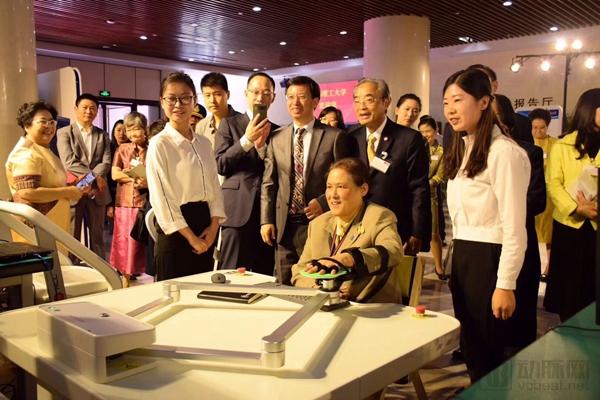
Princess Sirindhorn of Thailand Trials ZD Medical’s ArmGuider (Image source: Provided by the company)
Product, on the way
According to Wang Daoyu, in addition to ArmGuider, Zhuodao’s exoskeleton rehabilitation robot, NimBot, has also achieved critical progress. Building on the first-generation product’s mechanical design that fully conforms to the five degrees of freedom of the human shoulder, the solution has been comprehensively upgraded. Through novel structural and interaction designs, the team has reduced the use of expensive imported sensors and components, significantly lowering the bill of materials (BOM) cost. Meanwhile, NimBot delivers more powerful functionality than its predecessor and offers broader platform scalability.
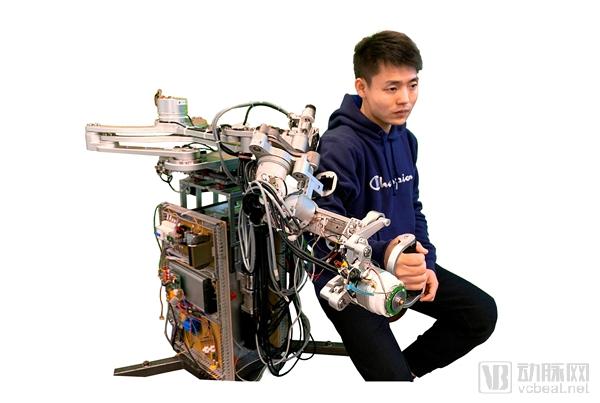
Jian Zhuo, CTO of ZD Medical, Tests Nimbot Engineering Prototype (Image source: Provided by the company)
Furthermore, building upon exoskeleton and traction-based upper-limb rehabilitation training robots, the ZD Medical team has begun expanding into additional application scenarios tailored to patients’ varying rehabilitation stages, affected limb segments, and the severity and type of functional impairments, gradually forming the initial framework of a comprehensive product portfolio for rehabilitation training.
To address lower limb functional recovery during the acute postoperative phase, ZD Medical has developed SmartSling (SS), a bedside suspended lower limb rehabilitation robot. This product utilizes powered suspension cables as the traction source, working in conjunction with limb gravity to enable fully automated, combined training of the hip, knee, and ankle joints. Featuring easy mobility, SmartSling can be used not only in rehabilitation departments but also easily brought into surgical inpatient wards. Therapists need only press a few buttons to allow patients to receive high-quality, “one-on-one” rehabilitation services early after surgery without leaving their beds. It is reported that the product has completed all research and development work and is currently in the stage of regulatory testing for medical device registration.
In addition to the extensive application of robotic-assisted technologies, ZD Medical has established intelligent interaction as another cornerstone of its series of platform technologies. Guided by this philosophy, ZD Medical independently developed a new generation of occupational therapy platform: the Intelligent OT Training System, which provides intelligent rehabilitation solutions for patients with upper limb dysfunction, hand dysfunction, and cognitive impairment. Smartcolor has intelligently upgraded the traditional rehabilitation device known as the "pegboard" by innovatively integrating a soft-light guidance system along with audio, vibration, and posture feedback systems. This enables multisensory integration training involving auditory, visual, tactile, and proprioceptive stimuli, while also improving cognitive function in patients with brain dysfunction. It is reported that the product has entered pre-mass production preparations.
Following the regulatory approval of ArmGuider, Shanghai ZD Medical Technology Co., Ltd. officially launched its innovative product line strategy. Within just a few months, nearly ten intelligent rehabilitation hardware and software products and robotics projects were formally initiated, with each currently at various stages of research and development or regulatory certification.
Capital Winter Has Two Sides: ZD Medical’s Growth Depends on Self-Sustaining Revenue Generation
“Sometimes, I even wish the winter would last a bit longer. This kind of winter brings a sense of calm, both for entrepreneurs and investors. With less hot money chasing trends and hyping concepts in the market, it may not necessarily be a bad thing for companies like ours,” Wang Daoyu told VCBeat. “When capital is limited, everyone becomes more rational and less impulsive. Our opportunity arises when we focus on diligently developing our products.”
Wang Daoyu stated that ZD Medical is currently focused on diligently developing products that truly satisfy customers, setting reasonable prices based on costs, and continuously driving new product development through sustained sales and market feedback.
In Wang Daoyu’s view, if hundreds of millions in financing are used for price and marketing subsidies, the strategies employed by internet startups could severely disrupt the entire business environment. Ultimately, prices that defy commercial logic may prevent high-quality products from being sustainably supplied to the market. Only when capital becomes less abundant, and when entrepreneurs and investors alike adopt a more measured approach toward rehabilitation robotics ventures—focusing on how products can effectively serve clinical needs, prioritizing regulatory compliance, and patiently obtaining necessary certifications before production and sales—will the rehabilitation robotics industry truly enter its springtime.
Capital can be a boon, accelerating corporate growth; yet it can also act as a stimulant, prompting reckless expansion and even leading to sudden collapse. Before embarking on his entrepreneurial journey, Wang Daoyu worked at a well-known domestic investment consulting firm, where he was responsible for investment research in the medical device sector. This invaluable experience helped him recognize that so-called “hot trends” enable speculators adept at chasing hype to secure financing, but simultaneously overdraw investors’ expectations and trust. In Wang Daoyu’s view, entrepreneurship in the medical device field is an inherently long-term endeavor, with little potential for short-term explosive growth. Starting a business in the high-end rehabilitation equipment sector is an even more protracted process, as industry development hinges on broader advancements in rehabilitation care and societal progress. Therefore, more capital is not necessarily better; appropriate funding levels can help companies remain rational and focused on steady, pragmatic execution.