

Huang Fanzi of Share Capital: Building a Medical Innovation Ecosystem Over 9 Years and Investing in 80+ Companies
Editor’s Note: This article is reprinted from Pedata, authored by Liu Quan. VCBeat has been authorized to republish it.
Introduction:
Over the 12 years since its establishment, Fenxiang Investment has focused on investments in two sectors: healthcare and broader living services. In particular, it has cultivated deep expertise in the healthcare sector, securing a significant position within China’s medical investment landscape. Even in 2018, when venture capital firms collectively slowed their investment pace, Fenxiang still invested in more than 20 healthcare projects.
In the “world” of domestic healthcare investment, Fenxiang Investment is akin to a “recluse”—rarely joining the fray in the venture capital community, yet frequently making moves and maintaining a remarkably high level of investment activity. Even in 2018, when venture capital firms collectively slowed their investment pace, Fenxiang still invested in more than 20 healthcare projects.
The “mastermind” behind all this is Huang Fanzhi, Co-founder of Fenxiang Investment and Managing Partner of its Healthcare Fund. Established in Shenzhen in 2007, Fenxiang Investment became one of China’s earliest professional venture capital firms structured as a limited partnership. In 2011, at the earnest invitation of Bai Wentao, Founder of Fenxiang Investment, Huang Fanzhi joined the firm, forming the “iron triangle” of this domestic VC alongside Bai Wentao and Cui Xinxin.
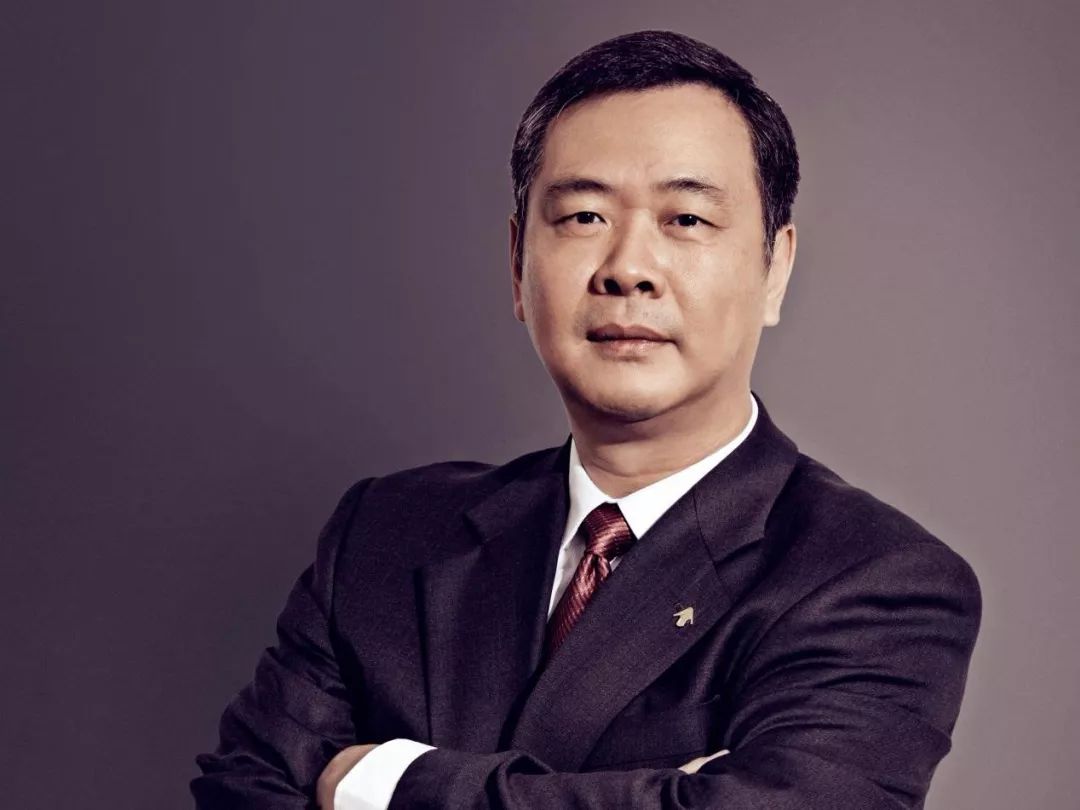
Huang Fanzhi, Co-founder of Share Capital and Managing Partner of the Healthcare Fund
Today, 12 years later, Sharing Investment has established 11 funds, with assets under management exceeding RMB 7 billion. It has invested in more than 180 companies, focusing on the healthcare and “big living” sectors. In particular, it has cultivated deep expertise in the healthcare sector for many years, securing an indispensable position in China’s healthcare investment landscape.
Back to 2010. In that year, Fenxiang Investment began venturing into the healthcare sector and, three years later, officially established its first dedicated healthcare investment fund, embarking on a path of specialization.
Huang Fanzi recalled, “At that time, there were probably no more than 20 funds in the market that were truly labeled as healthcare funds.” Six years have passed, and the number of healthcare funds on the market has now surged to at least three or four hundred, offering a clear glimpse into the fervor surrounding the healthcare sector. “Especially over the past two years, capital markets have been flush with liquidity, making fundraising relatively easy. As a result, investors have flocked to the healthcare track,” Huang Fanzi said. The influx of capital into the healthcare sector underscores its broad prospects.
As one of the earliest venture capital firms in China to focus on the healthcare sector, we have developed our own investment style through years of practice: grounded at the forefront of innovation in the healthcare industry, looking ahead to trends over the next 5 to 10 years, and focusing on products or services with genuine innovative value.
“Frontier, Future, Innovation”—these are the three words Huang Fan mentions most frequently. Currently, Fenxiang has a broad investment scope in the healthcare sector, covering subfields such as new drug development, biotechnology, innovative medical devices, and healthcare services, with an investment portfolio distinctly characterized by its focus on new drug development and biotechnology.
We consistently adhere to our investment thesis across each niche sector. For instance, in the medical device industry, despite the vast array of product categories and numerous startups, we selectively focus only on sub-sectors that align with our core investment logic, concentrating deeply on minimally invasive interventions, regenerative medicine, and human-computer interaction. Within the field of minimally invasive interventions, we have invested in leading companies such as Tianchen Medical (staplers), Pulirui (peripheral balloons), Langmai Orthopedics (bone balloons), Weimai Medical (DSA systems), Houkai Medical (ultrasonic scalpels), and Innuovo Medical.
In the realm of healthcare services, Fenxiang Capital is more bullish on specialized clinic chains. “Many large funds prefer investing in general hospitals, but general hospitals are precisely not our primary investment target,” explained Huang Fanzhi. He cited three reasons: first, general hospitals require substantial capital investment; second, they have long investment cycles; and third, they demand deep operational involvement, making them unsuitable for venture capital (VC) investment. In contrast, specialized chains—such as those in ophthalmology, dentistry, pediatrics, gynecology, medical aesthetics, and reproductive health centers—are relatively asset-light, facilitating chain expansion and scalable replication. Moreover, the competitive landscape between public and private hospitals in these specialties is relatively fair. Fenxiang Capital holds a more favorable outlook on this sector.
Over the years, the healthcare investment landscape has gradually taken shape: more than 80 healthcare companies have been invested in, including Meinian Onehealth, Buchang Pharmaceuticals, BGI Genomics, Genetron Health, Medprin Regenerative Medical Technologies, iCarbonX, Dr. Zhang Qiang’s Doctor Group, MaiBu Robotics, Mommy Knows, Zeltis Pharma, Haichang Pharmaceutical, Gusen Pharmaceutical, Huajin Pharmaceutical, Zenith Pharma, Fang En Medicine, Sorrento Therapeutics (Suoyuan Bio), Fapon Biotechnologies, ACROBiosystems, and Weidian Bio, among many other star projects, steadily establishing its prominent position in the industry.
When discussing the pitfalls in the healthcare sector in recent years, Huang Fanzi believes there have been three major bubbles. The first was the once-booming internet healthcare industry. “Three years ago, internet healthcare emerged and became extremely popular, but over the past two years, it has gradually faded from public discourse.” Huang Fanzi witnessed the brief “crazy history” of internet healthcare. In recent years, more than 200 billion yuan in funding from venture capital (VC) and private equity (PE) firms was “burned” in China’s internet healthcare sector, yet few standout companies emerged. “In the past, people wishfully believed that the internet could disrupt everything. However, current realities demonstrate that the inherent nature of healthcare makes it difficult for internet-based healthcare to rapidly disrupt traditional services, unlike consumer-oriented internet platforms.”
The second bubble is healthcare big data. With the success of internet giants such as Alibaba and Tencent, people have gradually recognized the value of big data. “However, we also see that there are still very few outstanding big data companies in the healthcare sector,” said Huang Fanzhi. He believes that a good big data company must at least accomplish three steps: first, the ability to acquire data sources; second, the ability to transform data sources into products; and third, the ability to realize the commercial value of those products. Currently, so-called healthcare big data companies often possess only the first capability—merely acquiring some data sources. Fewer than 10% can complete the second step, and possibly fewer than 1% can achieve the third. “We have invested in two big data companies, Jianyi Technology and Anjieli, both of which have truly achieved a closed-loop commercial model for big data,” said Huang Fanzhi.
Medical AI, currently a red-hot sector, may also be a trap in Huang Fanzi’s view. He noted that well-known AI healthcare companies on the market now command exceptionally high valuations, often reaching billions of yuan; even relatively mediocre firms can easily secure valuations in the hundreds of millions, which is staggering. The “AI + Healthcare” concept has been heavily hyped. Many companies lack viable business models, and the sector suffers from strong homogeneity, with players largely burning through investors’ capital. If the capital market environment deteriorates, these businesses will struggle to sustain operations. Huang Fanzi predicts that investment institutions that blindly chase hot trends without regard for valuations will face the awkward predicament of being unable to exit their investments in the future.
Furthermore, circulating biomarker testing is another trend that warrants caution. While cell-based and DNA-based circulating tests are currently gaining significant traction, Huang Fanzhi expresses some concerns. “For instance, circulating tumor cell (CTC) detection can identify early-stage tumors. It sounds promising and is theoretically sound, but the technology is not yet mature; its current accuracy has not reached a level suitable for commercial application.” In this regard, Huang Fanzhi stated that Fenxiang Investment will maintain close attention to this sector, seeking the right timing to enter the market, rather than joining the current rush to chase this trend.
In 2018, the “fundraising crunch” swept across the entire venture capital and private equity industry. Huang Fanzhi believes that more than two-thirds of VC and PE firms may disappear in the next two years due to fundraising difficulties. In 2018, Sharing Investment began raising a medical-focused Phase III fund with a target size of RMB 1.5 billion, and has successfully secured half of the capital so far, with full closure expected in the first half of 2019. Huang Fanzhi frankly stated that this fundraising cycle has been significantly longer than anticipated, but it is also foreseeable that VCs surviving these challenging years will gain greater opportunities.
As most people believe, the most critical factors in investment are keen insight and precise judgment. However, in Huang Fan’s view, the ability to make judgments amid ambiguity is arguably more important for early-stage investing. “If you rely purely on rational analysis in early-stage investing, it is actually difficult to achieve strong results,” he explains. Early-stage investing differs from private equity (PE); at the PE stage, investors focus on metrics such as project scale, financial figures, and annual revenue growth. In contrast, such data are often unavailable at the early stage.
Huang Fan argued that early-stage projects are inherently fraught with numerous flaws. Applying standards in a “dogmatic” manner to evaluate such projects would likely cause investors to miss out on many promising opportunities. “I have always maintained that it is easy for me to reject any early-stage project; I can readily come up with a hundred reasons to do so at any time. However, finding one compelling reason to invest in it is far more difficult.”
“In the past, everyone was preoccupied with investing and fundraising, and many did not regard post-investment management as a key consideration.” Huang Fanzi believes that the era of “investing without oversight” has come to an end. Taking advantage of the industry’s “harsh winter,” he has shared internal requirements urging all investment managers and partners to thoroughly review their existing portfolio companies, engage in more frequent communication with these enterprises, provide strategic guidance on directional matters, and facilitate resource connections. These efforts aim to help portfolio companies navigate this challenging period with stability.
Regarding exit strategies, Fenxiang Investment, as an early-stage investment firm, does not place excessive reliance on domestic IPOs for exits. Huang Fan’s analysis indicates that there are currently over 10,000 funds in the market, the vast majority of which are private equity (PE) funds; a rough estimate suggests that PE funds account for approximately 90%, while venture capital (VC) firms likely number fewer than 1,000. With IPO regulations tightening, this means that institutions face severe challenges in exiting their investments. Even if an IPO is successfully completed, there is still a risk of valuation inversion, resulting in little to no profit.
“We generally invest at the early stage. Due to the fixed term of our fund, it is difficult to wait until a portfolio company’s domestic IPO for exit.” After years of practice, Fenxiang Investment has developed a unique combination of exit strategies—including exiting in subsequent financing rounds, exits via mergers and acquisitions (M&A), and overseas IPOs. “For example, if we invest in the Pre-A round and achieve approximately a 10-fold return by the B round, we may choose to exit. We do not insist on holding until IPO, as that is often impractical,” said Huang Fanzhi.
Navigating Market Cycles: A Persistent Challenge for Investment Firms. Over the past 12 years, Fenxiang Investment has remained an active and vibrant player in China’s venture capital and private equity sector. Regarding the secret to enduring success, Huang Fanzi identifies three critical factors.
First, it is essential to have forward-looking judgments on future trends. At Share Investment, we have always placed great emphasis on trend analysis and in-depth research into industry segmentation. This diligent effort ensures that we do not stray from the right direction. Many venture capital (VC) and private equity (PE) firms have faded into obscurity, primarily because they invested in sectors that did not represent the future, ultimately being left behind by the times. “We have also observed that some healthcare-focused investment institutions are still pouring money into sectors that appear increasingly traditional. In all likelihood, their ultimate fate will be elimination,” Huang Fanzi remarked with emotion.
Second, we have continuously strengthened our team. At the inception of Fenxiang Investment, none of the team members had a professional medical background. Therefore, Huang Fan began building a specialized healthcare investment team by recruiting investment managers, growing from one or two individuals to over ten members, and eventually attracting partners with profound professional expertise. Currently, Fenxiang Investment has two healthcare fund partners, Du Tao and Mao Xianguang, both of whom have long been deeply engaged in the healthcare sector and are recognized as senior industry experts. The core investment managers also possess strong professional backgrounds and extensive investment experience, enabling them to operate independently and effectively.
Third, building an ecosystem. Huang Fan revealed that the reason Sharing Investment has never lacked deal flow in recent years is attributable to the establishment of a series of platforms. It is understood that Sharing Investment collaborated with CEIBS (China Europe International Business School) to launch China’s first entrepreneurship course focused on smart healthcare. Each cohort comprises over 60 medical entrepreneurs, and the program has now completed its fourth session, bringing a substantial volume of high-quality projects to Sharing Investment. Furthermore, Sharing Investment has established collaborations with Peking University, Southern University of Science and Technology, and the Chinese Academy of Sciences system, gathering a large pool of outstanding entrepreneurs. Clearly, this approach differs significantly in efficiency from going it alone or casting a wide net in search of projects.
In 2019, the venture capital industry faced an uncertain outlook, with a pervasive sense of pessimism. In response, Huang Fan candidly stated that he would adopt a more cautious approach. The firm adjusted its strategy for the following two years to be more conservative, focusing on both the volume and pace of investments. “Nevertheless, we must remain active during this phase rather than coming to a halt. After all, investing is akin to sowing seeds; if you skip a season of planting, you will naturally reap no harvest in the autumn. Moreover, investment is inherently counter-cyclical. Truly outstanding investors should position themselves during downturns and exit during peaks.”