Synthetic Biology: Pioneering the Third Biotechnology Revolution – Industry Overview and Product Landscape
This excerpt is taken from Probe Capital’s “2019 Synthetic Biology Industry Research”
Synthetic biology is a discipline that integrates biological science with engineering to design and construct biological genomes and systems endowed with novel biological functions. It is anticipated that synthetic biology will be applied to address challenges in energy, materials, health, and environmental protection, with certain achievements already realized.
Multiple authoritative institutions and researchers have offered definitions of synthetic biology, most emphasizing its engineering characteristics and the creation of novel functions. Among these, the definition provided by the Synthetic Biology Organization website (www.syntheticbiology.org) is the most widely circulated: Synthetic biology refers to the design and construction of new biological parts, devices, and systems based on established principles and existing knowledge; it also involves the redesign of natural biological systems to serve specific human purposes.
The primary research areas of synthetic biology are categorized into three levels: first, constructing novel regulatory networks using existing natural biological modules to exhibit new functions; second, artificially synthesizing genomic DNA via de novo synthesis methods; and third, artificially creating entirely new biological systems and even life forms. Synthetic biology has two main applications: one is efficient production through artificial cell factories, termed “build to use”; the other is understanding fundamental biological principles through artificial life, termed “build to understand.” Therefore, some scholars refer to this technology as “gaining knowledge through construction.”
Jay Keasling, Professor of Chemical Engineering at the University of California, Berkeley, posits that synthetic biology is the engineering of “biology,” much like “physics” underpins “electrical engineering” and “chemistry” underpins “chemical engineering.” The Royal Society of the United Kingdom defines synthetic biology as an emerging discipline focused on designing and constructing novel artificial metabolic pathways, biological organisms, and devices, or re-engineering existing natural systems. The NSF-funded Synthetic Biology Engineering Research Center (SynBERC; http://www.synberc.org/) characterizes synthetic biology as a field integrating science and engineering, with the aim of designing and constructing innovative biological functions and systems. Its definition should be grounded in its key characteristics: predictable, off-the-shelf parts and devices assembled from these parts using universal connection standards; robust biological chassis systems (such as yeast and Escherichia coli) that accommodate these parts and devices; the ability to achieve complex functionalities by assembling parts and devices within biological systems according to standardized combinatorial rules; and the maintenance of open-source accessibility and continuous updates for parts, devices, and biological systems.
I. Major Research Directions in Synthetic Biology
Synthetic biology encompasses a wide range of research directions, among which the industrial application of cell factories engineered to synthesize specific products via constructed metabolic pathways is the most prevalent.
(1) Cell factories for the production of substances
Natural organisms already possess a wide variety of metabolic pathways capable of breaking down or synthesizing numerous substances. Synthetic biology aims to modify or even create metabolic pathways in commonly used biological systems, such as Escherichia coli or yeast, based on the principles of existing metabolic pathways, to achieve efficient synthesis of specific compounds. For instance, inserting genes encoding xylose reductase and xylitol dehydrogenase from Pichia stipitis into the yeast genome enables yeast to utilize xylose for ethanol production.

Schematic Diagram of Cell Factories | Probe Capital
(2) Cell Factories for Monitoring Substances in the Environment
During metabolic reactions, organisms produce gases (such as carbon dioxide generated by yeast respiration) or other substances capable of altering the acidity or alkalinity of their environment. By leveraging this characteristic of organisms in combination with the ability to sense specific environmental substances, it is possible to monitor the concentration of target substances in the environment. Typically, this is achieved by constructing biosensors within cell factories using metabolic pathways that output detectable signals, thereby enabling the detection of substance concentrations in the environment.
Cell factories based on biosensors hold promising applications in environmental monitoring, the food industry, and the fermentation industry. In environmental monitoring, a biosensor is typically assembled to convert pollutants in the environment into signals that are easy to detect and quantify, thereby enabling rapid and continuous monitoring of pollution levels.

Monitoring Environmental Conditions in Cell Factories: Compiled by Probe Capital
SiyaWakin et al. developed a microbial BOD sensor using Trichosporon and Bacillus species to monitor the level of organic pollution in water bodies and wastewater treatment plants. J. Aleksic and colleagues from the University of Edinburgh, UK, designed a cell factory capable of detecting arsenic ions, a major water pollutant. They leveraged the characteristic of Escherichia coli whereby gene expression is inhibited in the presence of arsenic ions to construct a corresponding sensing system. In the presence of arsenic ions, this system alters cellular metabolic responses, ultimately leading to a change in the pH of the solution. The concentration range of arsenic ions in the system can be determined by observing the color change of pH test strips.
In 2002, Cello et al. chemically synthesized a 7.5-kb poliovirus genome. In 2003, Smith et al. synthesized the approximately 5.4-kb genome of the φX174 bacteriophage. Subsequently, larger-scale genomes of various organisms, such as Mycoplasma, bacteria, and yeast, were synthesized.
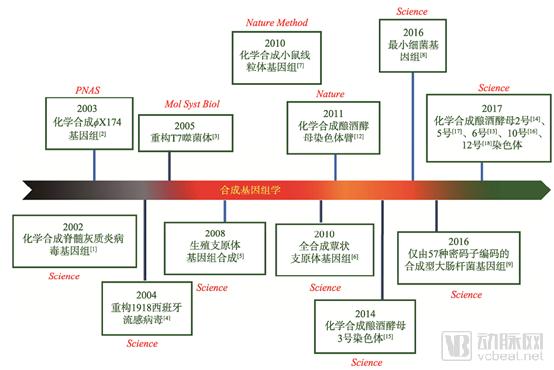
Organisms with Completed Synthetic Genomes Image Source: CNKI
The most fundamental objective of synthetic genomics is the chemical synthesis of replicable genomes, which correspond to an organism’s capacity for autonomous growth and reproduction. Higher-level objectives include genome minimization, stabilization, and the introduction of modular elements that facilitate convenient genetic modification. Achieving these goals yields organisms with smaller genomes, simplified metabolism, and more stable growth, making them better suited for engineered production.
Simplified genomes are achieved by removing genomic regions that are irrelevant or only weakly correlated with organismal growth, thereby reducing genome size while ensuring no adverse impact on the organism’s growth and reproduction. In 2016, Venter’s team conducted multiple rounds of design, synthesis, and testing on the synthetic Mycoplasma mycoides genome, ultimately reducing its size from 1.08 Mb in 2010 to 531 kb.
A stabilized genome refers to a genome in which unstable elements left behind during natural evolution (such as transposons and subtelomeric regions) have been removed, thereby reducing genomic mutations and achieving more stable replication and expression. Introducing operable elements for convenient genome modification involves artificially inserting functional sequences to facilitate more efficient and convenient genome engineering. For instance, over 3,000 loxPsym sites were inserted into the synthetic yeast genome, enabling routine genome modifications such as fragment insertion, duplication, and deletion at these sites.
Gene editing typically refers to the targeted modification of specific genes in mammals, involving operations such as deletion and insertion of DNA fragments. Gene-editing tools have undergone three generations of technological evolution: zinc-finger nucleases (ZFNs), transcription activator-like effector nucleases (TALENs), and the CRISPR-Cas9 system, which consists of CRISPR (clustered regularly interspaced short palindromic repeats) and Cas9 protein (CRISPR-associated protein 9). Compared with the first two generations, the CRISPR-Cas9 system is more convenient to design; it only requires the design of a guide RNA complementary to the target DNA sequence to achieve editing of the specified region.
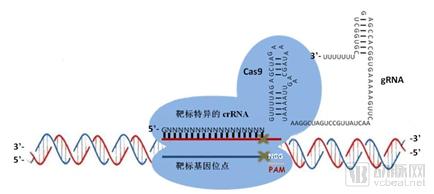
Schematic Diagram of CRISPR-Cas9 Knockout: crRNA in gRNA Binds to the Target Gene to Induce DNA Cleavage
In 2005, the research group of C. A. Voight developed an imaging system using Escherichia coli, which comprised two main components: light sensing and image development. The researchers constructed a photosensor capable of detecting light stimuli using phytochromes, and employed transcriptional regulation mechanisms to convert light signals into downstream gene expression, thereby catalyzing the color change of S-Gal to achieve image development.

Imaging the word “nature” using engineered Escherichia coli. Image credit: Nature
In 2017, C. A. Voight’s research group reported a color system capable of sensing red, blue, and green light. By modulating the intensities of red, blue, and green light, the system induces varying expression levels in corresponding tri-color gene expression systems, thereby displaying a range of colors.
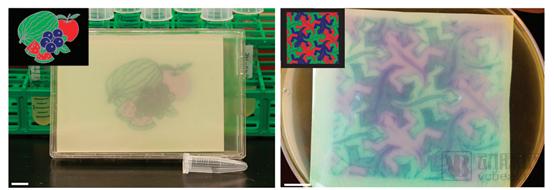
Imaging Results of the RGB System in Escherichia coli. Image Source: Nature Chemical Biology
II. Applications of Synthetic Biology
In leading nations of technological innovation such as the United States, the United Kingdom, Germany, and Japan, there is a substantial number of physical entities in the field of synthetic biology, including research centers, platforms, and laboratories. Statistical data from the Wilson Center’s Synthetic Biology Project shows that, as of February 2016, there were approximately 565 synthetic biology entities worldwide (including companies, universities, research institutes, and laboratories), primarily concentrated in the United States (388), the United Kingdom (69), Germany (41), China (27), and Japan (21). These institutions are currently providing, or are poised to provide, strong support to the industrial biotechnology sector.
In 2006, the U.S. National Science Foundation invested $20 million to establish the Synthetic Biology Engineering Research Center (SynBERC), with participation from institutions such as Harvard University, the Massachusetts Institute of Technology (MIT), the University of California, Berkeley, and the University of California, San Francisco. The center’s objectives were to construct biological systems using standardized sensors, actuators, pathways, and logic-gene circuits; to train engineers in the field of synthetic biology; and to actively engage policymakers and the public in discussions on the societal and governance issues related to synthetic biology. After the National Science Foundation ended its support for SynBERC, the Engineering Biology Research Consortium (EBRC) was established on this foundation.
The UK government has established seven interdisciplinary Synthetic Biology Research Centres and one industry centre, forming a national comprehensive research network. The UK Centre for Synthetic Biology and Innovation (SynbiCITE) is a knowledge and innovation hub for synthetic biology, funded by industry and leading synthetic biology technology development projects.
Several universities and research institutes in China have successively established related research centers (laboratories). Examples include the Key Laboratory of Synthetic Biology established by the Chinese Academy of Sciences, and interdisciplinary centers formed by Peking University, Tsinghua University, and other institutions. In recent years, governments at all levels have actively supported the development of infrastructure and innovation platforms for synthetic biology, such as the “National Center for Technological Innovation in Synthetic Biology” planned to be jointly built by Tianjin Municipality and the Chinese Academy of Sciences, and the “Major Scientific and Technological Infrastructure for Synthetic Biology Research” currently being planned in Shenzhen.
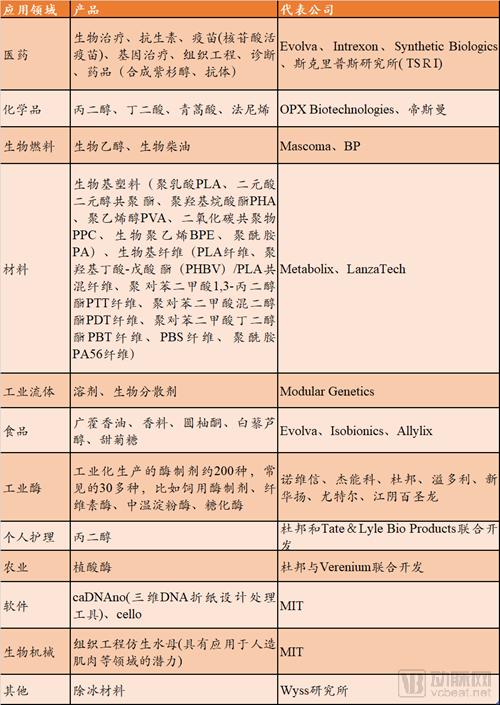
Synthetic biology has a wide range of applications, with synthetic biology products already on the market or under development in fields such as healthcare, chemicals, energy, materials, food, and agriculture. Among these, pharmaceuticals, chemicals, and biofuels are the key focus areas for product development.
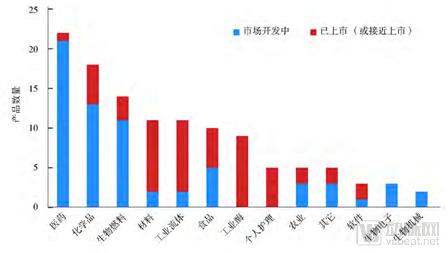
Number of Product Developments in Global Synthetic Biology Subsectors, 2015 Source: Woodrow Wilson International Center for Scholars
Application AreasProductOn Behalf of the Company
Compiled from public sources by Probes Capital
III. Investment Landscape in Synthetic Biology
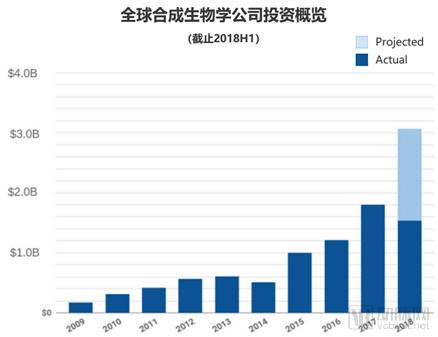
Image source: Synbiobeta
From 2012 to 2016, global investment in synthetic biology companies maintained a consistent upward trend, with synthetic biology startups cumulatively securing nearly $4 billion in venture capital. During this period, the average deal size for venture capital investments in the synthetic biology sector was $28 million, and ten companies completed financing rounds of $100 million or more.
In the first half of 2018 alone, global synthetic biology companies raised $1.575 billion in funding. These investments spanned not only general technology areas such as gene synthesis, computational tool development, and bioengineering platforms, but also applied research fields including pharmaceuticals and food. Investment mechanisms were diverse, encompassing startup financing, initial public offerings (IPOs) by listed companies, and government funding supporting corporate R&D.
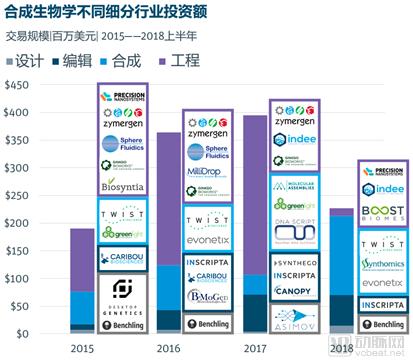
Image source: Silicon Valley Bank
There have been multiple investment deals in the fields of synthetic biology design, CRISPR gene editing, synthesis, and bioengineering. In 2018, there were a total of nine investment transactions, with a total transaction value exceeding $700 million.
Computational design (protein structure prediction, AI, software) significantly contributes to improving the success rate of metabolic pathway construction and reducing labor costs. Synthorx, a company specializing in computational design, went public on the Nasdaq in December 2018, raising $131 million. In its prospectus, Synthorx stated that it planned to conduct research on THOR-707 for use as a monotherapy for solid tumors and in combination with an immune checkpoint inhibitor. Benchling raised $14.5 million in Series B financing in June 2018, led by Benchmark (with three investors in total).
CRISPR gene-editing technology has greatly facilitated the engineering of mammalian cell genomes. Inscripta is a gene-editing company that has developed a family of CRISPR enzymes (known as MADzymes), customizable nucleases, and a comprehensive suite of gene-editing tools (including software, instruments, and reagents), significantly enhancing the speed and efficiency of gene editing. Inscripta has completed four rounds of financing, raising a total of $110 million. It secured $55.5 million in Series C funding in February 2018 and an additional $30 million in Series C funding in December 2018.
Synthetic DNA/RNA technology enables the production of custom-designed DNA/RNA sequences, with emerging companies significantly reducing production costs through technological innovations. Twist Bioscience went public on the Nasdaq in November 2018, completing a $70 million IPO. Greenlight Biosciences and Evonetix both secured over $100 million in funding in 2018.
Bioengineering introduces designed, synthetic, and engineered genes into cell factories for production; related companies Zymergen and Ginkgo Bioworks both secured over $100 million in investment in 2018.
IV. Startups in Synthetic Biology
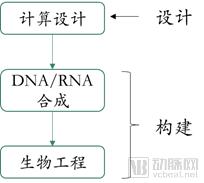
The artisanal, workshop-style production of cell factories results in excessive costs and low efficiency, making improved manufacturing efficiency a key focus for startups. In recent years, a wave of synthetic biology startups has emerged that master and apply emerging tools. Based on the cell factory production workflow—designing and constructing engineered strains—these startups can be categorized into three types: computational design, DNA/RNA synthesis, and bioengineering.
Key Tools in Synthetic Biology | Image Source: Compiled based on the Silicon Valley Bank (SVB) report
(1) Computational Design Startups
Powerful computational design can significantly reduce the workload of screening experiments and also support the optimization of cell factories.
Arzeda
Headquartered in Seattle, USA, the company is characterized by its use of computational simulations to model enzyme properties, predict protein energy, and map metabolic pathways. In February 2009, it received seed funding from the Washington Research Foundation. In July 2017, it secured $12 million in Series A financing led by OS Fund (with a total of five investors). In November 2017, it raised an additional $3.2 million in Series A funding from Universal Materials Incubator and Casdin Capital.
Benchling
Headquartered in San Francisco, USA, the company is characterized by its development of a research platform that enables scientists to design, share, and document experiments through an intuitive interface. In February 2014, it secured $900,000 in angel funding from Y Combinator. In April 2015, it raised $5 million in seed funding led by Andreessen Horowitz (with three investors in total). In October 2016, it obtained $7 million in Series A funding from Thrive Capital. In June 2018, it raised $145 million in Series B funding led by Benchmark (with three investors in total).
Asimov
Based in Cambridge, USA, the company is characterized by its use of machine learning to design genetic circuits. In September 2017, it raised $4.7 million in seed funding led by Andreessen Horowitz, with participation from a total of four investors.
Desktop Genetics
Headquartered in London, UK, the company is characterized by its use of AI to identify biological variables that influence CRISPR gRNA design. From October 2012 to the present, it has undergone 11 rounds of financing, securing a total investment of approximately $6.9 million. The most recent round was an equity crowdfunding campaign in October 2017, which raised £790,000, with investors including the leading sequencing company Illumina.
Cyrus Biotechnology
Based in Seattle, Washington, the company has commercialized RoSeTA, a protein design software developed by the Baker Laboratory at the University of Washington. Its cloud platform, CyrusBench, is designed to enable general biotechnology scientists to easily carry out protein design. In May 2015, it raised $850,000 in seed funding from W Fund and WINGS; in April 2016, it secured $535,000 through debt financing; in February 2017, it obtained $1 million in venture capital; and in July 2017, it closed an $8 million Series A round led by Trinity Ventures, with participation from a total of four investors.
LabGenius
Based in London, UK, the company leverages artificial intelligence and robotics to develop novel proteins, primarily for creating new materials such as adhesives, and even for producing anti-aging health products. Its “EVA” AI platform is designed to discover high-value protein components. In November 2017, it secured $3.7 million in seed funding led by Acequia Capital and Kindred Capital.
Synthorx
Headquartered in California, USA, Synthorx specializes in a protein platform based on unnatural amino acids. The company aims to synthesize new amino acids using two synthetic novel bases, X and Y, thereby optimizing proteins through site-specific modifications to enhance the pharmacological properties of these therapeutics. Its most advanced candidate, THOR-707, is an interleukin-2 (IL-2) variant designed to kill tumor cells by expanding CD8+ T cells and natural killer (NK) cells without causing vascular leak syndrome (VLS). The company went public on the NASDAQ in December 2018, completing a $131 million IPO under the ticker symbol “THOR,” with a total market capitalization of $451 million. In April 2014, it raised $6 million in Series A financing led by Avalon Ventures (with two investors in total). In July 2016, it secured $10 million in Series B financing led by RA Capital Management. In April 2018, it raised $63 million in Series C financing co-led by Avalon Ventures and OrbiMed.
DNA/RNA synthesis technology enables the in vitro production of DNA/RNA, serving as an essential step in establishing cell factories. Startups aim to optimize the accuracy, length, and cost-effectiveness of synthesized DNA/RNA.
Twist Bioscience
Headquartered in San Francisco, the company’s core platform features proprietary technology that pioneers a new method for manufacturing synthetic DNA by “writing” DNA onto silicon chips. It went public on the Nasdaq in November 2018, completing a $70 million IPO under the ticker symbol TWST, with a total market capitalization of $616 million. From February 2014 to the present, it has undergone eight rounds of financing, securing approximately $253 million in total investment.
Greenlight Biosciences
Headquartered in Boston, USA, the company leverages reusable enzymes derived from dead cells to produce RNA. The resulting double-stranded RNA (dsRNA) can be used to control agricultural pests and diseases, reduce populations of disease vectors (such as malaria-transmitting mosquitoes), and manufacture RNA vaccines. From August 2013 to the present, it has completed six rounds of financing, raising a total of approximately $850 million. The most recent round was a $50 million Series E investment led by Baird Capital and S2G Ventures in January 2019.
Evonetix
The company leverages semiconductor technology to synthesize DNA, integrating reaction sites on the surfaces of multiple chips to control the synthesis process, followed by error correction of the synthesized DNA. In January 2018, it secured $12.3 million in venture capital led by Data Collective (DCVC) and Draper Esprit, with participation from a total of six investors. In July 2018, it received a $1.3 million grant from Innovate UK.
Molecular Assemblies
Headquartered in San Diego, USA, the company leverages proprietary enzymes for template-free synthesis of long-fragment DNA. In December 2016, it secured $2.3 million in seed funding from seven investors, including Agilent Technologies and Keshif Venture. In August 2017, it raised an additional $4.5 million.
DNA Script
A French startup that performs template-free DNA synthesis using proprietary enzymes. From August 2015 to the present, it has undergone five rounds of financing, securing total investments of approximately $240 million. In its most recent funding round in July 2018, it received a $2.7 million grant from Bpifrance, with investors including the sequencing giant Illumina.
Synthomics
Based in the San Francisco Bay Area, the company has developed a highly automated RNA and DNA synthesizer called the “Green Machine,” which can simultaneously synthesize oligonucleotides in 1,536 wells. This represents a significant throughput increase compared to standard 96-well formats, while offering the advantages of lower costs and shorter turnaround times. In August 2014, it secured $1.1 million in grant funding, and in December 2016, it received venture capital investment from TSVC (amount undisclosed).
Synbio Tech (泓迅科技)
The independently developed Syno®3.0 synthesis platform is a next-generation chip-based DNA synthesis platform. By integrating electrochemical technology, it enables the simultaneous synthesis of tens of thousands to hundreds of thousands of primers on a single semiconductor chip. The platform provides high-quality DNA fragments (including primers, elements, and genes), as well as services for whole-gene synthesis, pathway synthesis, gene pool synthesis, oligonucleotide pools (Oligo pools), and the construction of various mutant libraries.In 2014, it received Series A investment from BGI Tech (amount undisclosed); in July 2016, it secured tens of millions in Series B funding from Suzhou Kaifeng Venture Capital, Xie Li Investment, and Yahui Precision Medicine Fund.
Biotechnology introduces DNA/RNA or editing tools into cells or organisms.
Precision NanoSystems
Founded in 2010 and headquartered in Vancouver, the company maintains a global sales office in South San Francisco. Its products consist of instruments for the design, testing, and production of nanoformulations, which are used in the development of nanomedicines.In September 2015, the company secured $13.4 million in Series A financing, led by 5AM Ventures and Telegraph Hill Partners (with a total of three investors). In June 2018, it raised $6 million in Series B financing from Rising Tide, 5AM Ventures, and Telegraph Hill Partners.
Zymergen
Headquartered in Emeryville, California, the company leverages AI and automated robotics to rapidly and efficiently boost the yield of target products in cell factories, which can be applied in numerous fields such as biofuels, plastics, and pharmaceuticals. In January 2014, it raised $2 million in seed funding led by Genoa Ventures (with a total of six investors). In June 2015, it secured $42.1 million in Series A financing led by Data Collective (DCVC) (with a total of ten investors). In October 2016, it obtained $130 million in Series B funding led by SoftBank (with a total of ten investors). In December 2018, it raised $400 million in Series C financing led by the SoftBank Vision Fund (with a total of eight investors).
Sphere Fluidics
Headquartered in Cambridge, UK, the company has developed 40 patented products, including biochips and specialized chemical reagents. It has established a microfluidics-based single-cell analysis technology platform for R&D and manufacturing, encompassing a high-viability microfluidic system for single-cell droplet encapsulation as well as systems for droplet-based single-cell testing and isolation. This platform enables the screening of millions of cells per day to identify rare diseased cells for research, diagnostic, and therapeutic applications. Since February 2013, the company has completed six rounds of financing, securing total investments of approximately $15 million. Most recently, in November 2017, it received a €1.6 million grant from Eurostars.
Ginkgo Bioworks
Headquartered in Boston, USA, the company provides customized microorganisms for the food industry, such as supplying flavorings to ingredient manufacturers and fragrances to perfume companies. Its flagship product is rose fragrance produced via genetically engineered (GE) ingredients using yeast and bacteria. From June 2014 to December 2018, it underwent five rounds of financing, securing a total investment of approximately $429 million. In its most recent funding round in December 2017, it raised $275 million in Series D financing from five investors, including Bill Gates and Cascade Investment.
Biosyntia
Based in Denmark, it provides unique fermentation solutions for chemical manufacturing companies. In May 2015, it raised $1.9 million in seed funding from Novo Ventures and Novo Holdings. In May 2018, it secured €4 million in Series A financing, led by Sofinnova Partners with participation from Novo Seeds.
Millidrop
Based in Paris, France, the company has developed an integrated instrument capable of high-throughput condition setup, as well as automated microbial culture and multi-trait analysis. It secured €1 million in seed funding in February 2016, received a €50,000 grant led by the EASME (EU Executive Agency for SMEs) in August 2017, and obtained a €1.9 million grant in September 2018.
Indee Labs
Headquartered in San Francisco, USA, the company has developed hardware for gene delivery that can be used in cell therapies for cancer, offering advantages such as high yield and minimal interference with immune cells. From March 2017 to December 2018, it underwent five rounds of financing, securing a total investment of approximately USD 51 million. Its most recent funding was received in August 2018, when it obtained a grant of AUD 500,000 from the NSW Medical Devices Fund.
Boost Biomes
Based in San Francisco, USA, the company has developed a microbial discovery platform that serves as the foundation for its product R&D, with applications in agriculture and medicine. In February 2018, it raised $2.1 million in seed funding led by Nimble Ventures and Viking Global Investors (with three investors in total). In April 2018, it secured convertible notes from SVG Partners (amount undisclosed).