

China-US Benchmark Rehabilitation Hospitals Comparison: Standards and Talent Development Remain Key Challenges
Against the backdrop of Chinese industries narrowing the gap with developed countries in Europe and America, the rehabilitation industry is poised for rapid growth. VCBeat will intensify its coverage of the rehabilitation sector and invites experts, enterprises, and hospitals across the rehabilitation value chain to contact us to strengthen collaboration.
Shirley Ryan AbilityLab (formerly the Rehabilitation Institute of Chicago, or RIC; hereinafter referred to as SRAlab) and the China Rehabilitation Research Center are the leading rehabilitation hospitals and research institutions in the United States and China, respectively. As mentioned in previous articles, there remains a significant gap between China and the United States in talent development within the rehabilitation field. As the premier rehabilitation hospitals in their respective countries, how do they differ in terms of medical services, education, and scientific research? VCBeat (WeChat ID: vcbeat) provides further analysis.
Introduction to the Best Rehabilitation Hospitals in China and the United States
Shirley Ryan AbilityLab
In 1954, SRAIab was established in Chicago, Illinois, in the Midwestern United States. Its founder, Dr. Paul B. Magnuson, a renowned orthopedic surgeon, dedicated himself to the treatment and care of individuals with disabilities in response to the large number of trauma patients after World War II.
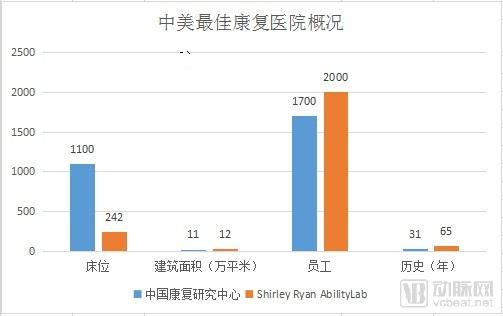
In 2016, with donations and fundraising efforts from the U.S. non-profit organization Pathways, the new hospital SRAIab was built at a cost of $550 million. The hospital building has a total of 27 floors.With a gross floor area of over 110,000 square meters and 242 beds—60 more than the original RIC—the facility has seen a 40% increase in patient volume.。
According to the hospital rankings by the authoritative U.S. magazine U.S. News & World Report, SRAlab, a nonprofit rehabilitation hospital located in Chicago, Illinois, ranked first among rehabilitation hospitals nationwide in 2018. This marks the 28th time since 1991 that it has topped the list for rehabilitation hospitals. Currently, SRAlab employs more than 2,000 researchers, clinicians, and staff members.
China Rehabilitation Research Center
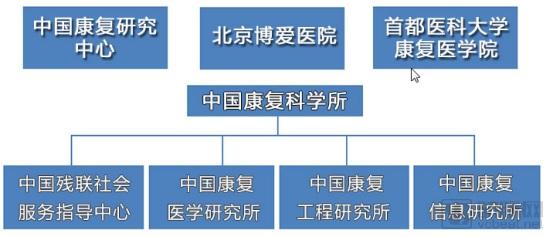
Organizational Structure of the China Rehabilitation Research Center
China Rehabilitation Research Center was established in October 1988. As a public institution under the direct administration of the China Disabled Persons’ Federation, it primarily undertakes multifaceted rehabilitation work, including rehabilitation medical services, rehabilitation research, professional training, community guidance, and international exchanges. After 30 years of exploration and development, the China Rehabilitation Research Center has grown to employ more than 1,700 staff members. Among them, there are 1,412 technical personnel, accounting for 81.15% of the total workforce; 89 administrative staff, representing 5.11%; 239 logistical support staff, comprising 13.74%; and 674 contract-based employees, making up 38.74% of the total staff.
Beijing Bo'ai Hospital, affiliated with the China Rehabilitation Research Center, is a public institution funded by the central government. It has 1,100 authorized beds. Beijing Bo'ai Hospital boasts numerous advantages, including its long history, large operational scale, comprehensive rehabilitation modalities, well-established rehabilitation processes, advanced rehabilitation models, a team of renowned rehabilitation experts, and extensive domestic and international collaborations.
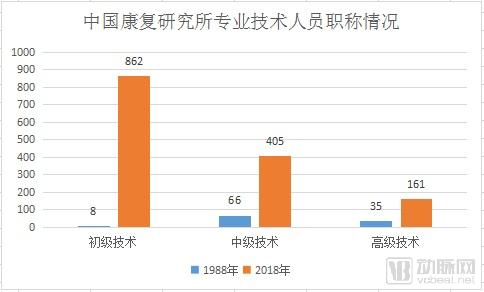
Professional Title Distribution of Technical Staff at the China Rehabilitation Research Center
Emphasis on research is a key factor in keeping both hospitals at the forefront.
《Among the 152 researchers at the top-ranked rehabilitation hospital in the United States, biomedical engineering dominates, with university-industry talent collaboration being key.》states that, according to data from the SRAlab official website, the hospital comprises five major laboratory categories and 22 subordinate specialized laboratories, including the Hand and Arm Laboratory, Leg and Foot Laboratory, Strength and Endurance Laboratory, Speech and Cognition Laboratory, and Pediatric Laboratory. Meanwhile, more than 340 research studies are being conducted concurrently.
Over the past 30 years, the China Rehabilitation Research Center has undertaken a total of 990 research projects, including several major scientific research initiatives, with cumulative research funding amounting to RMB 135 million. The center has published 3,241 papers in national-level journals and 237 articles in foreign languages indexed by SCI/EI. It has been granted 24 national invention patents and 35 utility model patents, and has received 36 awards for scientific and technological achievements.
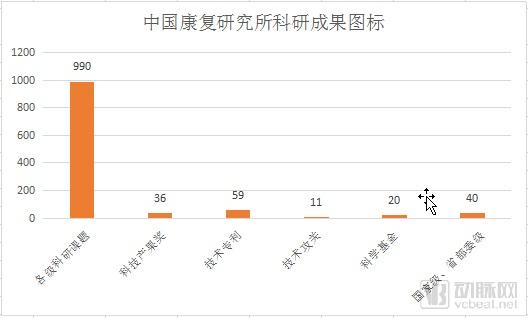
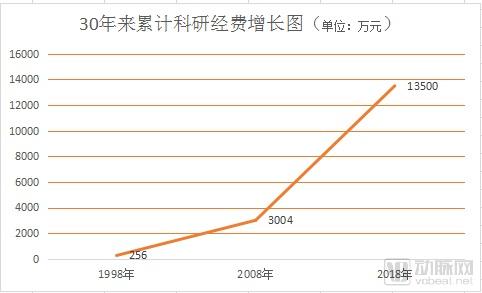
Data Source: China Rehabilitation Research Center
The China Rehabilitation Research Center also featuresChina Institute of Rehabilitation EngineeringandInstitute of Rehabilitation Information。
China Rehabilitation Engineering InstitutePrimarily engaged in the research, development, production, and sales of rehabilitation training equipment for individuals with disabilities and the elderly; integrates clinical practice to introduce and develop new technologies in prosthetics and orthotics; provides fitting services for various prostheses and orthoses for individuals with limb disabilities; and concurrently undertakes teaching responsibilities for the “Rehabilitation Engineering” course at the Seventh School of Medicine, Capital Medical University.
Over the years, in collaboration with the Department of Biomedical Engineering at Bo'ai Hospital, the Institute has researched, developed, and manufactured more than 140 types of rehabilitation training equipment and assistive devices for persons with disabilities, securing over a dozen national patents. It has fitted more than 800 prosthetic limbs and nearly 10,000 orthoses for patients with physical disabilities. In total, it has directly provided over 50,000 pieces of training equipment and assistive devices to persons with disabilities and the elderly.
China Rehabilitation Information Institute, formerly known as the China Rehabilitation Information Research Institute, was established in 1986. It is a comprehensive institution in China engaged in research on disability and rehabilitation policies and standards, rehabilitation information services, rehabilitation information management, and rehabilitation scientific research. It comprises four operational departments: the Information Research Division, the Library, the Computer Center, and the Editorial Department of the journal Chinese Journal of Rehabilitation Theory and Practice.
The Institute boasts a team of professionals well-versed in modern theories and methodologies of disability and rehabilitation research, as well as information technology and computer network technologies. Its scope of work includes policy and development studies on disability and rehabilitation; standardization research in disability and rehabilitation; social science and humanities research related to disability and rehabilitation; library and documentation services; rehabilitation information services and research; management and maintenance of the Institute’s website; planning, construction, and maintenance of the Institute’s local area network (LAN); and the editing, publishing, and distribution of the journal Chinese Journal of Rehabilitation Theory and Practice.
Comprehensive Coverage of Specialized Diseases and Services
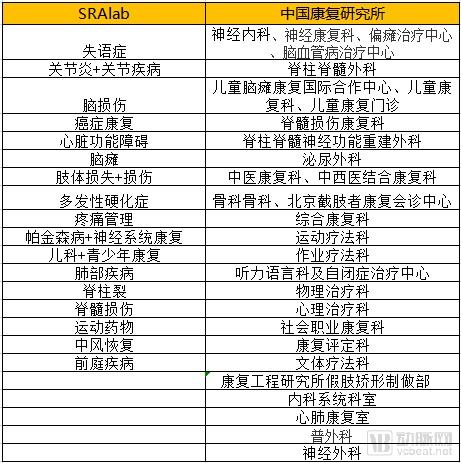
VCBeat, in its analysis of the therapeutic specialties and services offered by SRAlab and the China Rehabilitation Research Center, found that both institutions provide highly comprehensive rehabilitation services. These encompass standard programs for neurological, cardiac, and spinal conditions, as well as specialized services including speech therapy, physical therapy, psychological rehabilitation, and geriatric rehabilitation.
The difference is that the China Rehabilitation Research Center has three departments of neurological rehabilitation and a department of integrated traditional Chinese and Western medicine rehabilitation.Currently, many primary-care rehabilitation departments and clinics offer traditional Chinese medicine (TCM) physiotherapy services. In the course of development, integrated Chinese and Western physiotherapy has inherited and advanced TCM theory, building on its five pillars—stone therapy, acupuncture, moxibustion, herbal medicine, and daoyin tuina (therapeutic guidance and massage)—and guided by meridian theory. While tailoring treatment to patients’ conditions, it also fully leverages modern physiotherapy equipment for adjunctive therapy.
《Ranked No. 1 Among U.S. Rehabilitation Hospitals for 28 Consecutive Years: What Sets Shirley Ryan AbilityLab Apart?》 article mentions that the five major innovation centers and five functional laboratories established by SRAlab can provide cutting-edge research combined with excellent care. These centers include the Brain Innovation Center, Spinal Cord Innovation Center, Neuro-Musculoskeletal Innovation Center, Pediatric Innovation Center, and Cancer Rehabilitation Innovation Center. Patient care in these centers is supported by the latest intelligent control, electronic technology, and mobile therapeutic devices.
Through the comprehensive design of its laboratories and innovation centers, SRAlab can serve diverse patient populations and maximize functional recovery to achieve optimal rehabilitation outcomes.
According to the SRA Lab website, clinicians, researchers, patients, innovation designers, and technicians work together throughout the patient rehabilitation process, enabling timely communication among all stakeholders to deliver optimal rehabilitation solutions.。
Collaborate with universities to recruit high-quality talent
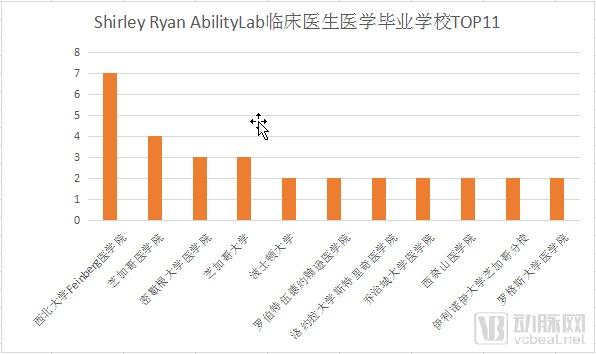
Note:SRA Lab’s clinicians graduated from 27 additional institutions, including Nova Southeastern University, Ponce Health Sciences University in Puerto Rico, Dalhousie University, and the University of Texas Southwestern Medical Center in Dallas.。
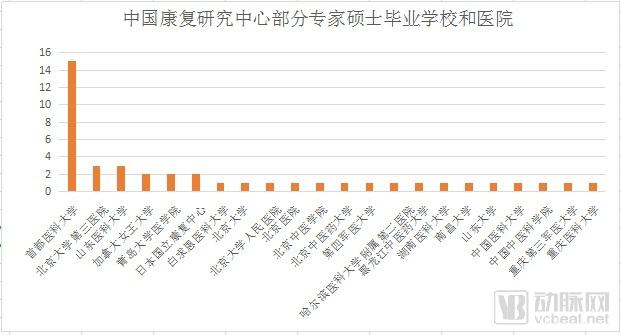
The most common alma mater for physicians at the China Rehabilitation Research Center is Capital Medical University, while the most common alma mater for medical professionals among physicians and staff at the Shirley Ryan AbilityLab (SRA Lab) is Northwestern University. Collaboration between hospitals and universities has significantly promoted the education of rehabilitation professionals.
China Rehabilitation Research Center & Capital Medical University
In 1991, China Rehabilitation Research Center (CRRC) jointly established educational programs with Capital Medical College (now Capital Medical University) to offer degree education in rehabilitation medicine. In 2000, the School of Rehabilitation Medicine was formally established, pioneering the nationwide launch of a major in rehabilitation therapy. Currently, its degree programs encompass undergraduate, master’s, and doctoral levels, and a postdoctoral research station has been established.
As of June 2018,469 individuals have obtained bachelor’s degrees, 176 have obtained master’s degrees, and 44 have obtained doctoral degrees from the School of Rehabilitation Medicine; additionally, 169 individuals are currently pursuing various degrees. The school has 170 faculty members.。
The School of Rehabilitation Medicine comprises 14 teaching and research sections, including Internal Medicine, Clinical Rehabilitation, Physical Therapy, Occupational Therapy, Social Rehabilitation, and Rehabilitation Engineering.
SRAI Lab and Northwestern University Feinberg School of Medicine
In 1967, RIC established an academic affiliation with Northwestern University and launched a residency program in Physical Medicine and Rehabilitation (PM&R). Located within Northwestern University’s medical campus, the Shirley Ryan AbilityLab (SRAlab) serves as a clinical training center for the Feinberg School of Medicine. All fourth-year students at the Feinberg School of Medicine are required to complete a two-week rotation at SRAlab.
At SRAI Lab,Residents can rotate through all inpatient units, including departments for brain injury, spinal cord injury, pediatrics, and oncology. Additionally, residents will participate in outpatient rotations to ensure a balanced clinical experience and exposure to a diverse patient population requiring physical therapy services, such as those in sports medicine, pain management, and amputee care.。
On the official website of SRAlab, academic training courses in rehabilitation and a Rehabilitation Measures Database (RMD) for practical application are provided for clinicians, therapists, and researchers. The rehabilitation curriculum covers topics such as stroke rehabilitation, aphasia, spinal cord injury, brain injury, and burn rehabilitation. A total of 87 courses are offered in three formats—in-person instruction, online teaching, and e-books—with prices ranging from $0 to $1,000.
Qingdao, Shandong: Outstanding Achievements in Rehabilitation Talent Development
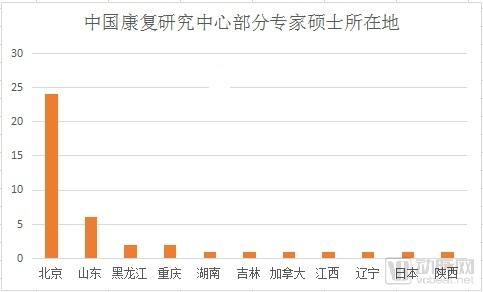
Data Source: China Rehabilitation Research Center, compiled by VCBeat
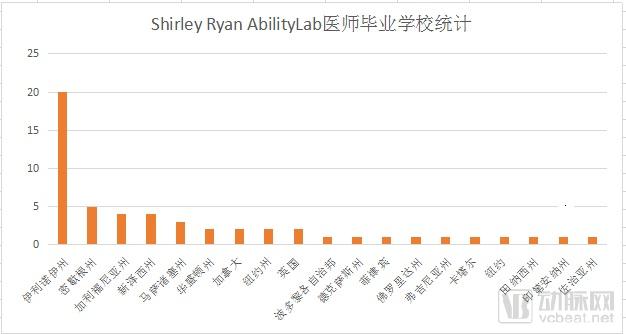
Data source: SRA Lab official website; compiled by VCBeat.
From the two charts above, we observe that the master’s degree holders recruited by the China Rehabilitation Research Center primarily graduated from institutions in Beijing, Shandong Province, and Northeast China. The clinicians at SRAlab mainly graduated from universities in Illinois. The academic institutions collaborating with both hospitals are generally located in their respective cities.
It is also worth noting that many physicians at the China Rehabilitation Research Center completed their master’s degrees at institutions in Shandong Province, with a significant proportion hailing from Qingdao. The Qingdao Municipal Government has maintained a highly proactive stance on the cultivation of rehabilitation professionals. In February 2019, Cheng Kai, Vice Chairman of the China Disabled Persons’ Federation and Deputy Head of its Executive Council, led a delegation to Qingdao University to investigate the development of its health-related disciplines and to discuss future areas of collaboration following the establishment of the Rehabilitation University in Qingdao.
In June 2017, a research team from the School Planning, Construction and Development Center of the Ministry of Education visited the High-Tech Zone to investigate matters related to the planned site selection for the University of Rehabilitation. Shandong Province has also been actively facilitating the establishment of the University of Rehabilitation in Qingdao.
Entry Barriers for Rehabilitation Professionals in China Are Rising, but Standards Remain Lacking
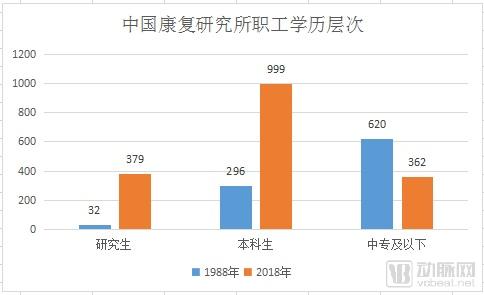
Data Source: China Rehabilitation Research Center; Compiled by VCBeat
At the China Rehabilitation Research Center, 21.7% of staff hold graduate degrees—a substantial increase from 3.37% in 1988—but a significant gap remains compared with the United States.
[Analysis of the Composition of 152 Researchers at SRA Lab: Biomedical Engineering and Mechanical Engineering Majors Are Popular in Rehabilitation Hospitals]》 mentions that in the United States, one must first complete an undergraduate degree at a comprehensive university, then pursue medical school, and obtain licensure before practicing medicine. To work in the rehabilitation industry, one must also obtain the appropriate professional license.
The job postings on the SRAI Lab website indicate that all physical therapists and clinicians must hold the appropriate licenses, whereas the China Rehabilitation Research Center primarily emphasizes professional expertise and academic qualifications.。
Ms. Bian Qiongxia, founder of Yan Education, told VCBeat that rehabilitation physicians in China are classified into assistant rehabilitation physicians, rehabilitation physicians, and senior rehabilitation physicians. In the United States, they are categorized as physical therapists (PT), occupational therapists (OT), and speech-language pathologists (ST). Hospitals can mutually select practitioners based on their specific needs and the physicians’ licenses.China still lacks industry standards for specialized rehabilitation sectors, causing significant inconveniences in talent development and recruitment processes.。
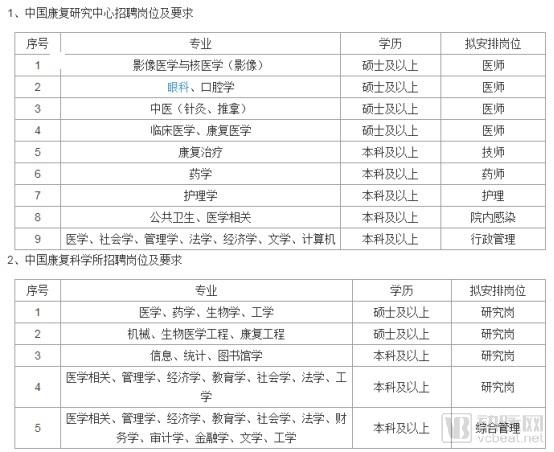
Campus Recruitment at China Rehabilitation Research Center
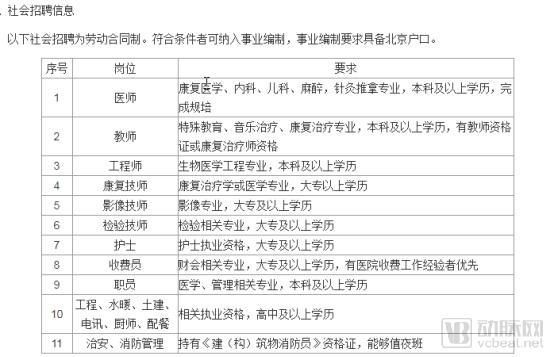
Social Recruitment at the China Rehabilitation Research Center Information Source: Official Website of the China Rehabilitation Research Center
From the recruitment notices of the China Rehabilitation Research Center, we observe that medical-related positions emphasize academic qualifications and specialties, with most roles requiring a master’s degree in a relevant field; however, there is no explicit requirement for holding corresponding professional licenses. Rehabilitation curricula at Chinese universities are overly broad yet lack depth, and the industry’s relatively short development history has led mainland private enterprises to prefer hiring foreign therapists at high salaries to train local practitioners. Consequently, graduates still require extensive additional training before they can practice in hospitals.
Patient Education Section: SRA Lab Information Is Clear and Comprehensive
In the education sector, SRAlab prioritizes patient education. Given the comprehensive coverage of rehabilitation services under U.S. health insurance, they adopt a prospective payment system based on Function-Related Groups (FRGs). For patients beyond the acute phase, reimbursement is primarily determined by functional improvement. The core concept of FRGs involves classifying patients according to the disability and impairment criteria outlined in the International Classification of Impairments, Disabilities, and Handicaps (ICDIH). Patients are then stratified into groups based on their functional status and age, using data and information from the Uniform Data System for Medical Rehabilitation (UDSMR). Cost standards for each classification level within these groups are calculated, and a fixed payment rate is established in conjunction with length of stay, which is prepaid to rehabilitation institutions. For rehabilitation providers, the FRG model offers fairer compensation and drives endogenous operational reforms. Following the implementation of FRGs, the average length of stay in rehabilitation hospitals is expected to be capped at approximately 20 days.
As a result of implementing this payment method, hospitals will expedite patients’ discharge by helping them meet discharge criteria as quickly as possible, thereby transitioning them to the next stage of rehabilitation (community- or home-based rehabilitation) to maximize revenue. Therefore, providing rehabilitation education to patients and their families is critically important, as it will determine the quality of home-based rehabilitation.
SRAI Lab houses the Henry B. Betts LIFE Center, a multimedia education center that provides individuals with various cognitive and physical impairments, chronic illnesses, or disabilities, as well as their families, with opportunities to learn self-rehabilitation.
The center offers a vast collection of educational videos, books and reference materials, assessment scales, and peer support programs, covering 21 major categories of topics and diseases. These include medical information and nursing care, education and employment, leisure and recreation, health insurance and legal affairs, bladder care, bowel care, disease rehabilitation, skin care, and respiratory care. Patients, their families, and community rehabilitation service providers can utilize these resources for self-directed learning in nursing care, thereby accelerating patient recovery.。
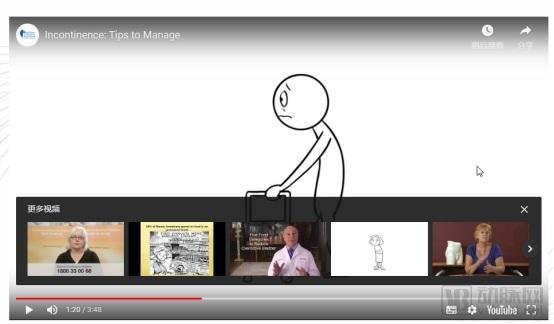
SRA Lab Official Website: Video on Managing Urinary Incontinence After Stroke
The China Rehabilitation Research Center also features a “Health Science Popularization” column, which includes health knowledge, expert health lectures, health education, and a patient community.However, upon careful review of the column information within, the content remains relatively sparse. For instance, the "Expert Health Lectures" section only covers topics related to frozen shoulder rehabilitation. The breadth of information coverage still requires improvement.。
Rehabilitation Environment Design: SRA Lab Stands as a Model
In the public consciousness, rehabilitation facilities are often perceived as no different from conventional medical institutions. However, Shirley Ryan AbilityLab (SRA Lab) has developed its rehabilitation hospital with exceptional excellence and thoughtful design. The article “Ranked No. 1 Among U.S. Rehabilitation Hospitals for 28 Consecutive Years: What Makes Shirley Ryan AbilityLab Unique?” noted that SRA Lab received the “Gold Award in the 32nd Annual Design Awards by Modern Healthcare in 2017” and the “Excellence Award in the 2018 HCD Design Showcase.”
SRA Lab employs vibrant, bold colors and graphic design to create unique environments for its five capability labs, applied research areas, and each therapeutic space. Each environment is designed to uplift spirits and motivate recovery and rehabilitation tailored to specific types of injuries and conditions. The wayfinding system is designed to maximize flexibility across all spaces, seamlessly integrating into the environment through simple text and auxiliary signage. The combination of rich environmental graphics and minimalist wayfinding elements ensures clearer, more explicit guidance.
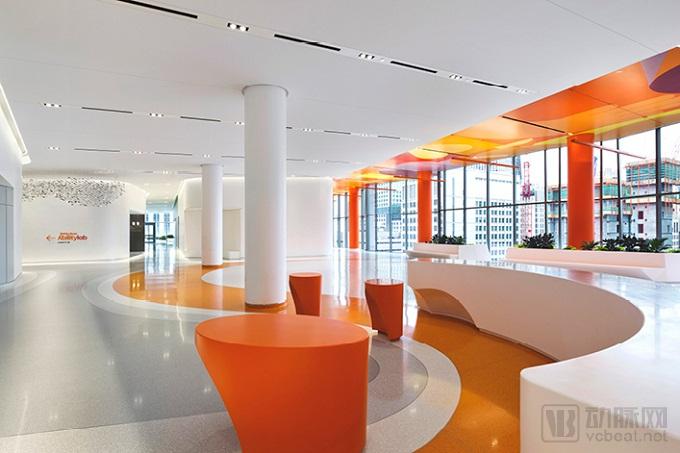
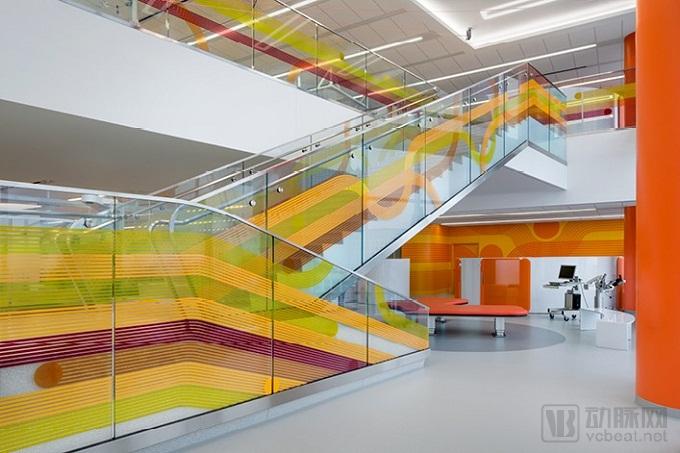
From the perspectives of healthcare, education, scientific research, and architectural design, both the China Rehabilitation Research Center and SRAI Lab stand as the premier rehabilitation institutions in China and the United States, respectively. China boasts its distinctive integrative approach combining traditional Chinese and Western medicine, while the United States features a more robust talent development framework and comprehensive rehabilitation assessment methodologies. Each side possesses unique strengths.
However, China’s rehabilitation industry started relatively late, and there is still much to learn.In particular, continuous improvements are needed in areas such as standard-setting, talent development, health insurance reimbursement, and compensation for practitioners.。