

Kanglu Biosciences Files IPO Prospectus: Pioneering Next-Generation FISH Technology for Precision Oncology
Precision Medicine is a novel medical model that delivers personalized healthcare based on individual patient differences. In essence, precision medicine encompasses two key aspects: precise diagnosis and precise treatment. Precise diagnosis serves as the foundation of precision medicine, with molecular diagnostics at its core. Compared to PCR and NGS molecular diagnostic technologies, Fluorescence In Situ Hybridization (FISH) offers irreplaceable advantages in detecting genetic and chromosomal abnormalities, including numerical and structural chromosomal anomalies, gene amplification, gene deletion, and gene rearrangement.
Wuhan HealthCare Biotechnology, driven by clinical needs, has independently developed a new generation of rapid in situ hybridization probes (FastProbe®). “We hope that through FastProbe®“A series of probes to accelerate and automate fluorescence in situ hybridization,” said Chen Gang, founder of Wuhan HealthCare Biotechnology Co., Ltd, in an interview with VCBeat.
Before founding Wuhan HealthCare Biotechnology Co., Ltd, Chen Gang was a faculty member at Wuhan University and previously held senior executive positions at Tianjin Biochemical Pharmaceutical Co., Ltd., Chase Sun Pharmaceutical, and Humanwell Healthcare. With over two decades of experience in the pharmaceutical industry, Chen has accumulated extensive expertise in industry management and market resources. Meanwhile, he also recognized the limitations of oncology drugs in clinical applications: “Although clinical trial response rates often exceed 60%, their real-world effectiveness varies significantly among individual patients.”
“The drug is effective, but lacks precision.” Chen Gang believes that the core of precision medicine lies in precise diagnosis, with molecular diagnostics serving as the foundation. The latter holds vast potential market opportunities in early cancer diagnosis, monitoring of drug efficacy, formulation of personalized treatment plans, and prognosis assessment.
Thus, in 2013, Chen Gang founded HealthCare Biotechnology. “Many startups typically develop a technology first and then consider how to implement it in clinical settings. In contrast, HealthCare Biotechnology started by identifying clinical needs and then worked backward to guide product development,” Chen Gang reflected on the company’s entrepreneurial journey. Reporters learned that through discussions with physicians about the advantages and disadvantages of fluorescence in situ hybridization (FISH) technology, HealthCare Biotechnology ultimately determined the basic development direction for probes used in its new-generation rapid FISH technology.
“HealthCare Biotechnology’s year of major breakthrough was 2014, when we developed our next-generation FISH technology, FastProbe”®achieved a major breakthrough,” Chen Gang recalled. Subsequently, Wuhan HealthCare Biotechnology Co., Ltd. secured Pre-A round financing from the Hubei Gaojin Biotechnology Venture Capital Fund. Following two years of clinical trial validation, the company’s FastProbe®The clinical concordance rate of the probes with traditional probes from internationally renowned brands reached 100%. In 2016, both products obtained CE certification. In January 2018, both products received CFDA registration certificates. In the same year, Wuhan HealthCare Biotechnology Co., Ltd secured RMB 30 million in Series A financing from Yuansheng Venture Capital.
Wuhan HealthCare Biotechnology’s core product portfolio primarily consists of three items: Fast FISH Probes (FastProbe®), fully automated FISH equipment, and a pharmacogenomics gene polymorphism product line (qPCR). Among these, over 60 rapid FISH probe products have been developed, with more than 20 already commercialized and applied in numerous Grade A tertiary hospitals across China, as well as in third-party testing institutions such as KingMed Diagnostics, Union Huamei, and Baoteng Bio.
The fundamental principle of fluorescence in situ hybridization (FISH) is the hybridization of fluorophore-labeled DNA probes with target DNA sequences within sample cells, thereby obtaining information on the status of chromosomes or genes within the cell nucleus. FISH combines traditional cytogenetics with DNA detection technologies, pioneering a new discipline—molecular cytogenetics.
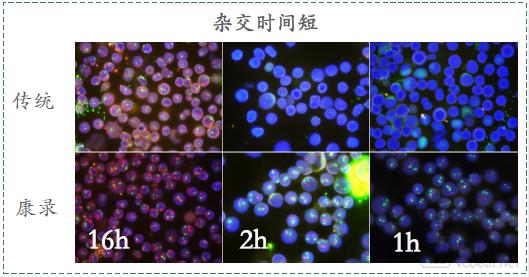
Wuhan HealthCare Biotechnology's self-developed FastProbe®The probes have revolutionized traditional FISH technology. Traditional probe preparations contain repetitive sequences, require hybridization times of 16–24 hours, and exhibit high fluorescent background, which significantly limit the clinical application of FISH technology. In contrast, the FISH probes from Wuhan HealthCare Biotechnology Co., Ltd. are prepared using non-repetitive sequences, featuring rapid hybridization (1–2 hours), high sensitivity and specificity, and a high signal-to-noise ratio.
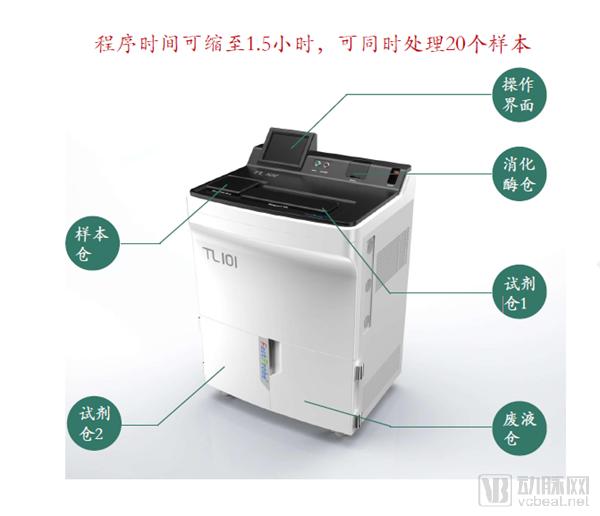
The company’s marketed FISH pretreatment device employs eco-friendly reagents. By simply loading specimens directly into the instrument, it achieves fully automated processing including deparaffinization, permeabilization, and enzymatic digestion. The entire process takes only 1.5 hours, with a throughput of 20 samples simultaneously, and is compatible with formalin-fixed paraffin-embedded (FFPE) samples. This device completely replaces the manual workflow involving more than ten steps and taking up to two hours, thereby reducing the workload of laboratory personnel and minimizing operational errors.
Fully Automated FISH System
The fully automated FISH instrument currently under development by the company leverages microfluidic technology to enable end-to-end automation, including specimen processing, hybridization, and AI-based automated interpretation, simply by loading the specimens directly into the instrument. This system achieves complete automation of fluorescence in situ hybridization (FISH) testing, with a total turnaround time of only 4 hours and the capacity to process 24 samples simultaneously. It is designed for cytology specimens. The device effectively reduces manual operational errors, facilitating greater standardization of FISH testing and enhanced laboratory quality control.
Wuhan HealthCare Biotechnology Co., Ltd. has accumulated technological and market expertise over six years, aiming to provide a comprehensive suite of rapid and automated fluorescence in situ hybridization (FISH) testing solutions. The company’s independently developed, fully automated FISH instrument, based on microfluidic technology, features low cost, end-to-end automation, rapid sample processing, and high throughput, while also integrating FastProbe®The probes enable rapid hybridization within 2 hours and complete detection within 4 hours, thereby eliminating the risks associated with overnight operation of automated instruments.
Regarding the commercialization of its products, Chen Gang revealed that the company’s FISH products are currently sold to more than 80 hospitals across China and are expected to be available in over 200 hospitals by the end of the year. Furthermore, in overseas markets, enterprises and testing institutions in more than 20 countries worldwide have gradually begun using HealthCare Biotechnology’s FISH products, including those in Spain, France, India, and the United States, with nearly ten having formally placed procurement orders.