

Tupai Imaging Aims to Disrupt China's Swept-Source OCT Market with Fully In-House Developed High-End Ophthalmic Devices
Why Are We Focusing on Tupai Imaging?
From an industry perspective, China faces a 70% shortfall in ophthalmic medical resources. The penetration rate of ophthalmic Optical Coherence Tomography (OCT) devices in China is below the global average and even lags behind Southeast Asia. In 2018, total sales of ophthalmic OCT devices in China amounted to approximately RMB 1.5 billion, with projections exceeding RMB 5 billion by 2025, representing a compound annual growth rate (CAGR) of nearly 30%. A company capable of capturing half of this market share would undoubtedly qualify as a genuine niche leader. This presents a significant opportunity for Topview Imaging.
From a corporate perspective, Topvue Medical has seized the industry’s first-mover advantage as the only company in China currently capable of independently designing and developing the latest generation of ophthalmic swept-source OCT systems.
In addition, we sought to determine whether a company dedicated to technological innovation and focused on product R&D could bring about breakthrough changes to the industry. To this end, VCBeat conducted an exclusive interview with Wang Yingqi, CEO of Topview Imaging.
Currently, China's ophthalmic OCT market faces two major challenges: first, there is a lack of high-end models with performance comparable to imported flagship products; second, there is a shortage of cost-effective models that offer both high value for money and strong reliability.
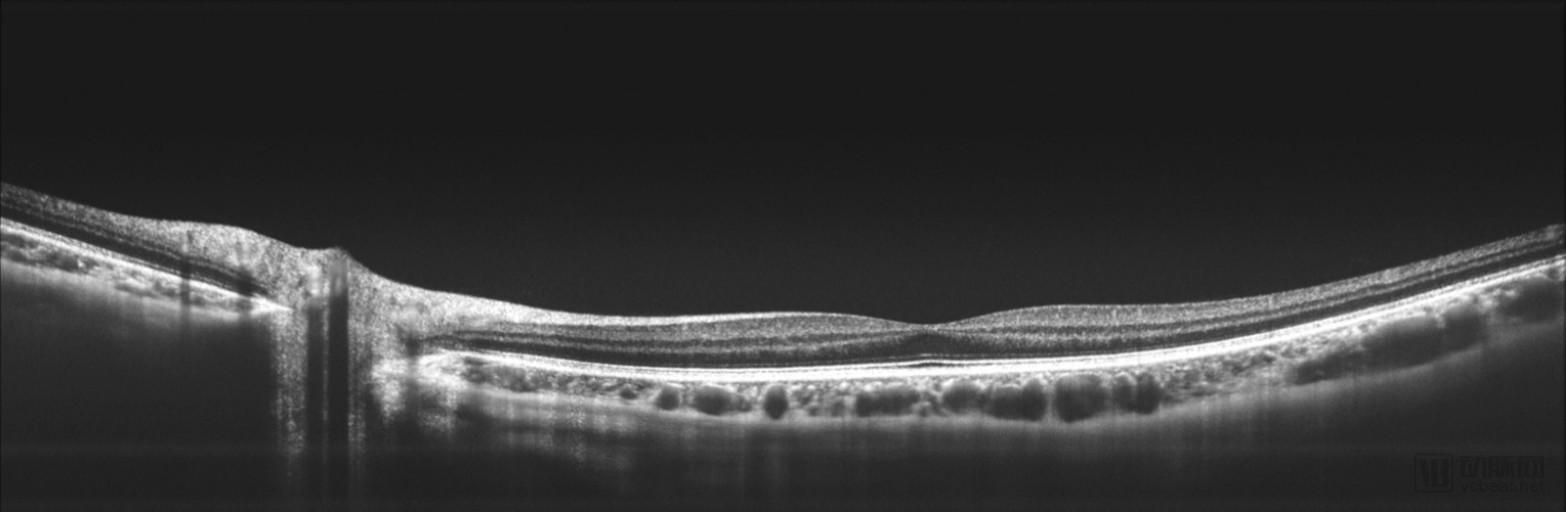
16-mm Optic Disc–Macular OCT Tomography (Image Provided by the Interviewee)
“In certain segments of China’s medical device industry, the rate of import substitution has been quite impressive; in some mid-to-high-end niche markets, domestic devices have already achieved large-scale import substitution. However, the current situation in China’s ophthalmic equipment sector is rather extreme, with imported devices accounting for over 95% of the market and maintaining a monopolistic position,” Wang Yingqi told VCBeat.
The primary cause of this phenomenon is China’s lack of industrial infrastructure, technological capabilities, and talent in the field of optical engineering. To independently develop swept-source OCT systems, it is essential not only for the technical team to have a thorough understanding of the entire optical supply chain but also to possess vertical integration capabilities spanning from components to systems across multiple specialized technical domains.
The greater the challenge, the greater the opportunity. In Wang Yingqi’s view, TopView Imaging’s bold entry into the ophthalmic OCT market stems from the strong “technical DNA” of its core team. The company’s Chief Scientist, Professor Huo Li, earned his Ph.D. from the Department of Electronic Engineering at Tsinghua University and completed his postdoctoral research in the Department of Biomedical Engineering at Johns Hopkins University, where he worked in one of the world’s earliest laboratories dedicated to swept-source OCT technology. After returning to China, he joined the faculty of the Department of Electronic Engineering at Tsinghua University. Professor Huo not only brings extensive research experience in the field of OCT but also has over two decades of accumulated expertise in key enabling technologies for OCT, including optics, photonic integration, and optoelectronics.
Xing Yanfei, the Technical Director, holds a Ph.D. in Electronic Engineering from Tsinghua University and previously served as a Senior Engineer at the 12th Research Institute of China Electronics Technology Group Corporation (CETC), boasting over a decade of R&D experience in fiber optics and optoelectronic systems. Wang Xiao, the Head of Software Algorithms, earned his master’s degree in Electronic Engineering from Tsinghua University and has extensive experience in developing OCT data processing, image algorithms, and OCTA algorithms. Furthermore, Topvue Imaging’s technical team brings together outstanding talents in optical engineering from various universities and research institutes across China. The team comprises more than 20 members, with over 70% holding master’s degrees or higher.
“We aim to drive progress in industries that currently show little sign of turning around and attract few willing participants, despite their substantial commercial and social value. China’s annual sales of ophthalmic medical devices amount to tens of billions of yuan, with the vast majority spent on imported products. Therefore, the value of domestic substitution is significant, and Topvue Imaging is committed to being a game-changer.”
In the field of medical devices, OCT technology is widely used internationally in ophthalmology, characterized by high R&D complexity and significant technical barriers.
“Topcon’s Sigma series of OCT products are domestically produced swept-source OCT systems developed entirely with Topcon Imaging’s proprietary technology, supporting OCT angiography (OCTA) functionality,” Wang Yingqi told VCBeat. Compared with previous-generation spectral-domain OCT technology, swept-source OCT offers faster scanning speeds, greater imaging depth, improved patient experience, clearer choroidal imaging, and fewer motion artifacts in OCTA images. It is reported that the product will obtain its registration certificate and be officially launched this September.
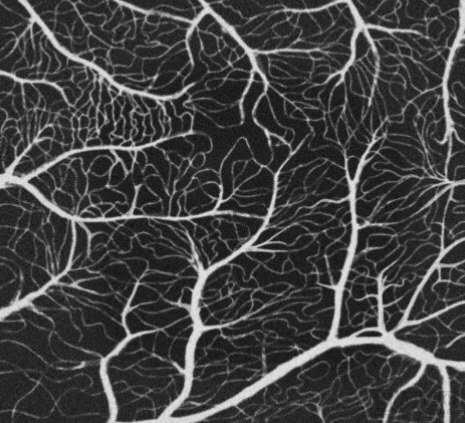
OCTA Imaging of the Macular Region (Image Provided by the Interviewee)
OCT is referred to by ophthalmologists as the “gold standard” for diagnosing fundus diseases. As the latest generation of OCT technology, swept-source OCT is currently mass-produced under regulatory approval by only two companies worldwide: Zeiss from Germany and Topcon from Japan.
To provide ophthalmic hospitals and doctors in China with more cost-effective swept-source OCT products in the future, Topvue Medical has persisted in independent research and development, dedicating the majority of its efforts to the R&D of core components and key system modules. To this end, the technical team has invested substantial human, material, and time resources. However, in Wang Yingqi’s view, all these efforts are well worth it.
"AsThe only company in China with fully independent design and R&D capabilities for the latest generation of ophthalmic swept-source OCT systems,Topview Imaging is not an ordinary system integration company, but a modern technology enterprise with genuine, in-depth capabilities in hard-tech development. For every future product, we will remain steadfastly committed to independent research and development, effectively reducing product costs while embracing the various challenges inherent in technological breakthroughs. We believe that our technical team will gradually evolve and grow stronger through this process. Ultimately, we aspire to become a great enterprise like Zeiss, driving the development of China’s optometry and ophthalmology industry.
Even the most advanced technologies and products require continuous refinement through feedback from clinical practice to avoid the embarrassment of facing “implementation challenges” upon actual market entry.
“The quality of a product is ultimately evaluated by doctors and patients. A key objective for Topvue Imaging in product development is to enable more ophthalmic patients seeking care at primary-level hospitals to access OCT examinations with higher performance and lower costs. Therefore, performance alone is insufficient; user experience must also be optimized.” In Wang Yingqi’s view, feedback from doctors and patients is precisely the key to refining the product.
Since 2017, Topvue Imaging has successively established academic collaborations with renowned medical institutions such as Beijing Tsinghua Changgung Hospital and Peking Union Medical College Hospital, continuously refining the functional details of its products. After more than two years of market research and feedback, Topvue Imaging has formulated a practical market operation strategy and assembled an expert-level team of market operation consultants.
“In addition to establishing long-term, collaborative partnerships with downstream medical institutions, Topvue Imaging is also continuously refining its relationships with upstream suppliers of raw materials and components. This accumulated expertise represents a valuable asset and constitutes another significant competitive advantage for Topvue Imaging against future market entrants. The development of proprietary swept-source OCT systems requires a wide array of highly specialized, niche materials and components, necessitating engagement with a broader supplier base. Our core technical team members each bring 10 to 20 years of extensive experience in this field, enabling them to identify which components from which manufacturers offer the optimal balance of cost-effectiveness and peak performance upon device completion.” In Wang Yingqi’s view, such supply-chain expertise is critical to ensuring successful mass production and effective cost control for future products.
It is reported that the Tupai Sigma series will be officially launched at the 24th National Ophthalmology Academic Conference in September this year.
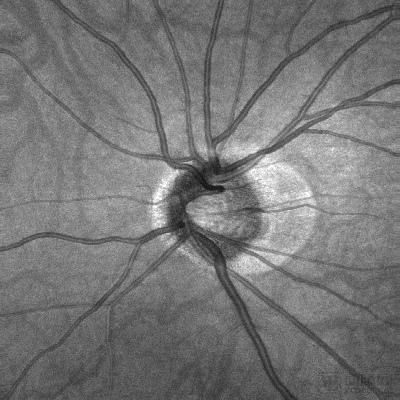
Reconstruction of the Subretinal and Choroidal Layers in the Optic Disc Region (Image provided by the interviewee)
The vast blue-ocean market and robust R&D capabilities have made Topview Imaging highly favored by investors since its inception. To date, Topview Imaging has completed two rounds of financing, raising a total of tens of millions of RMB.
“Shuimu Ventures has been closely monitoring the development of Topview Imaging. We highly recognize Topview Imaging’s technological prowess and are very optimistic about the market for ophthalmic OCT. I believe that Topview Imaging will secure a significant position in the future landscape of ophthalmic medical devices,” Yan Yi, Vice President of Shuimu Ventures, the angel-round investor in Topview Imaging, told VCBeat.
VCBeat has learned that Topview Imaging will launch a new round of financing in early April this year.