

After Microsoft Exits Wearables, Apple, Fitbit, and Samsung Double Down on Health Tech
Wearable devices have attracted the interest and attention of major tech giants. While companies such as Apple, Samsung, and Fitbit have frequently announced R&D progress in this field, Microsoft announced last week that it would cease operations of the Microsoft Band website and mobile application. The Microsoft Health Dashboard site will be shut down, and the Microsoft Band app will be removed from the Microsoft Store, Google Play, and Apple App Store on May 31, 2019.
According to The Verge, the Microsoft Band was released in October 2014, with its second generation launched in 2015. The company discontinued sales of the product in the fall of 2016.
Prior to its official discontinuation in late May, users of the Microsoft Health Dashboard could export their data via the site’s export tool. Eligible Microsoft Band users will be able to obtain refunds. Microsoft stated that while Microsoft Band users can still use their devices to record and track health information, the devices will no longer have internet connectivity.
Microsoft’s move stands in stark contrast to Apple’s continuous increase in investment in health-related applications, such as those on the Apple Watch. In addition to Apple, other prominent players in the wearable device sector have also been focusing their efforts in this direction, as summarized by VCBeat (WeChat Official Account: vcbeat).
Fitbit: Collaborations, Plans, and Products—A Comprehensive Strategic Layout
Fitbit's strategic layout in the wearable health device sector can be categorized into three aspects:
1. Seek External Collaboration
Previously, Fitbit partnered with Solera Health on a health initiative. The program demonstrated that patients with type 2 diabetes who enrolled in community-based or digital Diabetes Prevention Programs (DPPs) through the Solera platform could redeem Fitbit devices for use throughout the entire program.
One year later, data released by the two companies showed that Fitbit users achieved significantly greater weight loss after one year compared to participants who did not switch to Fitbit devices. Furthermore, Fitbit users reported an increase of 60 minutes in weekly physical activity during weeks 10 to 16, and at least 45 minutes per week over a period of 6 to 12 months, compared to non-users.
Based on this data, Amy McDonough, Chief Operating Officer of Fitbit Health Solutions, stated that the two companies will provide Inspire and Inspire HR devices to all enrollees in Solera’s DPP program, including those covered by Medicare and Medicaid plans.
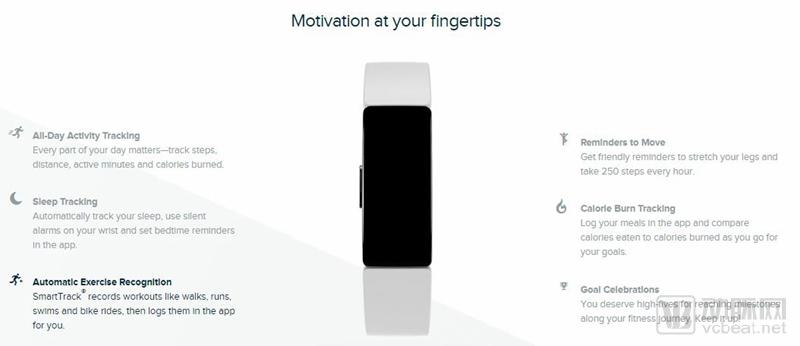
Inspire HR (Image from the company's official website)
2. Implement Health Plans
Last week, Fitbit held a press conference in which Amy McDonough and CEO James Park provided a clear overview of the company’s business strategy. Notably, Fitbit has launched more than 100 wellness programs, including 42 Medicare Advantage plans covering 27 states.
Fitbit is also rolling out a rewards program. The Fitbit Rewards Program will allow users to earn points for health-related activities, including steps taken, active minutes, and sleep quality. These points can be redeemed for products or services offered by partner companies such as Adidas, Blue Apron, and Deezer. The program is currently being tested in the United States, with the trial period scheduled to end on April 30, and it is expected to launch later this year as a premium service.
3. Continuously Innovate Products
Previously, Fitbit also launched two devices specifically designed for wellness programs, employers, and healthcare systems. These tools (Fitbit Inspire and Fitbit Inspire HR) feature activity and sleep tracking, as well as smartphone-connected notifications and mobile reminders. The Fitbit Inspire HR also has the additional capability of tracking heart rate and location.
2018 also marked a major turning point for the company. The decision to enter the smartwatch market propelled Fitbit to become the second-largest smartwatch vendor, trailing only Apple. The launch of Fitbit Care further enhanced its healthcare offerings targeted at payers and employers. James Park also expressed strong satisfaction with the recently released Charge 3, the child-focused Fitbit Ace, and the new features for tracking women’s health and sleep.
Notably, smartwatches accounted for 44% of Fitbit’s revenue in 2018, a significant increase from 2017. Fitbit Health Solutions saw an 8% growth in 2018, and James Park specifically highlighted that the division’s revenue is projected to reach $100 million in 2019. This growth is partly attributable to the launch of its new Inspire devices, Fitbit Care, and the continued development of health-focused software products.
Armed with these partnerships, incentive programs, and new devices, Fitbit’s holistic health strategy is mounting a strong challenge to its main competitors—Apple, which currently leads the smartwatch market, and Samsung, which just launched its new wearable health products last month.
Samsung: Building a One-Stop Shop for Consumer Health Management
On February 21, Samsung unveiled a series of new products at its Unpacked event in San Francisco, many of which aim to expand the company’s market share in the healthcare sector. Recently, Samsung also highlighted several health assessment tools and provider workflow solutions on its hardware and software platforms at HIMSS19.
Samsung’s newly launched Galaxy Active smartwatch upgrades the Galaxy Watch by adding health monitoring features, including blood pressure tracking, as well as standard wearable device functions such as heart rate monitoring, sleep tracking, and step counting. The smartwatch was released on March 8 with a retail price of $199.99.
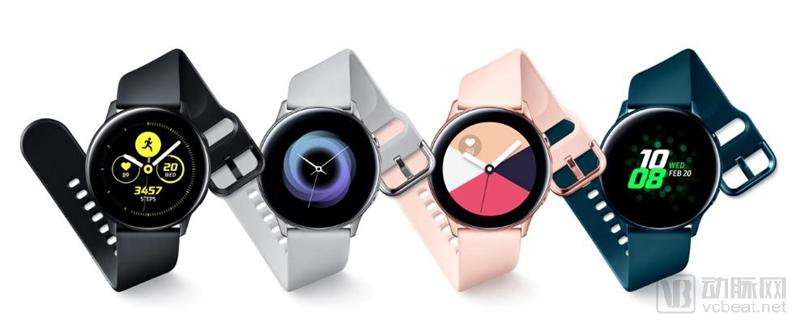
Galaxy Watch Active (Image from the company's official website)
In addition to the Galaxy Watch Active, Samsung also announced the launch of the Galaxy Fit fitness tracker series. This series connects with Samsung’s health app to help users achieve their fitness goals. The devices are waterproof, offer a battery life of up to one week, and share features such as sleep monitoring and stress management with the Galaxy Watch Active.
Shortly after the new product launch, on March 4, Samsung announced in a press release its partnership with Calm, a healthcare technology company based in California, USA, enabling users to access Calm’s meditation services directly through the Samsung Health app.
Smartphone users who have downloaded and updated the Samsung Health platform can tap the “Mindfulness” icon in the app and follow the instructions to set up or sync their Calm account. In addition to personalized meditation experiences, users with an activated Galaxy Watch can use this upcoming smartwatch to guide their meditation sessions and track their recorded stress levels.
In 10 markets, including the United States, the United Kingdom, the Philippines, and Hong Kong, consumers using smartphones running the Android Pie operating system can enjoy Samsung’s integrated services with Calm.
For Samsung, the integration of Calm’s services marks another step toward its goal of transforming its mobile platform into a one-stop shop for consumer health management. For consumers curious about app-based meditation, this move further lowers the barrier to entry.
Jiaming: Shifting the Business Core to Biomedical Research and Clinical Trials
Unlike Microsoft’s direct exit, and distinct from the meticulous strategies of Fitbit and Samsung, Garmin is increasingly pivoting its wearable device business toward health and wellness, particularly in the realms of biomedical research and clinical trials, as competition among major players in the wearables sector intensifies.
The company is collaborating with the University of Kansas on clinical trials and, last year, entered into agreements with remote monitoring and analytics firm ActiGraph and research device provider Fitabase to promote the application of its products in academic and medical research.
Regarding the company’s strategic shift of its wearable health device business toward biomedical and clinical research, Travis Johnson, Global Head of Products at Garmin Health, emphasized that hospitals are increasingly adopting wearable and remote patient monitoring devices. Garmin’s devices can be leveraged to collect supplementary data, thereby better informing product development and further research.
Although Garmin may not enjoy the same level of brand recognition as Apple and Samsung in the healthcare industry, it has been quietly building its brand and product portfolio in the wearable device sector. The company’s product range spans from simple activity and sleep trackers with a one-year battery life to high-end devices featuring heart monitoring capabilities and a battery life of five to seven days.
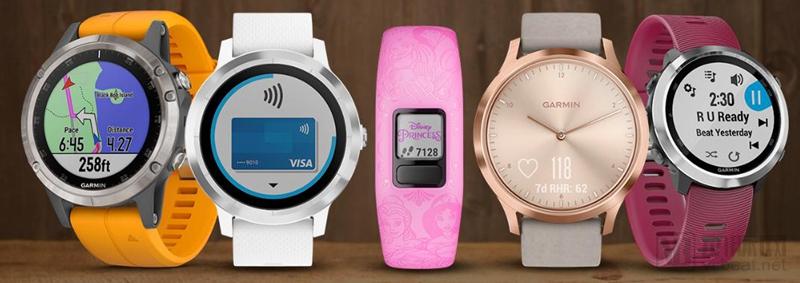
Garmin Wearable Product Series (Image from the Company's Official Website)
Driven by the growth in wearable device sales, Garmin’s fitness products account for approximately one-quarter of the company’s revenue. According to its official website, the company offers 20 different types of fitness trackers and smartwatches, with sales surpassing those of competitors such as Fitbit, Apple, and Withings.
Moreover, compared with tech companies attempting to enter the healthcare sector, Garmin operates its own manufacturing business and possesses extensive expertise in mechanical engineering—key factors that have enabled it to become a leading global brand in GPS navigation systems. More importantly, Garmin’s experience working in highly regulated fields such as aviation helps the company navigate regulatory reviews by agencies like the U.S. Food and Drug Administration (FDA), providing it with a distinct advantage.
Apple: Optimizing Products to Empower Users in Making Autonomous Health Data Decisions
In September last year, Apple released the Apple Watch Series 4, adding electrocardiogram (ECG) monitoring and fall detection features for health tracking. However, compared with the aforementioned companies, the biggest drawback of Apple’s new product is its inability to perform long-term sleep monitoring, which can only be provided through third-party app developers.
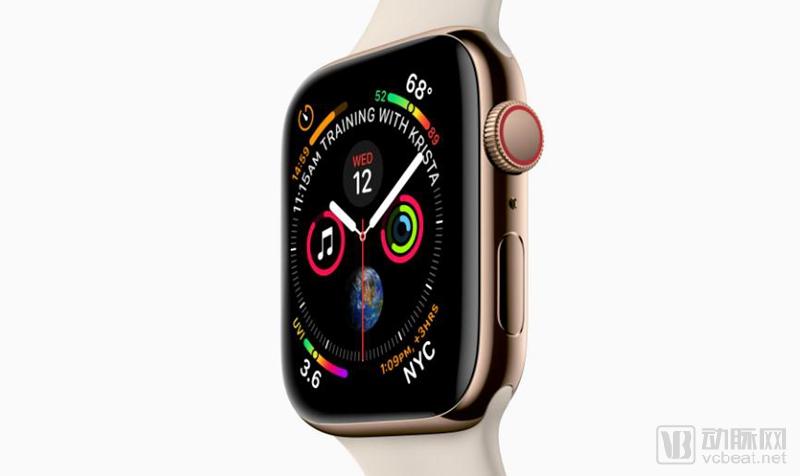
Apple Watch Series 4 (Image from the company's official website)
One of the current technological limitations of Apple Watch’s sleep tracking is its limited battery life. Competing products, such as the Fitbit Versa, can operate for days or even weeks before needing a recharge, whereas the Apple Watch lasts only a day. Potential solutions may include extending battery life, adopting a low-power night mode, or requiring users to charge the device more promptly.
Apple already demonstrated its interest in sleep monitoring when it acquired the Finnish startup Beddit in 2017. Last year, the company launched the Beddit 3.5 Sleep Monitor, a sensor strip designed to track nighttime body movements.
Apple also plans to add sleep tracking features to future models to fill the gaps in Apple Watch's health monitoring capabilities. According to Bloomberg, Apple has been testing this feature for the past few months and may launch it in 2020.
“Sleep deprivation is a major challenge. It is estimated that sleep disruption alone incurs approximately $16 billion in direct medical costs annually in the United States,” said industry insiders. “Apple is developing a sleep tracker for the Apple Watch, a move that will significantly raise global awareness of the importance of sleep and prompt other companies to follow suit.”
Although Apple has not yet released its own sleep monitoring feature, third-party app developers have already created their own versions by leveraging the existing hardware capabilities of the Apple Watch.
Apple has also been adopting incentive programs and health insurance subsidies based on the Apple Watch. Due to the ECG functionality of its Apple Watch Series 4, as well as its ongoing efforts to break down the “data silos” between personal health records and user data platforms, the company is committed to empowering users to make decisions regarding their personal health data. This has recently drawn significant attention from the market.
When companies such as Apple, Google, and Samsung initially entered the healthcare sector, industry insiders noted that these tech giants rarely approached the field from a scientific perspective. Instead, their device development was primarily driven by market success considerations. The accuracy of these products and their underlying technologies had not undergone rigorous validation, nor was there scientific evidence demonstrating their health benefits.
However, as competition in the wearable health device sector intensifies, these major companies are also continuously innovating in terms of technical accuracy and product quality, while actively seeking external collaborations.
With the rise of big data, the information collected by wearable health devices is finding increasingly broad applications. Technology companies will focus on processing the large volumes of data generated by wearable devices and collaborate closely with medical companies and research institutions to provide more accessible services and applications for the healthcare ecosystem.