

Planmeca Launches Upgraded Planmeca Emerald™ S Intraoral Scanner with Enhanced Imaging and Radiation-Free Caries Detection at IDS 2019

Planmeca
Top Private Family Business in the Oral Equipment Manufacturing Industry
From March 12 to 16, 2019, the 38th International Dental Show (hereinafter referred to as “IDS”) was held at the Koelnmesse in Cologne, Germany. Organized by GFDI, the commercial subsidiary of the German Association of Dental Manufacturers (VDDI), IDS is a biennial event. The exhibition showcases premier dental equipment, instruments, pharmaceuticals, and technologies in the global dental trade market, making it the largest and most influential trade fair in the international oral health industry. As the world’s largest professional gathering in the dental field, this year’s IDS featured over 160,000 square meters of exhibition space and attracted professionals and dental companies from nearly 60 countries around the world.
At the IDS exhibition, world-renowned dental equipment manufacturer Planmeca unveiled its new intraoral scanner, the Planmeca Emerald™ S. As an upgraded version of the successful Planmeca Emerald™, the Planmeca Emerald™ S combines high-speed image capture with novel diagnostic capabilities, such as radiation-free caries detection. Offering lightning-fast speed and exceptional precision, it delivers a premier service experience for dental professionals and patients alike.
Planmeca is a Finnish dental equipment company founded by Mr. Heikki Kyöstilä in 1971. Initially starting as a small enterprise manufacturing dental chairs and instrument cabinets, Planmeca adopted a global strategy and perspective from its early stages, while also expanding its product line to include oral surgery chairs and dental treatment units. In subsequent years, the company continued to broaden its product portfolio, which now encompasses digital dental treatment units, world-class 2D and 3D imaging equipment, open CAD/CAM solutions, and software suite solutions. Its distribution network covers more than 120 countries and regions worldwide.
The new version of the Planmeca Emerald™ S scanner showcased at the IDS exhibition retains the renowned features of the original Planmeca Emerald™ S, such as its compact size, autoclavable anti-fog scanning tips, and plug-and-play functionality. Furthermore, the Planmeca Emerald™ S scanner has been enhanced with new capabilities to meet demanding diagnostic requirements. With a scanning speed more than double that of its predecessor, the Planmeca Emerald™ S makes capturing digital images easier than ever before.
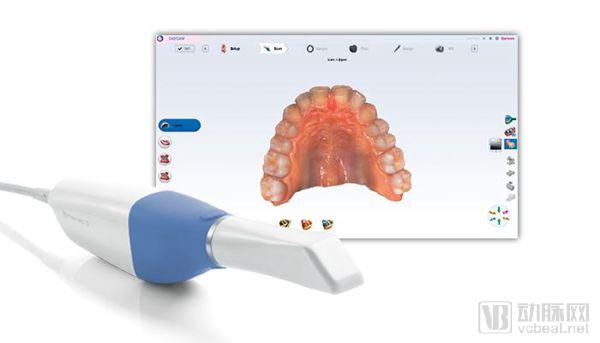
Planmeca Emerald™ S Intraoral Scanner, image sourced from the official Planmeca website
With the Planmeca Emerald™ S, users can leverage the new caries tip. This new caries tip enables clinicians to detect early-stage caries and cracks through teeth using radiation-free near-infrared light. As capturing patients’ tooth shades presents a challenge, the Planmeca Emerald™ S is also equipped with a Tooth Shade Assistant. This assistant simplifies the color-matching process by improving color uniformity.
Furthermore, the Planmeca Emerald™ S scanner employs a novel scanning algorithm that enhances the superior scanning experience by automatically eliminating unnecessary data. The scanner is also fully integrated with Planmeca devices and software, enabling exceptionally smooth workflows in dental clinics. Meanwhile, its open architecture allows users to easily share their scans with colleagues and external experts.
“For dental professionals, the Planmeca Emerald™ S offers exceptional usability and incredible speed. For patients, this means the convenience of faster treatment. I believe our customers will appreciate all the improvements and additional diagnostic capabilities provided by the scanner,” said Jukka Kanerva, Vice President of Planmeca’s Dental Care and CAD/CAM divisions.
(Compiled by Tan Xin)