

Aspen Dental Partners with Walgreens to Enhance Dental Care Accessibility Through In-Store Clinics

Aspen Healthcare
Provider of Family Health and Hospice Care Services
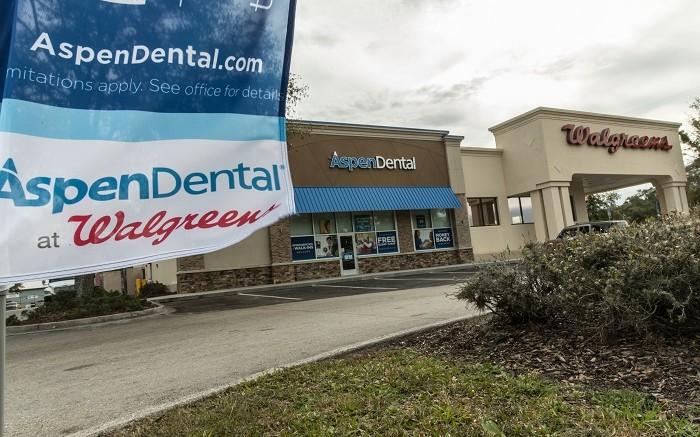
Aspen Dental Pilots Clinical Services in Walgreens Pharmacies
In the dental sector, major international players are primarily focused on medical devices, whereas domestic companies in China mainly operate as chain terminal providers. As consumerism permeates the healthcare industry, the highly marketized dental sector has consistently attracted substantial capital investment. In recent years, the most prominent trends in this field have been the surge in digitalization and the expansion of chain operations.
However, dental chains have long grappled with high physician costs, difficulties in achieving profitability during geographic expansion, and challenges related to single-brand versus multi-brand strategies. From a global perspective, what constitutes a viable chain model? We seek answers by examining several benchmark cases.
This issue features Aspen Dental, a representative enterprise among U.S. Dental Support Organizations (DSOs), which is analyzed by VCBeat (WeChat ID: vcbeat). The landscape of the U.S. dental market differs significantly from that of China in terms of scale, maturity, the balance between public and private sectors, public trust in private healthcare, prevalence of dental insurance, financing channels for individual dentists, and the complexity of licensing procedures. As the two markets are at different stages of development, the DSO model serves only as a reference for consideration.
Insights from Ophthalmic Retail Chains
The growth and expansion of Aspen Dental are closely tied to the founder’s philosophy and understanding of the healthcare industry, embodied by its CEO, Bob Fontana.
Before joining Aspen Dental, Bob Fontana founded East Coast Dental in 1995 and served as its President, thereby beginning to accumulate his leadership experience in dental practice management. Two years later, the practice merged with Aspen Dental, which was still a small-scale operation at the time, and he has served as CEO ever since. By 2003, the practice had expanded to 50 locations, starting to attract interest from private equity firms. Capital Resources Partners invested $18.7 million in Aspen Dental in 2004, and in 2010, Leonard Green & Partners LP acquired the company for less than $550 million.
In terms of DSO scale alone, Heartland Dental ranks first with 900 clinics, followed by Aspen Dental in second place. As DSOs primarily provide non-clinical and administrative services, this was previously mentioned (See Also: 900 Clinics, KKR’s Heavy Investment—Has the Dental Chain Model Proven Successful in the U.S.?) have been mentioned in detail and will not be repeated.
As leading dental support organizations (DSOs), Aspen Dental and Heartland Dental naturally share many similarities in service offerings, such as education, training, and business support. However, their growth strategies and operational models represent two distinct systems. Heartland Dental does not hold ownership or control over its affiliated practices, typically maintaining a service contract relationship. In contrast, Aspen Dental often retains control over its clinics, with dentists frequently serving as partners or shareholders. Consequently, Aspen Dental has pursued a path of national expansion under a unified brand, resulting in a different chain replication model.
Aspen Dental exercises actual control over its affiliated dental clinics by acquiring ownership of clinic fixed assets, setting sales performance targets, and managing the upstream and downstream value chain.
As the founder, Bob Fontana graduated from the State University of New York at Potsdam, majoring in art, economics, and management. He placed great emphasis on building Aspen Dental’s operational model and coordinating cross-regional collaboration capabilities. Under his leadership, Aspen Dental has grown from its establishment in 1998 in the Northeastern United States into a leading dental support organization (DSO), with more than 750 affiliated clinics.
When did Bob Fontana recognize the growth potential of the DSO model? In an interview with Apex360, he cited Luxottica Group, the world’s largest eyewear retailer founded in 1961, as one of the truly consumer-centric healthcare models that has reshaped the eye care industry.
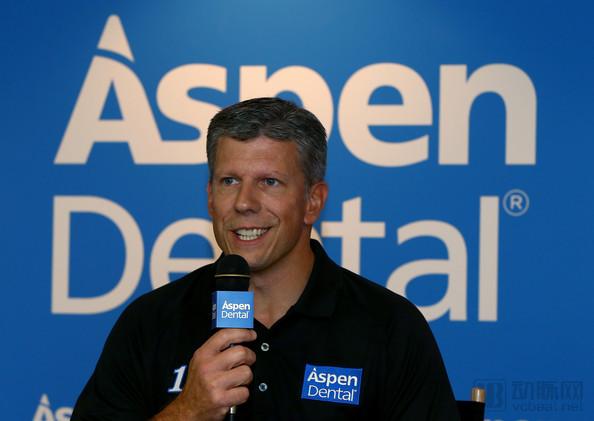
Aspen Dental’s CEO, Bob Fontana
“Seeing the success of companies like Luxottica, I wondered if something similar could be attempted in the dental industry—supporting the delivery of valuable services to patients under a unified brand. Although the DSO model is not necessarily new, I believe there are clear opportunities for innovation within the dental sector,” Bob Fontana revealed. As of early 2014, Aspen Dental operated nearly 550 clinics across 33 U.S. states, with growth showing no signs of slowing: the number exceeded 600 by early 2018 and reached 750 (across 38 states) in 2019. This represents a remarkable acceleration from the roughly 300 clinics it had in 2011.
Data shows that Luxottica Group’s manufacturing facilities are distributed across multiple regions worldwide, and it also possesses an extensive retail network. The group produces up to 75 million pairs of eyeglasses annually, with 143 pairs of Luxottica eyewear sold globally every minute. Its portfolio includes the eyewear retail brand LensCrafters, the largest optical retail chain in North America. Luxottica acquired LensCrafters in 1995 and has been committed to providing consumers with professional eye examination equipment, certified optometrists, and its 520 Standard Eye Health Examination.
Drawing on Luxottica’s “retail” model as a reference, a core development philosophy and business model of Aspen Dental is to provide consumers with accessible, convenient, and easy-to-pay dental care services, thereby enhancing patients’ access to much-needed dental treatment. Previously, the dental care sector was characterized by highly fragmented services, often requiring appointments, involving long wait times, and entailing prolonged treatment cycles; furthermore, prior to the widespread adoption of online media, pricing lacked transparency.
It would be quite impressive if Aspen Dental could successfully build a brand that patients trust, one in which dentists are free to focus on patient care without being burdened by non-clinical matters.
The Pains of Growth
According to ADA data, the proportion of dental chain practices in the United States has been steadily rising since 2011. Although solo practitioner clinics remain the dominant model, the upward trend in corporate consolidation is evident, with Dental Support Organizations (DSOs) serving as a key driving force.
The major variable is that consumerism trends will continue to drive the transformation of healthcare, as patients demand more choices and better access to high-quality medical services. Aspen Dental has adopted a unified brand and highly consistent dental strategy. How, then, does Aspen Dental incentivize dentists to join and reap the full benefits of this model? How does it address some of the thorny issues? The following analysis will focus on these questions.
Clinical Autonomy: Who Holds the Reins?
In its early stages, Aspen Dental faced a major challenge: spending considerable time overcoming dentists’ misconceptions. This stemmed from Aspen Dental’s standardized protocols in patient care, such as those for elderly patients, which include limiting chair time, ensuring medical history is evaluated during treatment planning, conducting thorough communication with patients and their families/caregivers both orally and in writing, tailoring treatments to the patient’s age and clinical condition, and providing opportunities for patients to share their experiences to foster a sense of welcome and care.
Under a series of regulations, the essence is to improve the efficiency and quality of doctor-patient services. However, this requires clarifying that all Aspen Dental clinics are independently owned and operated by dentists, who retain 100% clinical autonomy. To some extent, there is an inherent contradiction in this arrangement.
“DSOs have been around for decades, yet significant misinformation about the model itself persists, even within the professional dental community. This is a challenge we share with other DSOs, and because the practices we support operate under a common brand, we may face the most profound misconceptions,” Bob Fontana has publicly stated.
Coincidentally, in the ophthalmology industry, LensCrafters’ business model sparked significant controversy in the 1980s. The company offered customized eyeglasses with a money-back guarantee within one hour at its retail stores. This rapid-service model raised concerns among eye care professionals regarding clinical autonomy and patient care.
Ophthalmology is likely one of the most easily standardized sectors in healthcare, given its lower costs, more standardized treatment protocols, and greater consumer choice. The DSO model, which has spearheaded transformation in the dental industry, will naturally not proceed without challenges.
Doctors Are Also “Consumers”
The key to resolving the aforementioned issues lies in effectively serving physicians. Within Aspen Dental’s system, “consumers” refer not only to patients but also to dentists, with continuous attention paid to these two primary stakeholder groups.
Within Aspen Dental, a comprehensive dentist support service model has been established to provide business support to each Aspen Dental clinic. This, in turn, enables dentists to focus on patient care and building clinical teams. Dentists frequently convene to consult and discuss complex cases.
Dentists at clinics supported by Aspen Dental are highly involved in the day-to-day operations of their practices, no differently than traditional solo-practice dentists. Under both models, dentists provide the startup capital, purchase the practice, and hire and manage their own staff. They maintain ownership of their patient records and retain 100% clinical autonomy. Additionally, as with traditional private practitioners, the practice owners pay the salaries of their employees, including associate dentists, dental hygienists, and dental assistants.
What sets Aspen Dental apart is that dentists choose to operate their own clinics under a unified brand, sharing the group’s pool of dental professionals and fully leveraging non-clinical benefits—such as operational, financial, and legal support from the corporate group—ensuring a consistent patient experience across all locations.
In terms of brand promotion, Aspen Dental signed racing star Danica Patrick as its brand ambassador and has consistently carried out community donation programs, providing free dental care services to those in need, such as veterans. To some extent, this has also generated brand momentum for the company.
The Pursuit of Clinic Profits
Amidst the controversy, Aspen Dental faces another thorny issue: how to share profits with clinic dentists and ensure an exit mechanism for investors. During its development, the company completed multiple rounds of equity and debt financing and is controlled by private equity firms such as Ares Management LP, Leonard Green & Partners LP, and American Securities LLC. The growth of Aspen Dental has been inseparable from the boost provided by capital.
Bob Fontana has stated that private equity firms typically seek to exit their investments after approximately five years, with revenue growth being the key driver. However, Aspen Dental’s rapid pace of opening new locations often results in an initial drag on profitability. Publicly available data show that annual revenues reached $500 million, $675 million, and $780 million in 2011, 2015, and 2017, respectively, while pre-tax profits remained only at the tens-of-millions-of-dollars level.
Under pressure, Aspen Dental has been unable to avoid accusations of overtreatment and engaging in exaggerated advertising and marketing campaigns. For instance, among low-income populations, patients have complained that after examinations, they are pitched unnecessary and costly treatments by dentists. Profit pressures have driven some dentists to engage in revenue-boosting behaviors, resulting in a high volume of complaints.
Some former employees have revealed that Aspen Dental meticulously tracks each clinic’s revenue targets and dentists’ billing, with annual salaries and bonus opportunities tied to the extent of target achievement. However, Bob Fontana has publicly denied this, stating that dentists are responsible solely for clinical care, while underperforming clinic managers face the risk of termination.
On June 18, 2015, Aspen Dental was fined $450,000 by a New York State court for interfering with physicians’ clinical decision-making, sharing profits with clinics, and attempting to mislead consumers.
The court documents revealed that Aspen Dental engaged in multiple violations, including hiring individuals with no oral healthcare experience as clinic sales managers, setting aggressive business targets, and instructing employees to add expensive ancillary services and products regardless of patients’ actual conditions. In the majority of U.S. states, non-dentists are prohibited from owning dental practices and providing medical services.
Advancing Through Stumbles: In a Nutshell, the Difficulty of Entrusted Operation of a Clinic Is Often No Less Than That of Heavily Investing in Opening and Self-Operating a Storefront. This Situation Is Also Common in China; It Is Not Uncommon for Third-Party Dental Entrustment or Operation Platforms, Which Rose with the “Internet + Healthcare” Trend, to Shut Down or Undergo Transformation.
Redefining the Accessibility of Dental Services
Caught between a comprehensive operating model and the real-world pressures encountered in operations, Aspen Dental has chosen to take the initiative by expanding access to dental services.
In fact, today’s consumers have access to more information than ever before when choosing dental care—such as online reviews and social media platforms like Twitter and Yelp—posing challenges for every dental clinic to enhance both the quality and accessibility of their services.
How to do it? As early as 2016, Bob Fontana stated in an interview with Apex360: “Healthcare providers are undergoing transformation as consumer demands escalate, giving rise to the proliferation of urgent care centers and health clinics within traditional retailers such as CVS and Walmart. The rise of consumerism means that institutions must truly adopt a patient-centric approach to practicing medicine, maintaining a long-term perspective.”
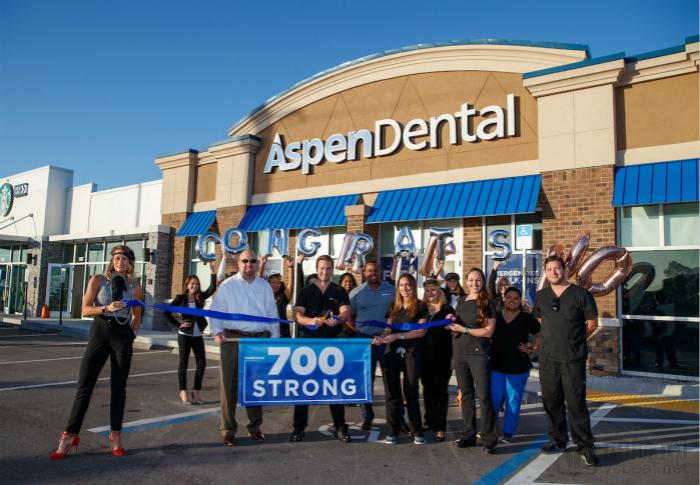
On September 27, 2018, the team celebrated reaching a scale of 700 clinics.
Previously, Aspen Dental had partnered with 15 urgent care clinics under the brand name Five Star Urgent Care. Its most recent major move came on December 13, 2018, when Aspen Dental in East Syracuse, New York, collaborated with Walgreens to provide in-store dental services to Walgreens customers, marking another step toward the LensCrafters retail model for Aspen Dental.
In addition to affordable, comprehensive dental care, the dental clinics within Walgreens pharmacies will also offer:
1. Provide free new patient examinations and X-ray screenings for uninsured individuals;
2. On-site dental laboratories facilitate the rapid fabrication, repair, relining, or adjustment of custom dentures—not limited to those purchased from Aspen Dental—along with a denture refund guarantee.
3. Various Payment Plans.
“The Amazon” Effect
According to available data, Walgreens Boots Alliance (WBA) currently operates in 25 countries and regions worldwide (primarily the United States and the United Kingdom), with 18,500 pharmacies. Of these, nearly 10,000 are located in the United States, over 2,000 in the United Kingdom, and more than 1,000 in Mexico. The company maintains over 390 pharmaceutical distribution centers and employs 415,000 people. Approximately 400 Walgreens stores offer healthcare clinics. Around 8 million customers interact with Walgreens daily, both in-store and online. In 2017, its revenue amounted to $131.54 billion. In January 2019, Microsoft announced a partnership with Walgreens Boots Alliance.
In the retail pharmacy sector, a major external driver of change stems from tech giants like Amazon frequently expanding their footprint in healthcare: In early 2018, Amazon announced a joint venture focused on healthcare with JPMorgan Chase and Berkshire Hathaway. Prior to this, Amazon acquired the online pharmacy PillPack for nearly $1 billion. Looking ahead, Amazon’s healthcare initiatives may extend deeply into pharmacies, laboratory testing centers, urgent care, and health benefits, posing a significant threat to the relatively “traditional” retail pharmacy and health insurance industries.
In response to the “Amazon effect,” the only viable defense is service accessibility—expanding services that cannot be provided online. This is essential for the survival of brick-and-mortar retail. Retail pharmacies are leveraging their key advantage: location. A Walgreens or CVS store may be closer to you than your doctor’s clinic.
Notably, CVS has also partnered with the startup SmileDirectClub, which sells teeth-aligner kits directly to consumers via the internet. CVS has added SmileShop Express kiosks in six of its pharmacy locations, where consumers can undergo intraoral scanning for the creation of clear aligners. According to both companies, this is currently a pilot program.
Regarding this collaboration, Pat Carroll, Chief Medical Officer of Walgreens, stated, “Adding a dental clinic that offers a full range of services—from cleanings to Invisalign orthodontic treatment to crowns and bridges—aligns well with Walgreens’ strategy. This makes dental care more accessible and transparent, as Walgreens provides conveniently located stores, while Aspen Healthcare publishes prices online and allows patients to book appointments digitally.”
This is also a way to tap into Walgreens’ existing customer base: the elderly.
Traditional Medicare insurance does not cover most dental treatments, requiring seniors to pay out-of-pocket for dental care. Aspen has released its pricing, and more private Medicare plans, such as Medicare Advantage, have begun offering dental coverage. Consequently, as an increasing number of seniors gain insurance coverage, Walgreens believes it can make it easier for them to find dentists, since they already visit Walgreens stores to fill their prescriptions.
“More people are seeking dental services as their dentists may be retiring, and they are looking for more options,” said Pat Carroll. “We are also focusing on the population that truly uses Walgreens and the services they need at our pharmacies.”
Private Dentists Build Differentiated Specialty Services
For businesses and investors, dentistry (such as orthodontics and dental implants) is highly profitable. The volume of such cases is expected to increase in the future, and patients can easily check whether pharmacies offer these dental services.
Of course, while intensified competition from retail pharmacies may be good news for patients, it is not necessarily so for dentists in private practices. To address the alliances between Dental Support Organizations (DSOs) and pharmacies, private practices must build differentiated competitive advantages by consolidating their strengths as smaller community-based clinics, fostering patient relationships, and cultivating loyalty.
After all, consumers are increasingly shopping online, posing an inevitable challenge for pharmacies. As a result, Walgreens and CVS are seeking transformation. Previously, Walgreens has added FedEx and Sprint Health Hubs in select stores and partnered with beauty e-commerce platform Birchbox to strengthen its beauty product lineup and enhance differentiated competitive advantages. Beauty consultants at Walgreens, trained by Birchbox, provide recommendations and guide customers through product experiences. Given this precedent, such services can be seamlessly extended to the dental care sector.
Some commentators have revealed that, as part of the “Amazon effect,” Walgreens and CVS are attempting to launch dental clinics within pharmacies to make services more convenient, which could erode dentists’ profits. However, data from Ominstar Beacon shows that when asked about receiving dental care in a retail setting, only 11% of respondents expressed strong interest, while 61% were not interested.
Aspen Dental plans to open another Walgreens co-located pharmacy-clinic in Tampa, Florida, in the second quarter of 2019. True innovation in the healthcare sector often advances quietly and imperceptibly; each shift in care settings creates new demands that can even trigger a cascade of systemic restructuring.
Image source: Company website/Business Wire
References:
A Brief Analysis of the U.S. Dental Care Service Industry (II) — The Emergence and Development of DSOs by Zhongheng Xingguang