

Where Is the Internet Hospital Headed? Wuzhen Internet Hospital Expands into Specialized Disease Care with New Prospectus Filing
Comprehensive rhinoplasty, wrinkle reduction, thread lift, radiofrequency skin tightening... In recent years, an increasing number of specialized terms from medical aesthetics and plastic surgery have become topics of daily conversation. The "beauty economy" and consumption upgrading have gradually heated up the consumer healthcare sector. According to a report released by Deloitte, the scale of China's medical aesthetics market had already reached RMB 87 billion in 2015, with projections indicating that the market would reach RMB 464 billion by 2020, representing a compound annual growth rate (CAGR) of 40%.
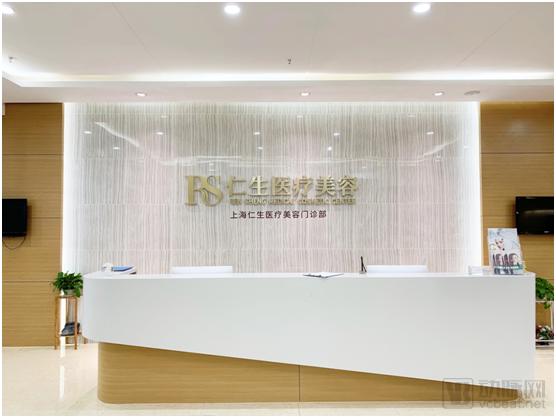
Perceiving new shifts in consumer behavior and emerging demands, the health-tech platform WeDoctor has launched its wholly-owned professional medical aesthetics institution in Shanghai—Shanghai Rensheng Medical Aesthetics Outpatient Department (hereinafter referred to as “Rensheng Medical Aesthetics”). This marks the first foray by an industry unicorn into the offline medical aesthetics sector. The development of the internet has provided a new platform for the rapid growth of consumer healthcare. Rensheng Medical Aesthetics is committed to exploring new models within the medical aesthetics industry through a management approach that integrates “Internet + physician platform + standardized specialties,” leveraging WeDoctor’s data capabilities and extensive user base.
The medical aesthetics industry is characterized by uneven standards and frequent medical accidents, imposing higher requirements on internet companies regarding professional teams and equipment. As the leader of Rensheng Medical Aesthetics, Professor Fan Zhihong studied under Academician Zhang Disheng, known as the father of plastic surgery in China. He previously served as the Deputy Director of the Department of Plastic Surgery at Shanghai Ninth People’s Hospital, often referred to as the “Whampoa Military Academy” of the medical aesthetics field, and currently serves as the Director of the Department of Plastic Surgery at Shanghai Renji Hospital. Rensheng Medical Aesthetics has established strategic partnerships with globally renowned medical aesthetic research and development institutions, including Cutera, Candela, Lumenis, and Allergan from the United States. By introducing advanced global instruments and equipment, it provides services such as dental aesthetics, skin beauty treatments, non-surgical cosmetic procedures, and surgical plastic surgery.
Additionally, consumers can access the “Medical Aesthetics” portal on the WeDoctor App homepage to utilize online services such as appointment scheduling, expert consultations, and post-consultation follow-ups. This enables comprehensive beauty management powered by the “Internet+” model, allowing users in Shanghai to enjoy world-class medical aesthetic services without leaving the city.
With the rapid development of the industry, traditional offline specialized medical institutions are facing challenges such as a shortage of specialist physicians and difficulties in branded chain management. Issues including patient management complexities, lack of transparency in informatization, and inefficient resource linkage channels have also become increasingly prominent.
WeDoctor’s Wuzhen Internet Hospital, with its years of accumulated high-quality medical resources and operational expertise, is well-positioned to help specialized medical institutions remove the “stumbling blocks” on their path to development.
By the end of 2015, WeDoctor partnered with the government to establish the Wuzhen Internet Hospital platform, integrating online and offline services. To date, it has connected 280,000 doctors across China, formed more than 7,500 expert teams, and established specialty consultation centers led by 12 academicians. Additionally, it has independently built seven specialist physician groups in plastic surgery, ophthalmology, rehabilitation, minimally invasive general surgery, minimally invasive urology, minimally invasive gynecology, and hepatology and gastroenterology.
By integrating robust online expert resources, Wuzhen Internet Hospital has established a standardized diagnosis and treatment system for 180 common conditions across more than 20 specialties, focusing on the standardization of diagnosis, surgical procedures, medication, and follow-up care. Leveraging AI technology to replicate the valuable clinical expertise of leading specialists, the hospital has formed a four-tier specialist alliance system comprising leading experts, multi-site practice physicians, teaching physicians, and county-level specialist doctors.
Taking Rensheng Medical Aesthetics as an example, Wuzhen Internet Hospital can guide online users to experience its professional medical services. Meanwhile, by leveraging AI technology, the clinical expertise of Professor Fan Zhihong’s team is transformed into a standardized system for plastic surgery diagnosis and treatment. This approach further breaks down barriers within the medical aesthetics clinic industry, facilitates the decentralization of top-tier specialized resources, reshapes clinical workflows, and provides necessary resources and services. It assists medical aesthetics institutions in achieving standardized, normalized, and lean operations, thereby enhancing operational efficiency.
The 2019 Government Work Report proposed “accelerating the promotion of ‘Internet Plus’ across all industries and sectors” and “enhancing scientific and technological support capabilities.” Yang Jianchun, Executive Director of Wuzhen Internet Hospital, revealed that starting with plastic surgery through Rensheng Medical Aesthetics, Wuzhen Internet Hospital will leverage technologies such as the internet and artificial intelligence in the future. With a focus on grassroots healthcare, it aims to facilitate the downward flow of high-quality resources from major cities, support the development of specialized medical services at the county and city levels, and enable the public to access more cost-effective medical services.