

Ningbo Teyi Files IPO Prospectus: Building Domestic Medical Foods for Chronic Disease Nutrition Solutions with In-house Lab Testing of 60 Quality Parameters

Med-Fine Capital
Venture Capital Firm
Ten years ago, Yang Guomin, founder of Ningbo Teyi, and his wife carried their newborn son from one doctor to another in search of a cure. They tried various approaches, including topical ointments, probiotics, and even folk remedies, yet their son’s eczema showed no improvement. Yang was deeply distressed: “I studied pharmaceuticals and worked in the medical field for over a decade, but in the end, I couldn’t even cure my own son’s illness.”
“On the verge of giving up, a friend introduced me to a specialist. ‘I didn’t have high hopes; I just went because my friend had made the introduction,’ said Yang Guomin. ‘It was only after the consultation that we learned my son had a cow’s milk protein allergy. The specialist recommended a formula for special medical purposes (FSMP)—an amino acid-based formula. We used this product to replace breast milk, and our son indeed improved.’”
Afterward, through conversations with many industry peers, Yang Guomin discovered that there are many other children like his son who suffer from cow’s milk protein allergy. Upon reviewing relevant literature, he found that the domestic market for foods for special medical purposes (FSMP) had long been dominated by foreign brands, which accounted for nearly 90% of the total market share. In the infant formula segment, imported products from multinational companies such as Nutricia, Nestlé, and Mead Johnson prevailed, leaving the domestically produced segment virtually untapped.
Yang Guomin, drawing on his years of frontline experience in the pharmaceutical industry, identified a business opportunity. He joined forces with several friends who also had extensive experience in the sector to pursue this venture, promptly assembling a team. The team began consulting leading pediatric healthcare experts across China and reached the following conclusion: 13% to 15% of infants and young children are allergic to various types of food, with over 80% of these cases involving cow’s milk protein allergy.
“Enable infants and young children with cow’s milk protein allergy to consume domestically produced formula powder.” With high expectations, Yang and several friends leased a laboratory in the R&D center of a foreign-funded company and embarked on their research and development efforts.
After two and a half years of development, a product closely resembling Asian human breast milk was created.
Using Nutricia’s overseas products as a benchmark, Te Yi selected an amino acid-based infant formula suitable for infants and young children with eczema, diarrhea, and moderate-to-severe cow’s milk protein allergy as its inaugural product.
At that time, apart from imported finished products, Te Yi had no knowledge of the raw materials, formulations, or data. Moreover, infants and young children often refused these imported products due to their poor taste.
In response to the existing issues, the team had no choice but to address them one by one. First, the team studied overseas finished products, analyzed and improved upon them to develop a new formula. Based on this formula, they sourced raw materials and prepared the first-generation amino acid formula powder. However, after testing and trials, it was found that the raw materials used in the product contained excessive impurities.
Yang Guomin stated that although the raw materials were supplied by top-tier domestic vendors, their impurity levels still failed to meet standards and could not compare with foreign counterparts. Due to the inability to source suitable raw materials, Teyi had suspended the project for six months.
Recalling the twists and turns of the past six months, Yang Guomin was deeply impressed. “We attempted to reach out to top-tier international raw material suppliers. However, major foreign manufacturers hardly paid attention to a small, lesser-known domestic company like ours. We had no choice but to proceed step by step: we reached out to overseas contacts, who helped us connect with distributors. Through layered communications from Asian distributors to Chinese distributors, we ultimately secured raw materials from leading international manufacturers via negotiations with the distributors.”
With the raw material issue resolved and the product manufactured, it was discovered that the taste was unsatisfactory. “The ratio of DHA to ARA in breast milk from Caucasian women is generally around 1:1, whereas in Asian women’s breast milk, the DHA-to-ARA ratio is typically between 1:1.8 and 1:2,” Yang Guomin told VCBeat. “However, such data were unavailable at the time, so we were unaware of the characteristics of Asian women’s breast milk.”
Subsequently, the team began collecting data and conducting extensive research, ultimately formulating a recipe that most closely resembles Asian breast milk. Yang Guomin emphasized that special medical purpose foods for infants and young children are unique in that they must not contain any additives; however, because TeYi’s product closely mimics Asian breast milk, it also offers a better taste profile compared to overseas products.
After two and a half years of development, Te Yi launched its first product—Jiaruibao Amino Acid Formula Powder. With the successful validation of this initial product line, Te Yi subsequently developed six additional products based on market feedback, providing a comprehensive solution for infants and young children with cow's milk protein allergy.
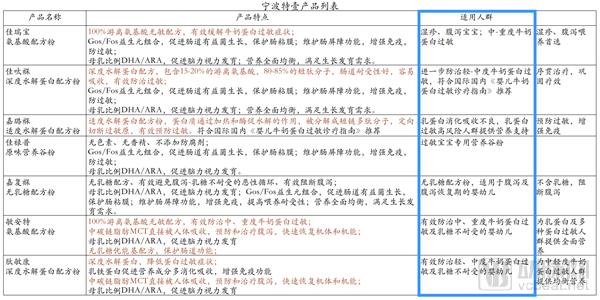
Existing Products of TeYi (Source: Provided by the Company)
In-house laboratories can perform individual testing for 60 indicators.
Safety is an unavoidable topic for foods for special medical purposes (FSMP), especially those designed for infants and young children. Yang Guomin stated that TeYi ensures the safety of its products through three factors and a two-tier quality control process.
Yang Guomin provided a detailed explanation of its three contributing factors, which specifically include the following aspects:
First, regarding raw materials. The raw materials for TeYi’s products are all sourced from globally renowned companies, such as the European dairy supplier Dairygold from Ireland, the New Zealand dairy producer Fonterra, and the European starch and deep-processed product supplier Roquette from France.
Secondly, in terms of facilities. Te Yi possesses a complete set of advanced equipment and a fully automated production line for foods for special medical purposes (FSMP). From raw material intake, production control, and finished product inspection to final sales, Te Yi achieves full-process electronic quality traceability for every can of product.
Thirdly, in terms of managing the production and operations team. To prevent quality complacency within the enterprise, Teyi has authorized its Qualified Person to report directly to the Board of Directors, ensuring strict implementation of rules and regulations.
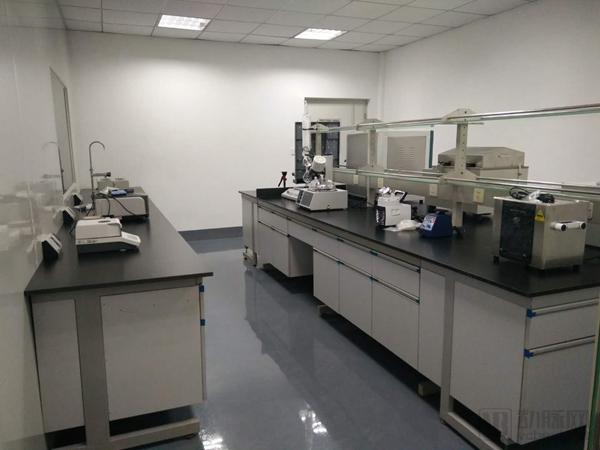
Teyi Laboratory (Image source: Provided by the enterprise)
Regarding the two-tier review process, Yang Guomin told VCBeat:
First is self-inspection. Te Yi has a complete set of quality control systems. Te Yi possesses three major quality systems: the ISO 9001 Quality Management System, HACCP (Hazard Analysis and Critical Control Points) System, and GMP (Good Manufacturing Practice), strictly controlling the production process.
Furthermore, to ensure fully controlled quality, TeYi established its own factory in 2017, enabling in-house testing of individual product components across nearly 60 parameters.
Second is third-party testing. Teyi submits its self-tested products to the Ningbo Entry-Exit Inspection and Quarantine Bureau Testing Center, one of the six most authoritative testing centers in China.
Expand and enrich the product portfolio in the field of adult rare diseases
According to statistics from the China Nutrition and Health Food Association, the global annual consumption of foods for special medical purposes (FSMP) totals RMB 56 billion to 64 billion, with the market size growing at an annual rate of 6%. In the United States, 65% of malnourished patients use FSMP, compared to 27% in the United Kingdom, while only 1.6% do so in China. Although FSMP in China falls far short of meeting market demand, it is experiencing rapid growth, with an average annual increase exceeding 35%.
According to the VCBeat article “[Exclusive] Ningbo Teyi Secures Tens of Millions in Series A Funding Led by Med-Fine Capital; Both Parties to Jointly Build a Management Platform for Personalized Nutritional Dietary Solutions for Chronic Diseases》shows that, with the gradual expansion of the market and basic coverage in the infant and toddler sector, Teyi has expanded its target to the adult market. After market research, it initially focused on patients with muscular atrophy.
It is reported that sarcopenia is prevalent among the elderly, postmenopausal women, and bedridden stroke patients. As China’s aging population grows, the number of individuals affected by sarcopenia is expected to rise, increasing the demand for Foods for Special Medical Purposes (FSMP) to help them meet their nutritional needs. Market estimates indicate that the total addressable market in this sector exceeds RMB 10 billion.
In addition, TeYi is planning to launch six products targeting oncology, postoperative rehabilitation, diabetes, epilepsy, and rare pediatric diseases, with the aim of building an enterprise-level platform for personalized nutritional dietary solutions for chronic disease management.