

China's Speech Rehabilitation Industry: Maturing Tier-1 and Tier-2 Markets, Leading Players Surpass RMB 200M in Revenue with Over 100% Growth
Speech-language therapy is a specialized discipline in which speech-language professionals provide treatment or remediation for individuals with various speech and language disorders.
In China, the content of speech rehabilitation is mainly divided into three categories:
The first category isRehabilitation and Education for the Deaf-Mute, this sector is primarily supported by national aid and assistance;
The second category isAssessment, Diagnosis, Treatment, and Research of Speech Disorders, including aphasia, dysarthria, developmental language delay in children, social communication disorders, voice disorders, and stuttering. This sector represents the primary research and business focus of rehabilitation institutions, with interventions delivered by speech-language pathologists;
The third category isDysphagia, this sector requires multidisciplinary comprehensive treatment, a service that only some medical institutions can provide.
Although this discipline has been widely developed in developed countries such as the United States, it has not yet received sufficient development and attention in China. In the eyes of most people, speech-language pathologist remains a little-known profession.
To gain insight into this industry, VCBeat (WeChat ID: vcbeat) has compiled an overview of speech rehabilitation institutions in China, with a particular focus on private chain providers, to assess the current state of development and prevailing challenges in the speech rehabilitation sector.
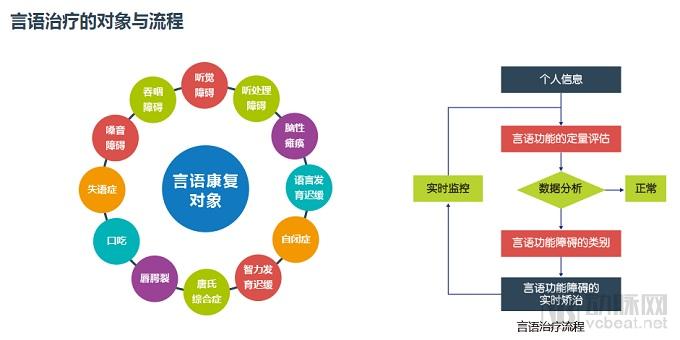
Image source: Taiyige
Current Status of Speech Rehabilitation in China
Speech rehabilitation in China originated in the 1980s and has developed for over 30 years to date.
After more than 30 years of effort, China has accumulated extensive experience in the diagnosis and treatment of speech disorders, with nearly 10,000 speech-language pathologists. However, the number of patients with speech disorders in China remains substantial. Developmental, acquired, and degenerative neuromuscular diseases, as well as injuries and conditions affecting speech-related organs, can all lead to speech and language impairments.
A comparison between China and the United States reveals that the American Speech-Language-Hearing Association (ASHA) currently has approximately 150,000 members, all of whom hold master’s, doctoral, or clinical doctorate degrees. In contrast, China has only about 10,000 therapists, indicating a severe shortage in provider-to-population ratio compared to the United States.
Data source: China Disabled Persons' Federation
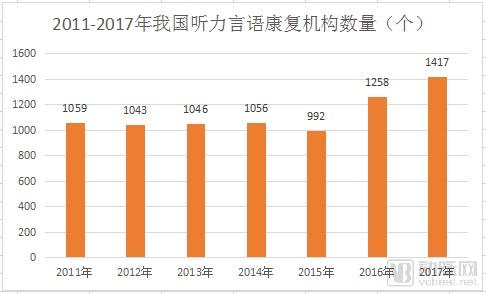
As of 2017, China had established a relatively comprehensive speech rehabilitation system. The number of speech rehabilitation institutions increased from 1,059 in 2011 to 1,417 in 2017.
Among them, the China National Rehabilitation Research Center for Hearing and Speech (abbreviated as CNRRCHS), established in 1983, is the only national-level hearing and speech rehabilitation institution in China. It serves as the technical resource center and industry management body for hearing and speech rehabilitation work nationwide. CNRRCHS oversees 31 provincial-level hearing and speech rehabilitation institutions, which are responsible for carrying out hearing and speech rehabilitation services in their respective provinces.
Other rehabilitation institutions include primary-level hearing and speech rehabilitation institutions and medical institutions specializing in speech rehabilitation, with the former further categorized intoLicensed and Unlicensed Designated Rehabilitation Institutions Affiliated with the Disabled Persons' Federation。
These institutions constitute the institutional framework for hearing and speech rehabilitation in China.
Private Chain Speech Rehabilitation Institutions Become an Important Force
In the early 21st century, private rehabilitation institutions in China began to emerge gradually, becoming a significant force in exploring and introducing advanced foreign speech rehabilitation technologies, standards, and experience.
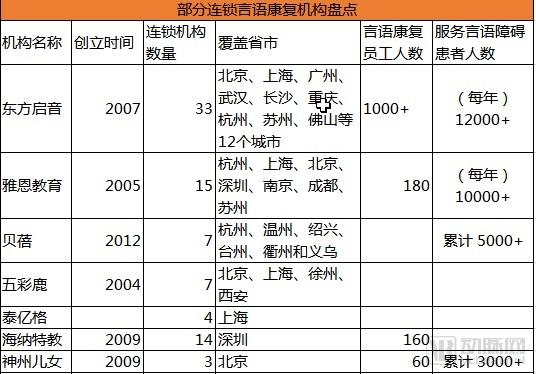
In terms of establishment date, well-known domestic chain speech rehabilitation institutions were all founded between 2000 and 2010, having cultivated the field of speech rehabilitation for over a decade.
These institutions have established their foothold by introducing advanced overseas speech rehabilitation expertise, leveraging service delivery and talent development. With the impetus of capital investment, they have begun to expand rapidly across China.
According to Bian Qiongxia of Ya’en Education, the company received investment from Legend Capital in 2015 and entered a phase of cross-regional expansion across China. In May 2016, Ya’an Education had only six chain centers, which expanded to 15 within the following two years.
In December 2017, Ostlin secured $25 million in Series B financing, with more than 20 directly operated centers across China at the time. Cui Guangli, founder of Ostlin, told VCBeat that the company now operates 33 direct-to-consumer speech rehabilitation centers.
In recent years, although the reputation of private rehabilitation hospitals has been affected by the influence of "Putian-system" hospitals, in the field of speech rehabilitation, private medical institutions remain the core force, theyHas made significant contributions in areas such as talent training, the localization of outstanding overseas curricula, and promoting the widespread adoption of speech rehabilitation.。
Taking the pediatric rehabilitation outpatient clinics of Changhe Healthcare in Beijing, Shanghai, and Shenzhen (Changhe Dayun), as well as Kunming Changhe Tiancheng Hospital, as examples, these institutions have adopted the standards and systems of specialized children’s rehabilitation from New Jersey, USA, and engaged professional rehabilitation consultants. They provide speech rehabilitation services grounded in evidence-based medicine and delivered through multidisciplinary team collaboration, thereby filling a gap in China’s specialized medical rehabilitation sector.
Differences Between Public Hospitals, Institutions Affiliated with the China Disabled Persons' Federation, and Private Rehabilitation and Educational Institutions
Zhao Yang, Operations Director of Changhe Medical, told VCBeat thatPublic hospitals dominate the entire field of speech rehabilitation, particularly in pediatric speech rehabilitation.。
In China, pediatric hospitals and the pediatric departments of general hospitals are the primary providers of speech diagnosis and rehabilitation services for children. The public’s healthcare-seeking behavior typically involves an initial consultation with a pediatrician. Depending on the individual case, rehabilitation may be provided directly within the consulting department, or patients may be referred to institutions designated by the pediatrician. Notably, speech rehabilitation constitutes only a small proportion of the services offered by dedicated rehabilitation departments.
We interviewed Zhu Miao, a former rehabilitation therapist at Wenxian County People’s Hospital, and learned that the hospital’s rehabilitation department focuses primarily on neurological rehabilitation, especially stroke. Rehabilitation therapists mainly provide physical therapy (PT) and occupational therapy (OT), as well as traditional Chinese medicine treatments such as acupuncture and massage. Speech therapy services are primarily managed by the pediatric department.
Certainly, domestic specialized rehabilitation hospitals also offer speech rehabilitation services, employ dedicated speech-language pathologists, and provide training for speech therapists.For example, the Department of Audiology and Speech at Beijing Bo'ai Hospital is one of the hospital's 51 departments. The department has 19 staff members and provides nine therapeutic services, including the diagnosis and treatment of aphasia and dysarthria. It handles more than 200 patient visits per day and over 50,000 visits annually. Additionally, it trains 40 to 60 trainees from across China each year, resulting in a substantial workload.
Due to the shortage of speech therapists in public hospitals, services fail to meet demand.Therefore, private chains of rehabilitation and educational institutions have filled this gap by expanding the speech therapy segment.。
Some institutions employ hundreds or even over a thousand rehabilitation therapists, with staff numbers and facility sizes ten to one hundred times those of a single hospital. They can provide one-on-one medical services as well as small-group education to improve children’s communication skills.
Cui Guangli told VCBeat that after learning mature curricula and training programs from overseas, chain speech rehabilitation institutions have established a career development pathway for speech therapists—ranging from assistant therapist to intermediate, senior, and supervising therapist—following localized adaptations.
In terms of facilities, there is a significant gap between public hospitals and leading private speech rehabilitation institutions. Public hospitals typically have spaces of around 100 square meters, whereas private clinics can offer areas ranging from 800 to 1,000 square meters or even larger.
Due to limitations in space and staffing, public hospitals generally only provide assessment and diagnosis; physicians typically advise individuals with speech disorders to undergo rehabilitation at rehabilitation institutions or rehabilitation schools established by the China Disabled Persons' Federation.
Rehabilitation institutions affiliated with the China Disabled Persons’ Federation (CDPF) generally have sufficiently large rehabilitation facilities. However, the CDPF typically conducts rehabilitation therapy on a class-based basis, focusing on improving life skills for individuals with speech disorders, especially children.
In contrast, private speech rehabilitation institutions typically offer a comprehensive range of services covering assessment, diagnosis, and rehabilitation, with many sessions conducted on a one-on-one basis. It is precisely due to these differences in service quality that there is a significant disparity in pricing between the two.
Cui Guangli stated,Some early childhood education institutions and speech rehabilitation centers have overlapping business scopes, as both involve parent-child education. However, the most significant difference is that most early childhood education institutions lack the capacity to provide rehabilitative services for children with speech disorders.。
In fact, speech rehabilitation is intended for individuals with speech disorders across all age groups. However, due to the limited prevalence of speech rehabilitation programs in China and the high demand among children, the majority of recipients are school-aged children.
Localizing Outstanding Overseas Courses
As speech-language rehabilitation in China started relatively late and foreign countries have mature curriculum systems, private institutions in China typically develop their programs by optimizing and localizing established overseas curricula. This approach enables the rapid establishment of training programs that are aligned with global standards.。
Taking Yaan Education as an example, the institution has established six major curriculum modules, including developmental language training, speech articulation therapy, RDI (Relationship Development Intervention) counseling and coaching, and the Picture Exchange Communication System (PECS). It holds the exclusive authorization from Pyramid Educational Consultants in the U.S. to introduce the Picture Exchange Communication System (PECS), making it the sole entity authorized to provide certified training across Mainland China, Hong Kong, Macao, and Taiwan. For preschool-aged children with autism spectrum disorder and related disabilities, the majority are able to develop independent language skills after undergoing PECS training.
Furthermore, Yaen Education has developed online courses for parents of children with speech disorders to enhance their knowledge and skills in home-based training. This initiative aims to reduce the need for offline sessions, thereby lowering treatment costs for families. Additionally, it provides parents in regions without established training centers with access to a professional training system.
Formulation of Standards for Speech Rehabilitation
Dr. Shan Chunlei, who holds a Ph.D. in Cognitive Neuroscience from the Chinese Academy of Sciences, pointed out in his article “Seizing Great Opportunities to Achieve a New Leap Forward for Speech Therapy in China”:
After nearly three decades of effort, China has accumulated extensive clinical experience in speech therapy. In the area of speech assessment, a variety of independently developed evaluation tools with proprietary intellectual property rights have been created, including the Chinese Aphasia Assessment Scale, the Standard Chinese Aphasia Examination, the Dysarthria Evaluation Method, the Apraxia of Speech Evaluation Method, and computer-assisted assessment systems.
Meanwhile, we have also localized the Boston Diagnostic Aphasia Examination and the Western Aphasia Battery, conducted in-depth research on developing assessment scales for language disorders in Uyghur, Cantonese, and other languages, and established a set of effective quantitative assessment methods for speech and language functions.
In the field of speech therapy, services have expanded from the initial focus on rehabilitation for aphasia, dysarthria, and pediatric hearing impairment to encompass the treatment of a wide variety of speech and language disorders, including stuttering, developmental language delay in children, language impairments associated with autism spectrum disorder, voice disorders, post-cochlear implant rehabilitation, and dementia-related communication deficits.
Private institutions are also actively introducing overseas assessment scales.On August 25, 2018, Mr. Sun Changsen, Chairman of Changhe Medical, and Director Long Mo of the Chinese Research Center for Hearing and Speech Rehabilitation signed a project cooperation agreement on the Chinese version of the Griffiths Developmental Assessment Scales at the "2018 China Hearing and Speech Forum," marking the official launch of their strategic collaboration in the field of the Chinese version of the Griffiths Developmental Assessment Scales.
Thus, it is evident that private institutions play a significant role in advancing the development of speech rehabilitation standards in China.
The Development of Speech Rehabilitation Education
The shortage of talent has long been a critical factor constraining the development of China’s rehabilitation industry, with both government and private-sector entities cultivating rehabilitation professionals through their respective approaches.
In 2013, the Ministry of Education adjusted the undergraduate education catalog, formally establishing the undergraduate major in “Hearing and Speech Rehabilitation,” which falls under the discipline of “Medical Technology.”
As the discipline is still in its early stages, the vast majority of speech-language pathologists need to consolidate and expand their professional skills by participating in relevant training programs organized by professional associations and leading medical institutions in the field of speech rehabilitation.
Therefore, the professionalism of the training organizers and faculty, the scientific rigor and practicality of the curriculum design, and the use of internationally aligned, evidence-based diagnostic and rehabilitation tools are the primary concerns for participants.
Currently,Eight universities in China have already established programs in Hearing and Speech Rehabilitation.Among them, five universities focus on hearing rehabilitation, including Capital Medical University, Xinhua College of Sun Yat-sen University, Zhejiang Chinese Medical University, Binzhou Medical University, and West China School of Medicine, Sichuan University; three universities specialize in speech rehabilitation, including Shanghai University of Traditional Chinese Medicine, Kunming Medical University, and East China Normal University (Educational Rehabilitation major).
In addition, numerous normal universities and vocational colleges have also launched programs in this field, all of which have driven the development of speech therapy education.
In terms of textbook development, the first batch of “13th Five-Year Plan” undergraduate planning textbooks for the “Hearing and Speech Rehabilitation” major, published by People’s Medical Publishing House, also commenced compilation in July 2016. This series of textbooks broke away from the previous limitation in planned textbooks for rehabilitation medicine or rehabilitation therapy, where speech therapy was covered in only a single volume.A total of 13 professional textbooks have been planned, including 9 on audiology and 4 on speech-language pathology.
Compared with previous editions, these textbooks will achieve a qualitative leap in both the breadth and depth of their content. Upon publication, they will significantly enhance the professional competence of speech-language therapy practitioners.
In the process of talent development, universities also collaborate with enterprises; for instance, Kunming Changhe Tiancheng Hospital, under Changhe Medical, partners with Kunming Medical University to train speech-language pathologists.
According to VCBeat, four speech therapists at Kunming Changhe Tiancheng Hospital are responsible for delivering four speech rehabilitation courses at Kunming Medical University. Each cohort sees 35 to 40 speech therapy graduates, who are free to choose their employers upon graduation; annually, four to five of these therapists remain at Kunming Changhe Hospital.
As there are very few speech-language pathology and rehabilitation programs offered by Chinese higher education institutions, failing to meet industry demand, the company needs to cultivate its own talent and has established an in-house training system.
Bian Qiongxia told VCBeat that Yaen Education invests the most in employee skill development each year.
Two types of cultivation methods are available: oneOne approach is to invite distinguished speech rehabilitation experts from both China and abroad to conduct systematic training at Yaen; the second is to select outstanding employees for external study opportunities.。
Bian Qiongxia stated that it is currently difficult to recruit young people who are patient and willing to commit long-term to this industry. Professionals in this field interact daily with special needs populations, whose parents seek consultations with high expectations. However, speech rehabilitation does not yield immediate results; impatient parents may voice complaints and project their anxiety onto speech therapists.
Therefore, rehabilitation therapists need to continuously adjust their mindset to cope with these pressures. Often, a child undergoing rehabilitation provides significant encouragement and comfort to the therapist.
Cui Guangli told VCBeat that OASIS has introduced technical talent and training instructors from developed countries and regions such as Hong Kong, the United States, and Australia, while also training local professionals in the medical and education sectors. Additionally, outstanding employees are selected for advanced studies abroad to further enhance their expertise. Currently, OASIS trains 80 to 100 speech rehabilitation professionals each month.
Standardized talent development has also ensured service quality for Ostar’s rapid expansion.
Some chain institutions also collaborate with renowned international organizations to issue certificates to qualified trainees. For instance, Dongfang Qiyin partners with the University of Newcastle in Australia to provide training for speech therapists. The curriculum integrates theoretical instruction with clinical practice, and upon successful completion, the University of Newcastle awards the STA certificate, which meets international standards.
This training system has propelled the development of speech therapy (ST) education in China. Currently, Dongfang Qiyin has partnered with several domestic universities to accelerate the training of qualified speech therapists, addressing the current limitation where much rehabilitation education focuses solely on autism and pedagogy.
Furthermore, as a private healthcare institution, providing employees with substantial, transparent compensation is a crucial strategy for retaining talent.
Technical Solutions to Communication and Interaction Challenges
In addition to addressing speech disorders through pedagogical interventions, experts in science and technology are also leveraging technological solutions to tackle communication challenges.
Professor Zhai Guangtao and his team from the Department of Electronic Engineering at Shanghai Jiao Tong University have developed an ITA immersive autism therapy system to aid in the rehabilitation of children with autism.
This system, by simulating a VR virtual environment, primarily offers two functions: assisted assessment and diagnosis, and systematic curriculum planning. Its targeted course and content design, aligned with cognitive and developmental psychology, can enhance children’s attention span, stimulate their interest in learning, and improve interactive experiences.
By meticulously recording data throughout the experience for comparative assessment, a basis is provided for customizing more effective intervention plans, thereby achieving synchronization between assessment and intervention. Leveraging VR technology, scenarios can be varied and courses tailored to the preferences of children with autism spectrum disorder (ASD), gradually enhancing their communication skills through interactions with virtual cartoon characters.
Professor Zhai Guangtao told VCBeat that VR technology features interactivity, immersion, and imagination, offering the possibility of helping children with autism open up.
Due to the unique characteristics of children with autism, it has been challenging for the team to recruit a sufficiently large cohort, thereby precluding the completion of long-term randomized controlled trials. Although the team conducted several controlled trials, adequate data could not be obtained due to various constraints. Nevertheless, existing trial results demonstrate evident improvements. Meanwhile, the device has undergone pilot testing in several rehabilitation institutions, receiving positive user feedback, with some children with autism showing significant improvement.
In fact, many researchers and hospitals have focused their studies on speech disorders primarily within the context of autism; however, speech disorders encompass more than just autism, and research into these conditions extends beyond virtual reality (VR) technology.
In terms of research methodologies, diagnostic techniques such as acoustic analysis, functional brain imaging, and electrophysiological monitoring have been widely applied. Research on interventional approaches, including Transcranial Magnetic Stimulation (TMS), Transcranial Direct Current Stimulation (tDCS), the Psycholinguistic Assessment of Chinese Aphasia (PACA), and the Mirror Neuron Training System (MNTS), has approached or partially reached international advanced levels, exerting a certain influence globally.。
Analysis of Typical Domestic Cases
Oriental Speech is a leading professional institution in China specializing in pediatric speech and cognitive development. Established in 2007, it operates 33 directly managed centers across major cities including Beijing, Shanghai, Guangzhou, and Shenzhen. The company employs over 1,300 staff members, with rehabilitation therapists comprising approximately 80% of the workforce. It trains 80 to 100 new speech therapists each month.
In terms of revenue, more than 10,000 families pay for various services at OA Speech Therapy’s centers each year. The company’s total revenue in 2018 exceeded RMB 200 million, nearly doubling that of 2017. Cui Guangli told VCBeat that the company’s annual revenue and the number of families served are both growing at a rate of 100%.
Addressing the pain points in speech rehabilitation, Oriental Speech has implemented practices in the following four areas:
1、Localize advanced international curricula.Its curriculum is divided into medical and educational components. In the medical domain, in 2016, Dongfang Qiyin entered into a strategic partnership with STAR Autism Support, a leading U.S. authority on autism, to jointly develop Chinese-language training programs for autism spectrum disorder (ASD), thereby advancing the professional development of autism rehabilitation in China. In terms of systematic professional education, Dongfang Qiyin collaborates with the University of Newcastle in Australia to standardize its local curriculum. By leveraging extensive clinical cases from its various centers, conducting lesson-based assessments, and formulating individualized training plans to establish evidence-based data, the two institutions jointly undertake research and development on multiple specialized topics in speech therapy in China.
2、Due to the very limited number of speech-language pathology and rehabilitation programs offered by Chinese higher education institutions, which fail to meet industry demands, therefore,Oriental Speech has established its own talent training system., it has introduced technical experts and training instructors from developed countries and regions such as Hong Kong, the United States, and Australia, trained local professionals in the medical and education sectors, and selected outstanding employees for overseas advanced studies. Currently, OASIS can cultivate 80 to 100 speech rehabilitation professionals each month.Standardized talent development has also ensured the quality of services during Ostaling's rapid expansion;
3. Dongfang Qiyin serves not only children with special needs, such as those with autism and cerebral palsy, but also addresses speech disorders in typically developing children and adults, offering tailored courses for each group.In the United States, 60% of speech therapy (ST) services are provided to typically developing children, addressing a wide range of speech and language issues such as articulation disorders, stuttering, logical reasoning deficits, social attention difficulties, and learning disabilities. In contrast, speech therapy services in China primarily cater to children with autism or cerebral palsy. Ostar Education positions itself to serve all individuals with speech and language disorders, not only those with special needs. Currently, Ostar Education has partnered with Country Garden to conduct speech ability screenings for preschool-aged children and provide training for their parents.
4. Establish a training system for the assessment of promoted speech-language pathologists: OSTO has partnered with the University of Newcastle, Australia, to provide training for speech therapists. The curriculum consists entirely of clinical courses, and upon successful completion, participants receive an STA certificate issued by the University of Newcastle, which meets international standards. This training system has promoted the development of speech rehabilitation education in China. Currently, OSTO has collaborated with several domestic universities to help supplement ST clinical courses for qualified speech therapists.
Since 2007, Yaen Education has been dedicated to speech, language, and communication training for children aged 2 to 6 with special needs, providing personalized services for children with language development disorders, developmental delays, and autism spectrum disorder.
Currently, Yaen Education has established 15 branches in Shanghai, Hangzhou, Nanjing, Beijing, Shenzhen, Chengdu, and Suzhou, and will continue to open new service outlets in major cities.The plan is to expand to more than 30 chain service centers within three years, serving over 10,000 families annually.The patient population includes not only individuals with autism but also those with speech and language delays, intellectual developmental disorders, Down syndrome, hearing impairments, and other conditions associated with speech and communication disorders.
Changhe Medical is a rehabilitation healthcare group integrating investment, management, and operations. It has currently established rehabilitation facilities and hospitals in Beijing, Shanghai, Shenzhen, and Kunming.
Kunming Changhe Tiancheng Rehabilitation Hospital is a secondary specialized rehabilitation hospital jointly invested and established by Changhe Medical and Kunming Tiancheng Property Management Co., Ltd.
The hospital has specially appointed renowned authorities in the field of rehabilitation from both China and abroad to establish an international, multidisciplinary team comprising physicians, therapists, dietitians, and psychological counselors. Together, they have developed six premium service sectors: neurological rehabilitation, musculoskeletal rehabilitation, cardiopulmonary rehabilitation, pain management, pediatric rehabilitation, and chiropractic medicine. Additionally, the hospital offers supporting outpatient clinics in internal medicine, surgery, pediatrics, traditional Chinese medicine, pain management, and psychiatry (clinical psychology), along with auxiliary diagnostic departments.
Speech Rehabilitation is a Department of the Hospital.He Hongxiang, Head of Speech Therapy and Associate Director of Speech Therapy at Kunming Medical University, told VCBeat that the hospital currently has 10 speech therapists, including three from Taiwan, China, and the remaining seven being local therapists.
The speech-language pathologists at Changhe Tiancheng Rehabilitation Hospital demonstrate a high level of professionalism; they all hold degrees in Speech-Language Pathology and specialized in speech rehabilitation during their university studies.
Moreover, the hospital'sAll local therapists are graduates of the Speech Therapy program at Kunming Medical University. They serve 700 to 800 patients with speech disorders each month and also undertake speech rehabilitation tasks assigned by the Kunming Disabled Persons' Federation.。
In terms of talent development, Changhe Tiancheng Hospital has established its own professional treatment grading and promotion systems. Each junior and intermediate therapist is assigned a dedicated professional mentor for guidance. As the in-house training academy of the Changhe Medical Group, Changhe Tiancheng Hospital supplies qualified medical rehabilitation professionals to clinics across the group’s nationwide network.
Furthermore, the hospital collaborates with Kunming Medical University to train students. Currently, four speech therapists from Kunming Changhe Tiancheng Hospital are responsible for teaching four courses in speech rehabilitation at Kunming Medical University. Each cohort graduates 35–40 speech therapists, of whom 4–5 remain at Kunming Changhe Hospital annually.
As a rehabilitation hospital under the Changhe Medical Group, Changhe Tiancheng Rehabilitation Hospital is also responsible for drafting training syllabi for speech-language pathologists across various regions. Furthermore, in light of the varying prevalences of pediatric speech disorders in different cities, the team develops customized training curricula beyond the foundational speech therapy courses. For instance, speech therapists in Shanghai and Beijing primarily receive training focused on autism spectrum disorder (ASD). In Shenzhen, the emphasis is placed on rehabilitation for ASD and developmental delays. Meanwhile, speech therapists in Kunming are trained to address a broader range of conditions, including ASD, cerebral palsy, Down syndrome, and adult speech disorders.
[End of Full Text]
Special Acknowledgements:We acknowledge the contributions of Cui Guangli, founder of OASIS; Bian Qiongxia, founder of Yan Education; Zhao Yang, Operations Director at Changhe Medical; Professor Zhai Guangtao from the Department of Electronic Engineering at Shanghai Jiao Tong University; He Hongxiang, Deputy Director of Speech Therapy at Kunming Medical University; and Zhu Miao, former rehabilitation therapist at Wenxian County People’s Hospital.