

Xiamen Becomes First City Nationwide to Implement National '4+7' Centralized Drug Procurement Policy
According to VCBeat (WeChat ID: vcbeat), the national “4+7” city-based centralized drug procurement and utilization program has officially entered the implementation phase.
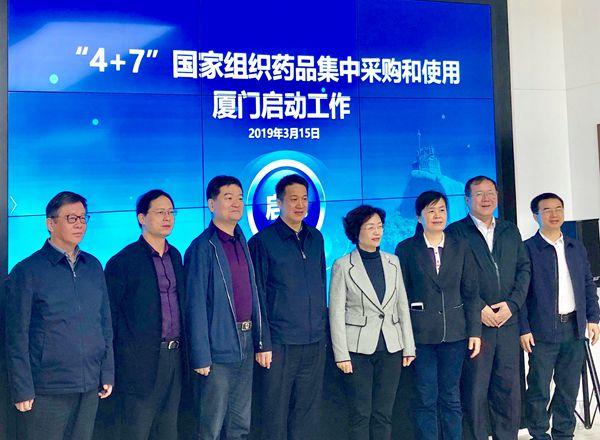
On March 15, pilot public medical institutions in Xiamen initiated the procurement of selected drugs. The First Affiliated Hospital of Xiamen University completed the first purchase order for these selected drugs on the Haixi Platform for Joint Price-Capped and Transparent Procurement of Pharmaceuticals and Medical Devices in Fujian Province.
Three days later, residents of Xiamen will be able to access high-quality, affordable selected medicines at pilot public medical institutions. As a result, Xiamen has become the first among China’s 11 pilot cities to implement the procurement and use of medicines under the “4+7” centralized drug procurement program.
Drug prices are a matter of public concern. At the recently concluded Two Sessions, deputies and committee members engaged in heated discussions on multiple measures to reduce artificially inflated drug prices and alleviate the burden of high medical costs. In early 2019, the General Office of the State Council issued the Pilot Program for National Centralized Drug Procurement and Use, designating 11 cities to pilot centralized drug procurement and utilization.
Compared with the lowest procurement prices for the same drugs in pilot cities in 2017, the average price reduction for the 25 selected drugs was 52%, with a maximum reduction of 96%.Vice Premier of the State Council Sun Chunlan issued instructions, emphasizing the need to combine market mechanisms with government intervention to promote the return of drug prices to reasonable levels.
To ensure that the benefits of the new reform policies reach the public as soon as possible, the Xiamen Municipal Government has organized departments including healthcare security, health and family planning, and market regulation. Centering on the core objectives of “ensuring utilization, ensuring quality, ensuring supply, and ensuring payment,” the government has introduced multiple supporting measures for implementation. It has commissioned the Haixi Pharmaceutical Trading Center to build and operate Xiamen’s “National Centralized Drug Procurement and Usage Supervision Platform,” thereby achieving full-process supervision of selected drugs.
According to VCBeat, the platform enables unified oversight of the procurement, utilization, inventory, and settlement of selected drugs, while providing real-time monitoring of their usage to ensure adequate supply. Healthcare security authorities and distribution enterprises can conduct direct settlement of drug payments through the platform, thereby reducing transaction costs for pharmaceutical companies and safeguarding drug availability.
Through SMS, official accounts, and other channels, the platform also provides patients with convenient services such as medication guidance, reminders, and efficacy feedback, ultimately achieving the reform goal of “policies that are implementable, acceptable to pharmaceutical companies, executable by hospitals, and reassuring to patients.”
At the launch ceremony, Guo Guirong, Deputy Mayor of Xiamen, stated that the “4+7” City Drug Centralized Procurement is a major reform initiative introduced by the CPC Central Committee and the State Council to alleviate the public’s difficulties in accessing medical care. Xiamen took the lead in initiating the procurement and use of selected drugs, marking the transition of this national policy from preparation to implementation. Xiamen will implement the measures with diligence and attention to detail, striving to create a “Xiamen Model” with demonstrative value and potential for broader adoption.
Ma Xiaowei, Director of the National Health Commission, stated during the Two Sessions that the scope of the “4+7” volume-based procurement program would be further expanded and rolled out nationwide. Xiamen took the lead in implementing the “4+7” procurement and utilization initiatives, setting a precedent expected to drive nationwide adoption. This effort aims to reduce the medication cost burden on the public, allowing citizens to benefit from the reforms of the national volume-based drug procurement program.