

Xiamen Secures China's First '4+7' Centralized Drug Procurement Prescription with Full-Process Regulatory Platform Backed by Haixi Medical Exchange
The “4+7” Drug Centralized Procurement and Use: Fierce Competition for the “First Order,” with Xiamen Ultimately Taking the Lead.
As early as the morning of March 18, Zhongshan Hospital Affiliated to Xiamen University issued the first prescription for a drug selected in the national “4+7” city-based centralized procurement program. The prescribed medication was Entecavir Dispersible Tablets, one of the products selected under the “4+7” initiative.
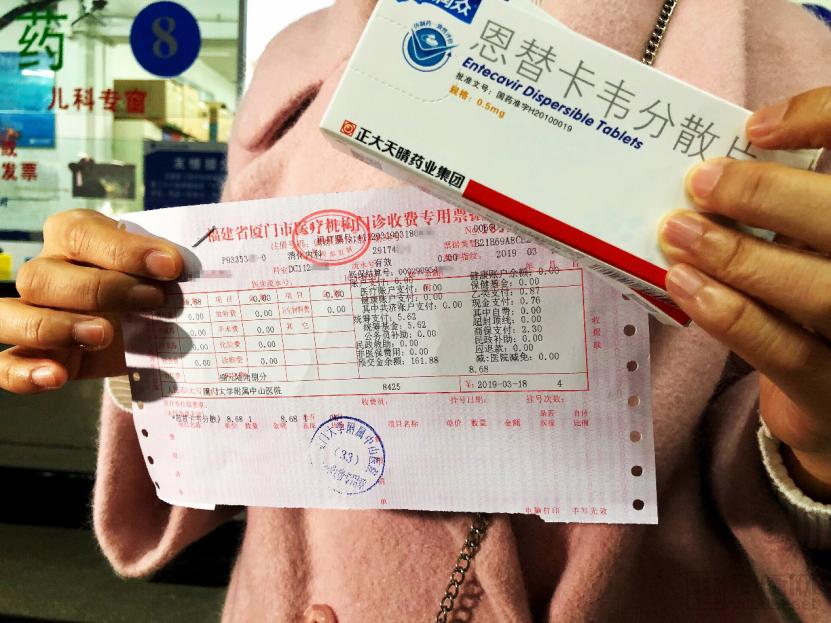 (Figure: Patient receives the first prescription invoice for a drug selected under the “4+7” centralized procurement program)
Previously, on March 15, Xiamen City launched the procurement of medicines selected under the “4+7” centralized volume-based procurement program. Relevant hospitals completed the first purchase of these selected medicines through the Haixi Platform for Joint Price-Capped and Transparent Procurement of Pharmaceuticals and Medical Devices in Fujian Province.
From centralized procurement to successful implementation, Xiamen has thus become the first city in China to officially implement the “4+7” drug centralized procurement policy. Why was Xiamen able to take the lead? Who provided the underlying support platform? What are the highlights of the “Xiamen Experience”? How will it develop in the future?
Why Is Xiamen Taking the Lead in the “4+7” Initiative? Su Miaoling, a member of the Party Leadership Group of the Xiamen Municipal Health Commission and Director of the Municipal Healthcare Office, pointed out to the media that although Xiamen does not have an advantage over other pilot cities in terms of city size and market share, the municipal party committee and government have attached great importance to the initiative. They have convened multiple meetings to study implementation plans, refine policy measures, and actively promote the rollout of the national centralized drug procurement and usage pilot program. As early as February this year, Xiamen issued the “Implementation Plan for Xiamen City to Carry Out the National Pilot Program on Centralized Drug Procurement and Usage.”
Under the plan, the Xiamen Municipal Health Commission organized all public medical institutions to sign volume-based purchase and sales contracts with distribution enterprises by March 8 of this year. On March 15, Xiamen First Hospital completed its first procurement order for 23 drugs, including 2,400 boxes of atorvastatin for lipid-lowering therapy, through the Fujian Province Drug and Medical Device Joint Price-Limitation Sunshine Procurement Haixi Platform. Currently, more than 50 public medical institutions have procured the selected drugs, with all 25 selected drugs being purchased, and the initial procurement volume accounting for a high proportion of the agreed-upon procurement volume.
To ensure the smooth advancement of the pilot program, Xiamen City has added a “Project Management” module to its full-process regulatory platform. This module is designed to oversee aspects including drug production, distribution, and procurement, as well as to monitor health insurance expenditures and drug quality. Meanwhile, real-time monitoring of the inventory of selected drugs at distribution enterprises and public medical institutions is implemented to guarantee medication availability.
Compared with other pilot cities, Xiamen’s pilot program exhibits the following distinctive features: First, quality improvement—selected drugs that have passed the consistency evaluation are subject to unified supervision and management of procurement, usage, inventory, and settlement on a single platform, ensuring citizens can use them with confidence. Second, price reduction—volume-based procurement is leveraged to exchange volume for lower prices, further squeezing out inflated drug costs and enabling citizens to use them with peace of mind. Third, guaranteed supply—direct settlement of drug payments between the municipal medical insurance department and distribution enterprises ensures uninterrupted drug availability, allowing citizens to use them with ease.
According to VCBeat’s analysis, the implementation of Xiamen’s “4+7” policy features several highlights, the first being full-process supervision. The procurement, transaction, distribution, settlement, and oversight of selected drugs are subject to end-to-end supervision on Xiamen’s “National Centralized Drug Procurement and Use Supervision Platform.” This system enables real-time alerts on procurement volumes to ensure that the contracted purchase and usage targets for selected drugs are met. Meanwhile, the procurement of comparable substitute drugs is also included in the monitoring scope, allowing online tracking of changes in their procurement patterns, thereby ensuring the smooth implementation of the pilot program.
Second, establish a direct settlement model: enable direct settlement of drug payments between healthcare security authorities and distribution enterprises to prevent “triangular debt” issues and reduce transaction costs for pharmaceutical companies.
Third, achieving interoperability: The trading platform integrates the ERP systems of supply enterprises with the HIS systems of public medical institutions, enabling supervision and management of drug inventory and prescription practices, ensuring adequate drug supply, and monitoring hospital compliance.
Fourth, direct integration with end-users: The trading platform provides patients with convenient services such as medication reminders, efficacy alerts, feedback on therapeutic effects, and policy education through various channels including SMS and official WeChat accounts.
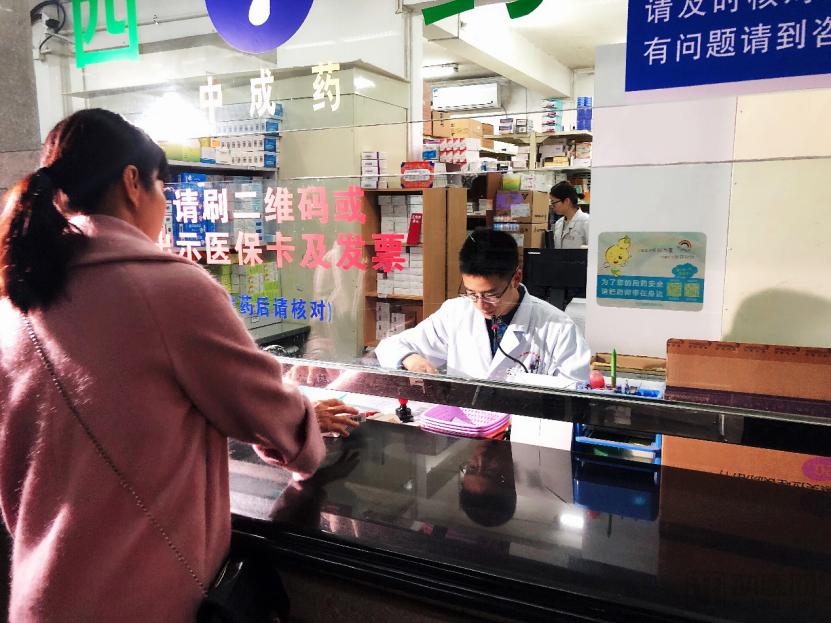
The key emphasis of Xiamen’s implementation also aligns with the core principles of the national “4+7” policy. According to previous documents issued by the General Office of the State Council, specific measures include “volume-based procurement, exchanging volume for price,” ensuring usage volumes, and requiring public medical institutions in pilot regions to prioritize the use of procured drugs to fulfill contracted quantities within one year. Meanwhile, product quality and supply stability must be ensured, and timely payments should be guaranteed to reduce transaction costs.
Key concerns within the industry regarding the implementation of the “4+7” policy primarily revolve around the construction of centralized procurement platforms, drug quality, adequate utilization, and timely payment. Through the aforementioned supporting policies and technical measures, Xiamen has achieved a win-win outcome characterized by feasible policy implementation, acceptability for pharmaceutical companies, executability for hospitals, and reassurance for patients.
The “Full-Process Supervision Platform,” which played a significant role in the implementation of Xiamen’s “4+7” policy, was developed and operated by Xiamen Haixi Pharmaceutical Trading Center Co., Ltd. (hereinafter referred to as the Haixi Pharmaceutical Platform). This company originated from the Sanming medical reform and provides healthcare informatization system development and solution support.
The reform path of the Sanming Healthcare Reform began with drug pricing to reduce costs, implementing a “vacate the cage to change the bird” strategy, and gradually achieving the “three-medical linkage.” In support of the Sanming Healthcare Reform, the Haixi Pharmaceutical Platform established deep cooperation with Sanming City, pioneering initiatives that gradually built China’s first centralized procurement platform for pharmaceuticals and medical devices to realize the “three-medical linkage.”
With the establishment and continuous expansion of the “Sanming Alliance,” the Haixi Pharmaceutical Platform has further upgraded its original system into the Sanming Alliance Joint Price-Capped Procurement Platform for Pharmaceuticals and Medical Devices. This platform provides services to all alliance members and has become China’s only cross-provincial centralized procurement platform for joint volume-based price negotiations on pharmaceuticals and medical devices. The “Sanming Alliance” currently covers 15 provinces, 21 cities, and 31 counties across China, serving a population of over 100 million.
Driven by the new platform and model, from 2011 to 2017, public hospitals in Sanming City achieved relative savings of RMB 5.51 billion in expenditures on drugs and medical consumables, while the deficit of RMB 210 million in the basic medical insurance fund for urban employees was reversed into an annual surplus of RMB 150 million. In 2017, drug expenditures at public medical institutions across Fujian Province decreased by RMB 874 million compared with the previous year; based on the historical growth rate of drug expenditures, this translated into annual savings of approximately RMB 3 billion.
“Sanming Alliance” also saw immediate results in drug cost savings in other regions: In 2018, the drug procurement prices in Tongren City, Guizhou Province, a member of the alliance, dropped by 27.64% compared to the average of the previous three years, while the overall drug procurement prices in Hinggan League, Inner Mongolia, decreased by 30%.
From supporting the healthcare reforms in Sanming and Fujian to fostering a nationwide ecosystem through the “Sanming Alliance,” the Haixi Pharmaceutical Platform has accumulated extensive experience in building and operating pharmaceutical and medical device trading platforms. As the technical support provider for Fujian Province’s Joint Price-Capped Transparent Procurement Platform for Pharmaceuticals and Medical Devices, the Haixi Pharmaceutical Platform naturally assumed the roles of system developer and operator under the “4+7” volume-based procurement initiative, helping Xiamen successfully implement the policy. In the future, the “Xiamen Model” may be replicated across China.
It is also worth noting that the controlling shareholder of the Haixi Pharmaceutical Platform is WeDoctor Group, making their “close interaction” highly anticipated. Last November, WeDoctor Group, Yilianzhong, and the Haixi Pharmaceutical Platform collaborated to establish China’s first integrated healthcare platform linking medical services, health insurance, and pharmaceuticals—known as “San Yi Lian.” Centered on health insurance, this platform leverages the internet, artificial intelligence, and big data to integrate medical consortia, internet hospitals, cloud pharmacies, and centralized procurement platforms. This integration enables the public to enjoy a more convenient and equitable experience in seeking medical care and purchasing medications, including online consultations, electronic prescriptions, online drug purchases, home delivery, and real-time health insurance settlement.
The national pilot program for centralized drug procurement and usage is a complex undertaking that requires strict adherence to assigned responsibilities and coordinated efforts among competent authorities—including those overseeing medical insurance, healthcare services, the pharmaceutical industry, and industry and information technology—to ensure the smooth realization of reform outcomes. For companies such as WeDoctor Group and the Haixi Pharmaceutical Platform, participation presents a significant opportunity to deepen their understanding of healthcare industry dynamics, refine their product and service offerings, and lay a solid foundation for future development.