

Huitong Medical Disrupts the MedTech CRO Market with 'Zero Down Payment' Innovation
Research and development (R&D) and regulatory registration are two critical pillars in the fields of pharmaceutical research and medical devices. However, driven by the specialized nature of corporate operations and the increasing specialization of social division of labor, a growing number of companies are opting to outsource tasks such as developmental testing and regulatory submission to third-party providers. Third-party Contract Research Organizations (CROs) have thus become an integral component of the healthcare industry.
The CRO model first emerged in the 1970s and is currently concentrated primarily in the pharmaceutical research sector in China. In recent years, with the continuous expansion of the medical device industry, CROs have begun to extend their services into the medical device field.
As an emerging field, how is this industry developing? What are the market pain points? How are companies responding? VCBeat conducted an exclusive interview with Huitong Medical, a long-established medical device CRO company.
Huitong Medical, established in 2005, is a CRO consulting services group specializing in medical device registration, clinical trials, and pre-market research. Headquartered in Nanjing, the company has branches in Beijing, Nanjing, Hong Kong, Guangzhou, Suzhou, and other cities. In recent years, Huitong Medical has actively expanded into third-party testing services and obtained CMA certification in June 2018.
Medical Device CROs: Opportunities and Challenges Coexist
With the implementation of tiered diagnosis and treatment, the spotlight in the healthcare sector is no longer solely focused on large tertiary Grade A hospitals; primary care has also begun to take center stage. Currently, medical equipment in China’s primary healthcare institutions is inadequately equipped, with an urgent need for “upgrades” and “gap-filling.” This situation has catalyzed significant market potential for mid- to low-end medical devices in primary care settings. Meanwhile, in the high-end market, import substitution policies have, to some extent, stimulated vitality within China’s high-end medical device industry.
Dr. Chen Tao, founder of Huitong Medical, believes that the current growth of the medical device CRO market is mainly driven by the following three opportunities:
I. Tighter Policy Oversight and Higher Market Expectations for Clinical Trial Compliance;
II. The output value of the medical device industry continues to increase at an annual rate exceeding 10%;
III. Driven by stringent regulatory requirements, established companies that previously conducted clinical trials and registrations in-house are now also seeking assistance from CROs.
On one hand, market demand has surged alongside the expansion of the medical device industry; on the other hand, the medical device CRO sector remains in its early stages of development, with a series of issues—such as high upfront costs, frequent delays, arbitrary price hikes, lack of integrity, and poor service—casting a shadow over the industry’s growth.
Caught between urgent service demands and the chaotic state of the medical device CRO industry, the medical device sector currently faces a major dilemma.
Chaos Breeds Change.
The root cause lies in the “pay-first, service-later” model, which makes it difficult to safeguard corporate interests.
Dr. Chen Tao stated in an interview, “The crisis of trust has become a formidable tiger blocking the path of the medical device CRO industry.”
Under intense market competition, using price suppression as a bargaining chip is no longer a novel topic. As a third-party service sector, medical device CRO companies have increasingly resorted to simplistic and crude tactics—such as adding unnecessary procedures, imposing hidden fees, and causing indefinite delays—as the easiest means to secure short-term gains. Meanwhile, these practices have significantly eroded trust within the industry.
One of the events that left a deep impression on Dr. Chen Tao occurred in 2016, when a long-standing client of Huitong Medical, with whom the company had collaborated for over a decade and who required clinical trial services, chose a new partner due to a lower quotation. A year later, the client’s experience was somewhat shocking.
The initial base fee quotation of RMB 1.5 million increased by nearly RMB 1 million under various pretenses during actual implementation, representing a 70% higher increase than anticipated. The ethical approval, originally scheduled to be completed within four months, remains unfinished after a year has passed, exceeding the expected timeline by more than threefold. As is well known, for medical device companies, delays in regulatory submission and approval are less tolerable than cost overruns.
“If we abandon the collaboration, it means that the hundreds of thousands of yuan invested upfront will go down the drain. Yet continuing to invest feels like a distant and uncertain prospect,” said Dr. Chen Tao. This phenomenon is not an isolated case within the industry; its root cause lies in the “pay-first, service-later” model. With opaque pricing for medical device services, clients are unable to exercise choice or maintain control over risks. “To change this situation, we must first address the fundamental issue of payment methods.”
On March 15, Huitong Medical undertook an initiative of “special significance.” On that day, the launch event for *Innovative Clinical Service Models for Medical Device Registration*, hosted by Huitong Medical, was held in Nanjing, attracting 150 medical device experts, entrepreneurs, investors, and media representatives from across China.
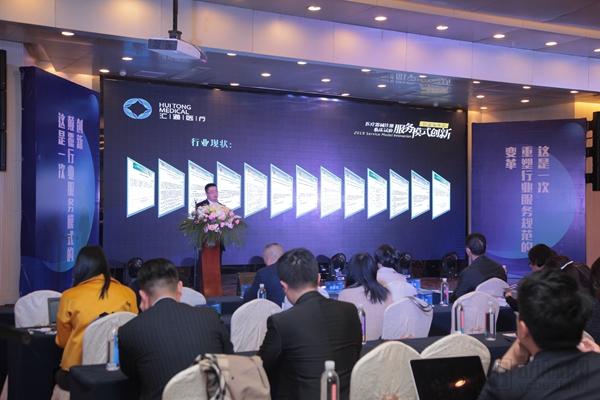
“Innovation in Clinical Service Models for Medical Device Registration” Press Conference (Photo provided by the interviewee)
Dr. Chen Tao was the first to propose the “Zero Down Payment, Zero Risk, 100% Satisfaction” service model at the conference. Its innovation lies in establishing a service philosophy centered on zero down payment, pay-after-service, and prioritizing customer satisfaction.
Compared with the traditional model, the zero-down-payment approach reduces companies’ trial-and-error costs and grants them greater optionality. The post-payment model, in turn, mitigates the risk of losses associated with clinical trial registration. Establishing service satisfaction as the core focus clarifies the original intent to address root causes and return to the essence of service delivery.
One-Stop Testing and Registration Service: Streamlining Pre-Market Research for Medical Devices
While emphasizing its service model, Dr. Chen Tao, who has a technical background, stressed to VCBeat that Huitong Medical remains a technology-driven company.
While industry peers strive to capture market share on the manufacturing front, Huitong Medical has quietly focused its efforts upstream on the testing segment of the value chain. The company aims to establish an integrated “testing plus registration” model, thereby streamlining the entire pre-market research pathway for medical devices.
“Currently, only a few industry giants possess independent laboratories capable of conducting in-house R&D validation and exploratory testing. In contrast, more than 95% of small and medium-sized enterprises (SMEs) lack such capabilities. This results in companies having an unclear understanding of whether their products meet requirements for service life, packaging, and safety performance during the R&D process,” stated Dr. Chen Tao. “Our aim is to intervene at the R&D stage, helping companies address challenges in product development and mitigate the risks associated with later-stage standardized compliance testing from the outset.”
In January 2018, the Center for Medical Device Evaluation of the China Food and Drug Administration (CFDA) issued the “Notice on the Recognition of Entrusted Inspection Reports for Medical Devices,” explicitly stating that entrusted inspection reports (including pre-evaluation opinions) issued by medical device testing institutions qualified for medical device inspection shall have equivalent validity to registration inspection reports and shall be accepted. This notice laid the policy foundation for the socialization of medical device testing.
In June of the same year, Nanjing Huitong Testing Technology Co., Ltd., a subsidiary of Huitong Medical Group, obtained qualifications for 19 parameters across three major categories from the China Metrology Accreditation (CMA), including shelf-life validation, packaging integrity verification, and environmental cleanliness testing. The institution has established a laboratory management system in accordance with ISO/IEC 17025 and has built specialized laboratories such as a comprehensive laboratory, an electrical safety laboratory, a biosafety laboratory, a performance laboratory, and a physical and chemical laboratory.
Currently, the medical device CRO sector remains in its early exploratory phase. Amidst industry uncertainty, Huitong Medical has consistently sought to clarify and explore new development models and industry dynamics. This is one of the key reasons for our interest in the company. Going forward, VCBeat will continue to closely monitor the developments of Huitong Medical and other enterprises in the medical device CRO space.
Huitong Medical is currently undergoing its first round of financing, with Probe Capital serving as the exclusive financial advisor for this round.