

High Efficiency! A Comprehensive Look at How a Veteran Tier-3A Hospital Built Its Internet Smart Hospital
When reporters entered the outpatient hall of Nanfang Hospital, Southern Medical University (hereinafter referred to as “Nanfang Hospital”), the most immediate impressions, besides the crowds of people, were the X-banner stands placed beside the information desk. Promotional materials for WeChat Pay and the Donghua Information System occupied prominent positions. From time to time, patients approached the desk to inquire about procedures such as registration and payment, receiving careful guidance from the medical staff.
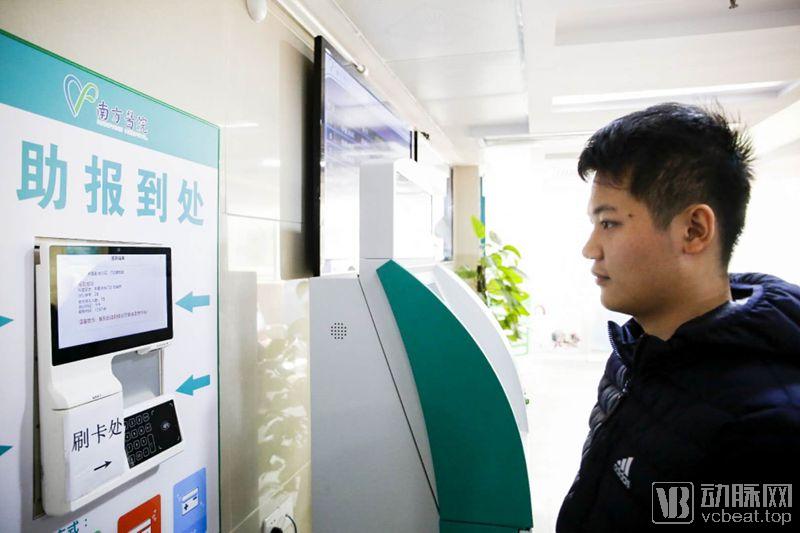
At Nanfang Hospital, patients only need to “scan their face” to check in after making an appointment registration.
These new developments serve as testament to the hospital’s exploration of innovative practices. Nanfang Hospital is the medical institution in Guangdong Province that receives the highest volume of out-of-district outpatient visits, with the proportion of patients from outside the city consistently rising over the past five years. As a large comprehensive Grade A tertiary hospital renowned for its excellence in the prevention and control of major diseases and in the diagnosis and treatment of complex and refractory tumors, and recognized as one of the “Top 100 Hospitals” nationwide, Southern Medical University Nanfang Hospital reported a critical case rate among its outpatient admissions of 84.12% from January to November 2018, representing a year-on-year increase of 2.19%.
This means that Nanfang Hospital serves as a “beacon of hope” for critically ill patients within the province, while the steady influx of out-of-town patients also places significant “pressure” on the hospital. Unlike outpatient care for common local ailments, the treatment of critically ill patients from other regions involves numerous special requirements.
So how does Nanfang Hospital alleviate "pressure," meet patient needs, and enhance the patient care experience? How can it ensure that patients who come seeking its renowned expertise have a better medical experience and achieve higher satisfaction?
In the era of "Internet Plus," this long-established hospital has embraced a spirit of innovation.“These amplified pain points have become an endogenous driving force for our embrace of the Internet; out of necessity, we are willing to embrace innovation and change.” To improve patients’ healthcare experience, while implementing the “Action Plan for Improving Medical Services,” Nanfang Hospital has continuously pursued digital transformation, initiating the exploration and practice of a whole-process, convenient care model centered on cross-regional patients.
In October 2018, Nanfang Hospital embarked on a “new initiative” in its digital transformation by signing a strategic cooperation agreement with internet giant Tencent to jointly build an “Internet Smart Hospital.” According to Vice President Cao Rui, “Through our partnership with Tencent, we have established a comprehensive online medical service process. By integrating Tencent’s core technologies with Nanfang Hospital’s platform and clinical expertise, we are building Nanfang Hospital’s Internet Smart Hospital.”
In the process of building an internet-based smart hospital,Vice President Cao Rui candidly stated that the reform and innovation of an internet-based smart hospital require not only the endorsement of the hospital’s leadership team but also a solid institutional foundation.
First, at the cognitive level, it is crucial to maintain an open mindset and embrace both the Internet and innovation.Nanfang Hospital, established in 1941, is a large-scale comprehensive Grade A tertiary hospital integrating medical care, teaching, scientific research, and preventive health services, and is recognized as one of the “Top 100 Hospitals” in China. It serves as the First Affiliated Hospital and the First Clinical Medical College of Southern Medical University (formerly the First Military Medical University).
The hospital currently oversees the Main Campus, Zengcheng Branch, Knowledge City Branch, Jianggao Campus, Taihe Branch, Xintang Hospital, and Taicheng Yiyuan Branch. The Main Campus is located on Qilin Gang at the eastern foot of Baiyun Mountain in Guangzhou, Guangdong Province. It covers an area of 203,000 square meters, with a building area of 458,000 square meters. The hospital has 2,225 operational beds, and the total value of its medical equipment amounts to nearly RMB 1.4 billion. In 2018, the outpatient and emergency visits reached 3.2546 million person-times, and the annual number of discharged patients was 119,000.
Among them, the Zengcheng Branch is located in the national-level Zengcheng Economic and Technological Development Zone in eastern Guangzhou. It has officially opened with a planned capacity of 1,500 beds, striving to become a smart Grade III Class A hospital characterized by “intelligent processes, refined management, and high-quality services.” Xintang Hospital is a secondary general hospital with 250 operational beds. The Jianggao Campus, situated in northwestern Guangzhou, traces its history back to the Puhui Hospital established by New Zealand missionaries in the late Qing Dynasty. Featuring a blend of Chinese and Western architectural styles and a pleasant environment, the campus is designated as a cultural relic protection unit in Guangzhou. It currently has 360 operational beds and offers specialized departments including Geriatrics, Interventional Medicine, Psychiatry and Psychology, and Health Management.
In terms of technological and academic innovation, Nanfang Hospital has remained tireless, securing funding for major projects such as the National “12th Five-Year” Major Science and Technology Projects and the Joint Fund of the National Natural Science Foundation of China and Guangdong Province. The hospital has received eight Second-Class Prizes for National Scientific and Technological Progress and one First-Class Prize for Chinese Medical Science and Technology. Led by academicians and “Thousand Talents Program” experts, the hospital has cultivated a number of prominent disciplines, including 17 national-level key disciplines.
Generally speaking, hospitals that excel in healthcare informatization fall into two categories: one is specialized hospitals, which are less complex; the other is regional hospitals, rather than national leading institutions. These two types of hospitals often take the lead, as they possess the financial strength and willingness to innovate. In contrast, large comprehensive hospitals ranked among the top nationwide, due to their massive scale and significant inertia, often need to comprehensively consider multiple factors when pursuing innovation.
In Cao Rui’s view, the most valuable aspect of Nanfang Hospital’s exploratory journey is its willingness to embrace new developments, align the mindset of staff across the entire hospital, foster unity, formulate a cohesive strategy, and actively adopt the “Internet Plus” model.
In the process of building an internet-based smart hospital, Nanfang Hospital has consistently centered its reforms around the “Action Plan for Improving Medical Services,” a nationwide initiative that is both widespread and essential. Key components include the continuous improvement of the healthcare environment, optimization of patient care processes, and enhancement of service awareness among all staff members, with a particular focus on medical and nursing personnel.
The advent of “Internet Plus” technology has not only accelerated the pace of reform at Nanfang Hospital but also expanded its range of internet-based medical services, making the hospital more intelligent and smart.
Xiao Li, who had recently arrived in Guangzhou, felt unwell and decided to schedule an appointment at Nanfang Hospital of Southern Medical University via its official WeChat account. Before booking the appointment, Xiao Li was able to register and create a medical record simply by using facial recognition on WeChat, with his health insurance card linked simultaneously, making the process highly convenient. However, he encountered a dilemma when selecting the appropriate department for his consultation. Fortunately, the hospital’s “Intelligent Triage” feature resolved this issue. After describing his symptoms to the “AI Triage Assistant,” Xiao Li received recommendations for suitable departments and doctors within one second. Guided by the AI assistant, he successfully completed the appointment booking.
Unfamiliar with Guangzhou, Xiao Li used navigation to reach Nanfang Hospital. However, the hospital campus is so vast that he struggled to locate the specific consultation room. The “In-Hospital Navigation” feature on Nanfang Hospital’s WeChat official account proved invaluable. Following the prompts, Xiao Li smoothly found the consultation area, with seamless integration between outdoor and indoor navigation ensuring he took no detours. Upon arriving at the consultation area, Xiao Li completed his check-in via facial recognition and waited for his number to be called. Given the high volume of out-of-town patients, Nanfang Hospital has established a green channel for first-time visitors from other regions, and the facial recognition system has made Xiao Li’s medical journey even more convenient.
After his consultation, Xiao Li immediately received the doctor’s prescription and payment notification via WeChat, where he completed the medical insurance settlement. When picking up his medication, Xiao Li was pleasantly surprised by the smart pharmacy at Nanfang Hospital. After scanning a QR code for self-check-in, the automated dispensing machine began operating, allowing him to retrieve his medication quickly with virtually no waiting time.
Nanfang Hospital’s smart outpatient services allowed Xiao Li, a patient visiting the hospital, to truly experience the convenience brought by internet technology. For critically ill patients from other regions, Nanfang Hospital’s post-discharge medical transport reservation service is particularly thoughtful. In the past, arranging transportation was a major challenge for critically ill patients who had been cleared for discharge and rehabilitation, as it was difficult to verify the qualifications of ambulance providers. Nanfang Hospital has streamlined this process by offering professional medical escort reservation services through its WeChat official account, covering options such as civil aviation medical express lines, high-speed rail transport, and ambulance transfers. This helps prevent worsening of the patient’s condition due to improper care during hospital transfer or discharge, thereby avoiding irreversible consequences.
The changes brought by internet technology to hospitals and patients have not only effectively addressed challenges such as difficulty in appointment registration, payment, and accessing medical care, thereby significantly improving the efficiency and convenience of patient visits, but also enhanced safety.
After more than six months of exploration, Nanfang Hospital has developed a cross-regional patient-centered, full-process convenient healthcare model, encompassing three phases: pre-triage, during consultation, and post-consultation.
First, Pre-Consultation – Precise Appointment Registration:To address the pain point of “difficulty in securing appointments,” and leveraging hospital-side appointment slot management, the Smart Outpatient Online Registration feature provides patients with two registration pathways: off-site advance booking and real-time on-site registration. This solution resolves industry-wide issues such as chaotic slot allocation and difficulties in obtaining appointments.
Leveraging technologies such as artificial intelligence, natural language understanding, and speech recognition, the intelligent AI triage system guides patients through the medical consultation process, thereby alleviating the pressure on hospital inquiry and triage services. Patients can access the “Intelligent Triage” mini-program via the hospital’s official WeChat account. By simply describing their symptoms in one sentence, the intelligent triage assistant can accurately match them to the appropriate department within one second and recommend physicians whose specialties best align with their condition, enabling seamless online triage and appointment registration in a single step.
Pre-Consultation - Facial Recognition for Profile Creation and Check-in:Prior identity verification of patients is conducted using facial recognition technology to establish electronic medical cards and health records. After completing online registration and appointment booking, patients activate their queue status via facial recognition check-in upon arrival at the outpatient hall, significantly reducing waiting times for registration and queuing.
Second, During Consultation – Precision Physician Matching.Smart Outpatient Services provide patients with channels to locate clinics and physicians both outside and within the hospital through departmental search functionality. By leveraging intelligent triage and smart navigation features, the system delivers real-time, intelligent location updates for patients navigating the hospital campus and records their in-hospital medical-seeking trajectories. With navigation accuracy precise to the individual consultation room, this solution significantly enhances the patient experience in large-scale or multi-campus hospitals, addressing industry-wide challenges such as difficulties in locating appropriate medical care.
Patients typically check in at various outpatient departments by swiping their medical cards or registering at the triage desk. The Smart Outpatient Service is dedicated to enabling online check-in, allowing patients to register via the official WeChat account and view real-time queue lengths ahead of them, thereby facilitating better time management.
Third, Post-consultation: Convenient Payment and Safe Medication.Leveraging payment platform management and WeChat Pay capabilities, we provide patients with online payment channels to address industry challenges such as difficulties in making payments. The Smart Outpatient Department utilizes online payment functions—including medical insurance settlement—to meet patients’ needs for remote payments, alleviate pressure on hospital payment windows, and enhance both the efficiency and experience of patient visits.
Smart outpatient services also provide patients with online access to laboratory and diagnostic test reports. Patients can view their medical records, test results, prescriptions, and other information via a WeChat official account on their mobile phones, enabling them to monitor their health status at any time and arrange or adopt targeted treatment plans accordingly.
Through the smart pharmacy, rapid outpatient medication dispensing is achieved. Patients present their paid prescriptions at the check-in kiosk in the outpatient pharmacy to scan the prescription. Upon receiving the patient’s check-in information, the automated dispensing machine immediately allocates a service window based on the medication details in the prescription and initiates the dispensing process simultaneously. The entire procedure is highly efficient, allowing patients to retrieve their medications with virtually no waiting time.
A more critical role is to ensure the accuracy of medication dispensing and safeguard patient medication safety. In traditional manual prescription dispensing, pharmacists are prone to errors when handling medications with similar packaging specifications or similar-sounding names due to high-intensity workloads. Intelligent dispensing machines utilize national drug supervision codes to identify each medication, thereby ensuring the accuracy of dispensing. Furthermore, through pre-prescription review, these systems enable prospective auditing of all prescriptions and medical orders across the hospital, while also providing retrospective evaluation capabilities. This helps further standardize physicians’ clinical practices and enhance the rationality and safety of patient medication use.
Medical Transport Booking Service: Providing professional medical escort for patients, covering booking services such as civil aviation medical express, high-speed rail transport, and ambulance transport, to prevent aggravation of the patient's condition due to improper care during hospital transfer or discharge, which could lead to irreversible consequences.
Internal data statistics from Nanfang Hospital indicate that following the implementation of smart outpatient services in December 2018: online engagement with the smart outpatient platform has shown steady growth; the daily volume of online appointments registered by patients through the smart hospital averages approximately 1,100, accounting for about 15% of the total appointment volume; and the daily average volume of online payments represents approximately 10% of the total payment volume.
Furthermore, another achievement brought about by Nanfang Hospital’s internet-enabled smart hospital initiative is the decentralization of high-quality medical resources to primary care levels. Medical consortia and telemedicine are effective mechanisms through which large tertiary Grade A hospitals drive development at the grassroots level and promote the orderly implementation of tiered diagnosis and treatment. The integration of “Internet+” further enhances the efficiency and expands the coverage of this model.
Because remote consultations by specialists can effectively alleviate the burden on large hospitals, improve the medical standards of primary care institutions, and spare patients from arduous travel. This mode of diagnosis and treatment, which breaks through geographical barriers, fundamentally realizes the sharing of medical resources, enabling patients to access specialist outpatient services “without traveling far” and alleviating the difficulty of accessing medical care.
In terms of the medical consortium, Nanfang Hospital has been entrusted by the Baiyun District Government to manage Taihe People's Hospital and establish a close-knit medical consortium. By fully leveraging Nanfang Hospital’s advantages in medical care, education, and research, as well as its brand influence, the hospital’s service capacity has been rapidly enhanced, providing high-quality, convenient, and affordable medical services to residents in Taihe and surrounding areas, as well as in the central and northern parts of Baiyun District.
This initiative not only benefits patients but also provides substantial support to the physicians at Taihe People’s Hospital. Throughout the collaboration, Nanfang Hospital will fulfill its role in mentoring and guiding by enabling high-quality medical professionals to practice at multiple sites in lower-tier hospitals. In a creative twist, it will also allow physicians from these lower-tier hospitals to accompany eligible patients referred upward to Nanfang Hospital for multi-site practice, where they will receive mentorship from senior professors and assist with ward rounds, surgeries, and treatment.
Cao Rui summarized the value generated by internet-based smart hospitals as the “fractional effect.” He believes that developing internet-based smart hospitals delivers three layers of value:
The first layer leverages Internet-plus technologies, such as artificial intelligence, big data, and cloud computing, to provide patients with a convenient healthcare experience and enhance offline efficiency through online methods.
The second layer involves the rational utilization of big medical data resources to enhance healthcare quality and safety, such as predicting patient flow, managing bed resources more intelligently, and ensuring more precise and safer medication management.
The third layer focuses on enhancing therapeutic efficacy by integrating diverse specialty medical data at the foundational level, thereby feeding back into clinical research and delivering value for improved treatment outcomes.
The aforementioned three layers of value, akin to the numerator of a “fraction,” are better when larger, representing convenience, safety, and efficacy.
The denominator is cost—through improved efficiency, rational resource utilization, and risk reduction, medical resources are gradually conserved and medication costs are lowered—ultimately enlarging the “fraction,” making healthcare more accessible to the public, and promoting a more balanced development of the healthcare sector.
In Cao Rui’s view, the development of internet-based smart hospitals will significantly promote the nation’s healthcare sector, particularly by driving the realization of value-based healthcare and bringing about transformative improvements in maximizing patient value—a prospect that is highly anticipated.